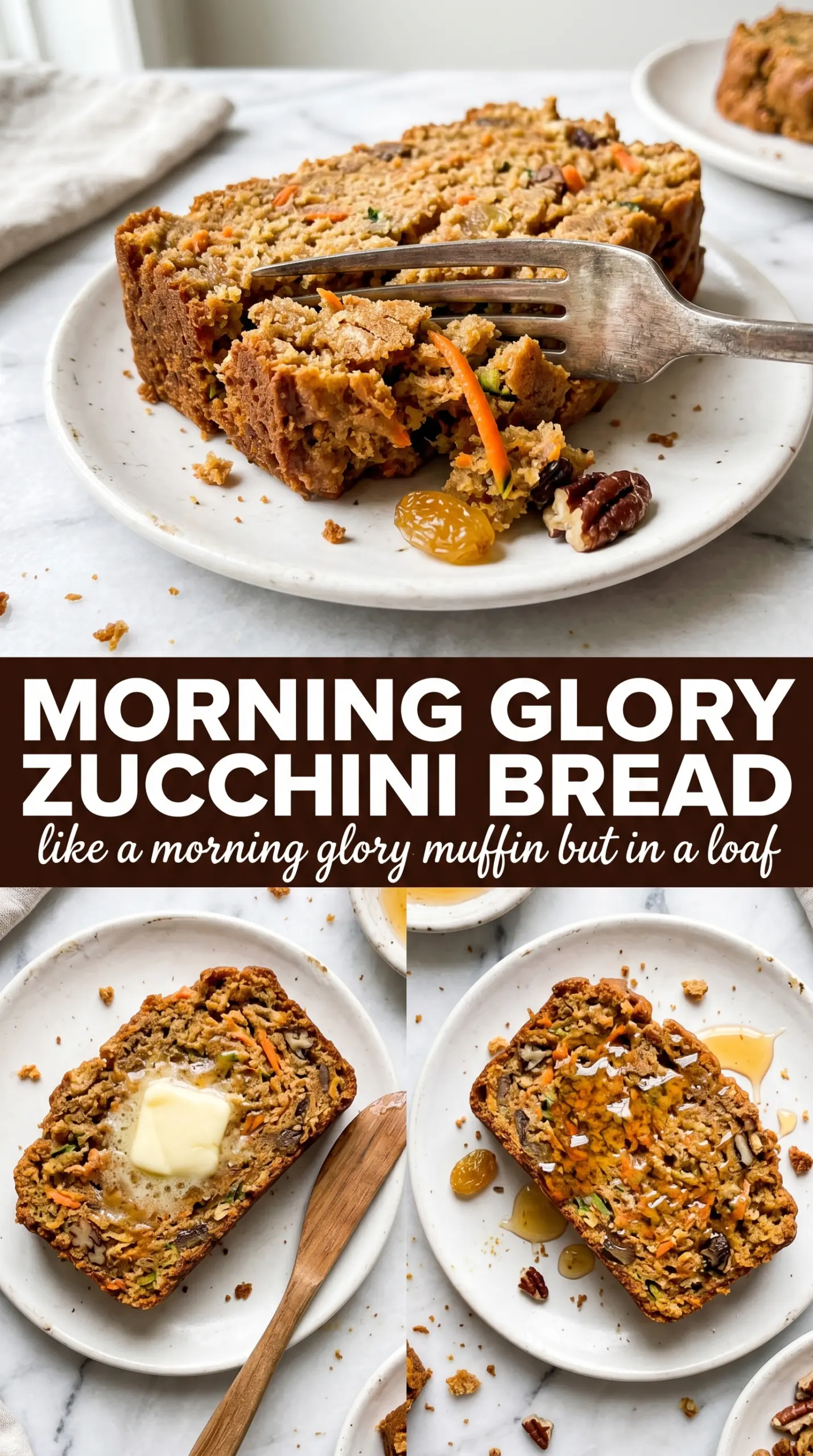
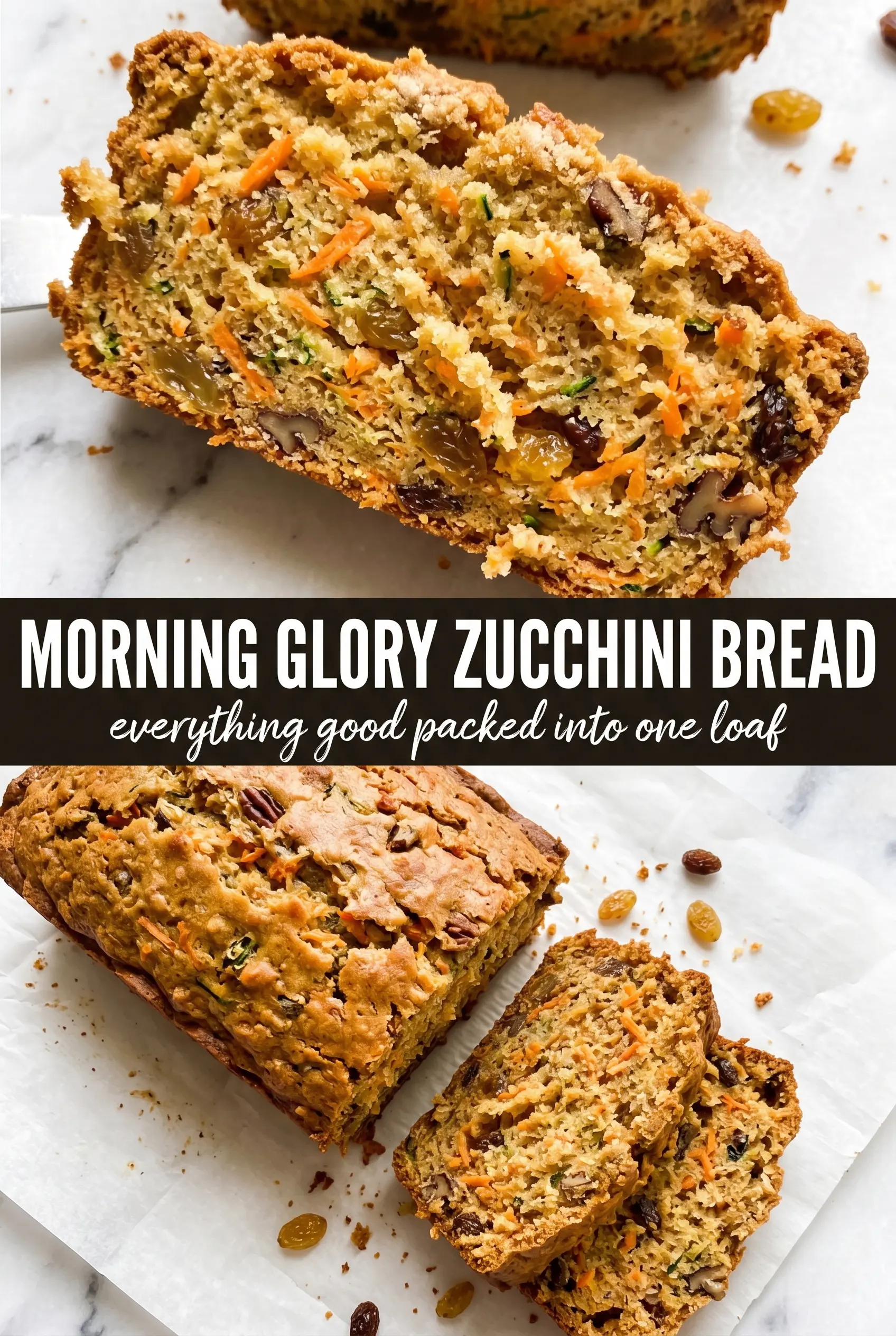
Morning Glory Zucchini Bread bakes into a tall, tender loaf with a moist crumb, warm spice, and all the good kind of texture in every slice. You get little bits of carrot, apple, coconut, raisins, and seeds scattered through the bread, so it eats like a proper breakfast and never feels plain or one-note.
The trick is keeping the zucchini dry and folding the batter just until it comes together. That keeps the loaf from turning heavy, and it lets the fruit, nuts, and seeds stay distinct instead of disappearing into the batter. Greek yogurt adds a little extra tenderness without making the crumb greasy, and brown sugar gives the bread a deeper, almost caramel edge that works beautifully with the cinnamon and nutmeg.
Below you’ll find the details that matter most: how to keep the loaf from sinking in the middle, which ingredient swaps still hold up, and why this bread tastes even better the next day.
I was nervous this would be dense with all the add-ins, but it baked up light and stayed moist for days. The raisins and coconut made every slice taste different, and the top browned beautifully.
Love a loaf with carrots, apple, coconut, and raisins in every bite? Save this Morning Glory Zucchini Bread for the days when you want a hearty breakfast slice that stays moist for days.
The Secret to Keeping All Those Mix-ins From Sinking
With a loaf this packed, the usual failure isn’t flavor. It’s structure. If the batter is too loose or the add-ins are too wet, the fruit and nuts slide toward the bottom and the center can turn gummy before the top has a chance to set.
The fix starts before the batter is mixed. Grate the zucchini, then squeeze it dry so it doesn’t leak into the loaf as it bakes. The apple and carrot should be grated fine enough to blend into the crumb, but not so wet that they turn the batter sloshy. Folding the flour in at the end keeps the gluten from tightening up, which is what gives quick bread that heavy, rubbery texture people blame on the add-ins.
- Zucchini — This gives the loaf moisture without a strong vegetable flavor. Squeeze it dry in a clean towel until it stops dripping, or the center of the bread will stay soft and slightly damp.
- Greek yogurt — It adds tenderness and a little tang. Plain yogurt works too, but don’t use a thin drinkable yogurt; the batter needs that thicker texture.
- Apple — The grated apple melts into the crumb and keeps the loaf lively. Peel it first so you don’t get tough bits of skin in the slices.
- Walnuts and seeds — These are there for crunch and contrast. Pepitas give a cleaner, lighter bite than walnuts alone, and sunflower seeds work just as well if that’s what you have.
What Each Ingredient Is Doing in This Loaf
- All-purpose flour — This keeps the loaf sturdy enough to hold all the mix-ins. A 1:1 gluten-free blend can work, but the crumb will be a little more delicate and the loaf may need a few extra minutes in the oven.
- Brown sugar — It brings moisture and a deeper sweetness than white sugar would. That extra molasses note helps the cinnamon, nutmeg, and coconut taste warmer and fuller.
- Vegetable oil — Oil keeps the bread soft even after it cools. Melted butter can be used, but the loaf won’t stay as tender on day two.
- Eggs — They hold the batter together and give the bread lift. Whisk them well with the sugar, oil, yogurt, and vanilla until the mixture looks smooth and glossy before adding the vegetables.
- Coconut, raisins, walnuts, and seeds — This is the texture group that makes the loaf feel complete. If you skip one, the bread still works, but it loses some of the contrast that makes each slice interesting.
Building the Batter Without Overmixing It
Start With the Dry Bowl
Whisk the flour, baking soda, baking powder, salt, cinnamon, and nutmeg together first so the leaveners and spice are spread evenly through the batter. That small step keeps you from biting into a pocket of baking soda or an unevenly spiced slice. If the dry mix looks clumpy, break it up now instead of later when the batter is already thick.
Whip the Wet Ingredients Until Smooth
Beat the brown sugar, eggs, oil, yogurt, and vanilla until the mixture looks unified and a little glossy. You’re not trying to add a lot of air here; you’re building a smooth base that will coat the flour without making the loaf cakey. Once the zucchini, carrots, and apple go in, the mixture will look loose and a little shaggy, and that’s exactly what you want.
Fold in the Flour and Finish the Batter
Add the dry ingredients in one go and fold just until no dry streaks remain. The batter should look thick and studded, not silky. Stir in the coconut, raisins, walnuts, and seeds at the very end so they stay evenly distributed; if you keep mixing after this point, the loaf gets tough fast.
Bake Until the Center Is Set
Scrape the batter into the prepared loaf pan and bake until a toothpick comes out clean or with just a few moist crumbs. If the top is browning too fast before the center is done, tent it loosely with foil for the last 15 minutes. Let the loaf cool for 15 minutes in the pan before turning it out, or it can break while it’s still too soft.
How to Adapt This Bread Without Losing the Good Texture
Make It Dairy-Free
Swap the Greek yogurt for an equal amount of dairy-free yogurt with a thick texture. Thin plant-based yogurts can make the batter looser, so choose one that holds its shape on a spoon. The loaf will still be moist, but the tang will be a little softer.
Make It Gluten-Free
Use a cup-for-cup gluten-free flour blend in place of the all-purpose flour. The loaf will still slice well, but it may need an extra 5 to 10 minutes in the oven and should cool fully before cutting. That’s the part that keeps it from crumbling.
Swap the Nuts for More Crunch
If walnuts aren’t your thing, use chopped pecans or leave the nuts out and increase the seeds a little. Pecans give a sweeter, softer crunch, while extra pepitas make the loaf a little more rustic and less rich.
Reduce the Sugar Slightly
You can cut the brown sugar back by a couple of tablespoons without hurting the structure. Go much lower than that, and the loaf loses moisture and browns less evenly. The fruit helps, but it can’t replace all the sugar’s work in a quick bread.
Storage and Reheating
- Refrigerator: Store tightly wrapped for up to 5 days. The loaf stays moist, and the spice flavor settles in even more after the first day.
- Freezer: This bread freezes well. Wrap the cooled loaf or individual slices tightly, then freeze for up to 3 months.
- Reheating: Thaw at room temperature, then warm slices in a toaster oven or low oven. The common mistake is microwaving too long, which makes the crumb rubbery instead of soft.
Questions I Get Asked About This Recipe
Morning Glory Zucchini Bread
Ingredients
Equipment
Method
- Preheat the oven to 350°F and grease a 9x5 loaf pan; set it aside for easy filling later.
- Whisk all-purpose flour, baking soda, baking powder, salt, cinnamon, and nutmeg together until evenly combined; the mixture should look speckled.
- Beat brown sugar, eggs, vegetable oil, Greek yogurt, and vanilla extract until smooth, glossy, and fully incorporated.
- Stir in zucchini, carrots, and apple until the wet batter turns thick and studded with shreds.
- Fold the dry ingredients into the wet just until combined; stop when no dry streaks remain to keep the crumb tender.
- Fold in shredded coconut, raisins, chopped walnuts, and sunflower seeds or pepitas for a visibly colorful, texture-packed batter.
- Pour the batter into the loaf pan and smooth the top with the pan to level the surface.
- Bake at 350°F for 55–65 minutes until a toothpick comes out clean, with the top set and lightly golden.
- Cool the loaf for 15 minutes before slicing so it firms up and holds its colorful interior.