Soft, chewy oatmeal cookies with a thick marshmallow cream center hit that exact middle ground between homemade and nostalgic. The cookies stay tender at the edges with a little give in the center, and the filling adds just enough sweetness to make each bite taste like the best kind of lunchbox treat — only bigger, fresher, and packed with real butter and vanilla.
What makes this version work is the balance. Brown sugar and molasses give the cookies that deep, warm flavor and keep them from baking up dry, while old-fashioned oats bring the chewy texture you want in a cream pie cookie. The filling leans on cream cheese to keep the marshmallow creme from tasting flat or cloying, so the whole sandwich feels rich without becoming one-note.
Below, I’ll show you how to keep the cookies soft, how to get the filling fluffy instead of grainy, and why chilling isn’t necessary if you let the cookies cool the right way first.
The cookies stayed soft for days and the marshmallow filling whipped up smooth without getting runny. I split one open while they were still just cool and the center was thick enough to hold its shape, which made them taste exactly like a bakery version.
Pin these oatmeal cream pies for soft, chewy sandwich cookies with a thick marshmallow filling.
The Cookie Texture That Keeps These from Turning Cakey
The biggest mistake with oatmeal cream pies is overpacking the dough with oats and flour, then baking them until they look fully done in the oven. That’s how you get dry cookies that lose their bend once they cool. Here, the dough should look a little loose when it’s scooped, and the cookies should come out when the centers are just set and the edges are barely turning golden.
Molasses is doing more than adding flavor. It keeps the crumb soft and gives the cookies that old-fashioned depth you expect from a cream pie cookie. Let the cookies finish setting on the pan for a few minutes before moving them, or they can break while they’re still too tender to handle.
What the Filling Ingredients Are Each Doing

- Old-fashioned rolled oats — These give the cookies their chew and structure. Quick oats will work in a pinch, but the texture gets softer and a little more uniform. If you want that classic, hearty bite, stick with rolled oats.
- Molasses — This is the ingredient that makes the cookies taste like oatmeal cream pies instead of plain oatmeal cookies. It deepens the color, adds warmth, and keeps the crumb moist.
- Brown sugar and granulated sugar — Brown sugar brings softness and caramel notes, while granulated sugar helps the edges set without making the centers dense. Using all brown sugar would make the cookies too heavy.
- Cream cheese — This is the secret to a filling that tastes fluffy and rich instead of one-note sweet. Use it softened all the way through so it blends smoothly with the marshmallow creme.
- Marshmallow creme — It gives the filling that classic sweet, sticky center. If you swap it for melted marshmallows, the texture won’t stay stable enough to sandwich cleanly.
Building the Dough and Filling Without Losing the Soft Center
Whipping the Butter and Sugars
Beat the butter with both sugars until the mixture looks pale and fluffy. That air gets you a lighter cookie that still stays chewy. Add the eggs, molasses, and vanilla after the butter mixture is ready so everything emulsifies cleanly; if the butter is cold or the bowl is too cool, the mixture can look curdled, but keep going and it will smooth out once the dry ingredients go in.
Bringing the Dough Together
Fold in the flour, baking soda, cinnamon, nutmeg, salt, and oats just until the last streaks disappear. Overmixing here tightens the dough and makes the cookies bake up tougher than they should. The dough should be thick enough to mound on a spoon, but still soft enough to scoop into rough 2-tablespoon ovals without cracking.
Baking Until Set, Not Dry
Bake at 350°F for 10 to 12 minutes and watch for the edges to set while the centers still look slightly underdone. That’s the moment you want. If you wait until the tops look fully baked, the cookies will finish too firm once they cool and you’ll lose the soft sandwich-cookie texture. Let them sit on the pan for a few minutes before moving them to a rack so they finish setting gently.
Whipping the Marshmallow Filling
Beat the softened butter and cream cheese first until completely smooth, then add the marshmallow creme, powdered sugar, vanilla, and cinnamon. If the filling looks grainy, the butter or cream cheese wasn’t soft enough. Keep mixing until it turns light and spreadable; it should hold its shape on a spoon without being stiff.
Matching and Filling the Cookies
Pair the cookies by size before filling so the sandwiches look even and press together cleanly. Spread a generous layer on the flat side of one cookie, then top with its match and press just enough for the filling to reach the edges. If you push too hard, the filling squeezes out and the cookies can crack, so use a gentle hand.
How to Change These for Different Eaters and Different Pantry Shelves
Make Them Gluten-Free
Use a 1:1 gluten-free flour blend in place of the all-purpose flour, and make sure your oats are certified gluten-free. The texture stays chewy, though the cookies may spread a little less and bake up a touch more delicate.
Skip the Cream Cheese
If you want a more classic, sweeter filling, replace the cream cheese with an equal amount of softened butter. The filling will be lighter in tang and a little more candy-like, but it will still pipe and spread well.
Use Quick Oats in a Pinch
Quick oats will make the cookies softer and less rustic. They’re fine if that’s what you have, but the chew won’t be as pronounced and the cookies will taste a little more uniform.
Make Them Ahead
Bake the cookies a day ahead and store them unfrosted, then fill them the day you plan to serve. That keeps the filling fresh and gives you the best soft texture without the cookies absorbing too much moisture.
Storage and Reheating
- Refrigerator: Store in an airtight container for 4 to 5 days. The cookies stay soft, but the filling firms up slightly when chilled.
- Freezer: Freeze the assembled cookies in a single layer, then transfer to a container with parchment between layers. They freeze well for up to 2 months.
- Reheating: Let frozen cookies thaw at room temperature. Don’t microwave them unless you want the filling to melt and the cookies to turn sticky on the outside.
Answers to the Questions Worth Asking
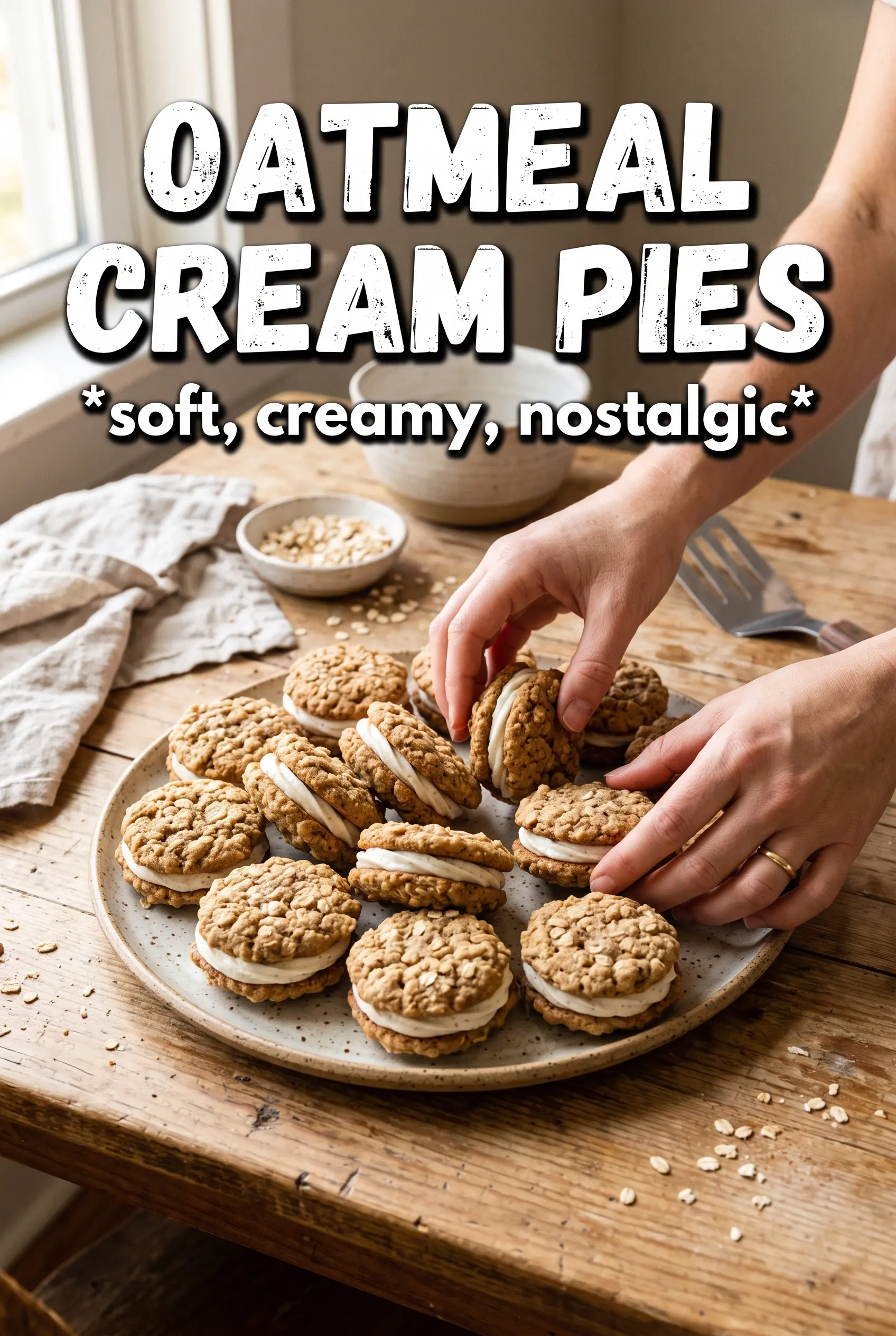
Oatmeal Cream Pies
Ingredients
Equipment
Method
- Beat the softened unsalted butter, brown sugar, and granulated sugar until fluffy using a stand mixer. Add the eggs, molasses, and vanilla and beat until smooth and combined (about 1–2 minutes).
- Add the all-purpose flour, baking soda, cinnamon, nutmeg, and salt, then mix until the dry ingredients are evenly dispersed. Fold in the old-fashioned rolled oats until the dough is thick and uniform with no dry streaks.
- Scoop the dough into 2-tablespoon ovals and place on a sheet pan with spacing between cookies. Bake at 350°F for 10–12 minutes, until the edges look set and the centers no longer look wet.
- Remove the cookies from the oven and cool completely on the sheet pan or a rack. Stop when fully cooled, since warm cookies will cause the filling to melt.
- In a stand mixer, beat the softened unsalted butter and cream cheese until very smooth. Add the marshmallow creme, powdered sugar, vanilla, and cinnamon and beat until very smooth and fluffy with a thick spreadable texture.
- Pair cookies of similar size, then spread a generous layer of filling onto one cookie. Press together with the matching cookie, then repeat to form 12 sandwich cookies.