Olive Garden chicken gnocchi soup lands in that sweet spot between cozy and substantial: a creamy broth, tender shreds of chicken, soft little pillows of gnocchi, and just enough spinach and vegetables to keep each spoonful interesting. The texture is what makes people go back for seconds. The broth stays velvety instead of gluey, and the gnocchi turn plush without falling apart.
The trick is building the base in stages. Sautéing the onion, carrots, and celery first gives the soup a savory backbone, while flour added after the garlic helps the broth thicken without tasting raw. The cream and milk go in after the broth has had a chance to simmer, which keeps the soup smooth and prevents the dairy from separating.
Below, I’ll walk through the one timing detail that keeps the gnocchi tender and the spinach bright, plus a few easy swaps if you need to work with what’s already in the fridge.
The broth thickened up beautifully and the gnocchi stayed soft instead of turning gummy. I added rotisserie chicken and it tasted like the soup had been simmering all afternoon.
Save this Olive Garden chicken gnocchi soup for the night you want a creamy, spoonable dinner with pillowy gnocchi and almost no fuss.
The broth gets thick enough to coat a spoon without turning heavy
The mistake with gnocchi soup is rushing the base and dumping in dairy before the broth has any body. Flour needs a full minute in the butter and vegetables so it loses that raw taste and has something to bind to. Once the broth goes in, a short simmer gives the soup a light, silky thickness that supports the cream instead of fighting it.
Gnocchi changes the texture fast, which is why it goes in near the end. If you boil it too long, it swells and turns soft in the wrong way, almost pasty. You want them floating and tender, not collapsing. The spinach is last for the same reason: it only needs a couple of minutes to wilt, and keeping it green makes the whole bowl look and taste fresher.
What each ingredient is actually doing in this soup
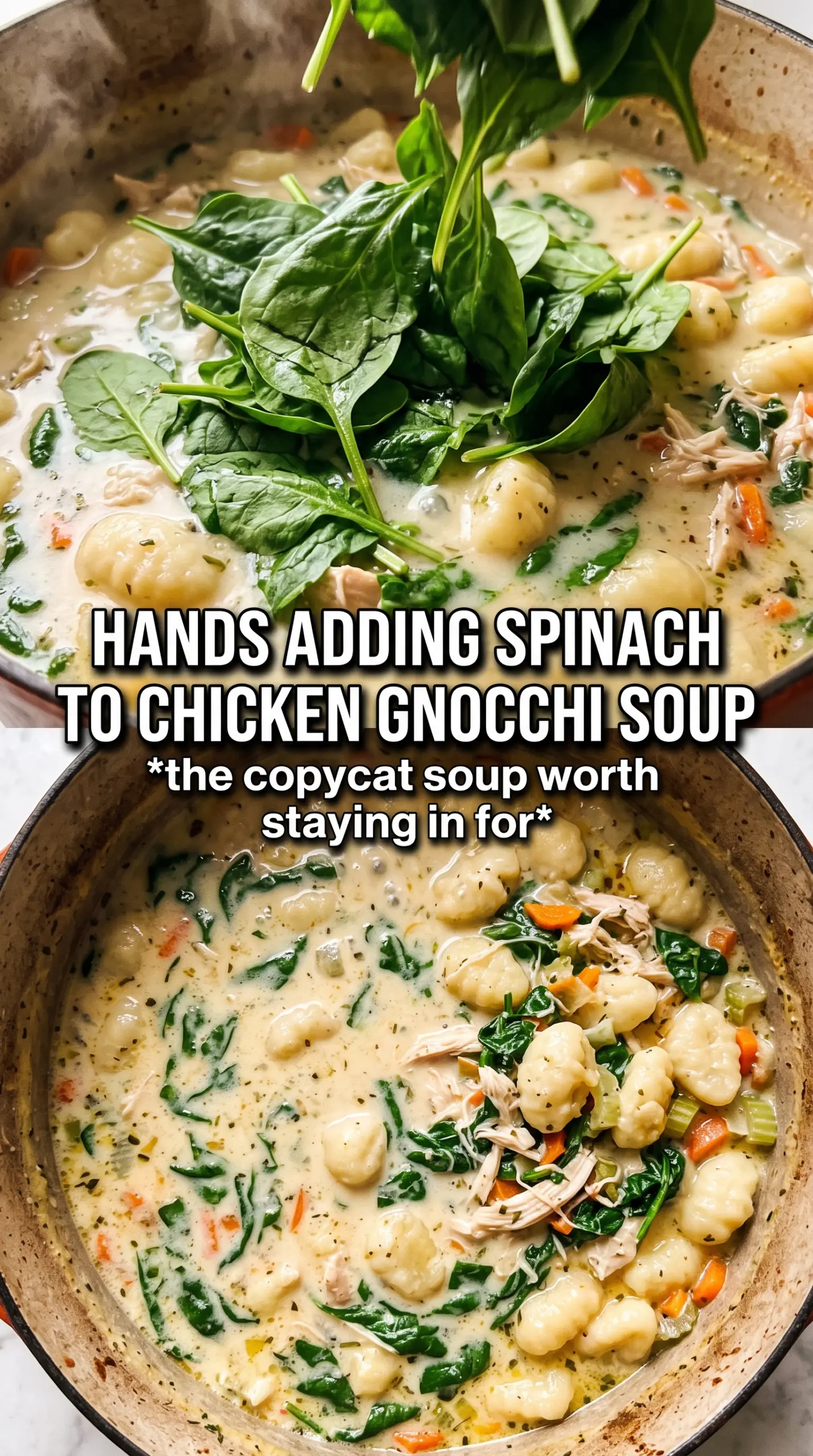
- Mini potato gnocchi — These give the soup its signature spoonable texture. Shelf-stable gnocchi work fine here, but fresh gnocchi will cook a little faster and stay extra tender. Don’t swap in standard pasta unless you want a different soup entirely; pasta won’t give you that soft, dumpling-like bite.
- Heavy cream and whole milk — The combination keeps the soup rich without making it cloying. Heavy cream brings body, while whole milk loosens the texture so the soup stays pourable. Using all cream makes it too dense, and using low-fat milk can leave it thin and less satisfying.
- Chicken broth — This is the savory base, so use one that tastes clean and seasoned, not flat. Homemade broth is great, but a good boxed broth works fine as long as you’re willing to adjust salt at the end. If your broth is very salty, hold back on seasoning until after the cream goes in.
- Butter, flour, onion, carrot, celery, and garlic — This is the flavor foundation. The butter carries the vegetables, the flour thickens, and the garlic goes in after the vegetables soften so it doesn’t scorch. Dice the carrots and celery small enough that they soften in the same window as the onions; big chunks stay firm and throw off the texture.
- Spinach — Fresh spinach is the right choice here because it wilts into the broth without taking over. Frozen spinach works in a pinch, but squeeze it dry first or it will water down the soup. Add it at the very end so it stays bright and doesn’t disappear into the background.
Building the soup so the gnocchi stays tender
Softening the vegetables first
Melt the butter in a large pot and cook the onion, carrots, and celery until the onion turns translucent and the carrots just start to soften. This isn’t about browning; it’s about drawing out the sweetness and giving the soup a round, cooked base. If the vegetables are still crunchy when the broth goes in, they’ll stay that way in the finished soup. Keep the heat at medium so the butter doesn’t brown before the vegetables have a chance to sweat.
Making the roux and simmering the broth
Stir in the garlic, thyme, and rosemary, then whisk in the flour and let it cook for about a minute. You want the mixture to look pasty and lightly coated, not dry or clumpy. Gradually pour in the broth while whisking so the flour disperses evenly; if you dump it all in at once, you’ll get little pockets of raw flour. After that, a short simmer is enough to take the edge off the starch and give the soup a faint body.
Finishing with dairy, chicken, and gnocchi
Lower the heat before adding the cream and milk. High heat is the fastest way to make dairy separate or taste cooked. Stir in the chicken and gnocchi, then let the soup bubble gently until the gnocchi float and feel tender when you cut one open. If the soup starts boiling hard, drop the heat immediately; gnocchi can blow out and turn mushy in a hurry.
Wilty spinach and final seasoning
Stir in the spinach only long enough for it to collapse into the broth. Two to three minutes is plenty. Taste after everything is in the pot, because the broth, cream, and chicken all change how much salt you need. Pepper at the end gives the soup a cleaner finish than pepper cooked for a long time.
How to adapt this soup when you need a shortcut or a lighter bowl
Use rotisserie chicken for a faster dinner
Shredded rotisserie chicken works beautifully and saves you the step of cooking chicken separately. Add it near the end just long enough to warm through so it doesn’t turn stringy. The soup still tastes homemade because the broth carries the flavor, not the chicken alone.
Make it gluten-free with one swap
Use gluten-free gnocchi and a gluten-free flour blend for the roux if you need the soup to stay wheat-free. The texture will be slightly less silky than with all-purpose flour, but it still thickens well if you cook the flour long enough. Check the broth label too, since some brands sneak in wheat-based additives.
Lighten the soup without losing the creamy feel
Swap half-and-half for the cream if you want a lighter bowl. It won’t be quite as plush, but the soup still feels rich if you keep the simmer gentle and don’t let it reduce too far. I wouldn’t go much leaner than that, or the broth starts tasting thin instead of comforting.
Storage and Reheating
- Refrigerator: Store in an airtight container for up to 3 days. The gnocchi will continue to soften, and the soup will thicken as it sits.
- Freezer: It doesn’t freeze well once the dairy and gnocchi are in it. The cream can separate and the gnocchi turn grainy. If you want to freeze ahead, freeze the broth base without the cream and gnocchi, then finish the soup fresh.
- Reheating: Warm it slowly over low heat on the stove, stirring often. Don’t boil it or the dairy can split and the gnocchi can fall apart. If the soup is too thick after chilling, add a splash of broth or milk until it loosens.
Questions I Get Asked About This Recipe

Olive Garden Chicken Gnocchi Soup
Ingredients
Equipment
Method
- Melt 3 tablespoons unsalted butter in a large pot over medium heat, then sauté the diced onion, diced carrots, and diced celery for 5 minutes, stirring until softened and fragrant.
- Add the minced garlic, dried thyme, and dried rosemary for 30 seconds, then whisk in the all-purpose flour and cook for 1 minute to remove the raw flour taste.
- Gradually whisk in the chicken broth, then bring to a gentle simmer and cook for 5 minutes until slightly thickened.
- Stir in the heavy cream and whole milk, then add the shredded chicken and the mini potato gnocchi and simmer for 5-7 minutes until the gnocchi float.
- Add the fresh spinach and cook for 2-3 minutes, stirring, until wilted and incorporated into the creamy broth.
- Season with salt and pepper to taste, then serve hot while the gnocchi are tender.