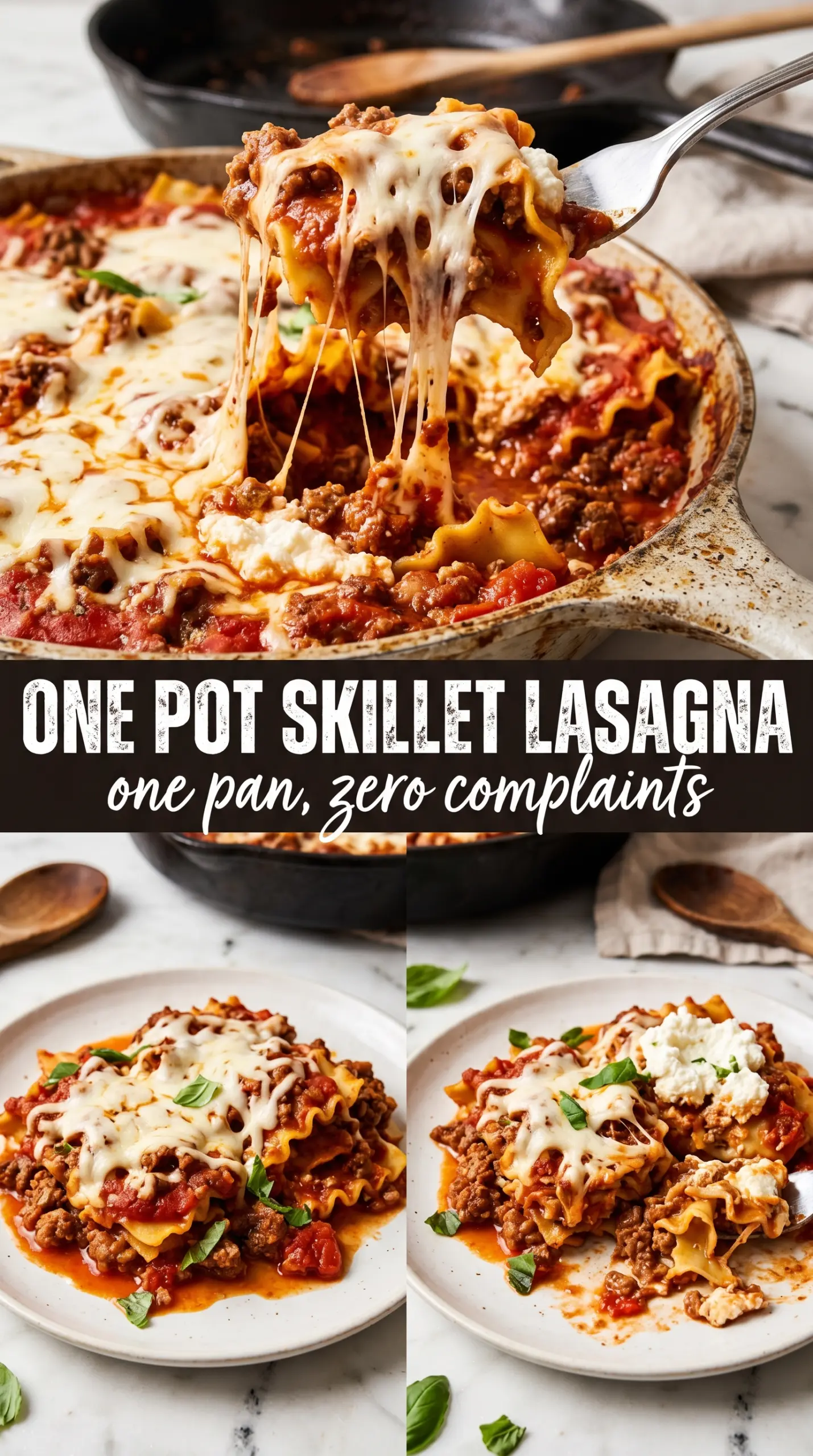
Broken lasagna noodles simmered straight in a rich beef marinara make this skillet lasagna taste like a full casserole without the layering, boiling, or extra pans. The noodles soak up the sauce as they cook, which gives every bite that soft-edged, saucy texture people love in classic lasagna, while the ricotta, mozzarella, and parmesan melt over the top into a bubbling finish that feels just a little bigger than a weeknight dinner usually does.
This version works because the noodles cook in enough liquid to stay tender, but not so much that the sauce turns thin. Browning the beef with the onion first builds a savory base, and adding the garlic only after the fat is drained keeps it from going bitter. The ricotta goes on at the end in spoonfuls instead of being stirred in, so you still get those creamy pockets that make each serving taste like the best corner piece.
Below, I’ve laid out the few spots where skillet lasagna can go wrong and how to avoid them, plus a couple of easy swaps if you need to work with what’s in your kitchen.
The noodles cooked up tender right in the sauce and the top got that bubbly, cheesy finish without having to bake anything. My husband said it tasted like lasagna from a restaurant, and the skillet was empty fast.
Save this skillet lasagna for the nights when you want bubbling ricotta, tender noodles, and one pan to do the whole job.
The Part Where the Noodles Turn Tender Without Turning to Mush
The biggest mistake with skillet lasagna is treating the noodles like they’re going into a baked casserole. In a skillet, the sauce has to do double duty: flavor the meat and fully cook the pasta. That means you need enough liquid for the broken noodles to stay submerged and enough stirring to keep the bottom from sticking while the top pieces soften evenly.
If the pan looks dry before the noodles are tender, add a splash more broth or water. If the sauce looks loose near the end, uncovered simmering for the last few minutes will tighten it up. The goal is glossy sauce that clings to the noodles, not a soup with pasta floating in it.
What Each Ingredient Is Actually Doing in the Skillet
- Ground beef — This gives the dish its savory backbone and enough fat to carry the sauce. An 80/20 blend works well because it browns well without drying out. If you use leaner beef, the sauce will still work, but you may want a small drizzle of olive oil in the pan.
- Marinara sauce — Use a jar you actually like the taste of, because it’s the main flavor in the finished dish. A thicker sauce is better here than a watery one. If your marinara is on the thin side, let the finished skillet simmer uncovered for a few extra minutes.
- Beef broth — This is what cooks the noodles while deepening the sauce. Water can work in a pinch, but the flavor won’t be as rounded. If you’re using low-sodium broth, season a little more boldly before the noodles go in.
- Ricotta, mozzarella, and parmesan — This trio gives you the lasagna effect without layering. Ricotta adds creamy pockets, mozzarella melts into the top, and parmesan brings the salty finish that keeps the whole dish from tasting flat. Don’t stir the ricotta through the sauce or you lose that contrast.
Building the Skillet So the Sauce Stays Rich
Browning the Beef and Onion
Cook the beef and onion over medium-high heat until the meat loses its pink color and the onion turns translucent with browned edges. That browning matters; it’s where the deeper flavor comes from. If the pan starts to collect too much liquid, keep cooking until it evaporates before adding the garlic. Garlic added too early can scorch once the beef is done rendering fat.
Turning the Sauce Into a Pasta Bath
Once the marinara and broth go in, scrape up the browned bits from the bottom of the pan. Those bits melt into the sauce and give it a richer finish. Bring everything to a boil before adding the noodles, because the initial heat jump helps the pasta start cooking evenly instead of soaking in lukewarm sauce and turning uneven.
Letting the Noodles Cook in the Sauce
Stir the broken noodles in and press them down until they’re submerged. Cover and simmer gently, then stir every few minutes so nothing sticks to the bottom or clumps together. If the noodles are still firm but the sauce is getting thick, add a splash of broth. If they’re tender and the sauce is still loose, take the lid off and let it reduce for a minute or two.
Finishing With the Cheese Layer
Drop the ricotta over the top in spoonfuls instead of spreading it out. That gives you pockets of creamy filling instead of a uniform layer that disappears into the sauce. Sprinkle the mozzarella and parmesan over everything, cover just until melted, then add basil right before serving so it stays fresh and bright.
How to Adapt This Skillet Lasagna Without Losing the Good Parts
Make It With Italian Sausage Instead of Beef
Use mild or hot Italian sausage in place of the ground beef for a deeper, spicier flavor. Because sausage brings its own seasoning and fat, you may not need as much salt at the end. The texture stays the same, but the sauce tastes a little closer to a baked lasagna from a good neighborhood restaurant.
Dairy-Free Skillet Lasagna
Skip the ricotta and use your favorite dairy-free mozzarella-style shreds. The top will still melt, but you’ll lose some of the creamy pockets that make classic lasagna feel rich. A little drizzle of olive oil over the finished pan helps add back some body if the sauce seems a touch lean.
Gluten-Free Version
Use gluten-free lasagna noodles, but watch them closely because they can go from tender to soft faster than regular pasta. Stir a little more often and start checking a few minutes early. If the sauce looks too thick before the noodles are done, add broth in small splashes so it stays glossy instead of gummy.
Storage and Reheating
- Refrigerator: Store leftovers in an airtight container for up to 4 days. The noodles will keep soaking up sauce, so the dish gets a little thicker by day two.
- Freezer: This freezes well in portions for up to 2 months. Cool it completely first, then wrap tightly so the cheese doesn’t pick up freezer flavor.
- Reheating: Reheat gently on the stovetop or in the microwave with a splash of water or broth. The common mistake is blasting it on high heat, which dries out the pasta and makes the cheese separate.
Answers to the Questions Worth Asking
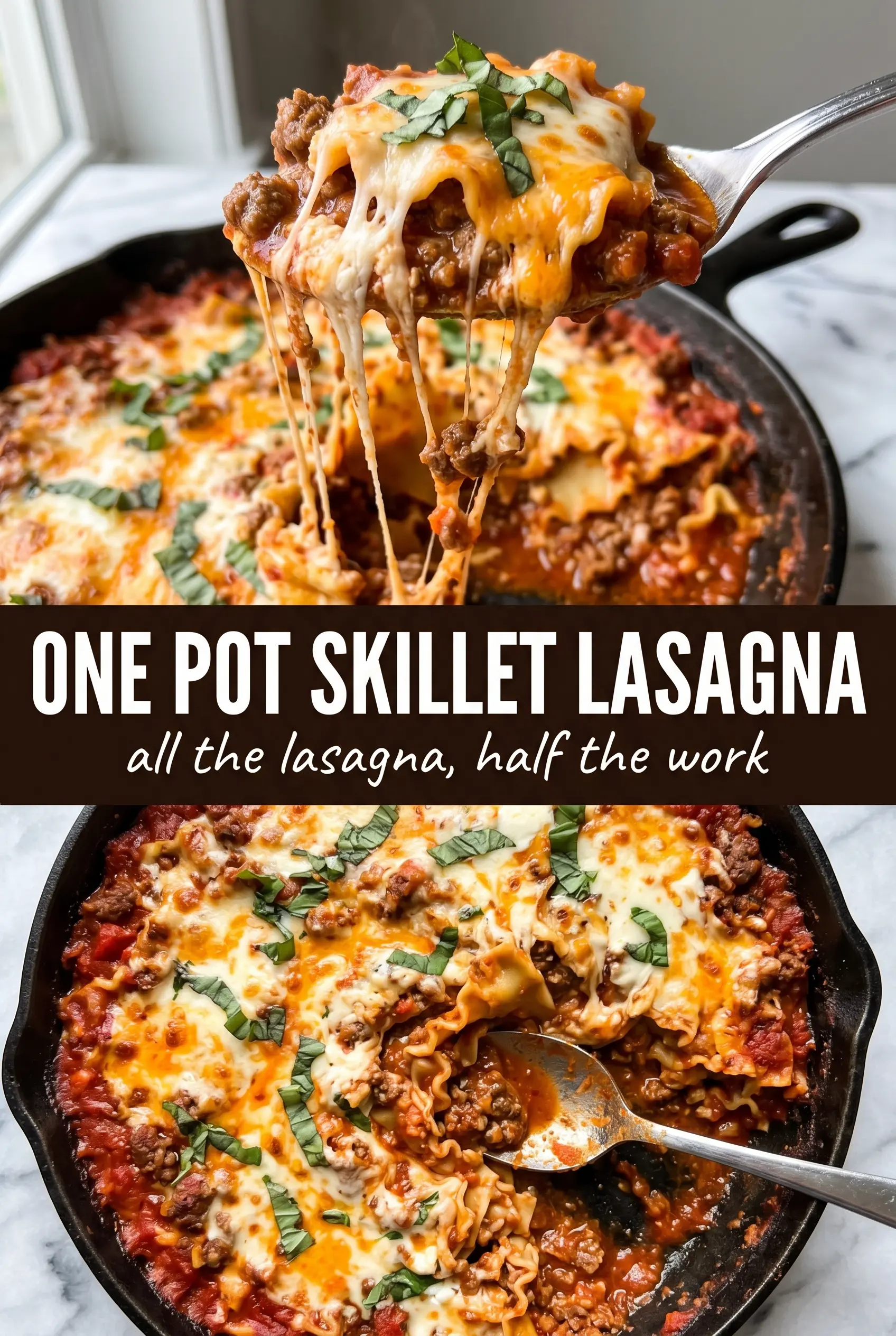
One Pot Skillet Lasagna
Ingredients
Equipment
Method
- Heat a large deep oven-safe skillet over medium-high heat and brown the ground beef with the diced onion. Drain excess fat, then stir in the minced garlic and cook 30 seconds.
- Pour in the marinara sauce and beef broth, then add Italian seasoning, red pepper flakes, salt, and pepper. Bring the mixture to a boil, bubbling throughout.
- Stir in the broken lasagna noodles and ensure they are fully submerged in the sauce. Keep the sauce at a rolling simmer, then cover and simmer on medium-low for 18–20 minutes, stirring occasionally, until the noodles are tender.
- Drop spoonfuls of ricotta over the top in uneven mounds, then sprinkle mozzarella and parmesan across the surface. Leave small gaps so the sauce can bubble up around the cheese.
- Cover the skillet and cook 3–5 minutes until the cheese melts and turns glossy. Garnish with fresh basil and serve immediately while bubbling.