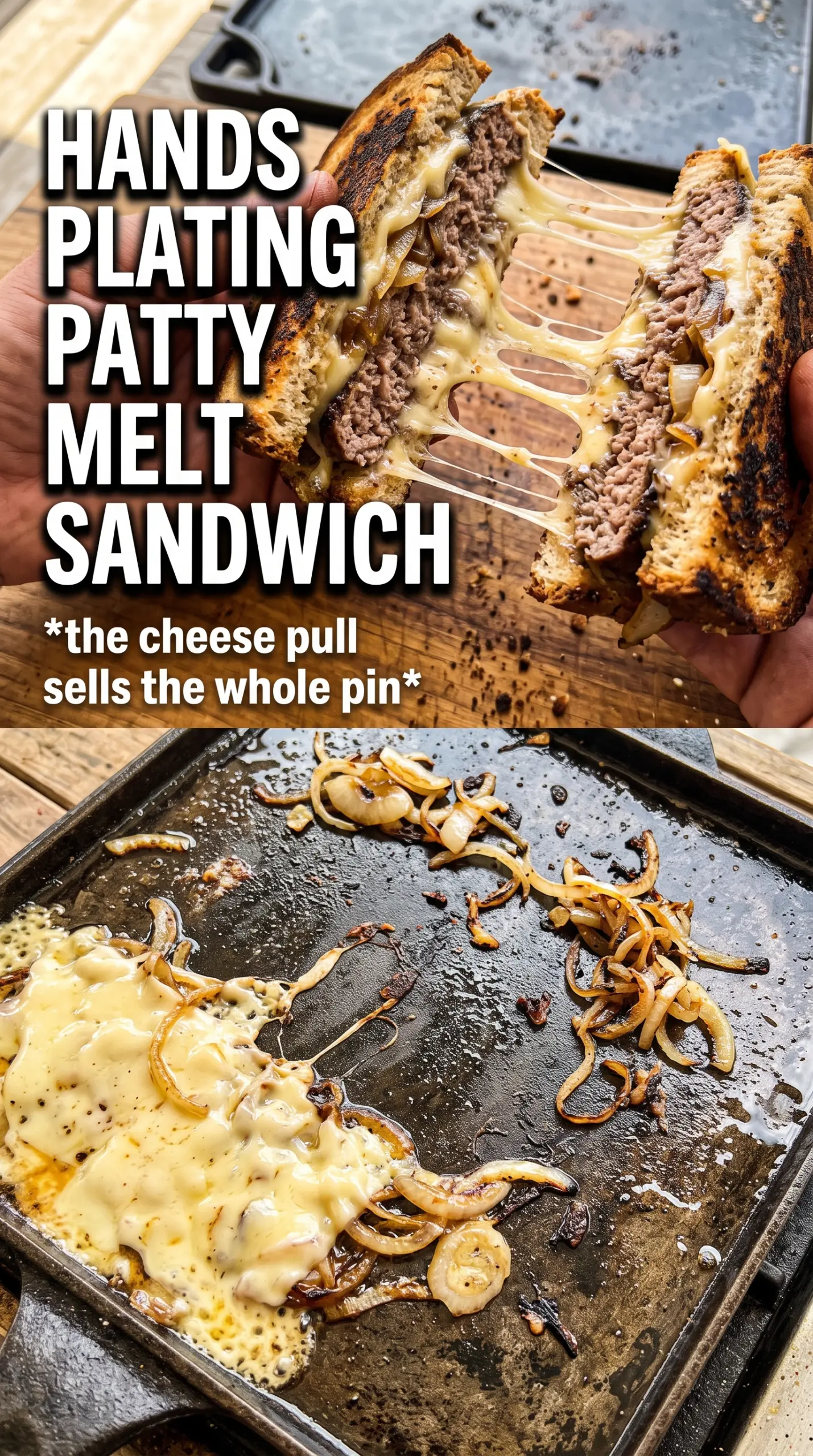
Crackly rye bread, a juicy beef patty, and a ribbon of melted cheese make a patty melt one of those diner-style sandwiches that earns its place in the regular rotation fast. The best versions are crisp on the outside, messy in the middle, and packed with sweet onions that taste like they took all afternoon to make, even though most of the work happens while the beef cooks.
This version leans on two things that matter: properly caramelized onions and a hot skillet. The onions need time over medium-low heat so they soften, deepen, and turn jammy instead of burning at the edges. The beef gets smashed thin in a cast iron pan, which gives you browned, lacy edges and keeps the sandwich from feeling thick and heavy once the cheese and sauce go in.
Below you’ll find the small details that keep the bread crisp, the cheese fully melted, and the sandwich intact long enough to get it from pan to plate in one piece.
The onions turned sweet and jammy instead of burnt, and the rye stayed crisp even after I pressed the sandwich back in the skillet. My husband said it tasted like our favorite diner version.
Save this patty melt for the nights when you want buttery rye, melted cheese, and sweet onions in one skillet sandwich.
The Secret to Keeping a Patty Melt Crisp After the Cheese Melts
The sandwich falls apart when the bread gets too much moisture before the final skillet press. That usually happens when the onions are wet, the sauce is heavy-handed, or the heat is too low and the bread soaks instead of toasting. The fix is simple: build with a thin layer of sauce, a hot pan, and onions that have cooked down until most of their moisture is gone.
Cast iron helps here because it holds heat when you add the sandwich back in for the final melt. That last press isn’t about cooking the beef through again; the patty is already done. It’s about turning the cheese into glue while the outside stays deeply browned and crisp.
- Rye bread — The slight tang stands up to beef and onions better than plain sandwich bread. Use sturdy slices with a tight crumb so they can handle the press without collapsing.
- 80/20 ground beef — You need some fat for the patty to stay juicy after smashing. Leaner beef can work, but the sandwich gets drier and less satisfying.
- Swiss and sharp American or cheddar — Swiss brings the classic melt, while the sharper cheese adds body and a little punch. If you swap cheeses, keep at least one that melts smoothly so the sandwich doesn’t turn grainy.
- Onions — These are not a garnish. They’re the sweetness that balances the beef and sauce, and they need the full 25 to 30 minutes to get silky and deeply browned.
What Each Ingredient Is Actually Doing in This Recipe
- Primary ingredient (the star) — Quality matters most. Choose the best you can find.
- Cooking medium (oil, butter, or broth) — This carries flavors and prevents dryness.
- Seasonings (salt, pepper, spices, herbs) — Layer flavors so nothing overpowers. Build depth gradually.
- Aromatics (garlic, onion, herbs) — Cook with fat to bloom flavors. Become the foundation.
- Supporting ingredients — Complement the main ingredient without overpowering it.
- Sauce or liquid (if applicable) — Brings flavors together. Balance richness with acid.
- Acid (lemon, vinegar, wine, or other) — Brightens and prevents flat-tasting results.
- Final finish (garnish, glaze, or sauce) — Prevents one-dimensional taste and adds visual appeal.
How to Build the Sandwich So the Bread Stays Crisp
Caramelizing the onions slowly
Start the onions in butter over medium-low heat and give them time. They should soften first, then turn golden, then take on a deeper brown color with a jammy texture. If the heat is too high, they’ll scorch before they sweeten, and that burned edge will show up in every bite.
Smashing the patties in a hot pan
Divide the beef into loose balls and season them before they hit the skillet. When the pan is hot, smash each ball thin right away so the surface browns fast and the patty stays tender inside. If you wait too long to smash, the beef starts to set and you lose that lacy crust that makes a patty melt taste diner-style.
Toasting, assembling, and melting
Butter the rye and toast it in the same skillet until the bread is golden and the surface feels dry, not greasy. Build the sandwich with sauce, onions, patty, both cheeses, and a little more onion for balance, then press it back into the skillet just until the cheese melts. If the bread browns before the cheese melts, lower the heat for the final minute instead of forcing it on high.
How to Adapt This Patty Melt When You Want a Different Finish
Dairy-Free Patty Melt
Swap the butter for a neutral oil or dairy-free butter, and use a good melting plant-based cheese. The sandwich will still crisp well, but the flavor gets a little less rich, so let the onions carry more of the sweetness.
Gluten-Free Version
Use a sturdy gluten-free sandwich bread with enough structure to handle a skillet press. Softer loaves can fall apart once the cheese melts, so choose one with a firmer crust and toast it well before assembling.
Spicy Patty Melt
Add a little hot sauce to the special sauce or tuck in a few pickled jalapeños with the onions. That bright heat cuts through the richness and keeps the sandwich from tasting heavy, especially if you’re using cheddar instead of American.
Make It for a Crowd
Cook the onions ahead and keep them warm, then form the beef into patties just before serving so they stay juicy. The sandwich comes together fastest if you build each one on a tray, then toast and melt them in batches in the same skillet.
Storage and Reheating
- Refrigerator: Store the cooked patties and onions for up to 3 days. The assembled sandwich is best fresh, since the bread softens once the sauce and onions sit together.
- Freezer: Freeze the cooked patties on their own for up to 2 months. The onions can be frozen too, but the finished sandwich doesn’t freeze well because the bread loses its crisp texture.
- Reheating: Reheat patties and onions in a skillet over medium heat, then assemble and toast fresh bread. If you microwave the whole sandwich, the rye turns soft and the cheese separates instead of melting cleanly.
Answers to the Questions Worth Asking

Patty Melt
Ingredients
Equipment
Method
- Melt 2 tablespoons unsalted butter in a cast iron skillet over medium-low heat, then add thinly sliced large onions.
- Cook the onions for 25-30 minutes, stirring occasionally, until deeply golden with browned edges and a soft, jammy texture.
- Divide 80/20 ground beef into 4 balls, then season each with Worcestershire sauce, garlic powder, salt, and pepper.
- Heat the cast iron skillet over high heat until very hot, then smash each ball thin and cook 2-3 minutes per side.
- Reduce heat slightly, then toast buttered rye bread slices in the skillet until golden and crisp at the edges.
- Spread special sauce (mayo, ketchup, Dijon, and Worcestershire) on one side of each toasted rye bread slice.
- Layer onions, then add each smashed patty and top with Swiss cheese and sharp American or cheddar cheese.
- Add more onions, then finish with the remaining rye toast slices, butter-side out.
- Return sandwiches to the hot skillet and press gently, cooking 1-2 minutes per side until the cheese is melted and the bread is crisp.