Golden, tender zucchini bread gets a crackly praline crown here, and that shift in texture is what makes this loaf hard to stop slicing. The bread itself stays moist without turning heavy, while the topping bakes into a sticky, glassy layer that shatters a little when you cut through it. It feels like a bakery loaf, but it’s built from straightforward pantry ingredients and a zucchini that would otherwise be sitting in the crisper drawer.
The trick is treating the zucchini like moisture, not a shortcut for extra tenderness. Squeeze it dry before it goes into the batter, or the loaf can turn dense and the center can bake up gummy. The praline topping goes on partway through baking, not at the start, so the sugar has time to bubble and set without burning the pecans. That timing is what gives you a glossy finish instead of a scorched one.
Below, I’ve included the one step that keeps the topping crisp, plus the swaps that still work if you’re out of buttermilk or want to make the loaf a little less rich.
The topping turned out glossy and crunchy, and the loaf stayed moist all the way through. I squeezed the zucchini dry like you said and the crumb baked up perfectly instead of soggy.
Pecan praline zucchini bread with that crackly caramel-pecan topping deserves a spot on your breakfast table and your recipe box.
The Reason This Loaf Stays Tender Without Turning Heavy
Zucchini bread gets messy when the batter carries too much hidden water. That’s the part that makes the crumb tight, gummy, or oddly sunken in the center. Squeezing the zucchini dry keeps the moisture where you want it and lets the loaf rise cleanly around the fruit and nuts.
The other piece is the balance between oil, eggs, and buttermilk. Oil keeps the crumb soft after the loaf cools. Buttermilk brings enough acidity to work with the baking soda, which gives the bread lift and keeps the cinnamon-brown sugar base from tasting flat. If your loaf has ever baked up heavy, the problem was usually too much wet zucchini or overmixed flour, not the oven.
What the Zucchini, Buttermilk, and Pecans Are Doing Here
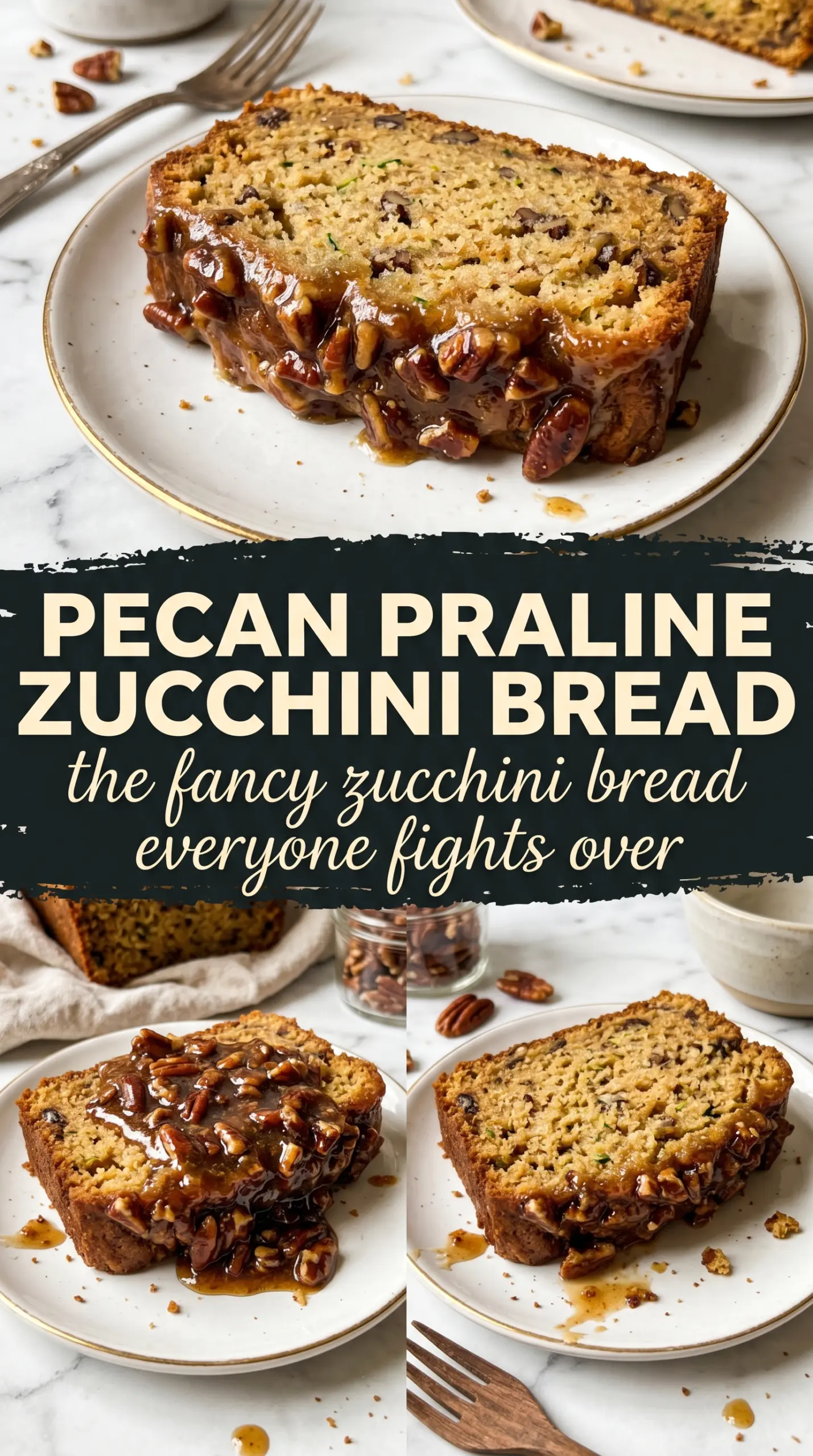
- Zucchini — It gives the loaf moisture and a soft crumb, but only after you squeeze it dry. Grating it fine helps it disappear into the batter so you get tenderness without wet pockets.
- Buttermilk — This adds a little tang and helps the baking soda do its job. If you don’t have it, use milk mixed with a teaspoon of lemon juice or vinegar and let it sit for a few minutes.
- Brown sugar — Packed brown sugar brings molasses depth that plain white sugar can’t match. It also helps the praline topping set with a caramel finish instead of tasting thin.
- Pecans — Chopped pecans in the loaf give you a little crunch inside, while pecan halves on top create that candy-like crown. If you use walnuts, the loaf still works, but the flavor will be sharper and less Southern in character.
- Heavy cream — This makes the praline topping rich enough to turn syrupy instead of grainy. Milk can work in a pinch, but the topping won’t set up with the same glossy finish.
Building the Praline Topping at the Right Moment
Mixing the Batter Without Overworking It
Start by whisking the dry ingredients so the baking soda and baking powder are evenly spread through the flour. Once the wet ingredients are smooth, stir in the squeezed zucchini, then fold in the dry mixture just until the flour disappears. If you keep stirring after that, the loaf can bake up tough and a little tunneled instead of soft and even.
Baking the Loaf Before the Topping Goes On
Pour the batter into the pan and bake it until it’s nearly set in the middle, usually about 50 to 55 minutes. The top should look puffed and the center should still have a slight give when you tap it. If you add the praline topping too early, the sugar can sink into the batter and the pecans can scorch before the loaf finishes baking.
Cooking the Praline Until It Turns Syrupy
Melt the butter, brown sugar, and cream together just until the mixture looks smooth and glossy and starts to bubble around the edges. You want a syrupy texture, not a dark caramel. If it cooks too long, it can harden in the pan before you get it onto the loaf, which makes spreading uneven and sticky in the wrong way.
Finishing With the Glassy Pecan Crown
Spoon the praline mixture over the partially baked loaf, then return it to the oven until the topping is set and bubbling. The pecans should look lacquered and the surface should have little shiny blisters. Let the loaf cool for the full 15 minutes before removing it from the pan; cutting too soon can tear the topping while it’s still soft.
Three Ways to Adjust the Loaf Without Losing the Praline Topping
Dairy-Free Version
Swap the buttermilk for unsweetened dairy-free milk mixed with a little lemon juice, and use a plant-based butter that melts cleanly for the praline topping. The loaf still bakes tender, but the topping will be a touch less rich and a little less set than the original.
Gluten-Free Loaf
Use a 1:1 gluten-free baking flour that already includes xanthan gum. The crumb will be slightly more delicate, so let the loaf cool in the pan a little longer before lifting it out or the praline crown can crack off.
Less Sweet, Still Special
Cut the brown sugar in the bread by a couple of tablespoons and keep the praline topping as written. That keeps the loaf from tasting overly dessert-like while still giving you the caramel crunch on top that makes this bread stand out.
Make It a Little More Nutty
Toast the chopped pecans before folding them into the batter and use toasted pecan halves for the topping. That extra step deepens the flavor and keeps the nuts from tasting flat under the caramel glaze.
Storage and Reheating
- Refrigerator: Store covered for up to 4 days. The topping softens a little, but the loaf stays moist.
- Freezer: Freeze slices tightly wrapped for up to 2 months. The praline loses some crunch after thawing, but the bread itself freezes well.
- Reheating: Warm slices in a 300°F oven for 8 to 10 minutes. Skip the microwave if you want the topping to keep any texture; it turns sticky-fast and the nuts go soft.
Answers to the Questions Worth Asking
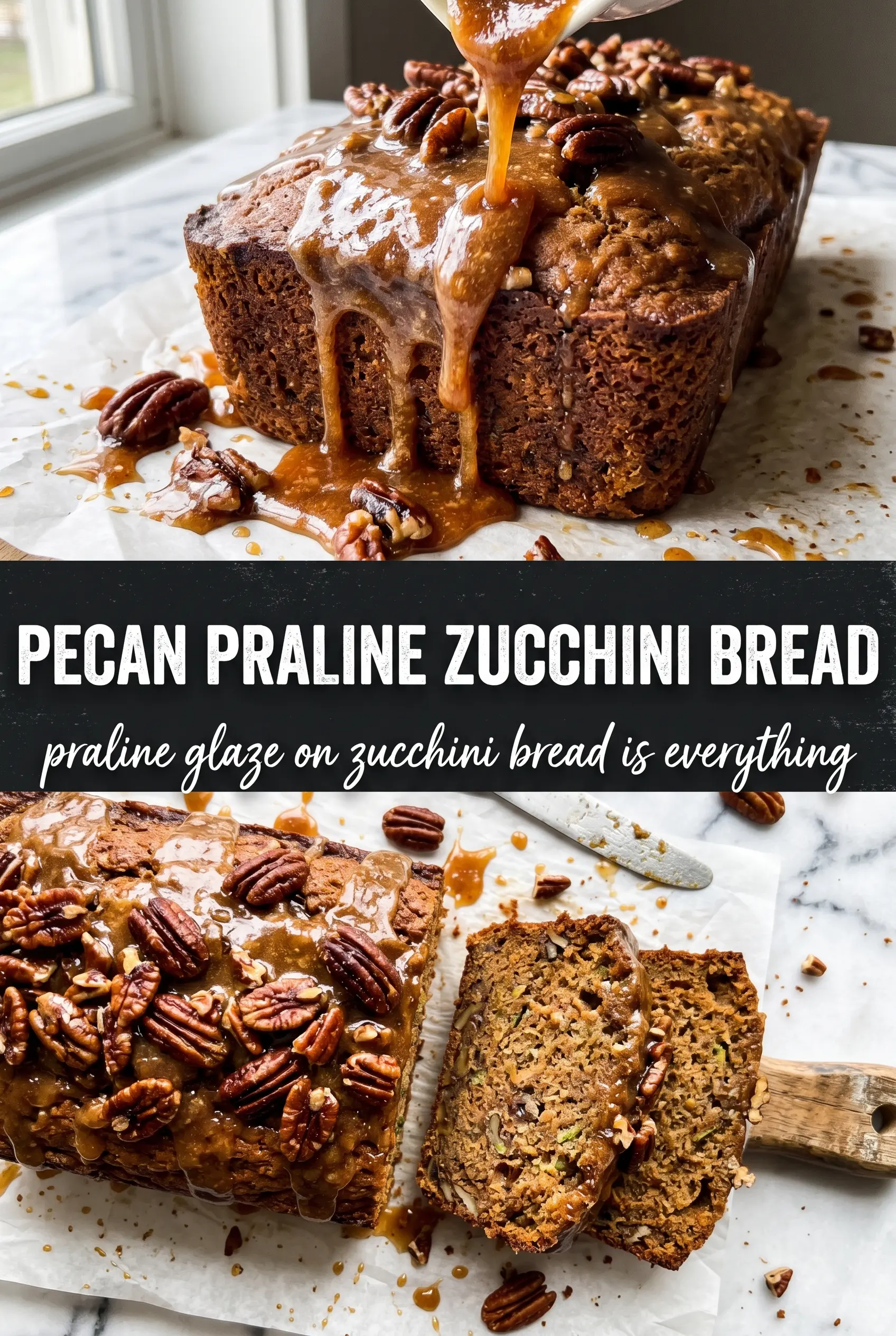
Pecan Praline Zucchini Bread
Ingredients
Equipment
Method
- Preheat oven to 350°F and grease a 9x5 loaf pan.
- Whisk all-purpose flour, baking soda, baking powder, salt, and cinnamon together.
- Beat brown sugar, eggs, vegetable oil, buttermilk, and vanilla extract until smooth, then stir in grated squeezed dry zucchini.
- Fold the dry mixture and chopped pecans into the wet ingredients until just combined.
- Pour batter into the loaf pan and bake 50–55 minutes until nearly done.
- Meanwhile, melt butter, brown sugar, and heavy cream in a saucepan for 2–3 minutes until syrupy, then stir in pecan halves.
- Pour the praline topping over the partially baked loaf and return to the oven for 10–12 minutes until topping is set and bubbling.
- Cool the loaf 15 minutes, then carefully remove from the pan for clean slices.