Philly cheese steak foil packet dinners hit that sweet spot between weeknight easy and cookout-worthy. The steak stays juicy, the peppers and onions soften into something sweet and savory, and the provolone melts right over the top so every packet opens up steaming and ready to eat. It’s the kind of dinner that feels laid-back, but still lands like a full meal.
What makes this version work is the order. The steak goes in thin so it cooks fast and stays tender, while the vegetables are sliced evenly enough to finish at the same time. Worcestershire sauce brings the deep, beefy backbone that keeps the filling from tasting flat, and the heavy-duty foil matters because thinner foil is the fastest way to lose steam and end up with uneven vegetables.
Below, I’ve included the small details that help these packets come off the grill the way you want them to: no leaks, no dry steak, and no cheese left behind on the foil.
The steak stayed tender and the peppers were cooked just enough without turning mushy. I loved opening the packets at the table and the cheese was perfectly melted every time.
Save these Philly cheese steak foil packets for the nights when you want steak, melty provolone, and almost no cleanup.
The Part That Keeps the Steak Tender Instead of Overcooked
The biggest mistake with foil packet steak is treating it like a low-and-slow dinner. Thin-sliced sirloin cooks fast, and once the packet seals, the trapped heat keeps working even after you pull it off the grill. That means the goal is not to chase deep browning inside the packet. The goal is to get everything into a hot, steamy environment quickly enough that the steak stays juicy while the vegetables soften.
Even slicing matters here. If the peppers and onions are cut too thick, they’ll still be crunchy when the steak is done. If the steak is cut too thick, it’ll turn chewy before the cheese melts. The foil packet creates its own little oven, so uniform slicing is what keeps the whole dinner synchronized.
What Each Ingredient Is Actually Doing in These Packets
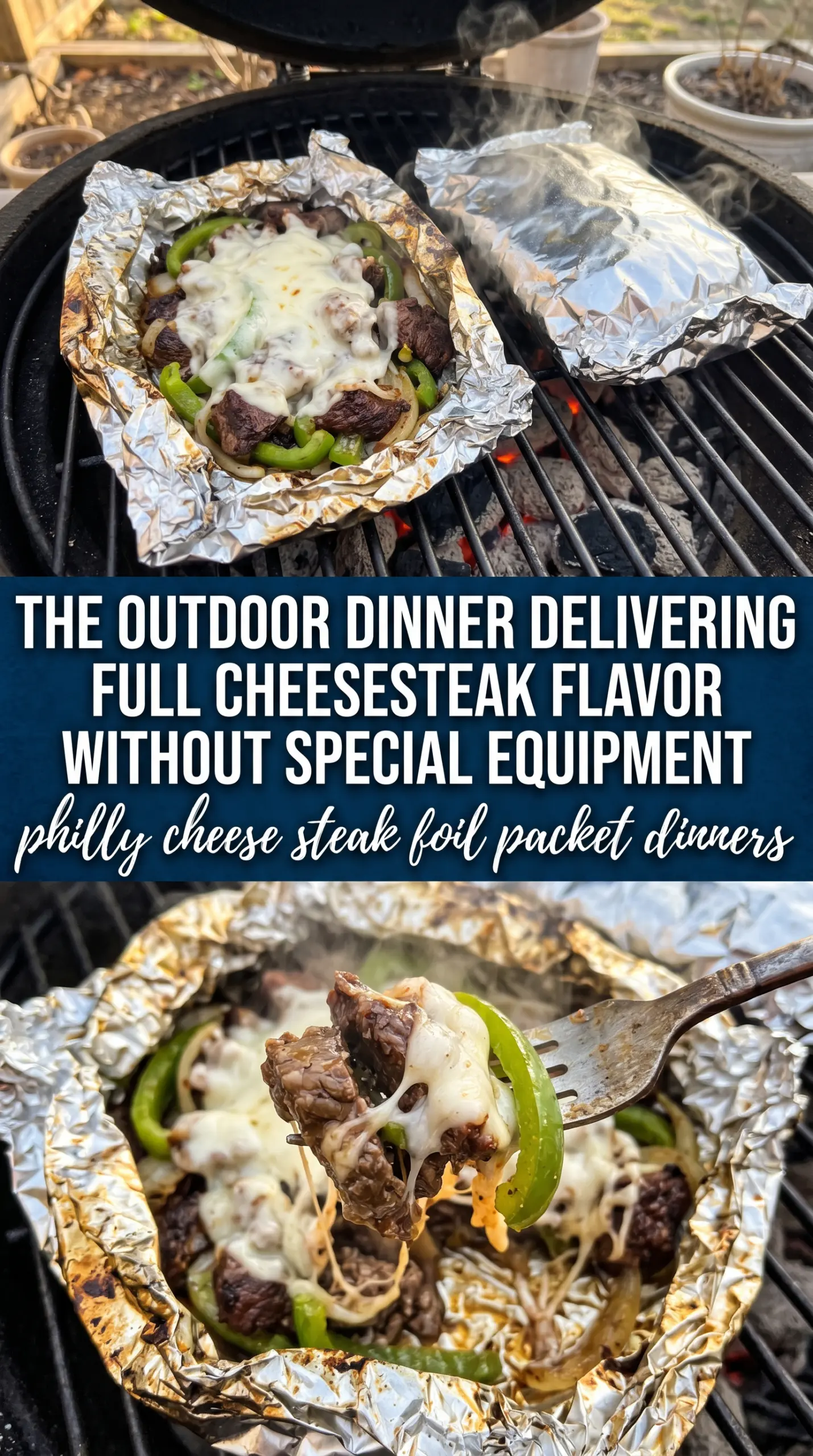
- Sirloin steak — Sirloin gives you beefy flavor without needing a long cook time. Slice it thin across the grain so it stays tender after the steam and heat do their work.
- Bell peppers, onion, and mushrooms — This trio brings the classic cheesesteak feel and gives the packets enough moisture to stay juicy. Mushrooms are optional in a strict Philly-style version, but they add a savory depth that works well in foil.
- Provolone cheese — Provolone melts smoothly and stays mild enough that it doesn’t bulldoze the beef. If you swap it, stick with a good melting cheese; anything too dry or aged won’t give you that blanket of melted top layer.
- Worcestershire sauce — This is the shortcut to deeper flavor. It adds salt, tang, and a little umami without needing a separate marinade.
- Heavy-duty foil — Regular foil can tear when you flip or open the packets, especially once the cheese starts melting and the steam builds. Heavy-duty foil is worth using here because it holds the seal and helps the vegetables cook evenly.
Building the Packets So They Steam Instead of Leak
Layering the Fillings Evenly
Divide the steak and vegetables into four portions before you start folding anything. That keeps the packets cooking at the same speed, which matters more than people think once they hit the grill. Drizzle each portion with olive oil and Worcestershire sauce so the steak gets seasoned all the way through and the vegetables don’t dry out. If one packet is overloaded, it’ll cook unevenly and take longer to finish in the center.
Sealing in the Heat
Fold the foil tightly, leaving a little room above the filling for steam to circulate. A loose seal lets juices leak out and leaves you with dry steak and scorched vegetables. Press the edges down well, but don’t crush the packet flat. That little bit of air inside is what helps the ingredients cook evenly instead of steaming into a mushy pile.
Grilling Until the Cheese Melts
Cook the packets over medium heat for about 18 to 20 minutes, then flip them halfway through so the grill heat works from both sides. If your grill runs hot, check them a minute or two early; thin steak can go from tender to dry fast. The packets are ready when the onions are soft, the steak is cooked through, and the cheese has melted into the vegetables. Open them carefully because the steam inside is intense.
How to Change These Packets Without Losing the Point
Dairy-Free Version
Skip the provolone and finish the packets with a dairy-free meltable cheese or a spoonful of caramelized onions for richness. You’ll lose the classic stretchy top layer, but the steak, peppers, and Worcestershire still carry the whole dish.
Low-Carb Serving
Serve the packets as-is instead of using hoagie rolls. You still get the full cheesesteak flavor, and the vegetables do enough of the work that you won’t miss the bread.
Different Protein
Thin-sliced chicken breast or boneless chicken thighs can stand in for the steak, but the cooking time changes a little. Chicken needs to reach a safe internal temperature, so check the thickest pieces before serving instead of relying only on the clock.
Storage and Reheating
- Refrigerator: Store leftovers in an airtight container for up to 3 days. The vegetables soften a bit more after chilling, but the flavor holds up well.
- Freezer: These freeze best before cooking, not after. Assemble the raw packets, wrap them well, and freeze flat for up to 2 months.
- Reheating: Reheat leftovers in a skillet over medium-low heat or in a 325°F oven until warmed through. High heat dries out the steak fast, so avoid blasting it in the microwave unless you don’t mind a tougher texture.
Answers to the Questions Worth Asking
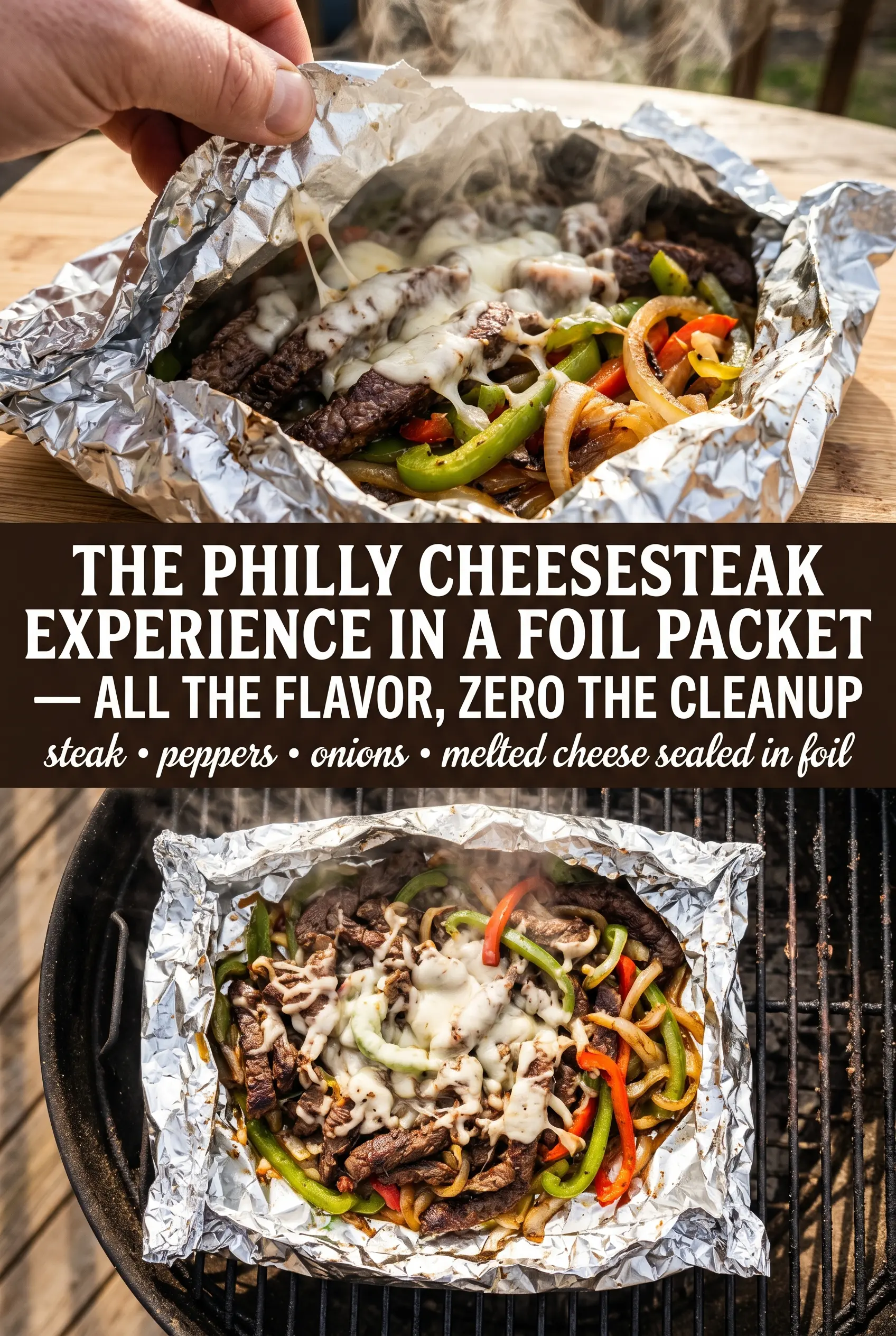
Philly Cheese Steak Foil Packet Dinners
Ingredients
Equipment
Method
- Divide the sirloin steak, bell peppers, onion, and mushrooms among 4 heavy-duty foil sheets.
- Drizzle each packet with olive oil and Worcestershire sauce.
- Season each packet with garlic powder, salt, and pepper.
- Top each packet with 2 slices of provolone cheese so it sits over the filling.
- Fold the foil into sealed packets, pressing the seams closed to trap steam (visual cue: no gaps at the edges).
- Grill the packets over medium heat for 18-20 minutes, flipping halfway (visual cue: steam should billow when opened).
- Carefully open the packets and serve in hoagie rolls or as-is (visual cue: melted provolone should stretch over the steak and vegetables).