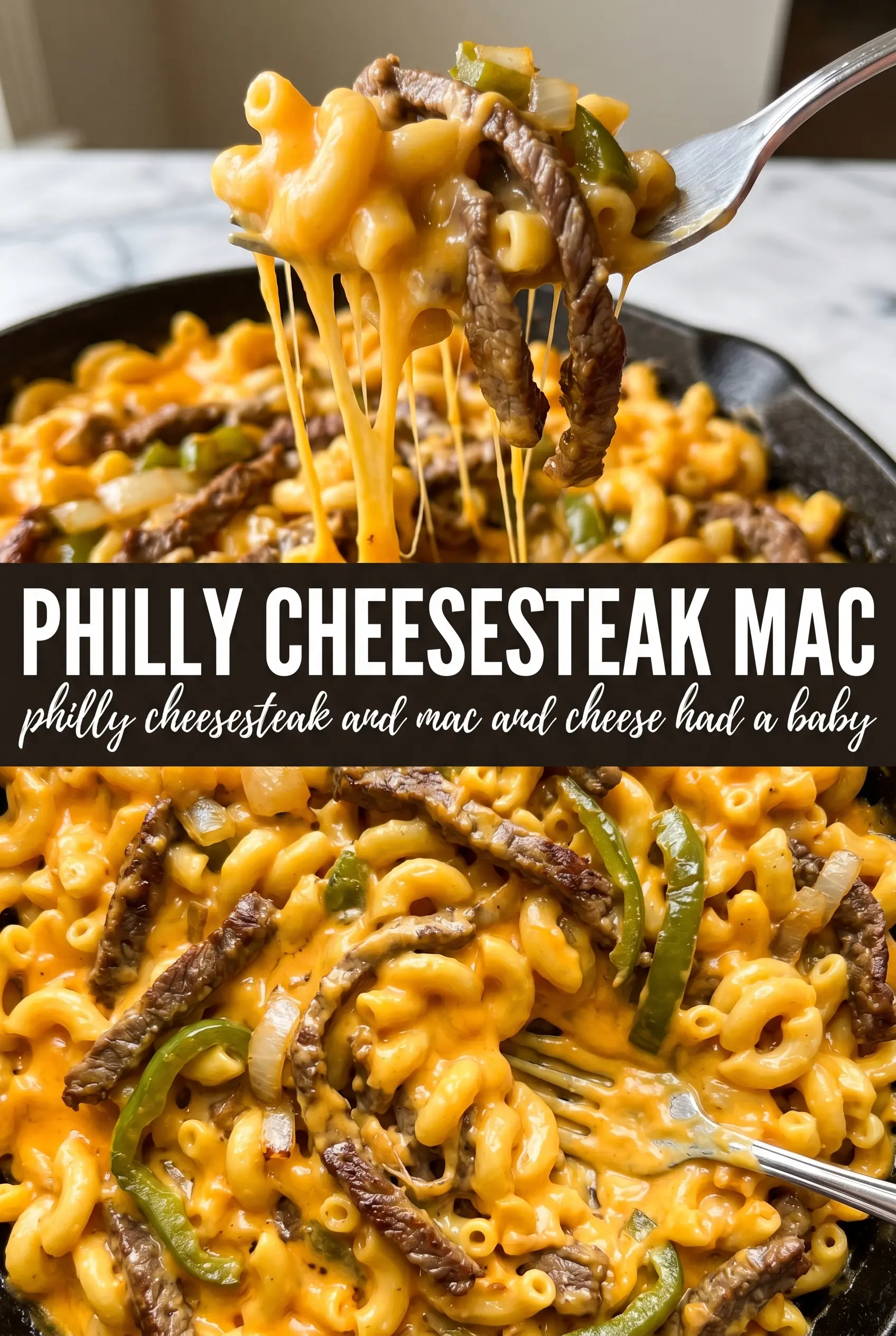
Philly cheesesteak mac lands in that sweet spot where comfort food stops being one-note and starts eating like a full dinner. You get the savory beef, softened peppers and onions, and a creamy provolone sauce clinging to every piece of pasta. The result is hearty without feeling heavy, and the skillet goes from stovetop to table with almost no fuss.
What makes this version work is the way the pasta cooks right in the broth and milk instead of boiling separately. That starch helps thicken the sauce as the noodles soften, so you end up with a glossy, cohesive pan instead of a loose beef-and-mac situation. Provolone gives you the cheesesteak flavor, while mozzarella melts over the top for that stretchy finish people expect from a good skillet pasta.
Below, I’ve included the small details that keep the sauce creamy and the pasta from turning mushy, plus the swaps I’d use when I want to stretch the dish or change up the cheese.
The pasta cooked right in the broth and milk, and the sauce came out thick and creamy instead of watery. My husband went back for seconds before I even sat down.
Save this Philly Cheesesteak Mac for a skillet dinner with creamy provolone, tender pasta, and all the beefy cheesesteak flavor in one pan.
The Part That Keeps This Mac Creamy Instead of Gluey
The biggest mistake with one-pan mac and cheese is letting the sauce get too hot after the cheese goes in. That’s how you end up with a grainy pan or strings that never melt into a smooth sauce. Here, the pasta cooks in the liquid first, which builds body without needing a separate roux, and the cheese is stirred in off the heat so it melts into the starch already in the pan instead of seizing up.
Another thing that matters is the balance of liquid. You want enough broth and milk for the macaroni to cook through, but not so much that the final pan looks soupy. If the skillet is still a little loose when the pasta turns tender, give it another minute uncovered before the cheese goes in. The sauce should coat the noodles and settle into a thick, glossy finish when you drag a spoon through it.
What Each Ingredient Is Actually Doing In This Dish
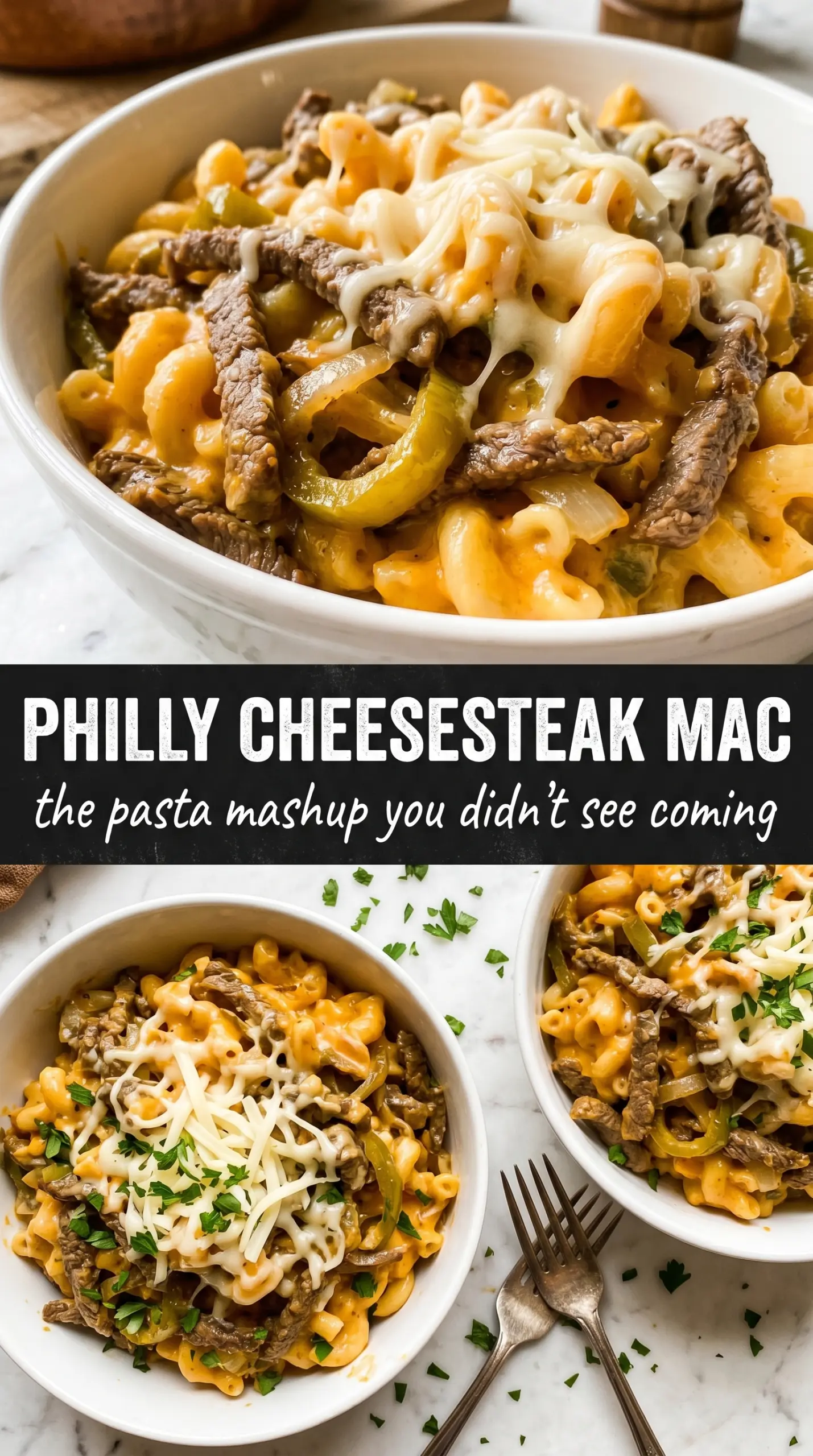
- Ground beef — This gives you the cheesesteak-style base without needing sliced steak. Use something around 85/15 if you can; it has enough fat for flavor but won’t leave the skillet greasy after draining.
- Green bell pepper and onion — These build the familiar cheesesteak backbone. Dice them small so they soften fast and blend into the pasta instead of eating like chunky vegetables.
- Worcestershire sauce — This is the quiet ingredient that makes the beef taste fuller and deeper. There isn’t a great swap for the exact savory hit it brings, but a little soy sauce can stand in if that’s what you have.
- Beef broth and whole milk — The broth carries the savory flavor, and the milk rounds it out so the sauce tastes creamy instead of thin. Whole milk matters here; lower-fat milk works, but the sauce won’t have the same body.
- Provolone — This is the cheesesteak flavor you’re after. Tear it instead of shredding it so it melts in loose ribbons, which helps it blend into the pasta more smoothly.
- Mozzarella — The mozzarella is mostly for that soft, melty top layer. It’s not the main flavor player, but it gives the skillet that gooey finish right before serving.
How to Build the Skillet So the Pasta Cooks Evenly
Brown the Beef and Soften the Vegetables
Start by cooking the beef with the diced pepper and onion over medium-high heat until the meat loses its pink color and the vegetables start to soften. You want some browning on the beef, not pale meat sitting in liquid, because that browning is where the flavor builds. If the pan fills with a lot of fat, drain it before adding the garlic or the sauce will taste heavy instead of rich.
Let the Pasta Cook in the Liquid
Once the garlic and Worcestershire go in, add the uncooked macaroni, beef broth, and milk, then bring everything to a boil. The liquid should bubble around the edges, then settle into a steady simmer once you lower the heat and cover the pan. Stir once or twice while it cooks so the pasta doesn’t clump at the bottom; if you skip that, the noodles near the pan can go soft while the top pieces stay firm.
Finish With the Cheese Off the Heat
When the pasta is tender and most of the liquid is absorbed, pull the skillet off the burner before adding the provolone. Stir until the sauce turns smooth and creamy, then add the mozzarella, cover briefly, and let the residual heat melt it on top. If the pan is still ripping hot when the cheese goes in, the sauce can tighten up or turn oily, so that short pause off the heat matters.
How to Adapt This for Different Nights
Swap in steak for a more classic cheesesteak feel
Thinly sliced ribeye or sirloin can replace the ground beef if you want a more traditional Philly-style texture. Sear it quickly, pull it out, then finish the pasta base and return the steak at the end so it stays tender. This version tastes a little more like the sandwich, but it’s less weeknight-easy because sliced steak cooks fast and can dry out if it hangs around too long.
Use gluten-free pasta without changing the flavor
A sturdy gluten-free elbow pasta works here, but it usually needs a little less time and a little more attention. Start checking early and stir more often, because some gluten-free shapes break down faster in a skillet than standard macaroni. The flavor stays the same; the only real difference is that you want to stop cooking as soon as the noodles turn tender.
Make it dairy-free with a different finish
Use an unsweetened dairy-free milk and your favorite meltable dairy-free cheese, but expect a slightly less stretchy sauce and a softer, less tangy flavor. I’d keep the beef broth and Worcestershire for depth, then taste before serving because dairy-free cheese often needs extra salt. This works best when you want the same skillet idea without the dairy, not when you’re chasing an exact provolone melt.
Storage and Reheating
- Refrigerator: Store leftovers in an airtight container for up to 4 days. The pasta will absorb some of the sauce as it sits, so it thickens up by the next day.
- Freezer: It freezes, but the cheese sauce can turn a little grainy after thawing. If you do freeze it, cool it completely, pack it tightly, and thaw overnight in the fridge before reheating.
- Reheating: Warm it gently on the stove or in the microwave with a splash of milk or broth. High heat is the fastest way to make the sauce break, so reheat slowly and stir often until it loosens again.
Answers to the Questions Worth Asking
Philly Cheesesteak Mac
Ingredients
Equipment
Method
- Brown the ground beef with diced bell pepper and diced onion in a large skillet over medium-high heat, then drain excess fat.
- Stir in the minced garlic, Worcestershire sauce, salt, and pepper; cook for 1 minute until fragrant.
- Add the elbow macaroni, beef broth, and whole milk, then stir and bring to a boil.
- Reduce heat to medium, cover, and cook 12–14 minutes, stirring once or twice, until pasta is tender and the liquid is mostly absorbed.
- Remove from heat and stir in the torn provolone until fully melted and creamy with a glossy sauce.
- Top with the shredded mozzarella, cover for 1 minute until melted, and serve immediately.