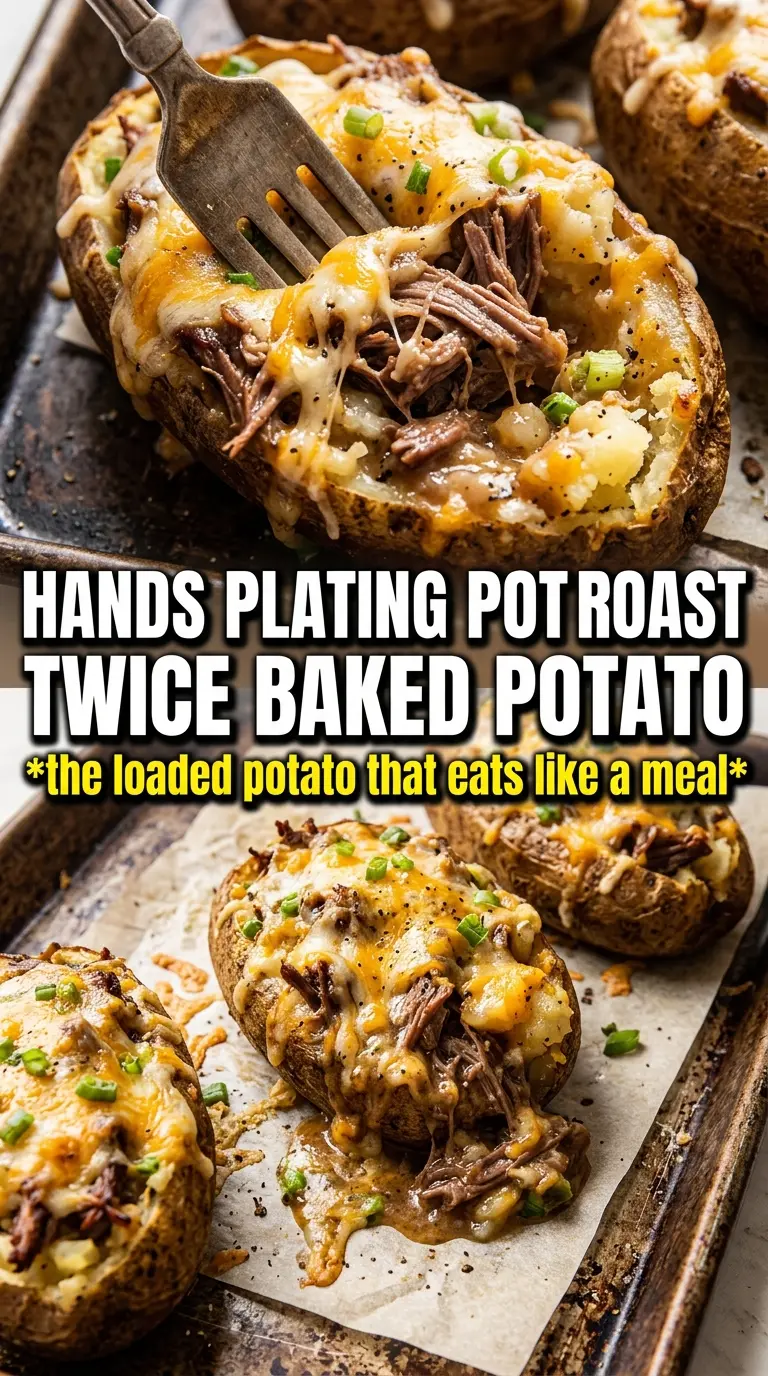
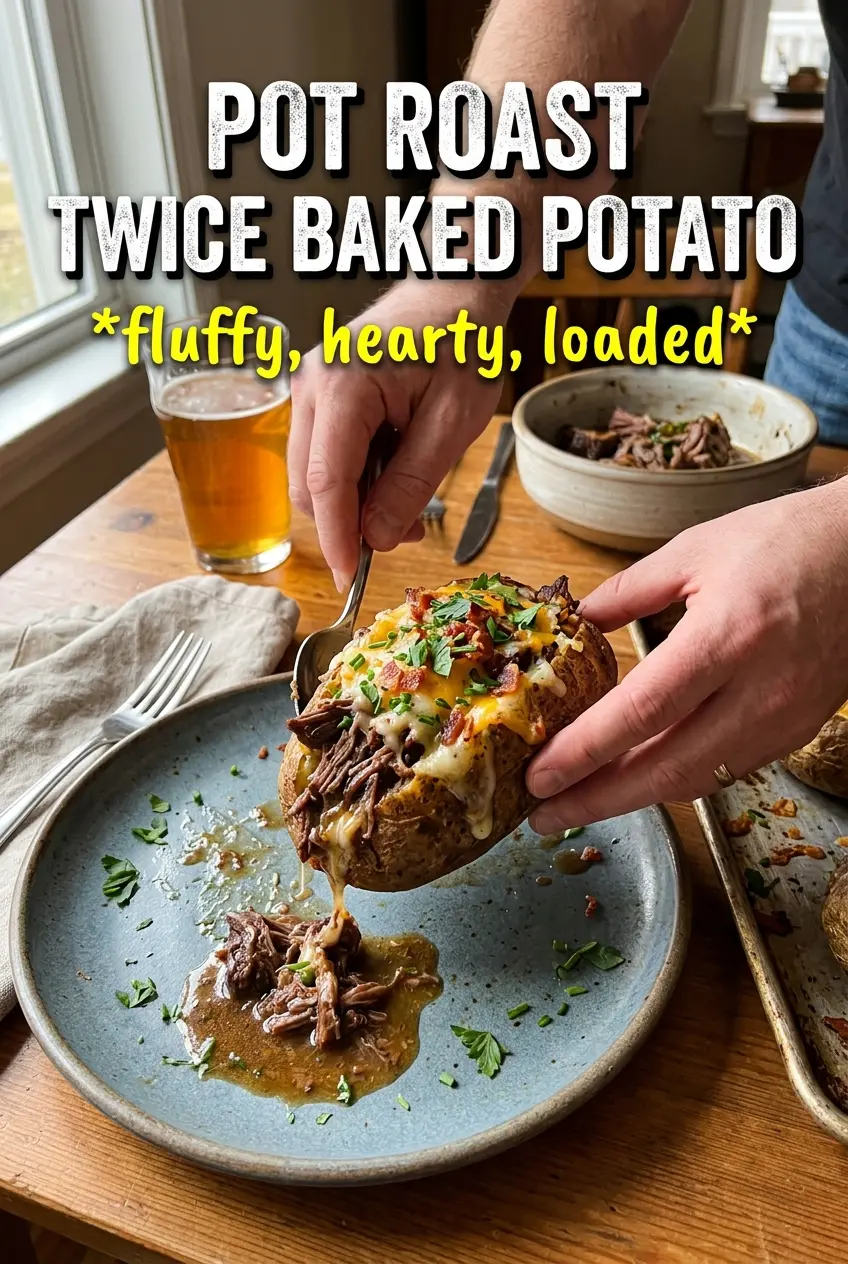
Pot roast twice baked potatoes turn leftover beef and baked potatoes into a full dinner with crisp skins, a creamy center, and a cheesy top that bubbles under the broiler. The best bites have a little of everything at once: salty gravy, soft potato, shredded beef, and enough cheddar to pull it into one forkful. It’s the kind of meal that feels like comfort food without asking for much more effort than warming dinner back up.
The trick is keeping the potato filling smooth and rich enough to hold the beef without turning heavy. Warm the pot roast in its gravy before folding it in, because cold meat drags the whole filling down and keeps the center from heating evenly. I also like to leave a thin shell on the potato so the skins stay sturdy after the second bake instead of collapsing under all that filling.
Below you’ll find the timing that keeps the potatoes hot all the way through, plus a few smart swaps for when you’ve got braised beef instead of pot roast. The gravy on top matters more than it looks; it ties the whole dish together.
The filling stayed creamy and the beef warmed through without drying out. I used the leftover gravy on top, and the potatoes came out with that perfect crispy edge after the broil.
Pot roast twice baked potatoes are the kind of loaded dinner that deserves a spot in your saved recipes.
The Mistake That Makes Twice Baked Potatoes Dense
Twice baked potatoes go wrong when the filling gets overworked or the potato shells are too thin to hold the weight. Russets are the right choice here because they bake up fluffy inside and sturdy outside, which gives you enough structure for the second bake without losing that creamy center. If you scoop too aggressively, the skins shrink, split, or go limp before they even make it back to the oven.
The other failure point is temperature. The beef and gravy need to be warm when they go into the potato mixture, but not boiling. Cold filling cools everything down and makes the cheese seize into a tighter, heavier mash. Warm ingredients melt together faster and stay loose enough to spoon back into the shells cleanly.
- Russet potatoes — Their high starch content gives you that fluffy interior that mashes smoothly. Yukon Golds work in a pinch, but they stay denser and won’t give you quite the same loaded-baked-potato texture.
- Leftover pot roast and gravy — The gravy keeps the meat moist and seasons the filling from the inside out. If you only have plain shredded beef, add a splash of beef broth so the mixture doesn’t dry out in the oven.
- Sharp cheddar — Sharp cheddar cuts through the richness of the beef and butter. Mild cheddar melts fine, but the flavor gets lost under the potatoes and gravy.
- Sour cream and butter — These are what make the potato flesh taste rich instead of just mashed. Use both if you can; cutting either one makes the filling less silky.
What Each Ingredient Is Actually Doing in This Recipe
- Primary ingredient (the star) — Quality matters most. Choose the best you can find.
- Cooking medium (oil, butter, or broth) — This carries flavors and prevents dryness.
- Seasonings (salt, pepper, spices, herbs) — Layer flavors so nothing overpowers. Build depth gradually.
- Aromatics (garlic, onion, herbs) — Cook with fat to bloom flavors. Become the foundation.
- Supporting ingredients — Complement the main ingredient without overpowering it.
- Sauce or liquid (if applicable) — Brings flavors together. Balance richness with acid.
- Acid (lemon, vinegar, wine, or other) — Brightens and prevents flat-tasting results.
- Final finish (garnish, glaze, or sauce) — Prevents one-dimensional taste and adds visual appeal.
Building the Filling So the Potatoes Stay Fluffy
Start by halving the baked potatoes and scooping out the centers, leaving a thin but sturdy shell. The flesh should be hot enough to mash easily, and the butter will melt into it right away. Stir in the sour cream, milk, and most of the cheddar until the mixture looks smooth and fluffy, not gluey. If it starts to look sticky, you’ve worked it too much.
Warm the pot roast in the gravy before folding it in. That step keeps the beef tender and prevents cold pockets in the middle of the finished potatoes. Spoon the mixture back into the shells generously, then mound the tops a little so the cheese has something to cling to. The second bake is just for heating and setting the top, not for cooking the filling from scratch.
Preparing the Potato Shells
Bake the potatoes until they’re tender all the way through, then let them cool just enough to handle. Slice them lengthwise and scoop out the flesh, but stop when there’s still about a 1/4-inch wall left. That thin layer holds its shape in the oven and gives you a skin that’s crisp at the edges instead of collapsing.
Mashing for a Creamy Center
Mash the potato flesh with the butter, sour cream, milk, and most of the cheddar until it looks smooth and light. Don’t beat it until it turns elastic, because that’s how potatoes go from fluffy to gummy. Salt matters here, and it should taste a little over-seasoned before the beef goes in, since the roast will mellow everything out.
Folding in the Beef
Warm the shredded pot roast in its gravy, then fold it gently into the potato mixture. You want strands of beef throughout the filling, not a broken-down paste. If the mixture looks too loose, let it sit for a minute; the potatoes will tighten slightly as they absorb the gravy.
The Final Bake and Broil
Fill the shells, top with the remaining cheddar, and bake until everything is hot and the cheese is melted. The broil at the end is what gives you those browned spots on top, but it only takes about 2 minutes. Stay close, because cheddar can go from bubbly to burned fast. Finish with green onions and extra gravy while the potatoes are still steaming.
How to Adapt These Pot Roast Loaded Potatoes
Use braised beef instead of pot roast
Braised beef works the same way as leftover pot roast as long as it’s shredded and already tender. Add enough gravy or broth to keep the meat moist, because drier beef can make the filling feel heavy once it bakes again.
Make it gluten-free
The potatoes themselves are naturally gluten-free, so this depends on the gravy. Use a gluten-free gravy or plain beef broth thickened with a little cornstarch, and check that the roast seasoning didn’t include flour-based drippings.
Swap in a different cheese
White cheddar, Monterey Jack, or a little Gruyère all melt well here. You’ll change the flavor of the topping, but the texture stays the same as long as you choose a good melting cheese and shred it yourself.
Make the filling lighter
Use a little less butter and sour cream, then add extra milk one tablespoon at a time until the potatoes are still fluffy but not as rich. You’ll lose some of the classic loaded-potato feel, but the beef and gravy still carry plenty of flavor.
Storage and Reheating
- Refrigerator: Store leftovers in an airtight container for up to 3 days. The skins soften a little, but the filling stays creamy.
- Freezer: These freeze better before the final bake. Wrap the stuffed potatoes tightly, freeze for up to 2 months, then bake from thawed for the best texture.
- Reheating: Reheat in a 350F oven until hot in the center, then broil briefly to re-crisp the top. The microwave works in a pinch, but it softens the skins and can make the cheese greasy.
Questions I Get Asked About This Recipe
Pot Roast Twice Baked Potato
Ingredients
Equipment
Method
- Preheat the oven to 400F. Halve the baked potatoes lengthwise and scoop out the flesh, leaving about a 1/4-inch shell for structure.
- Mash the potato flesh with butter, sour cream, milk, 1 cup cheddar, salt, and pepper until smooth. Keep mashing until the mixture looks creamy and lump-free.
- Warm the pot roast in the gravy until hot and steamy, then fold it into the mashed potato mixture. Mix just until evenly combined.
- Fill the potato shells with the pot roast mixture and top with the remaining cheddar. Arrange the potatoes on a sheet pan so they bake evenly.
- Bake for 15-18 minutes at 400F until heated through and the cheese is bubbly. The tops should look melted and lightly set.
- Broil for 2 minutes until golden. Top immediately with green onions and extra gravy before serving.