Pumpkin Alfredo pasta coats every ribbon of pappardelle in a silky sauce that tastes rich without turning heavy. The pumpkin brings body and a gentle sweetness, the Parmesan sharpens the whole pan, and the crispy sage on top gives each bite a little crackle before the sauce takes over again. It’s the kind of dinner that looks calm in the bowl and still feels special enough for company.
What makes this version work is the way the sauce is built. The garlic softens in butter first, then the pumpkin and cream simmer just long enough to smooth out the puree before the cheese goes in. That order matters. If the Parmesan hits a pan that’s too hot, it can clump instead of melting into a glossy sauce. A splash of pasta water finishes the job and loosens everything just enough to cling to the noodles instead of pooling underneath them.
Below, I’m walking through the part that keeps the sauce creamy, not grainy, plus a few smart swaps if you need to adapt the dish without losing what makes it good.
The sauce turned out silky and coated the pappardelle perfectly, and the crispy sage on top made it taste like something from a restaurant. I added a little extra pasta water at the end and it stayed creamy all the way through dinner.
Save this Pumpkin Alfredo Pasta With Sage for a creamy pasta night with crispy sage, toasted walnuts, and a sauce that clings to every bite.
The Trick to Keeping Pumpkin Alfredo Smooth Instead of Grainy
Pumpkin puree behaves differently from a plain cream sauce. It needs a little heat to lose its canned texture, but it does not need a hard boil. If the sauce boils after the cheese goes in, the dairy can tighten up and the Parmesan can turn sandy instead of melting cleanly.
The safest rhythm is low heat, steady stirring, and a small splash of pasta water when the sauce starts to look too thick. That starchy water helps the sauce emulsify, which means it stays glossy and clings to the pasta instead of separating. The crispy sage is best treated as a garnish, not a mix-in, because it loses its texture fast once it sits in the sauce.
What Each Ingredient Is Doing in This Bowl
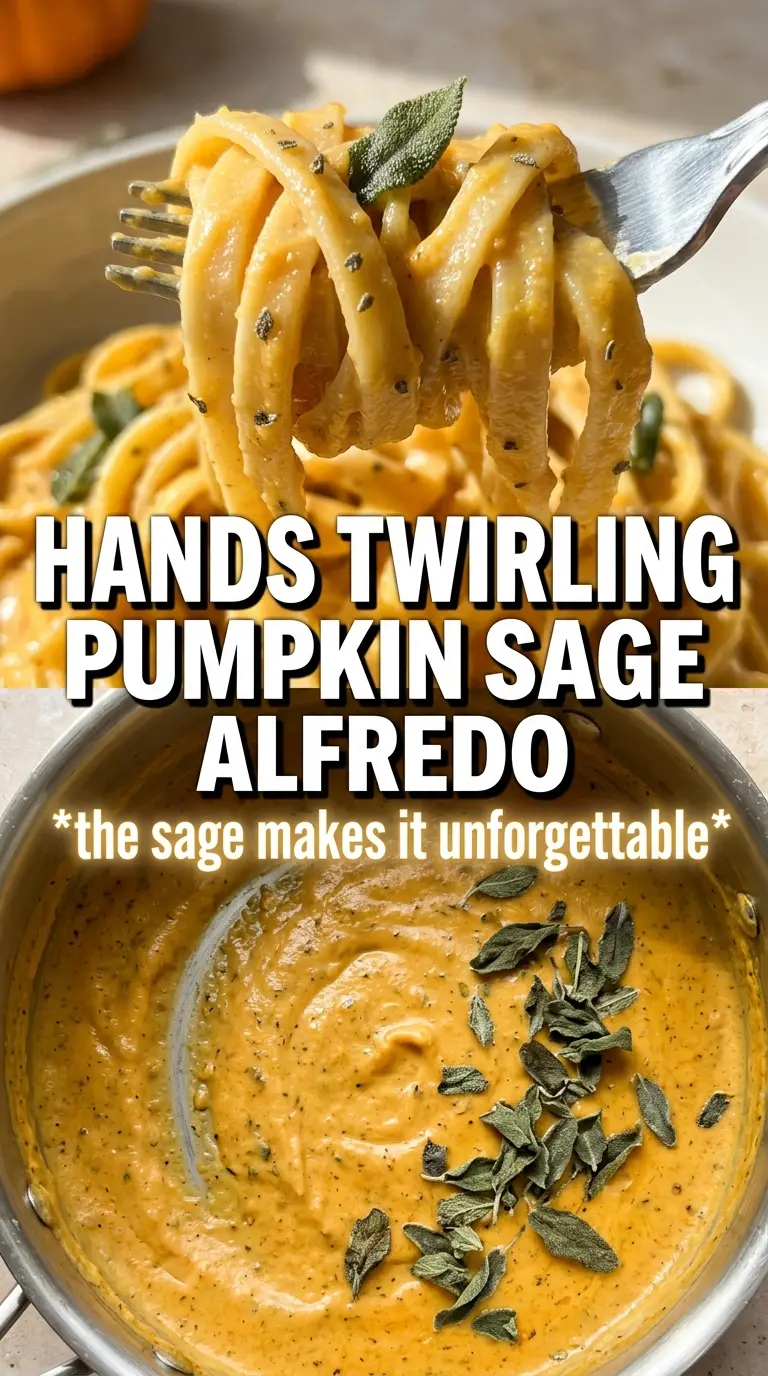
- Pumpkin puree — This gives the sauce its body and that soft autumn color. Use plain pumpkin puree, not pumpkin pie filling, or the sauce will taste sweet and spiced in the wrong way.
- Heavy cream — This keeps the sauce lush and helps the pumpkin stay smooth. Half-and-half works in a pinch, but the sauce will be thinner and won’t cling to the pasta as well.
- Butter — Half of it crisps the sage, and the rest builds the sauce base. Don’t swap in oil here unless you have to; butter gives the sauce a rounder taste and helps carry the garlic.
- Parmesan — Freshly grated Parmesan melts into the sauce far better than the shelf-stable kind. Pre-shredded cheese often has anti-caking agents, and those can leave the sauce a little gritty.
- Sage leaves — Fresh sage is worth using here because it fries up crisp and fragrant. Dried sage won’t give you the same texture, and it can taste dusty instead of lively.
- Walnuts — They add a toasted, slightly bitter crunch that keeps the pasta from feeling one-note. If you don’t have walnuts, toasted pecans are the closest substitute.
- Pasta water — This is the ingredient that turns a thick puree into a sauce that actually coats pasta. Save more than you think you need, because a few tablespoons can rescue the sauce if it tightens up in the pan.
Build the Sauce Before the Pasta Cools Down
Frying the Sage First
Start with the sage and butter while the pan is still ready to take on the next layer. The leaves should sizzle immediately and darken to a deep green-gold in under a minute, then crisp as they cool on a plate. If the butter browns too fast, the pan is too hot and the leaves will taste bitter before they turn crisp.
Softening the Garlic Without Burning It
Once the sage is out, add the garlic to the remaining butter and stir just until it smells sweet and loses its raw edge. It should never take on color. Burnt garlic will make the whole sauce taste sharp and muddy, and there’s no fixing that once it happens.
Turning Pumpkin and Cream Into Sauce
Stir in the pumpkin puree, cream, and nutmeg, then let the mixture simmer gently until it looks smooth and unified, about four minutes. You’re not trying to reduce it aggressively; you’re giving the pumpkin time to dissolve into the dairy. If the sauce looks like it’s getting too thick before the cheese goes in, add a splash of pasta water now instead of waiting until the end.
Finishing With Parmesan and Pasta
Take the pan down to low before the Parmesan goes in. Add it gradually while tossing, then bring in the hot pasta and a little pasta water so the sauce coats every strand. If the sauce seizes or looks grainy, it usually means the heat was too high. Pull it off the burner and stir in a spoonful of pasta water until it loosens again.
Dairy-Free Pumpkin Alfredo
Use unsweetened oat cream or a thick dairy-free cooking cream and swap the butter for olive oil or vegan butter. You’ll lose a little of the classic Alfredo richness, but the pumpkin still gives the sauce plenty of body, especially if you keep the pasta water in the mix.
Gluten-Free Version
Use a sturdy gluten-free pasta shape that can handle tossing, like brown rice pappardelle or a good corn-rice blend. Gluten-free pasta can break down fast, so pull it when it still has a little bite and finish it in the sauce for the best texture.
Add Chicken or Mushrooms for More Weight
Seared chicken or browned mushrooms both fit here without fighting the sauce. Chicken makes it a fuller dinner, while mushrooms bring an earthy note that plays nicely with sage and nutmeg. Add either at the end so the pasta stays the star.
Storage and Reheating
- Refrigerator: Store leftovers in an airtight container for up to 4 days. The sauce will thicken as it sits, so expect the pasta to look less glossy straight from the fridge.
- Freezer: This pasta freezes, but the cream sauce can separate a bit on thawing. Freeze only if you need to, and thaw it overnight in the refrigerator before reheating.
- Reheating: Warm it slowly in a skillet over low heat with a splash of water, milk, or cream. Microwave reheating works in short bursts, but stop and stir often so the cheese doesn’t tighten into a paste.
Questions I Get Asked About This Recipe
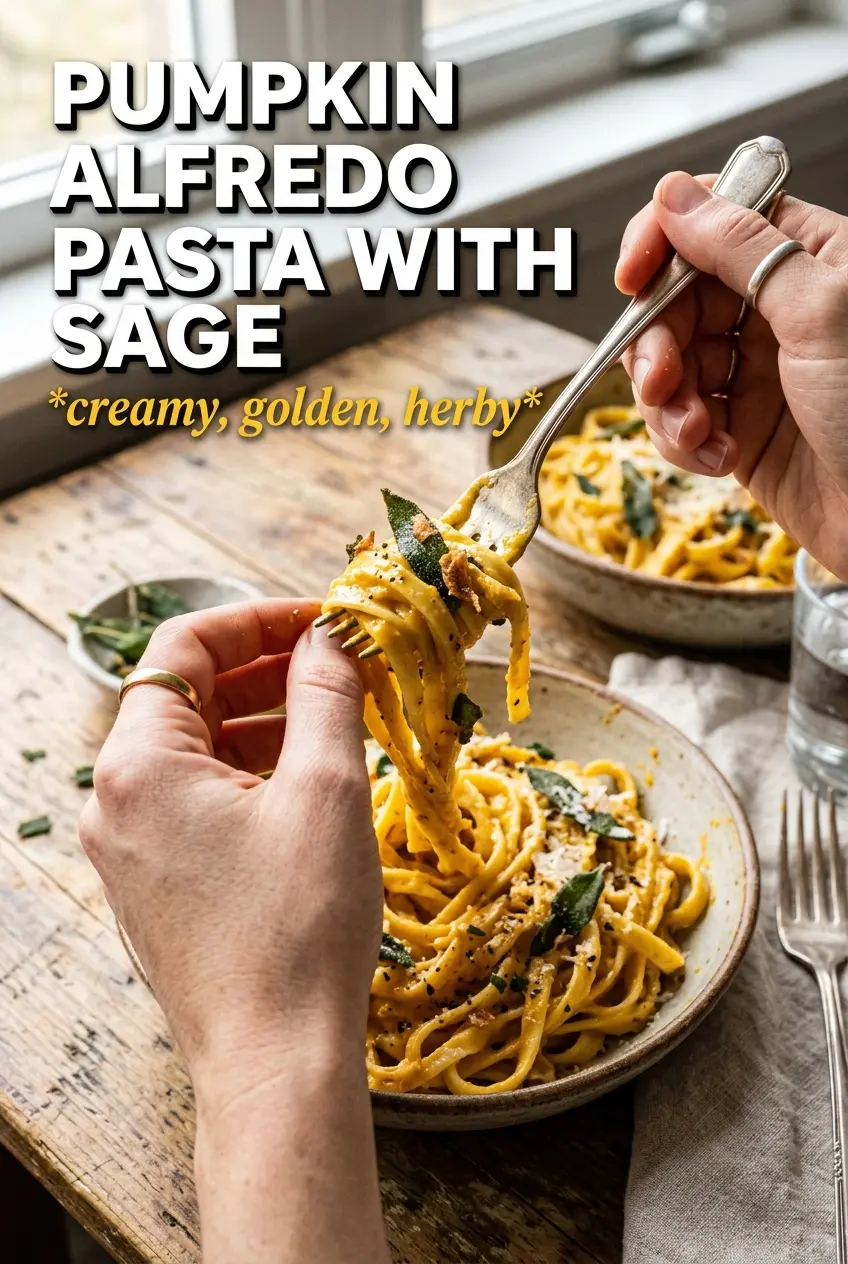
Pumpkin Alfredo Pasta With Sage
Ingredients
Equipment
Method
- Bring a pot of water to a boil and cook pappardelle until al dente, then reserve 1 cup pasta water and drain the pasta.
- Pat the fresh sage leaves dry so they crisp better in the pan.
- Heat 2 tablespoons of unsalted butter in a cast iron skillet over medium-high heat and fry the sage leaves for 1-2 minutes until crispy and golden, then remove and set aside.
- In the same skillet, melt the remaining unsalted butter over medium heat, then sauté minced garlic for 30-60 seconds until fragrant but not browned.
- Stir in pumpkin puree, heavy cream, and nutmeg, then simmer for 4 minutes until the sauce looks smooth and slightly thickened.
- Lower heat to gentle and stir in grated parmesan until melted and the sauce turns glossy.
- Add the cooked pasta to the skillet and toss, adding reserved pasta water a splash at a time until the sauce coats the noodles.
- Season with salt and pepper to taste, then serve topped with crispy sage leaves, toasted walnuts, and extra parmesan.