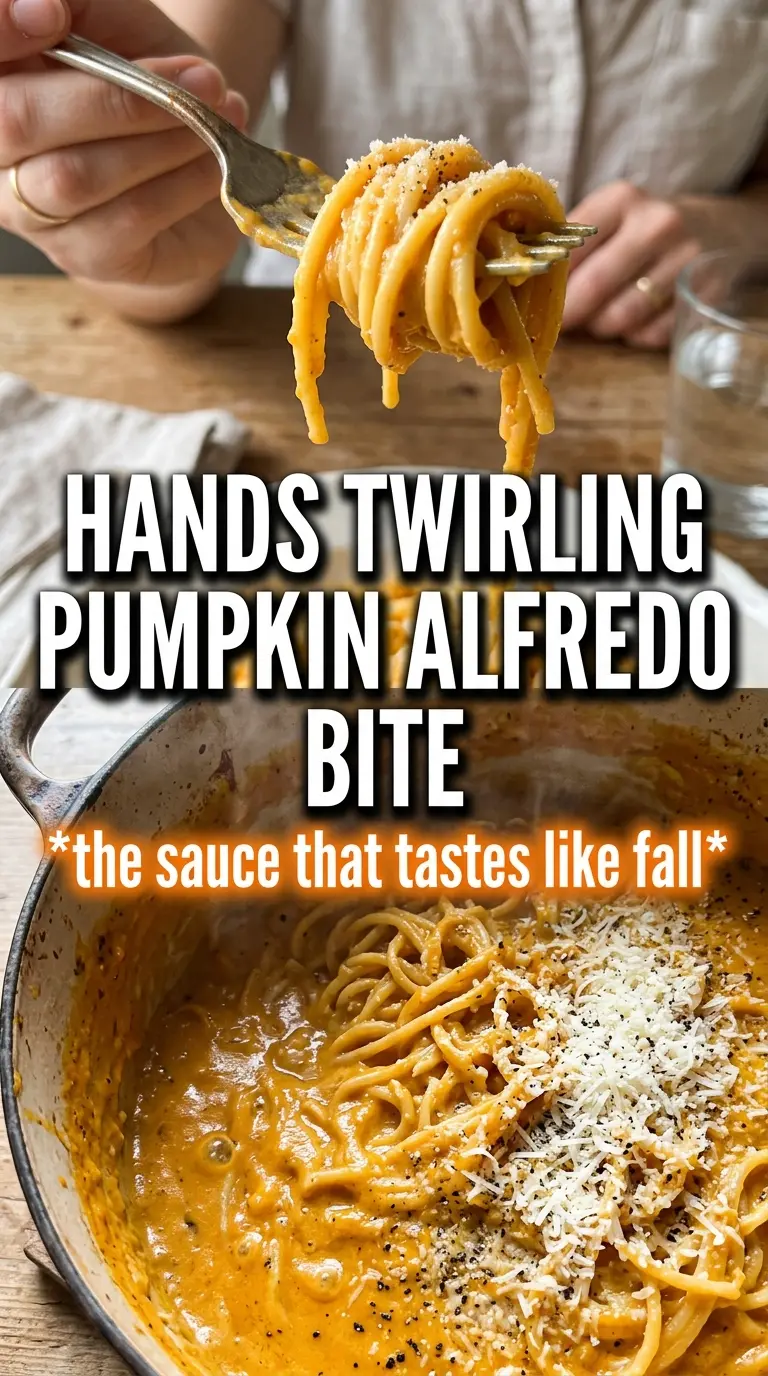
Velvety, savory pumpkin Alfredo coats every strand of fettuccine with a sauce that tastes rich without feeling heavy. The pumpkin adds body and a gentle sweetness, but the real win is how it melts into cream and parmesan instead of sitting on top as a separate layer. You get a smooth, clingy sauce that feels restaurant-worthy, with enough depth to keep you going back for another forkful.
The trick is treating the pumpkin like part of the sauce base, not a puree you stir in at the end. It needs a few minutes with the cream to lose any raw, canned edge and turn silkier before the cheese goes in. Grating the parmesan fresh matters here, too, because pre-grated cheese often has coatings that make the sauce grainy instead of glossy.
Below, I’ll walk through the small details that keep this sauce smooth, what to swap if you need to, and the one reheating move that saves leftovers from turning thick and gluey.
The sauce turned out silky and clung to the fettuccine without getting heavy, and the pumpkin flavor was balanced instead of sweet. I added a splash of pasta water at the end and it went from thick to perfect.
Creamy pumpkin Alfredo with silky parmesan sauce is one to pin for a fast pasta night that still feels special.
The Secret to Keeping Pumpkin Alfredo Smooth Instead of Grainy
Most broken Alfredo sauces happen the same way: the heat is too high when the parmesan goes in, or the sauce is too thin and the cheese has nothing to emulsify into. Pumpkin makes that risk a little higher because it thickens fast once it warms up. The answer is simple but important — build the sauce gently, then lower the heat before adding cheese so the dairy can melt into the fat instead of seizing.
Another thing that matters here is texture. Pumpkin puree should be smooth and fully stirred into the cream before the pasta goes in, with no streaks left behind. If the sauce feels loose at first, don’t panic. It tightens as the parmesan melts and again once the pasta hits the pan, so the pasta water should be used as a controlled adjustment, not a rescue mission dumped in all at once.
- Pumpkin puree — Use plain pumpkin puree, not pumpkin pie filling. Pie filling brings sugar and spices that fight the savory parmesan base. The puree’s job is body and a subtle earthy sweetness.
- Heavy cream — This gives the sauce its silk and keeps the pumpkin from tasting flat. Half-and-half will work in a pinch, but the sauce will be thinner and less stable when the cheese goes in.
- Freshly grated parmesan — This is where the flavor and thickness come from. Pre-shredded cheese often has anti-caking agents that make the sauce sandy instead of smooth.
- Pasta cooking water — The starch in the water helps the sauce cling to the noodles and loosens it without watering down the flavor. Add it a splash at a time so the sauce stays glossy, not soupy.
What Each Ingredient Is Actually Doing in This Recipe
- Primary ingredient (the star) — Quality matters most. Choose the best you can find.
- Cooking medium (oil, butter, or broth) — This carries flavors and prevents dryness.
- Seasonings (salt, pepper, spices, herbs) — Layer flavors so nothing overpowers. Build depth gradually.
- Aromatics (garlic, onion, herbs) — Cook with fat to bloom flavors. Become the foundation.
- Supporting ingredients — Complement the main ingredient without overpowering it.
- Sauce or liquid (if applicable) — Brings flavors together. Balance richness with acid.
- Acid (lemon, vinegar, wine, or other) — Brightens and prevents flat-tasting results.
- Final finish (garnish, glaze, or sauce) — Prevents one-dimensional taste and adds visual appeal.
Building the Sauce Before the Cheese Goes In
Softening the Garlic Without Browning It
Melt the butter in a large skillet and cook the garlic just until fragrant, about 1 to 2 minutes. You want it pale and aromatic, not browned, because browned garlic turns bitter and can throw off the mellow pumpkin base. If the butter starts foaming hard or the garlic sizzles aggressively, the heat is too high.
Letting the Pumpkin and Cream Come Together
Stir in the pumpkin puree and heavy cream, then let the mixture simmer gently for 4 to 5 minutes. The sauce should look smooth and slightly thicker, with no raw pumpkin smell left. Keep the heat low enough that the edges barely bubble; a hard boil can make the dairy break and gives you a grainy finish.
Melting the Parmesan the Right Way
Turn the heat to low before adding the parmesan in handfuls. Stir after each addition until it disappears before adding more, because dumping it all in at once makes the cheese clump and can turn the sauce stringy. When it’s right, the sauce looks glossy and coats the back of a spoon without looking oily.
Finishing With Pasta Water and Seasoning
Add the drained fettuccine and toss until every strand is coated. If the sauce feels tight, add reserved pasta water a splash at a time until it loosens and turns silky again. Finish with nutmeg, white pepper, and salt to taste, then serve right away with parsley and extra parmesan while the sauce is still at its glossiest.
How to Adapt This Pumpkin Alfredo Without Losing the Creamy Texture
Make It Lighter With Half-and-Half
You can swap half-and-half for the heavy cream, but the sauce won’t be as rich and it may need a little more help from the pasta water. Keep the heat low and expect a softer, less luxurious finish. This version still tastes good, but it clings a little less firmly to the noodles.
Gluten-Free Pasta Night
Use your favorite gluten-free fettuccine, but undercook it by a minute or two so it can finish in the sauce without turning mushy. Some gluten-free pastas absorb more liquid, so hold back a little extra pasta water and add it only as needed. The sauce itself stays naturally gluten-free.
Skip the Dairy With a Cashew Cream Base
For a dairy-free version, use unsweetened cashew cream and a parmesan-style dairy-free cheese that melts well. The result is a little less sharp and salty than the original, but it still gives you that velvety coating on the pasta. Keep the seasonings steady, since the dairy-free cheese usually brings less punch on its own.
Add Protein Without Changing the Sauce
Seared chicken, crispy pancetta, or sautéed mushrooms all fit cleanly here. Add the protein at the end so the sauce stays smooth and the pasta remains the star. Mushrooms bring the best earthy contrast to pumpkin, while chicken keeps the dish more traditional and filling.
Storage and Reheating
- Refrigerator: Store leftovers in an airtight container for up to 3 days. The sauce will thicken as it chills.
- Freezer: I don’t recommend freezing this one. Cream sauces with parmesan can separate after thawing, and the texture usually turns grainy.
- Reheating: Warm it gently in a skillet over low heat with a splash of milk or water, stirring often. The common mistake is blasting it in the microwave, which dries out the pasta and makes the sauce break before it loosens.
Questions I Get Asked About This Recipe

Pumpkin Alfredo
Ingredients
Equipment
Method
- Bring a large pot of well-salted water to a boil, then cook the fettuccine until tender. Reserve 1 cup pasta cooking water before draining.
- Melt the butter in a large skillet over medium heat. Sauté the minced garlic for 1-2 minutes, until fragrant.
- Add the pumpkin puree and heavy cream to the skillet. Simmer for 4-5 minutes, stirring occasionally, until glossy and slightly thickened.
- Reduce the heat to low, then add the parmesan in handfuls. Stir continuously until each addition melts into a smooth, creamy sauce.
- Sprinkle in the nutmeg and white pepper. Stir until evenly distributed.
- Add the drained pasta to the skillet. Toss to coat the fettuccine in the sauce.
- Add reserved pasta water a splash at a time to loosen the sauce as needed. Continue tossing until the sauce clings to the pasta.
- Season with salt to taste. Serve immediately with fresh parsley and extra parmesan on top.