Pumpkin bread earns its place when it bakes up tall with a crackly sugar top and a soft, moist crumb that stays tender for days. The best loaves slice cleanly instead of crumbling, smell warm with cinnamon and spice, and taste like pumpkin instead of just sugar and loaf pan. This version does that without getting heavy or greasy.
The trick is in the balance. Pumpkin puree brings moisture and body, but oil keeps the crumb plush without the denser texture butter can sometimes give in quick breads. Brown sugar adds depth, granulated sugar keeps the sweetness clean, and a spoonful on top gives you that little shattery crust that makes each slice feel finished. The batter also stays simple on purpose: once the dry ingredients go in, stop as soon as the flour disappears. Overmixing is what turns a good pumpkin bread chewy and tight.
Below, I’ve included the details that matter most — how to avoid a gummy center, what the sugar topping is actually doing, and a few smart swaps if you need to work with what you have.
The loaf rose beautifully, the center stayed moist without turning gummy, and the sugar on top gave it that bakery-style crackle my family kept picking off first.
Save this pumpkin bread for the loaf with the crackly sugar top, soft crumb, and warm cinnamon spice.
The reason pumpkin bread turns dense instead of tender
Pumpkin bread usually goes sideways for one of two reasons: the batter gets overmixed, or the loaf is pulled before the center has set. Pumpkin puree adds a lot of moisture, and that can make the crumb seem underbaked even when the top looks done. The fix is patient baking and a light hand once the flour goes in.
The other thing that matters here is balance. Too much spice can drown out the pumpkin, while too little leaves you with a sweet quick bread that tastes flat. This formula keeps the spice present but not loud, so the loaf reads as pumpkin bread first and spice bread second.
- Pumpkin puree — Use plain pumpkin puree, not pumpkin pie filling. Pie filling already contains sugar and spices, which throws off both the texture and the flavor balance.
- Vegetable oil — Oil keeps the crumb soft for days. Melted butter can work, but the loaf will set up a little firmer once it cools.
- Brown sugar and granulated sugar — Brown sugar gives the loaf depth and moisture, while granulated sugar helps the top bake into that crackly finish.
- Milk — This loosens the batter just enough for a tender crumb. Whole milk is ideal, but any milk you keep in the fridge will work here.
What each ingredient is doing in the loaf
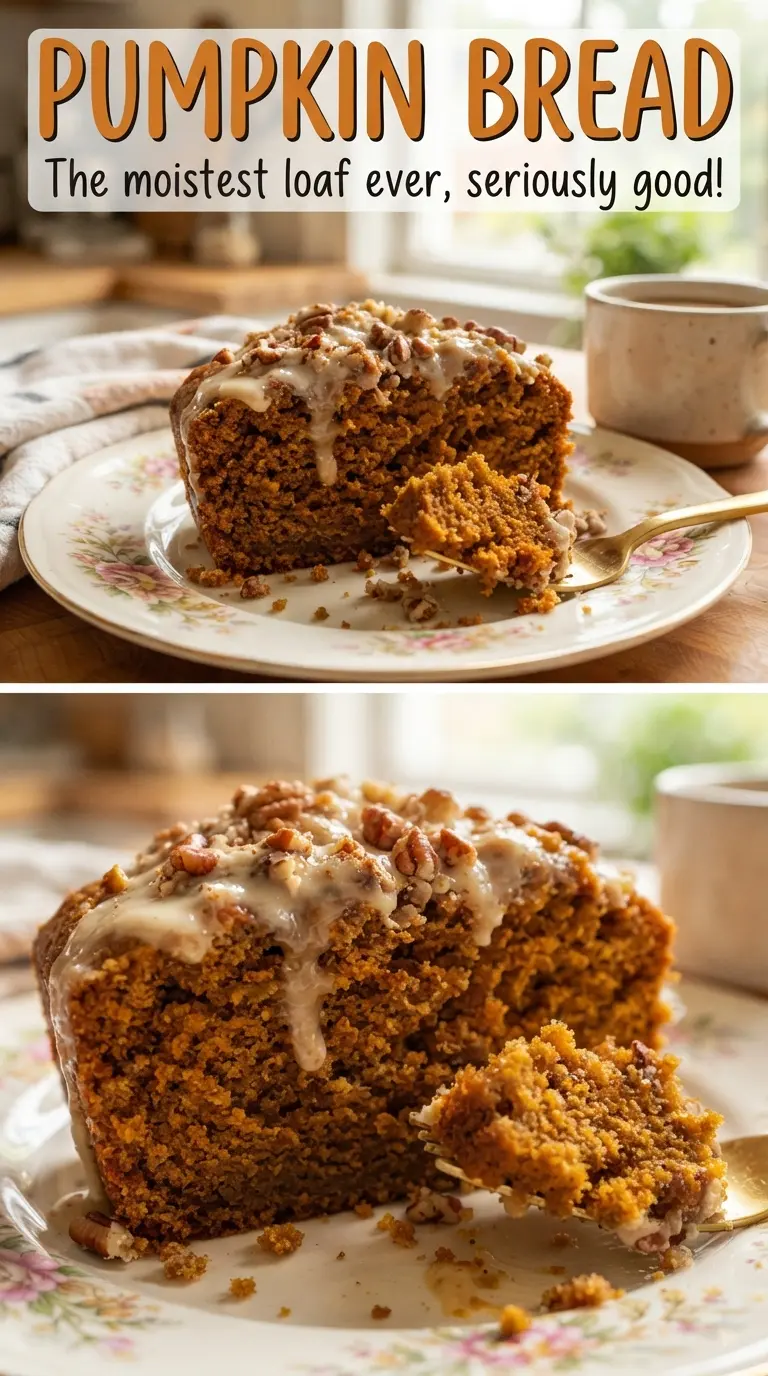
The flour gives the loaf its structure, but it only works well if it stays just barely mixed. Baking soda lifts the bread and helps it brown, and the pumpkin pie spice plus cinnamon bring warmth without making the loaf taste muddy. Vanilla rounds everything out in the background.
If you only have one spice blend on hand, lean on the pumpkin pie spice and keep the cinnamon. That combination gives the most classic result. If your milk is out, plain yogurt thinned with a splash of water can stand in, though the crumb will be a touch richer and slightly tighter.
Building the batter so the loaf stays soft
Whisk the wet ingredients until the pumpkin disappears into the sugar
Start by whisking the pumpkin, oil, eggs, sugars, milk, and vanilla until the mixture looks smooth and glossy. You want the brown sugar mostly dissolved so the finished loaf bakes evenly instead of leaving a grainy layer near the bottom. If it still looks streaky, keep whisking for another 20 to 30 seconds.
Fold in the dry ingredients without working the batter hard
Add the flour mixture and fold just until you stop seeing dry pockets. The batter should look thick and a little shaggy, not silky. If you beat it smooth, the loaf gets tougher and the center can turn gummy instead of tender.
Bake until the center is set, not just the top
The sugar on top should look lightly crackled and the loaf should spring back when you press the center gently. A toothpick in the middle should come out clean or with a few moist crumbs, but not wet batter. If the top is browning too fast before the center is done, lay a piece of foil loosely over the pan for the last 15 to 20 minutes.
Make it dairy-free without changing the crumb much
Swap the milk for an unsweetened non-dairy milk like almond or oat milk. The loaf bakes up almost the same, though oat milk gives a slightly rounder taste. Avoid canned coconut milk here; it adds too much richness and can make the texture feel heavier.
Use melted butter for a richer, tighter crumb
Replace the vegetable oil with the same amount of melted butter if you want a loaf with a little more flavor and a firmer slice. You’ll lose some of the ultra-soft texture, but the bread tastes a touch more bakery-style. Let the butter cool before mixing it in so it doesn’t scramble the eggs.
Turn it into muffins for faster baking
Portion the batter into a lined muffin tin and bake until the centers spring back and a tester comes out clean, usually around 18 to 22 minutes. The texture stays moist, but you’ll lose the dramatic slice and the thick sugar crust on top. Sprinkle each muffin with a little sugar before baking for a similar finish.
Storage and Reheating
- Refrigerator: Store tightly wrapped for up to 5 days. The crumb stays moist, though the sugar top softens a little.
- Freezer: Wrap the cooled loaf or individual slices well and freeze for up to 3 months. Thaw at room temperature while still wrapped so condensation doesn’t make the crust sticky.
- Reheating: Warm slices in a toaster oven or low oven for a few minutes. The common mistake is microwaving too long, which makes the bread tough and soggy at the same time.
Questions I get asked about this pumpkin bread
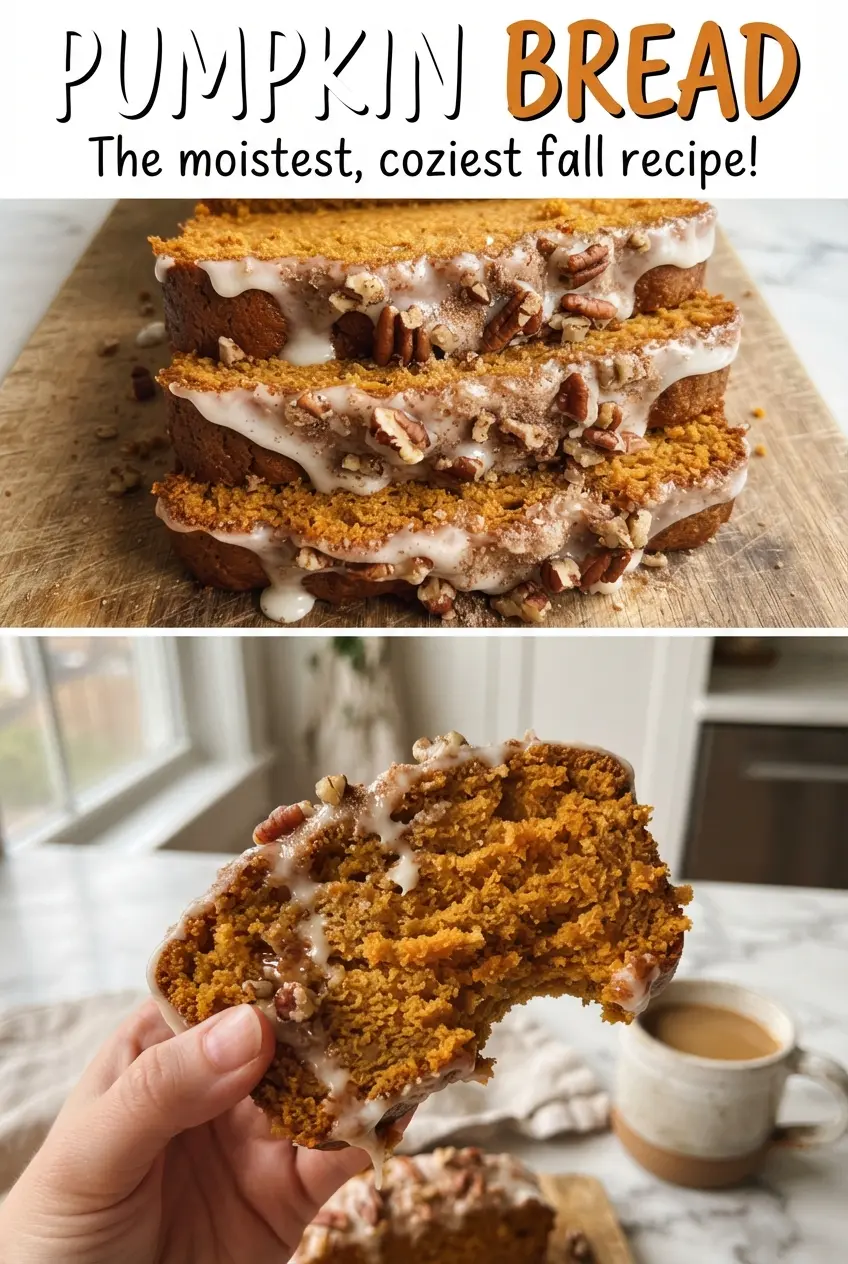
Pumpkin Bread
Ingredients
Equipment
Method
- Preheat oven to 350F, then grease and line a 9x5-inch loaf pan. Set it aside so it’s ready for batter.
- Whisk all-purpose flour, baking soda, salt, pumpkin pie spice, and ground cinnamon in a bowl until evenly combined. Stop when the spice color is uniform.
- Whisk pumpkin puree, vegetable oil, eggs, brown sugar, granulated sugar, milk, and vanilla extract until smooth. Scrape the bottom and sides so no sugar pockets remain.
- Fold the dry ingredients into the wet just until no flour streaks remain. The batter should look thick and cohesive with a soft orange tint.
- Pour batter into the prepared pan and sprinkle with 1 tablespoon granulated sugar. Aim for an even dusting so a crackly top forms.
- Bake at 350F for 55-65 minutes, until a toothpick comes out clean. Look for a domed top with a lightly crackled surface.
- Cool the loaf for 15 minutes in the pan, then move it to a rack before slicing. Letting it cool helps the crumb set for clean slices.