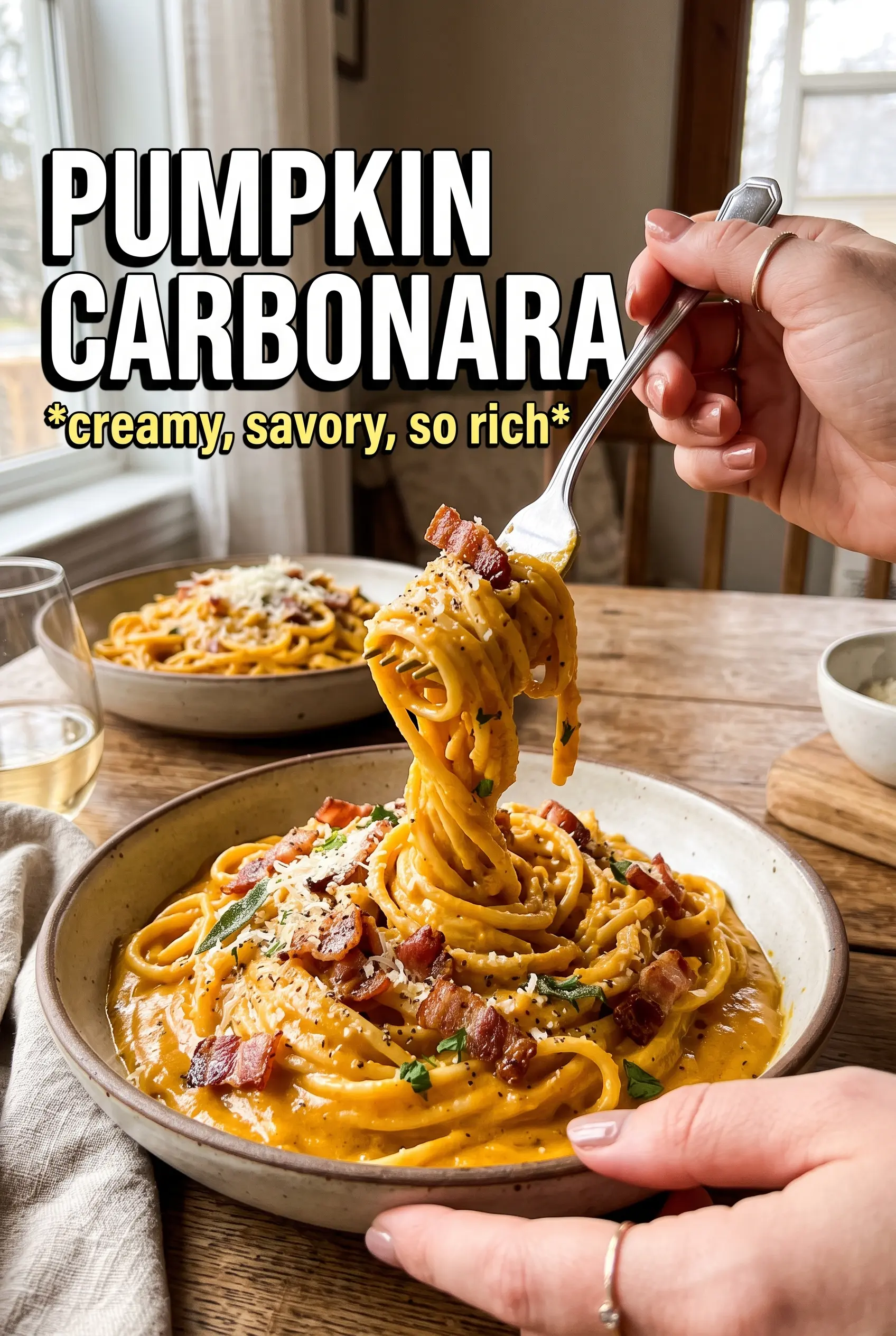
Pumpkin carbonara lands in that sweet spot between cozy and elegant: silky enough to coat every strand of pasta, rich without feeling heavy, and peppery enough to keep the pumpkin from turning soft or bland. The pumpkin gives the sauce a deep orange color and a faint sweetness, but the yolks, parmesan, and pancetta keep it firmly in carbonara territory.
The trick is treating the egg mixture like a fragile emulsion, not a cream sauce. Pumpkin puree adds body, so the sauce comes together fast once the hot pasta hits the pan, but that same thickness can turn grainy if you rush it or leave the skillet on the burner. Pulling the pan off heat before the eggs go in is what keeps everything glossy.
Below, you’ll find the one move that keeps the sauce smooth, why finely grated parmesan matters here, and a few smart ways to adapt the dish without losing the texture that makes it work.
The sauce turned out silky and never scrambled, even with the pumpkin in it. I added the pasta water a splash at a time and it clung to the spaghetti perfectly.
Like this pumpkin carbonara? Save it to Pinterest for a silky pasta dinner with pancetta, parmesan, and a sauce that stays glossy.
The Trick That Keeps Pumpkin Carbonara from Turning Grainy
Pumpkin changes the usual carbonara rhythm. It adds starch and thickness before the eggs even hit the pan, which means the margin for error gets smaller. If you leave the skillet on the burner when the yolks go in, the eggs can seize and the parmesan can turn sandy in seconds.
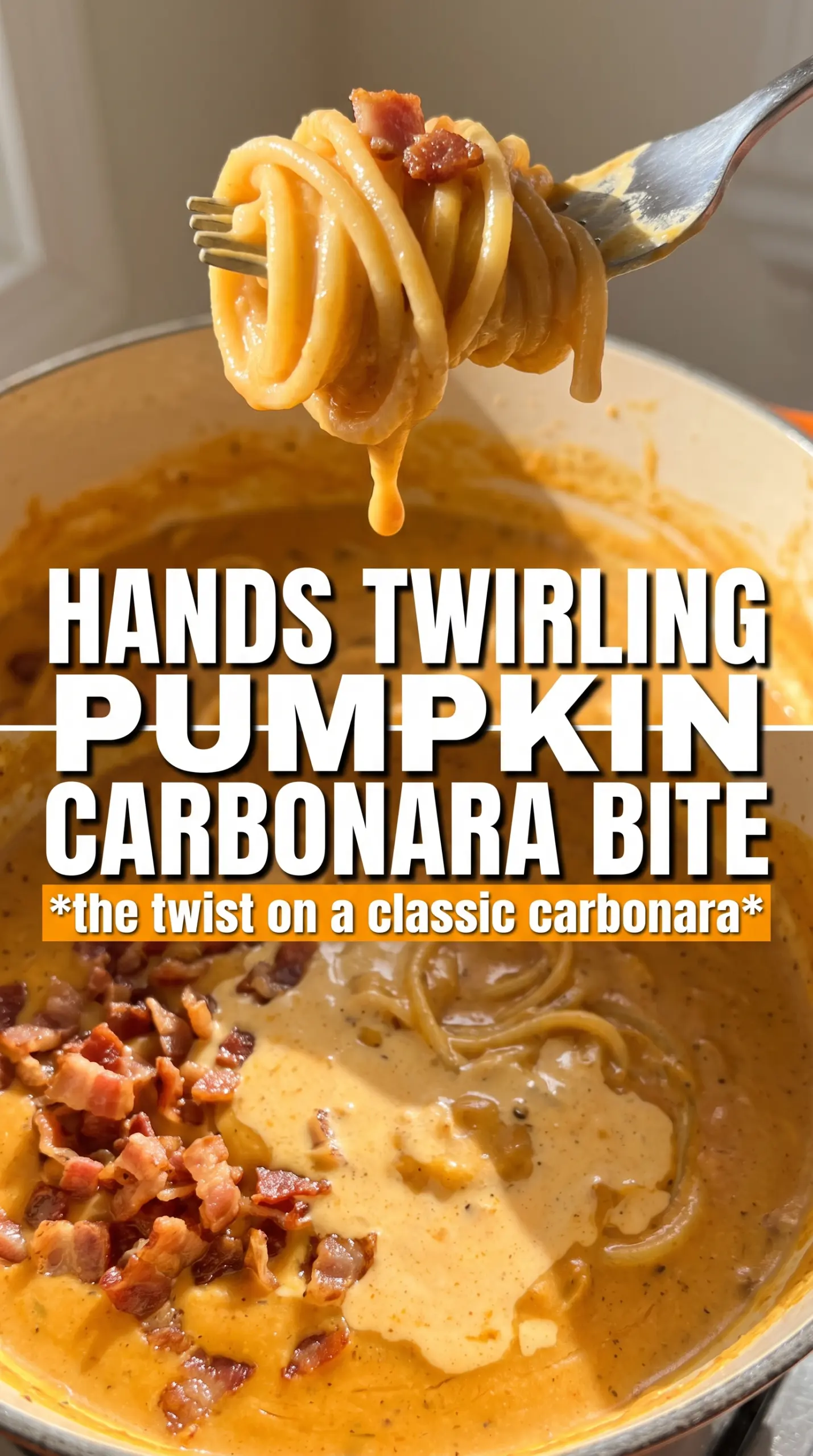
That’s why this version works best when the pasta goes into the pancetta pan off heat, not on it. The residual heat is enough to cook the yolks gently while the pasta water loosens the pumpkin into a silky coating. The sauce should look glossy and fluid at first, then cling more tightly as you toss. If it looks pasty, it needs a little more pasta water; if it looks greasy, the heat was too high and the sauce tightened too fast.
- Pumpkin puree — Use plain canned pumpkin, not pumpkin pie filling. The filling is sweetened and spiced, which throws the whole dish off and makes the sauce taste one-note.
- Egg yolks — Yolks give the sauce its lush texture. Whole eggs will work in a pinch, but the sauce won’t be as rich or as thick.
- Parmesan — Finely grated parmesan melts into the sauce much better than coarse shreds. Pre-grated cheese often contains anti-caking agents, so grate it yourself if you want the smoothest result.
- Pancetta or thick-cut bacon — Pancetta gives the cleanest salty pork flavor, but bacon is a good swap if that’s what you have. Cook it until the fat renders and the edges crisp; soft bacon leaves the sauce feeling heavy.
- Pasta water — This is the real sauce adjuster. The starch helps bind the egg, pumpkin, and cheese into something silky instead of dense.
What Each Ingredient Is Actually Doing in This Recipe
- Primary ingredient (the star) — Quality matters most. Choose the best you can find.
- Cooking medium (oil, butter, or broth) — This carries flavors and prevents dryness.
- Seasonings (salt, pepper, spices, herbs) — Layer flavors so nothing overpowers. Build depth gradually.
- Aromatics (garlic, onion, herbs) — Cook with fat to bloom flavors. Become the foundation.
- Supporting ingredients — Complement the main ingredient without overpowering it.
- Sauce or liquid (if applicable) — Brings flavors together. Balance richness with acid.
- Acid (lemon, vinegar, wine, or other) — Brightens and prevents flat-tasting results.
- Final finish (garnish, glaze, or sauce) — Prevents one-dimensional taste and adds visual appeal.
How to Build the Sauce So It Stays Glossy
Render the Pork, Then Pull It Off the Heat
Cook the pancetta in a wide skillet until the fat renders and the pieces turn crisp at the edges. Add the garlic for just about a minute, only until it smells fragrant and loses its raw bite. Then remove the pan from the heat completely before anything else goes in. If the skillet stays hot, the eggs will cook in streaks instead of forming a smooth sauce.
Whisk the Pumpkin Base Until It Looks Uniform
In a separate bowl, whisk the yolks, pumpkin, parmesan, nutmeg, and black pepper until the mixture looks thick and smooth, with no streaks of yolk or clumps of cheese. The mixture should be spoonable, not watery. This is the point where finely grated parmesan matters most, because bigger pieces won’t dissolve fast enough once the pasta hits the pan.
Toss Fast, Then Thin Gradually
Add the hot pasta to the skillet with the pancetta, then work quickly once the egg mixture goes in. Toss constantly and add pasta water a splash at a time, letting each addition disappear before adding more. The sauce should go from loose to silky and coat the pasta in a shiny layer. If it tightens up too much, a little more hot pasta water will bring it back; if it looks curdled, the pan was too hot before the eggs went in.
Serve It While the Sauce Is Still Moving
Carbonara waits for nobody, and pumpkin carbonara is no different. Spoon it into warm bowls as soon as the sauce looks glossy and just thick enough to cling to the pasta. Finish with more parmesan and a heavy crack of black pepper. By the time it sits, the sauce will keep thickening, so serving right away gives you the best texture.
How to Adapt This Pumpkin Carbonara Without Losing the Texture
Gluten-Free Version
Use a sturdy gluten-free spaghetti or rigatoni with a reputation for holding up in sauce. Cook it just until tender, because overcooked gluten-free pasta turns mushy once it gets tossed with the egg mixture. Save extra pasta water; some gluten-free shapes need a little more help loosening the sauce.
Dairy-Free Variation
You can swap in a good dairy-free parmesan alternative, but the sauce won’t melt quite as smoothly, so whisk it thoroughly before adding the pasta. The flavor will be a little less sharp, which means the black pepper matters even more here. Keep the pancetta, or use olive oil and mushrooms if you want a pork-free version.
Bacon Instead of Pancetta
Thick-cut bacon brings a smokier, more familiar flavor and a little more rendered fat. That extra smoke plays nicely with the pumpkin, but the dish will taste less classic and a touch more rustic. If the skillet looks greasy after cooking, spoon off a little fat before adding the pasta.
Storage and Reheating
- Refrigerator: Store leftovers in an airtight container for up to 3 days. The sauce will firm up and lose some gloss, but it still tastes good.
- Freezer: I don’t recommend freezing this one. Egg-based sauces tend to separate after thawing, and the texture gets grainy.
- Reheating: Warm it gently in a skillet over low heat with a splash of water, stirring often. High heat will scramble the eggs and make the parmesan clump, which is the fastest way to ruin the texture.
Answers to the Questions Worth Asking
Pumpkin Carbonara
Ingredients
Equipment
Method
- Bring a large pot of water to a boil and add salt until it tastes very well-seasoned, then cook spaghetti or rigatoni until al dente.
- Before draining, reserve 1 cup of pasta cooking water, then drain the pasta.
- Heat a large skillet over medium heat and cook diced pancetta or thick-cut bacon until crispy.
- Add minced garlic to the crisp pancetta and cook for 1 minute, then remove the skillet from the heat completely.
- In a bowl, whisk egg yolks, pumpkin puree, finely grated parmesan, nutmeg, and black pepper until smooth.
- Add the hot pasta to the pancetta pan and remove from the heat completely.
- Quickly pour in the egg mixture and toss continuously to coat the pasta.
- Add the reserved pasta cooking water a splash at a time while tossing until the sauce turns silky and clings to the pasta.
- Serve immediately with extra finely grated parmesan and a generous crack of black pepper.