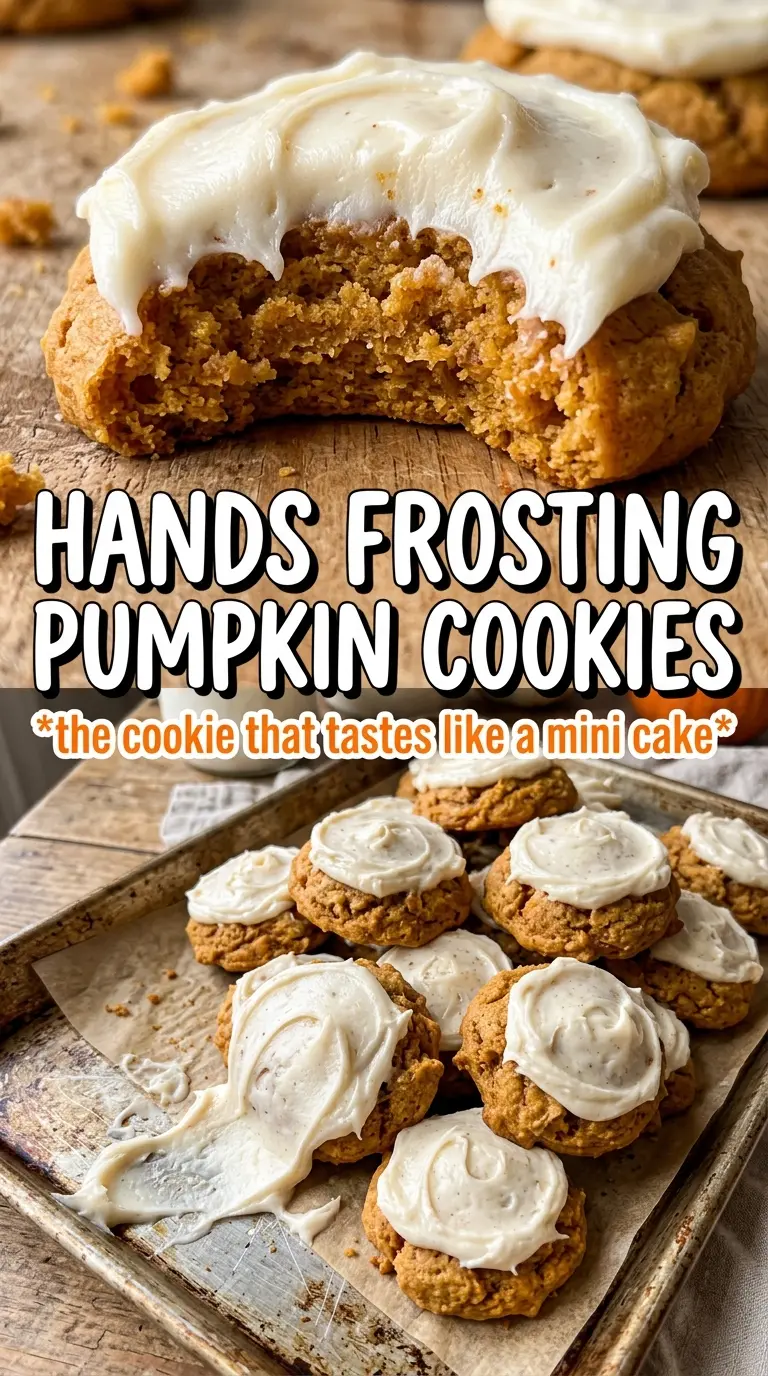
Pumpkin cookies with cream cheese frosting have that soft, pillowy texture that makes people reach for a second one before they finish the first. The cookies bake up tender and cake-like with warm spice in every bite, and the frosting adds just enough tang to keep the sweetness in check. A little cinnamon on top and a pecan pressed into each cookie gives them that bakery-case look without any fuss.
What makes this version work is the balance. Pumpkin puree adds moisture, but the butter and sugar still get creamed first so the cookies don’t turn heavy. The dry ingredients include both baking soda and baking powder, which helps them rise just enough without spreading into thin little pancakes. Letting the cookies cool completely before frosting matters, too. If they’re even a little warm, the frosting softens and slides right off.
Below you’ll find the details that keep these cookies soft instead of dense, plus a few ways to adapt them if you need a smaller batch or want to change up the finish.
The cookies stayed soft for days and the frosting set up just enough that they stacked cleanly. I loved the cinnamon in the frosting — it tied the whole cookie together without making it too sweet.
Save these pumpkin cookies with cream cheese frosting for the soft, spiced cookie that stays tender and frosts beautifully.
The Trick to Keeping Pumpkin Cookies Soft Instead of Dense
Pumpkin cookie dough behaves differently from a standard drop cookie. The puree brings moisture, but it also brings weight, so the batter needs enough lift from the leaveners and enough structure from the flour to hold onto that pillowy texture. If the flour is measured too loosely or the dough is stirred too long after the dry ingredients go in, the cookies can end up gummy in the center instead of tender.
The other thing that matters is portion size. These cookies are meant to bake as soft mounds, not spread into thin rounds. A 2-tablespoon scoop gives you that bakery-style thickness, and the short bake time keeps the centers from drying out. Pull them when the edges look set and the tops no longer look wet; they finish setting on the sheet as they cool.
- Pumpkin puree — Use plain pumpkin puree, not pumpkin pie filling. Pie filling is already sweetened and spiced, which throws off both the texture and the flavor balance.
- Butter — Softened butter creams with the sugars and helps trap air, which keeps the cookies lighter. Melted butter would make them spread more and bake up flatter.
- Baking powder + baking soda — The combination gives these cookies lift without making them cakey in a dry way. Both matter here, because pumpkin dough needs a little extra help rising.
What Each Ingredient Is Actually Doing in These Cookies
- All-purpose flour — This gives the cookies enough structure to hold the soft, cake-like crumb. Spoon and level it instead of packing it into the cup.
- Pumpkin pie spice and cinnamon — Pumpkin pie spice brings the warm background note, while the extra cinnamon sharpens the flavor so the cookies don’t taste flat. If you’re out of pumpkin pie spice, use extra cinnamon plus a pinch each of nutmeg and cloves.
- Brown sugar — This is what helps the cookies stay soft after baking. Granulated sugar adds sweetness and helps with the creaming, but brown sugar adds moisture and a deeper flavor.
- Cream cheese frosting — Full-fat cream cheese gives the frosting body and that slight tang that keeps the cookies from tasting too sweet. Low-fat cream cheese is thinner and can make the frosting loose.
Getting the Dough, Bake, and Frosting to All Behave
Cream the butter and sugars until they look fluffy
Beat the softened butter with both sugars until the mixture looks lighter in color and a little airy. That step traps the air that helps the cookies bake up with some lift. If the butter is too cold, it won’t combine properly; if it’s melted, the dough turns greasy and spreads too much.
Mix in the pumpkin just until combined
Add the pumpkin puree, egg, and vanilla and mix only until the batter looks smooth. Pumpkin dough is naturally softer than most cookie doughs, so you don’t need to beat it aggressively. Overmixing at this stage can make the finished cookies tighter and tougher.
Fold in the dry ingredients and stop as soon as the flour disappears
Once the flour mixture goes in, stir only until no dry streaks remain. The dough should look soft and slightly fluffy, almost like a thick cake batter. If you keep going after that point, the gluten builds up and the cookies lose that tender crumb.
Bake just until set, then cool before frosting
Drop the dough in even mounds and bake until the tops are no longer glossy and the edges are set. They should still feel soft if you press one gently with a fingertip. Let them cool on a rack all the way before frosting, or the cream cheese topping will melt into the cookies instead of sitting high and smooth.
Spread the frosting generously and finish with cinnamon
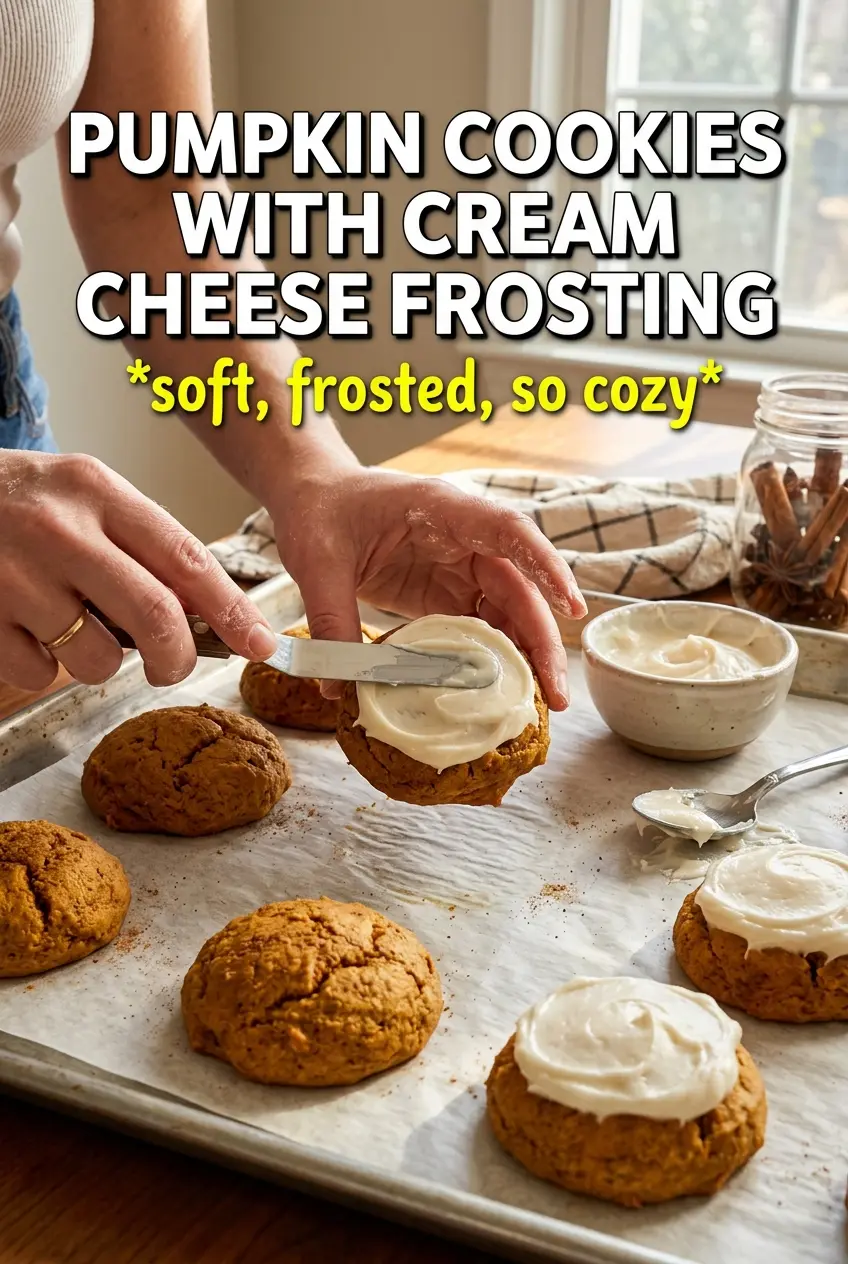
Beat the cream cheese and butter until completely smooth before adding the powdered sugar. That keeps the frosting creamy instead of grainy. Once the cookies are cool, swirl on a thick layer, dust with cinnamon, and press a pecan into the center before the frosting firms up.
How to Change These Cookies Without Losing the Soft Texture
Gluten-Free Version
Use a good 1:1 gluten-free baking blend that includes xanthan gum. The cookies will still be soft, but they may spread a little less and taste best if you let the dough rest for 10 minutes before baking so the starches hydrate.
Dairy-Free Frosting
Swap the butter and cream cheese for plant-based versions with a firm texture. The frosting won’t have quite the same tang, so add a tiny pinch of salt to sharpen the flavor and keep it from tasting one-note.
Extra-Spiced Pumpkin Cookies
Add another 1/2 teaspoon cinnamon and a pinch of ginger or cloves if you want a stronger spice finish. The cookies will still stay soft, but the warm spice comes through more clearly against the sweet frosting.
Storage and Reheating
- Refrigerator: Store frosted cookies in a single layer or with parchment between layers for up to 4 days. The cookies stay soft, but the frosting firms up in the fridge.
- Freezer: Freeze the unfrosted cookies for up to 2 months. Thaw them at room temperature, then frost after they’ve completely softened for the best texture.
- Reheating: These are best served at room temperature, not warmed. Heating them softens the frosting too much and can make the cookies seem greasy instead of tender.
Questions I Get Asked About This Recipe
Pumpkin Cookies With Cream Cheese Frosting
Ingredients
Equipment
Method
- Preheat the oven to 350°F and line sheet pans with parchment for nonstick release.
- Whisk together the all-purpose flour, baking soda, baking powder, pumpkin pie spice, cinnamon, and salt until evenly combined.
- Beat the softened unsalted butter, granulated sugar, and packed brown sugar until fluffy.
- Add the pumpkin puree, then beat in the egg and vanilla extract just until incorporated.
- Fold the flour mixture into the wet ingredients until a soft, cake-like dough forms.
- Drop the dough by 2-tablespoon portions onto the lined sheet pans, leaving space between cookies.
- Bake at 350°F for 10-12 minutes, until the cookies look set at the edges.
- Cool the cookies completely on a rack so the frosting won’t melt.
- Beat the softened cream cheese and softened unsalted butter until smooth.
- Beat in the powdered sugar, vanilla, and cinnamon until the frosting is thick and spreadable.
- Frost each cookie generously with a swirled layer of cream cheese frosting.
- Dust the tops lightly with cinnamon for a warm spice finish.
- Press a pecan onto the top of each cookie as a final decorative cue.