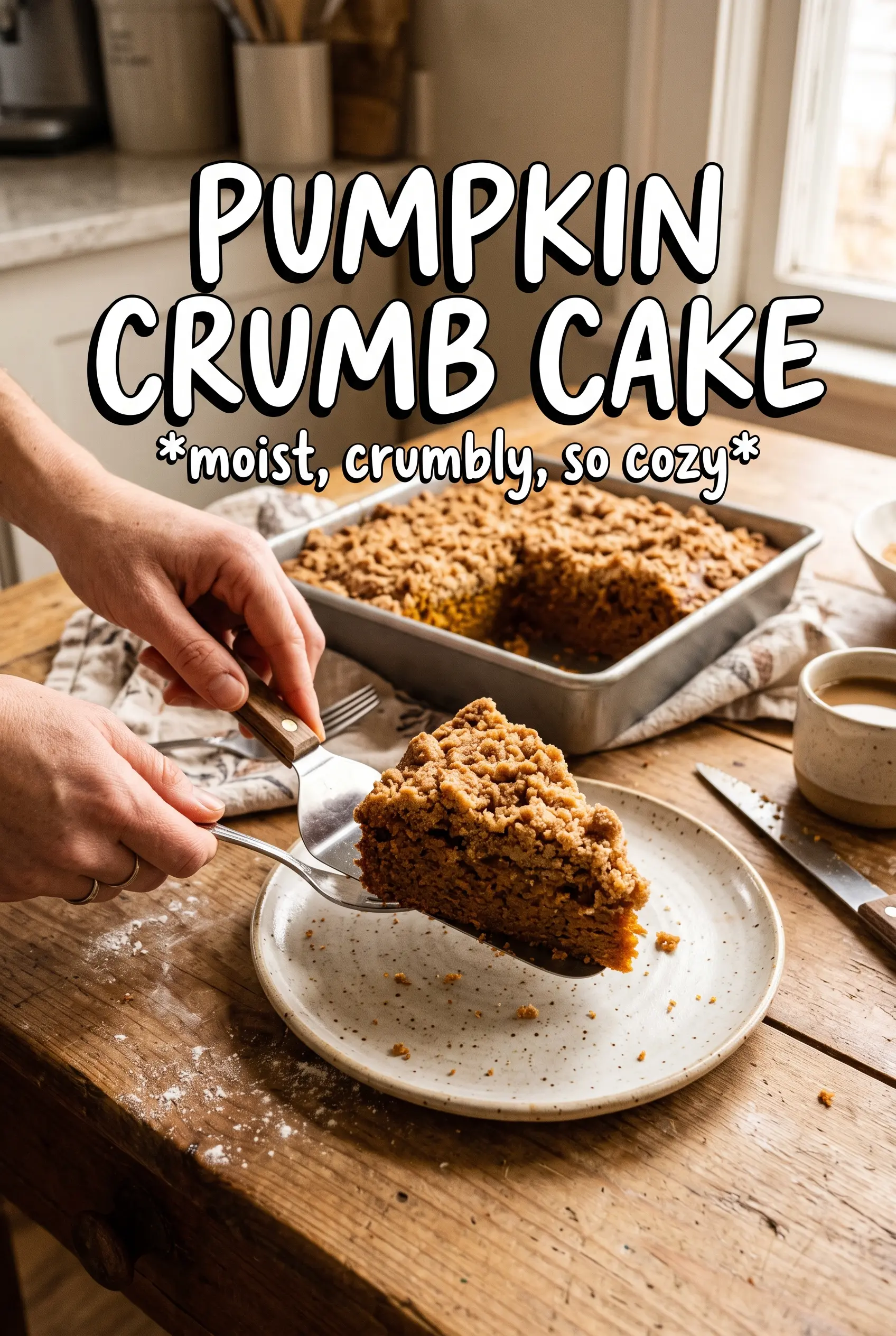
Thick cinnamon crumb on top of a soft pumpkin cake is the kind of breakfast bake people remember. The top bakes into buttery, nubbly crags that hold their shape when you cut into it, while the cake underneath stays moist and tender with just enough spice to taste like pumpkin without turning muddy or flat. It slices cleanly, serves beautifully, and somehow still feels casual enough to pull from the pan on a weekday morning.
The trick is in the crumb. Melted butter makes a loose mixture at first, but chilling it before baking helps those crumbs stay chunky instead of sinking into the batter. The pumpkin batter itself leans on brown sugar, sour cream, and a full cup of pumpkin for a soft, rich crumb that doesn’t dry out in a 9×13 pan. That balance matters because crumb cake can go wrong in two directions: too much topping and the center turns dense, or too little moisture and the cake tastes dusty by the next day.
Below you’ll find the exact texture cues I watch for, plus a few smart swaps and storage notes that make this cake dependable for breakfast, brunch, or a make-ahead treat.
The crumb stayed thick and buttery instead of disappearing into the cake, and the pumpkin layer was still moist the next morning. I baked it for 53 minutes and the center set up perfectly.
Like this pumpkin crumb cake? Save it to Pinterest for a buttery breakfast bake with a thick cinnamon topping and a tender pumpkin center.
The Crumb Needs Chilling or It Melts Into the Cake
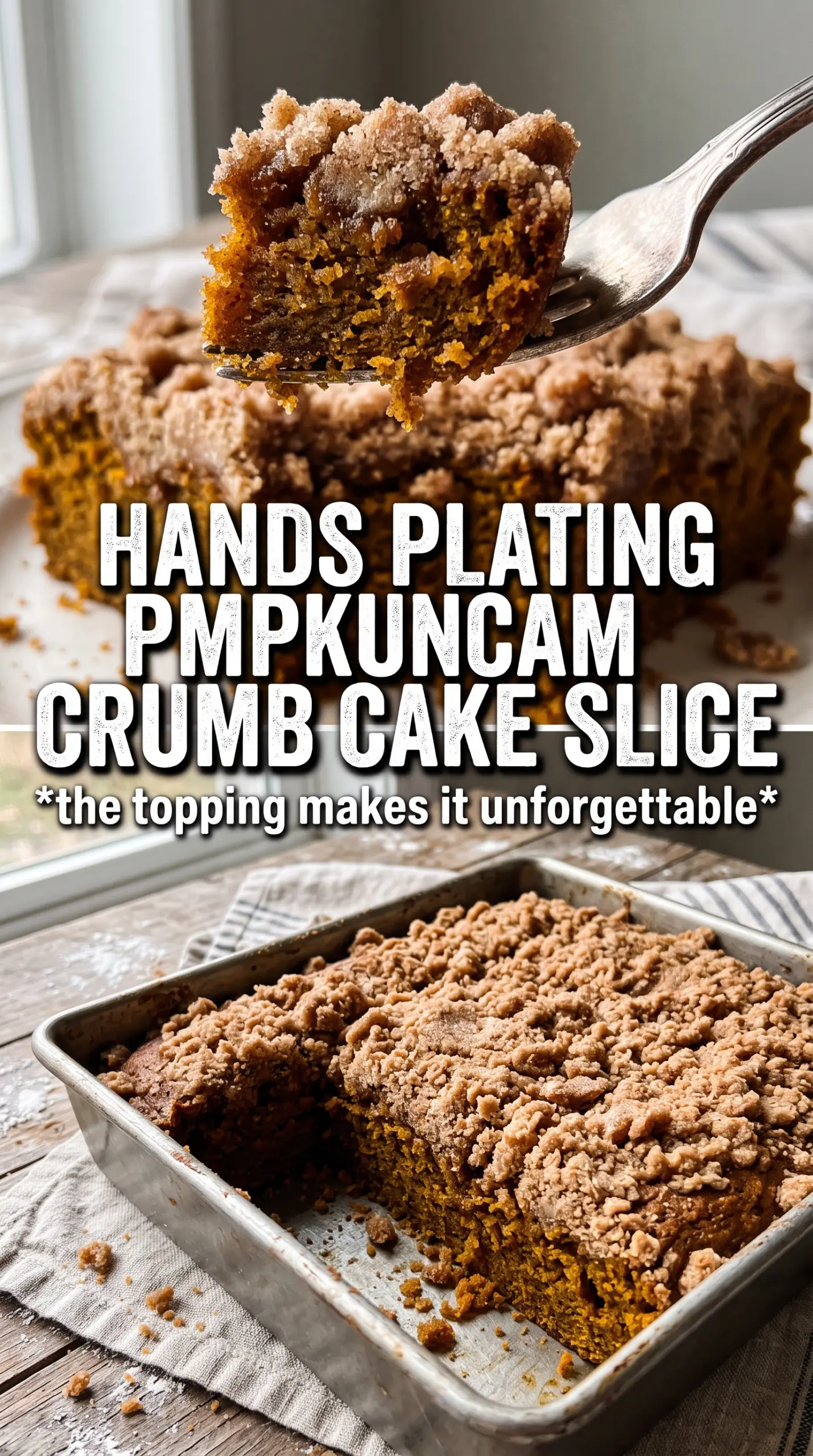
A lot of crumb cakes fail because the topping is mixed and scattered straight onto the batter while it is still soft and warm. With melted butter in the crumb mixture, the texture starts out loose and sandy, but a short chill firms it up just enough for those thick clumps to survive the oven. That gives you a real crumb topping instead of a sugary blanket that soaks in and disappears.
The other thing worth watching is the thickness of the topping. This recipe is built for a generous layer, but the crumbs still need air around them to bake into craggy pieces. If you pack them down, the center can steam instead of bake and the topping turns heavy. Scatter the crumbs loosely and keep some bigger chunks intact.
What the Sour Cream and Pumpkin Are Doing in the Batter
- Pumpkin puree — This brings moisture, body, and that pumpkin color without making the cake taste like pie filling. Use plain pumpkin puree, not pumpkin pie filling, or the batter will be too sweet and heavily spiced.
- Sour cream — This is the ingredient that keeps the crumb tender and plush for more than one day. Full-fat plain Greek yogurt works in a pinch, but it gives a slightly tighter crumb and a little less richness.
- Brown sugar — Brown sugar adds depth and keeps the cake softer than white sugar would. In the crumb topping, it also helps those buttery clumps hold together and bake into crisp-edged pieces.
- Butter — Softened butter in the cake creates structure, while melted butter in the crumb creates those bigger, sandier pieces. Don’t swap either one casually; they each do a different job.
- Pumpkin pie spice plus cinnamon — The blend gives the cake warmth, while the extra cinnamon in the crumb makes the top taste distinct from the base. If your pumpkin pie spice is old, the cake will taste flat, so fresh spice matters here.
Building the Batter and Crumb Without Overmixing
Mix the crumb first
Toss the flour, brown sugar, cinnamon, pumpkin pie spice, and melted butter until the mixture forms large, damp crumbs. Stop as soon as you see clumps; if you keep stirring, the topping turns paste-like and bakes into a flat crust. Chill it while you make the batter so the butter can firm up again.
Cream the base until it looks lighter
Beat the softened butter and brown sugar until the mixture looks fluffy and a little paler, not just combined. That step gives the cake a bit of lift before the dry ingredients go in. Add the eggs one at a time, then the pumpkin, sour cream, and vanilla. If the mixture looks slightly curdled, that is normal once the pumpkin and sour cream go in.
Fold the dry ingredients just until no flour streaks remain
Stir the flour, baking powder, baking soda, salt, pumpkin pie spice, and cinnamon in only until the last streaks disappear. Overmixing here makes the cake tight instead of tender, and you will taste it once it cools. Spread the batter evenly in the pan, then pile the chilled crumb mixture on top in a thick, even layer.
Bake until the center sets
Bake at 350°F until the top is deeply golden and the center no longer jiggles when you nudge the pan. A toothpick should come out with a few moist crumbs, not wet batter. If the crumbs are browning too quickly before the center is done, tent the pan loosely with foil for the last 10 to 15 minutes.
Make It Gluten-Free Without Losing the Crumb
Use a good 1:1 gluten-free flour blend in both the cake and the crumb topping. The texture will be a touch more delicate, but the crumb still holds well because of the butter and brown sugar. Let the cake cool fully before slicing so it has time to set.
How to Make It Dairy-Free
Use plant-based butter in both parts of the recipe and swap the sour cream for a thick dairy-free yogurt. The cake will still be moist, but the topping may spread a little more because some dairy-free butters soften faster. Chilling the crumb matters even more in this version.
Turning It Into Muffin-Style Squares
Bake the batter in a lined 9×13 pan as written, then cut it into smaller squares for grab-and-go portions. The crumb stays intact better than you might expect, but the pieces need a full cool-down before you move them or the topping can slide.
Storage and Reheating
- Refrigerator: Store covered for up to 5 days. The crumb softens a little by day two, but the cake stays moist.
- Freezer: Freeze individual squares wrapped well for up to 2 months. Thaw overnight in the refrigerator so the topping doesn’t get soggy from condensation.
- Reheating: Warm slices in a 300°F oven for 8 to 10 minutes or microwave briefly in 10-second bursts. The oven keeps the crumb crisper; the microwave is faster but softens the topping.
Questions I Get Asked About This Recipe
Pumpkin Crumb Cake
Ingredients
Equipment
Method
- Preheat the oven to 350°F and grease a 9x13 pan so the batter releases cleanly after baking.
- Pour melted butter over the dry crumb topping ingredients and toss until the mixture forms thick, sandy crumbs.
- Refrigerate the crumb mixture to help it stay crumbly while you mix the cake batter.
- Beat the softened butter and brown sugar until smooth and slightly lighter in color.
- Add the eggs, pumpkin, sour cream, and vanilla, then beat until the batter looks cohesive and well combined.
- Fold in the dry ingredients just until no dry flour streaks remain.
- Spread the batter in the prepared 9x13 pan, smoothing the top for even baking.
- Top the batter with a generous thick layer of crumble so you get an even crust across the surface.
- Bake at 350°F for 50–55 minutes, until the top is golden and a toothpick in the center comes out with moist crumbs.
- Let the cake cool, then dust with powdered sugar for a lightly sweet finish.