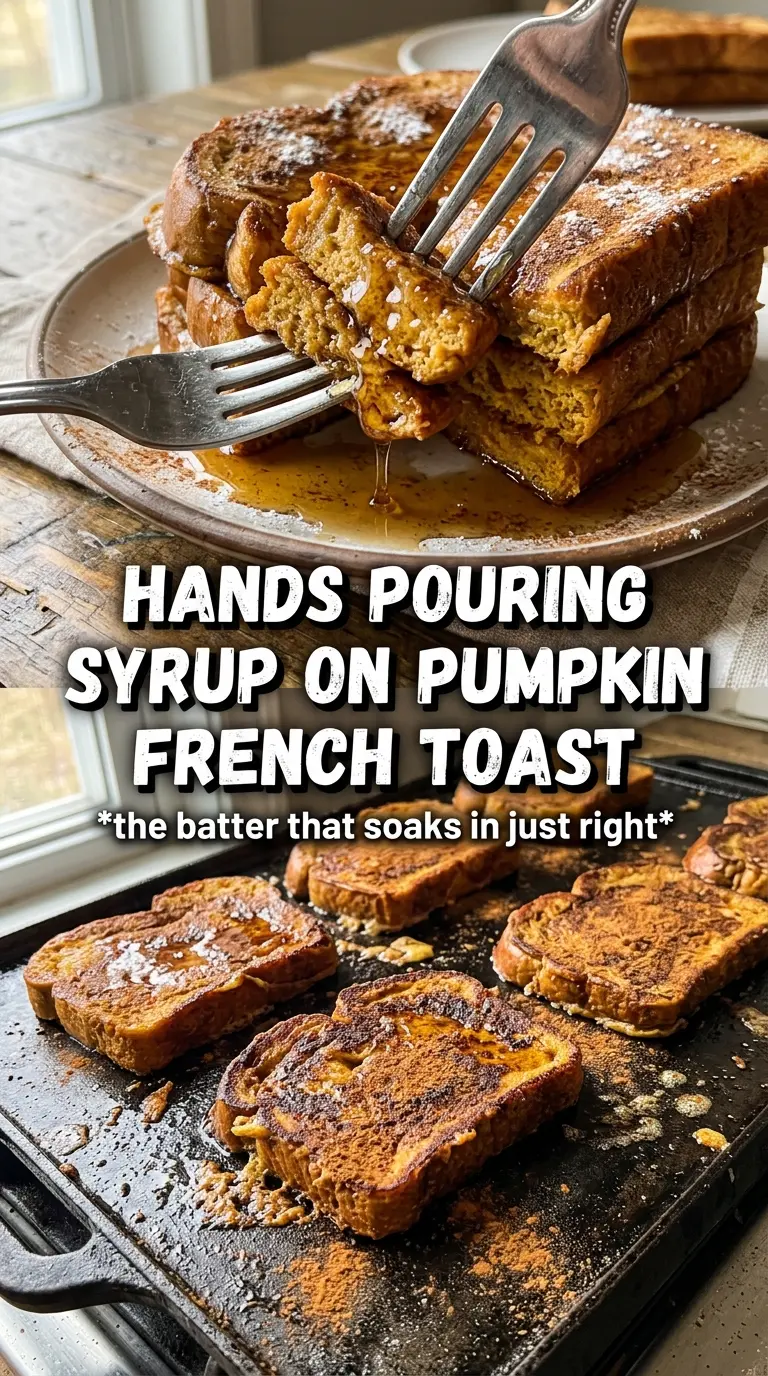
Thick slices of pumpkin french toast turn crisp and caramelized on the outside while staying soft and custardy in the center, with enough warm spice to taste like autumn without crossing into pumpkin-pie territory. The best version has contrast: a deep golden crust, a tender middle, and maple syrup catching in every ridge of the bread.
This version works because the custard is balanced. Pumpkin puree brings body, but the eggs keep the slices set, and the milk loosens everything just enough that the bread soaks without turning soggy. Brioche or challah gives you a rich base that browns well and holds its shape after the dip, which is where a lot of french toast goes wrong.
Below, I’ve included the soak time that keeps the center plush, the heat level that gives you real color instead of pale, steamed bread, and a few swaps for when you want to adjust the richness without losing that pumpkin-spice flavor.
The custard soaked in evenly and the slices cooked up with crisp edges and a soft center. I used challah and the pumpkin flavor came through without the bread falling apart.
Like this pumpkin french toast? Save it to Pinterest for a crisp-edged, custardy breakfast that tastes like warm spice and maple.
The Soak Time That Keeps Pumpkin French Toast from Going Soggy
The biggest mistake with pumpkin french toast is treating the custard like regular egg wash. Pumpkin puree thickens the mixture, so the bread needs a brief soak, not a long bath. Thirty seconds per side is enough for thick brioche or challah to pick up flavor without collapsing into a wet, heavy slice.
Medium heat matters here more than people think. If the pan is too hot, the outside browns before the egg mixture inside sets. If it’s too low, the bread dries out before you get that crisp edge. You want steady heat and enough butter to keep the surface frying, not steaming.
- Thick bread is non-negotiable — thin slices go limp fast. Brioche and challah both hold up because they’re rich and sturdy.
- Pumpkin puree adds body — it gives the custard that seasonal flavor and thicker texture, but it also means you need to whisk until completely smooth.
- Butter has to be replenished — the pan should look lightly glossy before each new batch. Dry pan = pale spots.
- Maple syrup in the custard helps browning — just enough sugar is built in to encourage color without making the bread taste candy-sweet.
What Each Ingredient Is Actually Doing in the Custard
- Eggs — they set the custard and give the toast its structure. Without enough egg, the pumpkin mixture stays loose and the bread cooks up soft instead of custardy.
- Pumpkin puree — use plain puree, not pumpkin pie filling. Pie filling already contains sugar and spices, which throws off both texture and balance.
- Whole milk or half-and-half — whole milk gives a lighter finish, while half-and-half makes the center richer and more velvety. Both work; half-and-half just gives you a more luxurious bite.
- Maple syrup — there’s a little in the custard and more for serving. In the batter, it rounds out the spice and helps the toast caramelize.
- Brioche or challah — either one absorbs the custard without falling apart. If you only have sandwich bread, dry it out first so it doesn’t disintegrate in the pan.
Getting the Crust Right Before the Center Sets
Whisk a Smooth Custard
Combine the eggs, pumpkin puree, milk, maple syrup, pumpkin pie spice, cinnamon, vanilla, and salt until the mixture looks uniform and no streaks of pumpkin remain. Lumps of puree turn into patches on the bread and make the dip uneven. A wide bowl makes this easier because you can drag each slice through the custard without breaking it.
Soak the Bread Briefly
Dip each slice and let it sit for about 30 seconds per side. You’re aiming for saturated edges and a soft surface, not a soaked-through sponge. If the bread is very fresh, trim the soak a little shorter; if it’s a day old, it can handle the full time.
Cook in Butter Until Deeply Golden
Melt butter over medium heat and lay in the dipped bread without crowding the pan. Cook until the underside is deeply golden and releases cleanly, then flip and finish the second side. If the bread is browning too fast, lower the heat before it burns on the outside and stays raw in the middle.
Serve While the Edges Are Still Crisp
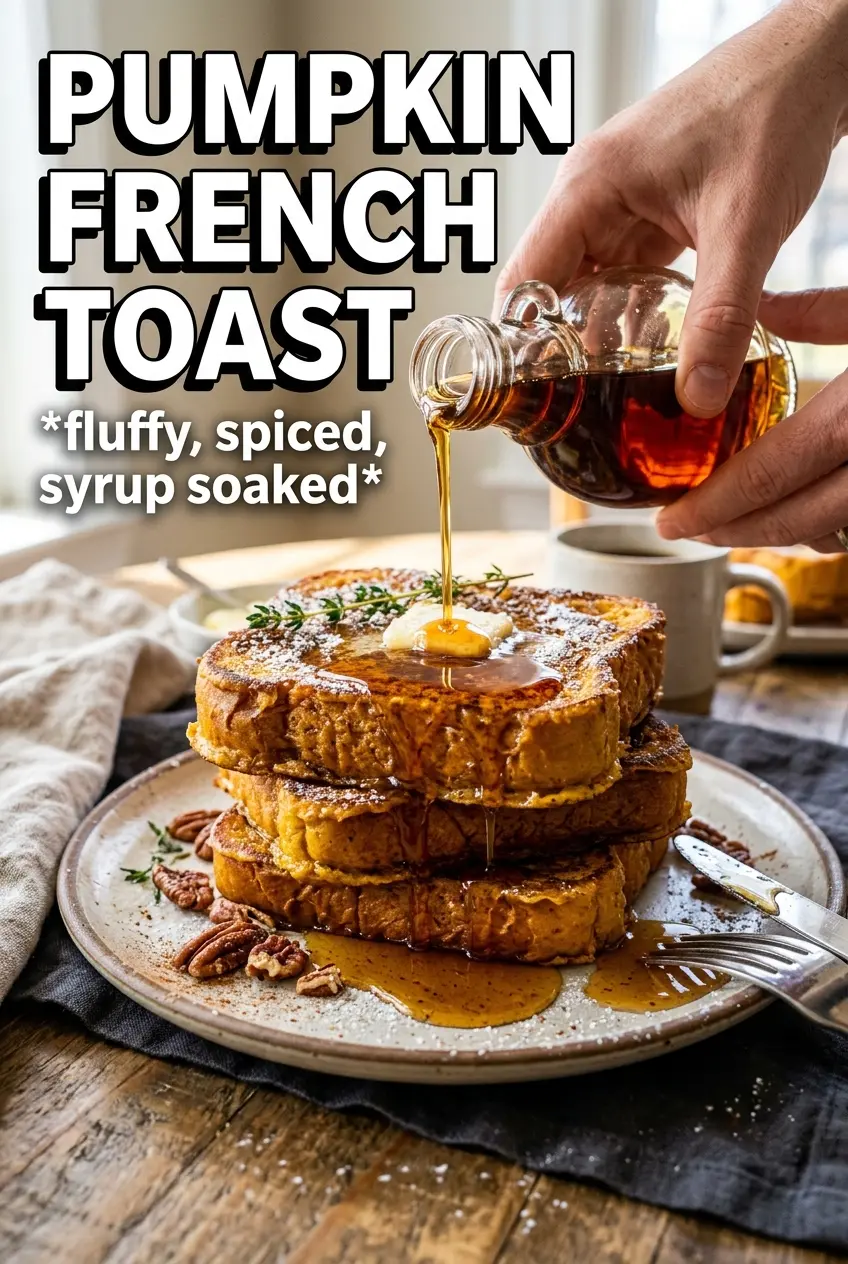
Stack the slices and finish with warm maple syrup, powdered sugar, or whipped cream. Pumpkin french toast waits for no one; the crust softens as it sits, so get it to the table right away. If you’re cooking for a group, hold finished slices on a rack in a low oven instead of covering them, which traps steam and ruins the texture.
How to Adjust This Recipe Without Losing the Pumpkin Flavor
Dairy-Free Version
Use an unsweetened oat milk or almond milk and cook with a neutral dairy-free butter. Oat milk gives the closest body; almond milk works, but the custard will be a little lighter and less rich.
Gluten-Free Swap
Use a sturdy gluten-free brioche-style loaf if you can find one. Softer gluten-free bread tends to break during the soak, so choose slices that already feel slightly dry and handle them gently in the pan.
Less Sweet, More Spiced
Cut the maple syrup in the custard to 1 tablespoon and bump the cinnamon slightly if you want a more breakfast-forward version. This keeps the pumpkin front and center and makes the topping syrup do more of the sweetening.
Make-Ahead for a Crowd
Whisk the custard a day ahead and refrigerate it, then stir again before dipping. You can also cook the slices and hold them on a wire rack in a 200°F oven for up to 20 minutes while you finish the batch, which keeps the bottoms from going soft.
Storage and Reheating
- Refrigerator: Store leftovers in an airtight container for up to 3 days. The crust softens, but the flavor holds well.
- Freezer: Freeze cooked slices in a single layer, then stack with parchment between them for up to 2 months. Reheat from frozen for best texture.
- Reheating: Toast in a skillet over medium-low heat or in a 350°F oven until the outside crisps again. The common mistake is microwaving too long, which turns the bread rubbery and the topping watery.
Answers to the Questions Worth Asking
Pumpkin French Toast
Ingredients
Equipment
Method
- Whisk the eggs, pumpkin puree, whole milk (or half-and-half), maple syrup, pumpkin pie spice, cinnamon, vanilla extract, and salt until smooth.
- Set the pumpkin custard aside while you heat the griddle or skillet.
- Heat a griddle or skillet over medium heat and melt 1 tbsp butter.
- Dip each bread slice in the pumpkin custard and let it soak for 30 seconds per side.
- Cook each soaked slice for 2-3 minutes per side, until deeply golden.
- Work in batches, adding more butter to the pan as needed to prevent sticking and keep browning even.
- Serve the French toast stacked, drizzled with warm maple syrup, dusted with powdered sugar, and topped with whipped cream.