Pumpkin hummus lands somewhere between familiar and new: creamy enough to scoop with warm pita, earthy enough to stand up to crunchy vegetables, and spiced just enough to keep you going back for one more bite. The pumpkin doesn’t make it taste like pie. It softens the chickpeas and gives the hummus a lighter, silkier body with a warm orange color that feels special without turning the dip sweet.
What makes this version work is the balance. Tahini and lemon keep the pumpkin from tasting flat, garlic gives it a little edge, and cumin with smoked paprika pulls the whole bowl toward savory. I also like blending the chickpeas with the lemon and tahini first, before adding the pumpkin, because that gives the base time to turn creamy before the thicker puree goes in.
Below you’ll find the little details that matter most: how to get the texture smooth instead of grainy, why aquafaba is the best way to loosen it without watering down the flavor, and a few smart ways to tweak the seasoning if your pumpkin puree is extra thick or your tahini runs bitter.
I was skeptical about pumpkin in hummus, but it stayed savory and the texture turned out unbelievably smooth. The smoked paprika on top made it taste like something from a good restaurant, and it was gone before dinner even started.
Love this creamy pumpkin hummus with its smoky topping and silky texture? Save it to Pinterest for snack boards, quick lunches, and easy entertaining.
The Smoothest Pumpkin Hummus Starts Before the Pumpkin Goes In
The biggest mistake with hummus is rushing straight to the thick ingredients and expecting the food processor to fix everything. Chickpeas, tahini, and lemon need time to turn into a creamy base first. Once that mixture loosens and lightens a little, the pumpkin blends in without turning the whole bowl pasty or heavy.
Texture is the real goal here. Canned pumpkin puree can be dense and a little dry, so if you add it too early, the hummus tends to stay grainy no matter how long you blend. The aquafaba gives you the easiest control at the end: a spoonful at a time until the hummus is fluffy, spreadable, and still rich.
- Tahini — This gives the hummus body and a nutty depth that pumpkin alone can’t provide. A good tahini should taste smooth and slightly bitter, not chalky. If yours is thick or separated, stir it well before measuring.
- Pumpkin puree — Use plain pumpkin puree, not pumpkin pie filling. The puree adds color, body, and a mellow sweetness that stays savory when it’s balanced with lemon and spice.
- Aquafaba — The reserved chickpea liquid is the best way to loosen the hummus without thinning the flavor. Add it slowly; too much at once can make the dip loose before you notice the texture changing.
- Smoked paprika — This is what keeps the pumpkin from reading as bland. If you only have regular paprika, the hummus will still work, but it loses that warm, slightly smoky finish that makes the bowl stand out.
What Each Ingredient Is Actually Doing in This Bowl

- Chickpeas — They give the hummus its structure and familiar nutty base. Reserve the liquid from the can because it’s useful for adjusting texture later.
- Lemon juice — It brightens the pumpkin and keeps the dip from tasting flat. Fresh lemon makes a noticeable difference here.
- Garlic — Two cloves give the hummus a real savory backbone without overpowering the pumpkin. If you want it milder, use one small clove instead of skipping it entirely.
- Olive oil — A little goes into the hummus itself, and more on top adds shine and richness. Use a good one for finishing, since that flavor comes through immediately.
- Pumpkin pie spice — Just enough to add warmth, not sweetness. It works because the cumin and smoked paprika keep the blend grounded on the savory side.
- Pumpkin seeds — These are optional, but they add crunch and a nice visual finish. Toasted seeds are even better if you have them.
Blending the Base Until It Turns Silky
Start with the Chickpeas, Tahini, and Lemon
Put the chickpeas, tahini, and lemon juice in the processor first and let them go for about a minute. The mixture should look lighter and a little whipped before you add anything else. If it still looks thick and sandy, keep blending; that early smoothing step is what keeps the finished hummus from feeling gritty.
Add the Pumpkin and Spices Next
Once the base is creamy, add the pumpkin puree, garlic, olive oil, cumin, smoked paprika, pumpkin pie spice, and salt. Blend for 2 to 3 minutes, stopping to scrape the bowl if needed. The color should turn even and the texture should look glossy rather than matte. If the mixture starts climbing the sides of the processor and never seems to move, it’s usually too thick, not underblended.
Use Aquafaba for the Final Texture
Add the chickpea liquid one tablespoon at a time and blend after each addition. You’re looking for a hummus that spreads easily but still holds a swoop in the bowl. Stop as soon as it reaches that point, because too much liquid can make the dip loose and dull the flavor. A final quick blend after the last addition gives it the fluffiest finish.
Finish With the Topping
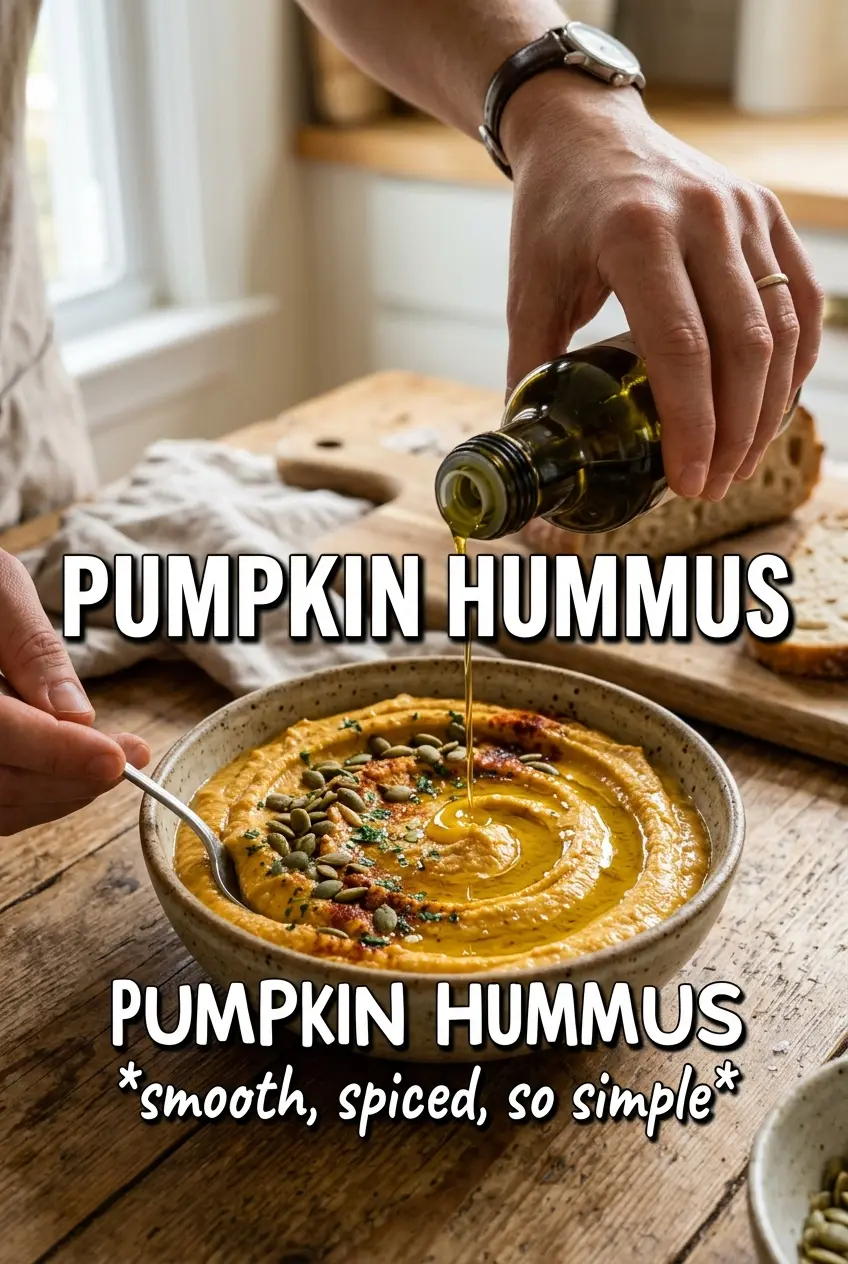
Spoon the hummus into a bowl and use the back of a spoon to make a shallow well in the center. Drizzle with olive oil, then scatter on pumpkin seeds and a little smoked paprika. A few parsley leaves add color and freshness, and they keep the bowl from looking one-note.
How to Adapt Pumpkin Hummus for Different Tables
Make It Vegan and Naturally Gluten-Free
The base recipe already fits both diets, so the only thing to watch is what you serve alongside it. Use pita only if it works for your table, and lean on carrots, celery, cucumbers, or gluten-free crackers for dipping. The hummus itself stays unchanged and just as creamy.
Skip the Pumpkin Spice for a More Savory Bowl
If you want the pumpkin to taste more like a classic savory dip, leave out the pumpkin pie spice and add a pinch more cumin instead. That version tastes earthier and less warm-spiced, which works especially well with crudités or grilled vegetables.
Swap Aquafaba for Ice Water if Needed
If you don’t have enough chickpea liquid, use cold water in small splashes. It will still loosen the hummus, but aquafaba gives a slightly fluffier result because it helps the dip emulsify instead of just thinning it out.
Make It Ahead for Easy Entertaining
This hummus tastes even better after it sits for a few hours, once the garlic, lemon, and spices settle in together. Stir it before serving, then add a fresh drizzle of oil and the toppings right at the end so the surface looks fresh and the texture stays smooth.
Storage and Reheating
- Refrigerator: Store in an airtight container for up to 4 days. The hummus may thicken slightly as it chills.
- Freezer: It freezes well for up to 1 month, though the texture can loosen a little after thawing. Stir it well after defrosting and add a splash of water or aquafaba if needed.
- Reheating: Hummus is usually best served cold or at room temperature. If you want it slightly warmer, let it sit out for 20 to 30 minutes rather than microwaving it, which can make the tahini separate.
Answers to the Questions Worth Asking
Pumpkin Hummus
Ingredients
Equipment
Method
- Add chickpeas, tahini, and lemon juice to a stand mixer and blend for 1 minute, scraping down as needed, until as smooth as possible.
- Add pumpkin puree, garlic, olive oil, cumin, smoked paprika, pumpkin pie spice, and salt, then blend for 2-3 minutes until very smooth and creamy.
- Add chickpea liquid (aquafaba) 1 tablespoon at a time, blending after each addition, until you reach your desired consistency for a smooth, spoonable dip.
- Taste the hummus and adjust seasoning as needed, adding more salt, lemon juice, or aquafaba to balance flavor and texture.
- Transfer the hummus to a bowl and spread it into an even layer, then create a well in the center with the back of a spoon.
- Drizzle olive oil into the well, then scatter pumpkin seeds over the surface and dust with smoked paprika.
- Serve immediately with pita and vegetables such as carrots, celery, and cucumbers.