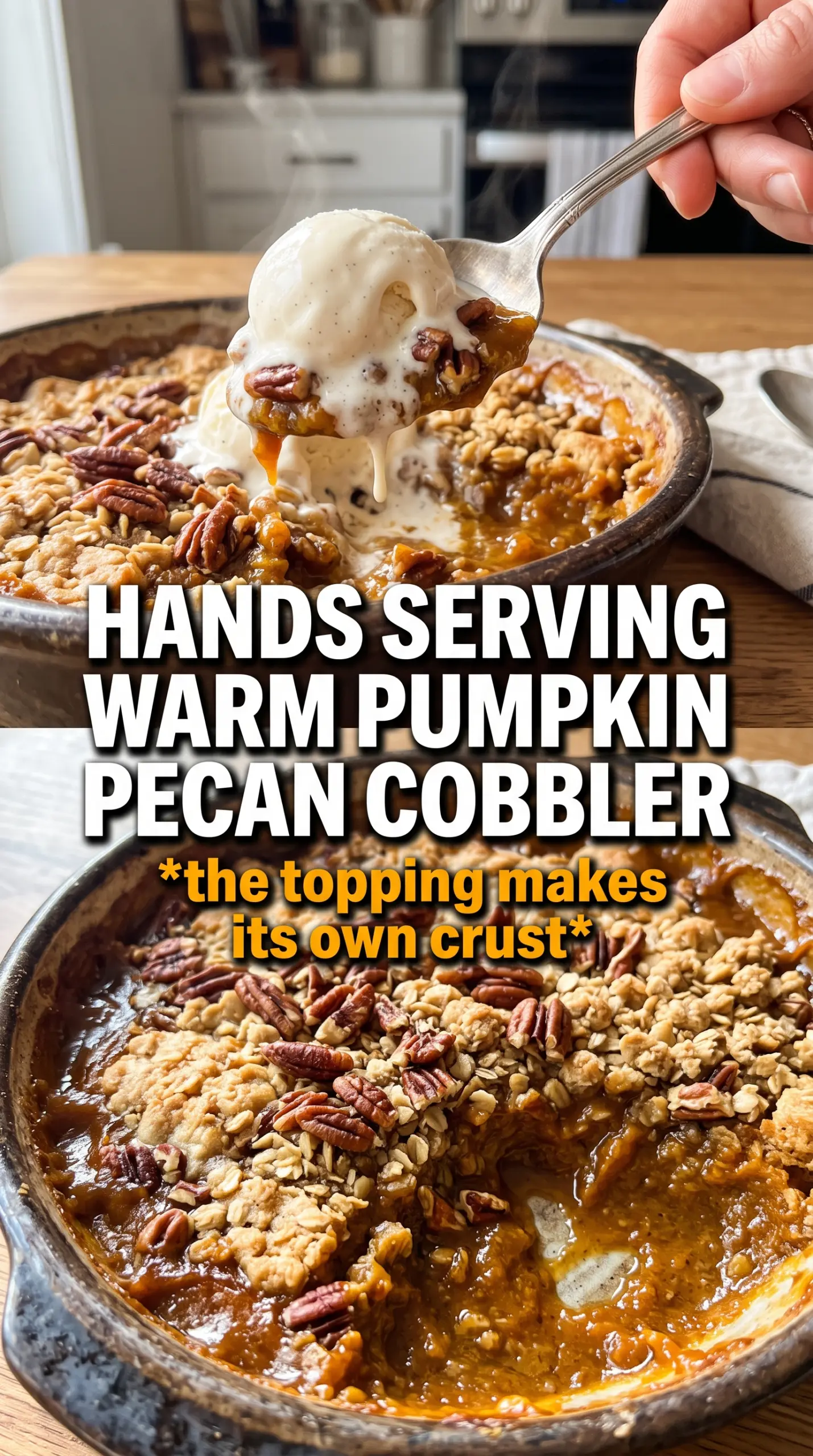
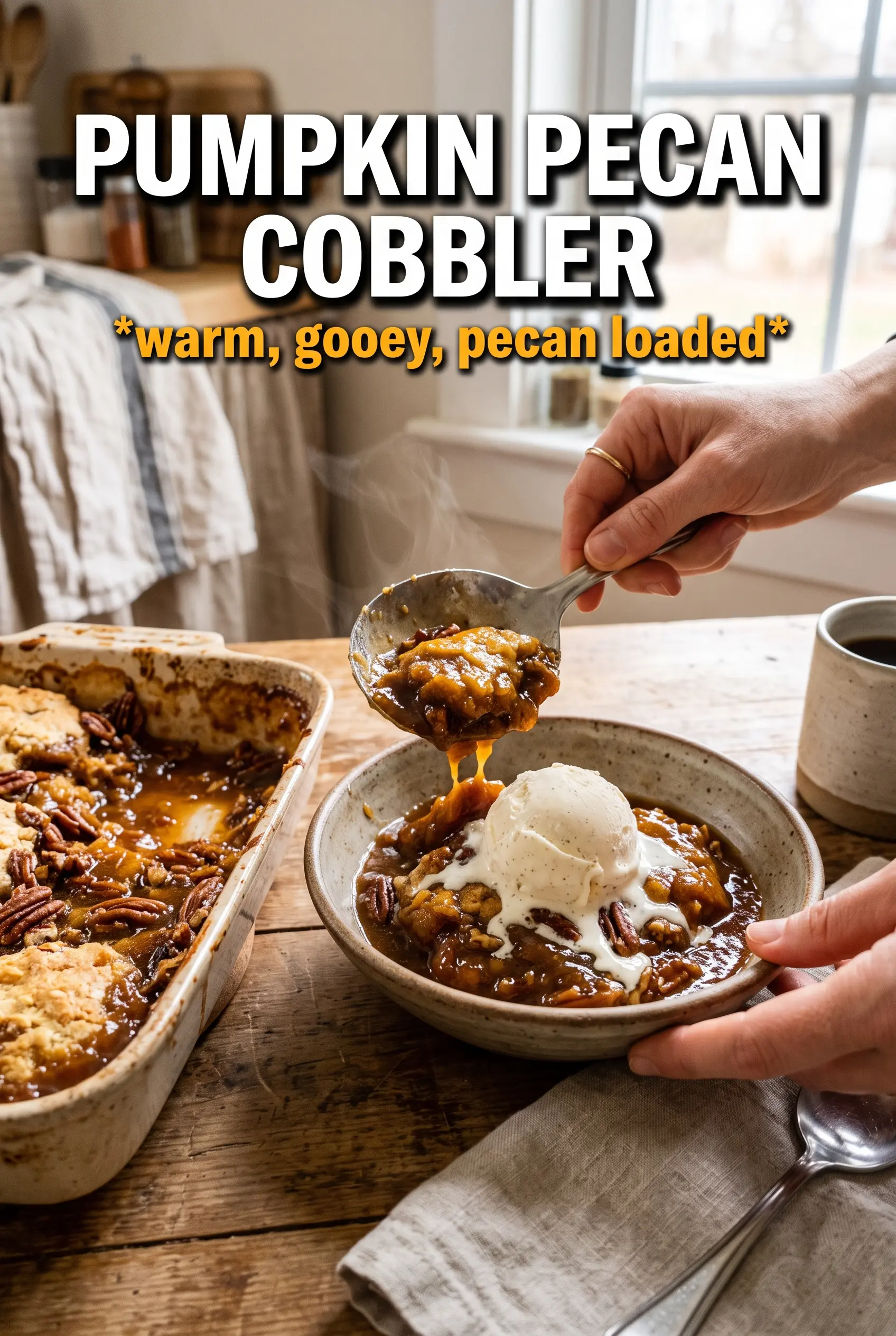
Pumpkin pecan cobbler bakes up with a soft, cake-like top and a warm caramel sauce underneath that you spoon up right from the pan. The pecans toast as the dessert bakes, so every bite gives you tender pumpkin spice crumb, buttery crunch, and that glossy sauce that gathers around the edges and underneath the cobbler. Served warm with vanilla ice cream, it lands somewhere between pudding cake and old-school cobbler, and that’s exactly why it disappears fast.
The trick is that the hot water gets poured over the top and left alone. It looks wrong for a minute, but that liquid drops through the sugar layer and creates the sauce while the batter sets above it. The pumpkin puree keeps the base moist and dense enough to hold its shape, while the brown sugar adds the deeper caramel note that plain granulated sugar can’t quite match.
Below, I’ll walk through the part that matters most: how to pour the water without disturbing the layers, plus a few swaps and storage notes so you can make this dessert with confidence.
The topping looked like it was floating at first, but the sauce formed underneath exactly like you said. Mine baked up with a soft pumpkin layer and a thick caramel bottom, and the pecans stayed crisp.
Save this pumpkin pecan cobbler for the nights you want a warm caramel sauce under a tender pumpkin spice topping.
The Water Layer Is What Builds the Sauce Underneath
Most cobblers ask you to mix everything together and hope for the best. This one works because the batter, sugar topping, and hot water stay in separate layers long enough for the oven to do the work. The water sinks down, dissolves the sugar, and turns into a caramel-like sauce beneath the cake as the top bakes and sets.
If your cobbler comes out too dry, the usual culprit is not enough liquid or an oven that ran hot enough to overbake the center before the sauce finished forming. Stop when the middle is just set and still has a slight wobble. It will finish tightening as it rests, and that’s when the sauce settles into the right spoonable texture.
- Pumpkin puree — This gives the batter its dense, moist crumb and the pumpkin flavor that makes the dessert feel rounded instead of just sweet. Use plain pumpkin puree, not pumpkin pie filling, or the sugar and spice balance will be off.
- Pumpkin pie spice and cinnamon — These do the heavy lifting in the batter and the topping, so the dessert tastes like pumpkin from the first bite through the last spoonful of sauce. If you only have cinnamon, use it, but the finished cobbler will lose some of that layered spice warmth.
- Brown sugar — This is what gives the sauce its deeper caramel note. Light or dark brown sugar both work; dark brown sugar makes the sauce a little richer and more molasses-forward.
- Pecans — Roughly chopped pecans give you crunch that survives the bake instead of turning pasty. If yours are old or stale, toast them briefly first so the flavor comes back to life.
What Each Ingredient Is Actually Doing in This Recipe
- Primary ingredient (the star) — Quality matters most. Choose the best you can find.
- Cooking medium (oil, butter, or broth) — This carries flavors and prevents dryness.
- Seasonings (salt, pepper, spices, herbs) — Layer flavors so nothing overpowers. Build depth gradually.
- Aromatics (garlic, onion, herbs) — Cook with fat to bloom flavors. Become the foundation.
- Supporting ingredients — Complement the main ingredient without overpowering it.
- Sauce or liquid (if applicable) — Brings flavors together. Balance richness with acid.
- Acid (lemon, vinegar, wine, or other) — Brightens and prevents flat-tasting results.
- Final finish (garnish, glaze, or sauce) — Prevents one-dimensional taste and adds visual appeal.
How to Layer It So the Cobbler Bakes Instead of Collapsing
Build the Pumpkin Batter
Whisk the dry ingredients first so the baking powder and spices are evenly distributed, then stir in the pumpkin, melted butter, milk, and vanilla until you have a thick, spreadable batter. It should look more like a soft cake batter than a pourable one. If it seems stiff, that’s fine; spreading it into the pan helps it bake up with enough structure to hold the sauce underneath. A fully mixed batter matters here, because streaks of flour turn gummy in the finished dessert.
Scatter the Pecans and Sugar Topping
Once the batter is in the pan, sprinkle the chopped pecans over the surface, then add the brown sugar, granulated sugar, and cinnamon mixture in an even layer. Don’t stir. The topping needs to sit on top so it can melt down through the batter and into the hot water below. Uneven sugar piles can leave one corner overly sweet and another corner too dry, so take a second to spread it all the way to the edges.
Pour the Hot Water and Leave It Alone
Very hot water is the turning point in this recipe. Pour it slowly over the back of a spoon or directly over the top in a steady stream so you don’t dig holes through the sugar layer. The pan will look wrong at this stage, with liquid pooling on top, and that’s exactly right. If you stir, you lose the separate layers that create the sauce.
Bake Until the Center Just Sets
Bake until the top looks set and the center has only the faintest jiggle when you nudge the pan. The surface should be golden and a little crackly, and you may see bubbling sauce around the edges. Pull it before the middle turns firm all the way through, or the sauce underneath will cook down too far and the dessert will eat more like cake. Let it sit a few minutes after baking so the sauce thickens enough to spoon cleanly.
How to Adapt This When You Want a Different Finish
Dairy-Free Version
Swap the butter for melted dairy-free butter and use an unsweetened non-dairy milk with a neutral flavor, like oat or almond. The batter will still bake into a soft pumpkin layer, though the crumb may be a touch less rich than the original. Serve with dairy-free vanilla ice cream if you want the same warm-and-cold contrast.
Gluten-Free Version
Use a cup-for-cup gluten-free flour blend that includes xanthan gum. The texture will be a little more delicate, but the sauce and topping still work the same way. Don’t use almond flour here on its own; it won’t give the batter enough structure to hold the sauce below.
Walnuts Instead of Pecans
Walnuts work well if that’s what you have, and they bring a sharper, slightly more bitter edge than pecans. The cobbler will still be rich and caramel-heavy, but the nut flavor will read more rustic and less buttery. Chop them roughly so they stay visible and add crunch.
Make It a Little Less Sweet
Reduce the granulated sugar in the batter by 2 to 3 tablespoons if you want the pumpkin to come through more clearly. Keep the topping as written, because that sugar is what creates the sauce. Cutting the topping too much changes the whole dessert and leaves you with a thin, underdeveloped pan sauce.
Storage and Reheating
- Refrigerator: Store covered for up to 4 days. The sauce will thicken as it chills, which is normal.
- Freezer: It freezes better in portions than as one large pan. Wrap tightly and freeze for up to 2 months, then thaw overnight in the refrigerator.
- Reheating: Warm individual servings in the microwave for short bursts or reheat the whole dish, covered, in a 300F oven until hot. Don’t overheat it or the sauce can tighten and the top can dry out.
Questions I Get Asked About This Recipe
Pumpkin Pecan Cobbler
Ingredients
Equipment
Method
- Preheat oven to 350F, then butter a 9x13 baking dish so the cobbler releases cleanly after baking.
- Whisk all-purpose flour, granulated sugar, baking powder, pumpkin pie spice, cinnamon, and salt until evenly combined with no dry pockets.
- Stir in pumpkin puree, melted butter, milk, and vanilla extract, then spread the batter evenly in the dish.
- Scatter pecans over the batter so they stay visible on top during baking.
- Mix brown sugar, granulated sugar, and cinnamon, then sprinkle evenly over the batter for a sweet, spiced layer.
- Pour very hot water over everything, and do not stir, so it sinks and forms the caramel-pumpkin sauce underneath.
- Bake for 40-45 minutes at 350F until the center is just set and the top looks golden.
- Serve warm so the caramel sauce underneath is bubbling and pair with vanilla ice cream so it melts alongside each portion.