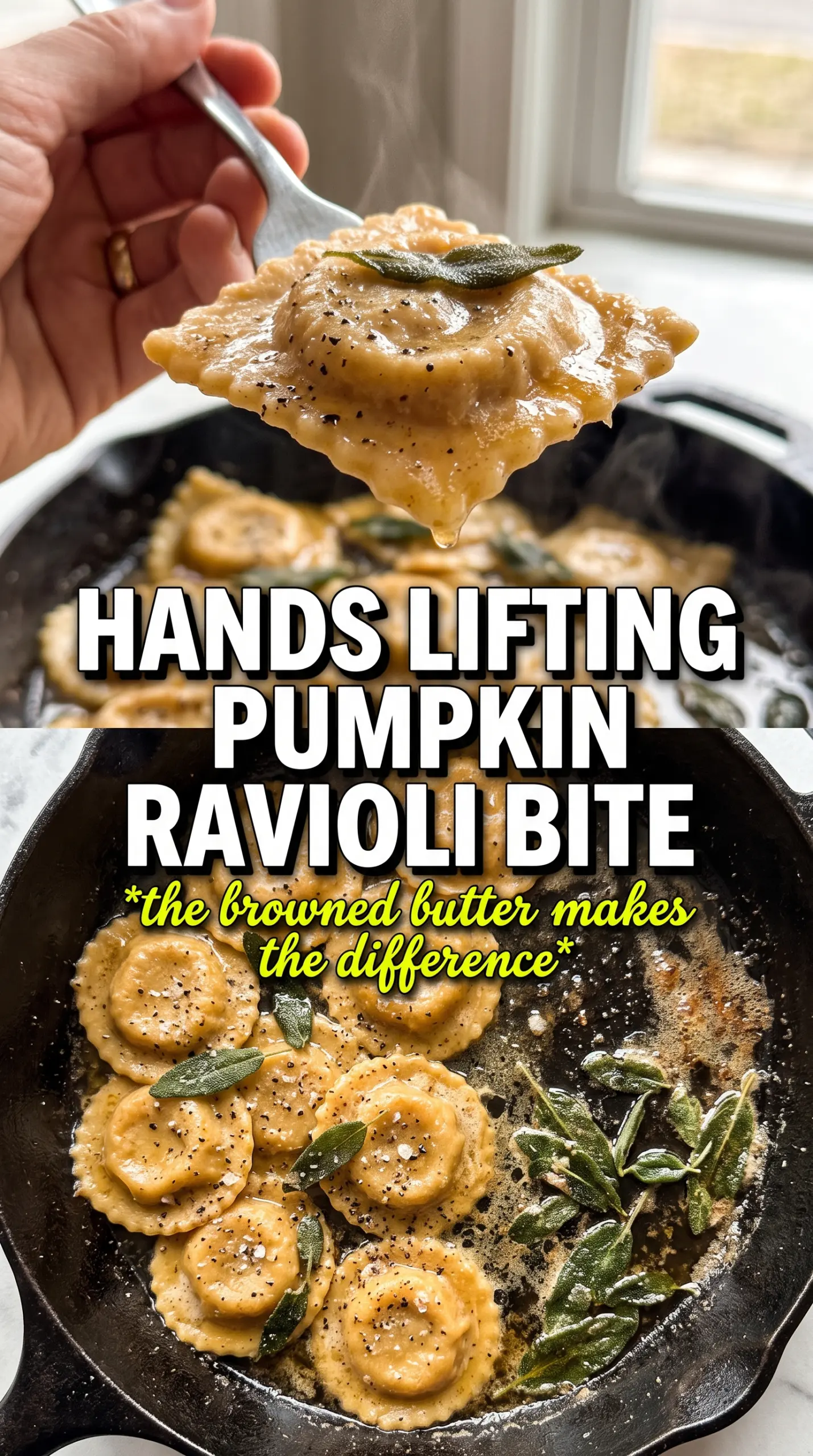
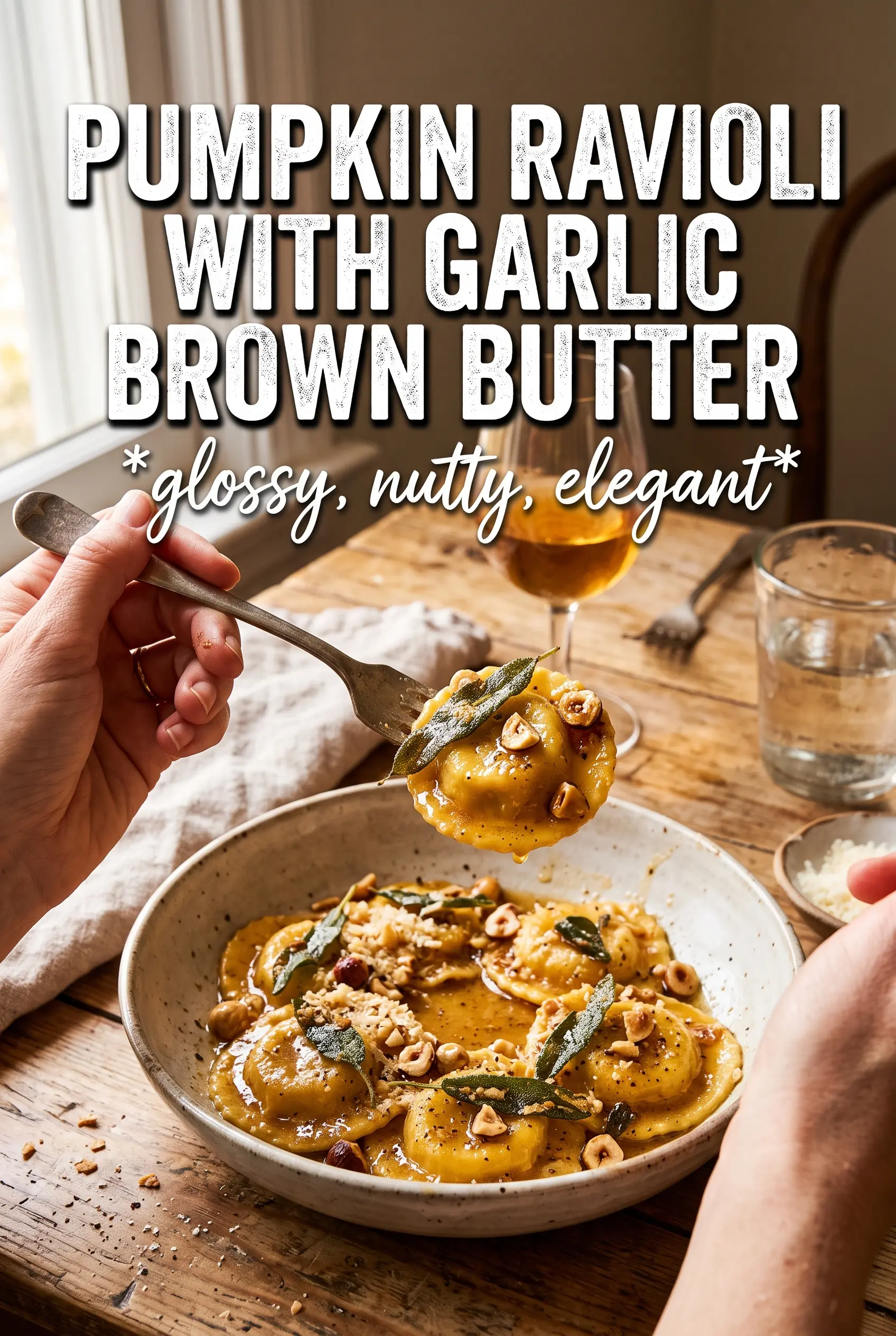
Silky pumpkin ravioli with garlic brown butter lands on the plate with that combination people go back for without thinking: tender pasta, a nutty, savory sauce, and little bursts of crispy sage that keep each bite from feeling soft or one-note. The filling stays balanced instead of turning heavy, and the browned butter gives the whole dish a warm, toasty depth that tastes like it took far more effort than it did.
What makes this version work is restraint. The pumpkin puree gets blotted dry so the filling doesn’t turn loose, and the ricotta keeps it creamy without making the wrappers soggy. The brown butter goes just far enough to smell like toasted hazelnuts before the garlic and sage finish it off, which means the sauce tastes rich instead of greasy. A handful of pine nuts adds crunch and a little sweetness that fits the pumpkin beautifully.
Below you’ll find the small details that matter here: how to keep the ravioli sealed, when the butter is browned enough, and what to change if you’re using store-bought pumpkin ravioli instead of making the quick version from wonton wrappers.
The filling held together perfectly and the brown butter turned nutty before the garlic burned. I used store-bought wrappers and they cooked in just a few minutes, but the sage and pine nuts made it taste like a restaurant plate.
Save this pumpkin ravioli with garlic brown butter for the night you want a cozy pasta dinner that still feels special.
The Trick to Keeping Pumpkin Ravioli from Turning Watery
Pumpkin filling gets into trouble when it’s treated like a thick puree right out of the can. Canned pumpkin holds a lot of hidden moisture, and if you skip the step of blotting it dry, the filling can seep out when you seal the wrappers or turn the pasta soft after boiling. The goal is a spoonable mixture that sits in a neat mound and doesn’t slump.
Ricotta helps here because it adds creaminess without needing extra starch. Parmesan tightens the mixture and gives it salt, while nutmeg and cinnamon keep the pumpkin tasting round instead of flat. If the filling feels loose, don’t keep adding more ricotta; keep blotting the pumpkin until it looks dense enough to hold its shape on a spoon.
What Each Ingredient Is Actually Doing in the Sauce and Filling
- Pumpkin puree — This gives the ravioli its flavor and color, but it needs to be blotted dry first. Wet pumpkin is the fastest way to get a filling that leaks or makes the wrappers gummy.
- Ricotta — Ricotta makes the filling creamy and light. Whole-milk ricotta works best because it has a richer body; part-skim can work, but it tends to taste a little flatter and hold a little less nicely.
- Parmesan — Parmesan seasons the filling and helps it set. Use the real stuff if you can, since pre-grated cheese doesn’t melt as smoothly and can taste dusty in a filling this simple.
- Wonton wrappers — These are the shortcut that makes quick homemade ravioli possible. They seal best when the edges are just barely damp, not wet, or they’ll slip open in the pot.
- Butter — Unsalted butter gives you control over the final seasoning and browns into the sauce itself. Once it smells nutty and the milk solids turn golden, the sauce has enough depth; push it too far and it turns bitter fast.
- Garlic and sage — The garlic perfumes the butter, and the sage crisps in the fat. Slice the garlic thin so it cooks quickly; thick pieces can burn before the butter finishes browning.
- Pine nuts — These add a buttery crunch that plays against the soft ravioli. Toasted pine nuts are worth the extra minute because raw ones taste mild and disappear in the dish.
Getting the Ravioli Sealed and the Brown Butter Right
Building the filling
Stir the pumpkin, ricotta, parmesan, nutmeg, cinnamon, salt, and white pepper until the mixture looks smooth and thick. Drop about a teaspoon in the center of each wrapper, then brush the edges lightly with water and press out the air before sealing. Air pockets are what make ravioli burst in the pot, so flatten the pasta around the filling with your fingertips before you close it.
Boiling without overcooking
Use a large pot of well-salted water and keep it at a steady boil, not a furious rolling one. The ravioli only need 3 to 4 minutes, and they should float before they come out. If you leave them in too long, the wrappers start to soften and tear when they hit the sauce.
Brown butter with garlic and sage
Melt the butter in a large skillet over medium heat and watch for the foam to settle into a clear, golden color with toasted bits at the bottom. Add the garlic and sage once the butter is already browned, not before, or the garlic can scorch while the butter is still trying to develop flavor. The sage is done when it looks crisp and darker green, and the garlic should be pale gold, not deep brown.
Finishing the dish in the pan
Add the drained ravioli to the skillet and toss gently so each piece gets coated without breaking. The sauce should cling in a glossy layer, not pool at the bottom; if it looks dry, add a spoonful of pasta water and toss again. Scatter on the pine nuts and parmesan right before serving so the nuts stay crunchy and the cheese melts in little warm shavings.
How to Adapt This for Store-Bought Ravioli, Dairy-Free Needs, or a Bigger Plate
Use store-bought pumpkin ravioli
Skip the filling and cook the ravioli according to the package directions, then toss them directly in the brown butter. This version is the fastest route to dinner and still tastes complete because the sauce carries most of the flavor.
Make it dairy-free
Use dairy-free ravioli and swap the butter for a good vegan butter that browns well. You lose a little of that nutty milk-solid flavor, but the sage, garlic, and pine nuts still give the dish enough richness to feel satisfying.
Make it gluten-free
Use gluten-free ravioli instead of wonton wrappers, or choose a store-bought gluten-free pasta version. Handle it gently after boiling because gluten-free pasta can go from tender to fragile faster than wheat pasta once it hits the pan.
Stretch it to serve six
Add an extra handful of ravioli and a few more tablespoons of butter so the pan has enough sauce to coat everything evenly. A squeeze of pasta water helps the sauce loosen without watering down the flavor.
Storage and Reheating
- Refrigerator: Store leftovers in an airtight container for up to 3 days. The ravioli will soften a little as they sit, but they still reheat well.
- Freezer: The cooked dish doesn’t freeze well because the pasta gets soft and the butter sauce can separate. Freeze uncooked sealed ravioli on a tray instead, then cook from frozen and add the sauce fresh.
- Reheating: Warm gently in a skillet over low heat with a splash of water or a little butter. The mistake people make is blasting it in the microwave, which tightens the filling and makes the pasta rubbery.
Answers to the Questions Worth Asking
Pumpkin Ravioli With Garlic Brown Butter
Ingredients
Equipment
Method
- Stir pumpkin puree, ricotta, parmesan, nutmeg, and cinnamon in a bowl until smooth and evenly combined. Keep the filling thick so it seals cleanly.
- Place 1 teaspoon of filling on each wonton wrapper, then moisten the edges with water and fold to seal. Press firmly to form a pillow shape with no gaps.
- Bring a large pot of well-salted boiling water to a steady boil, then cook ravioli for 3-4 minutes until they float. Scoop them out and drain right away.
- Melt butter in a large skillet over medium heat until it turns golden and nutty, swirling frequently. Once it foams, add garlic and sage and fry for 1-2 minutes until the sage is crispy.
- Toss the drained ravioli in the brown butter so they get glossy coverage. Move quickly to keep the wrappers from softening.
- Scatter toasted pine nuts over the top and serve immediately with generous parmesan. Garnish while the butter is still fragrant and the sage stays crisp.