Creamy pumpkin risotto gets its best texture when the rice stays tender at the edges and just a little loose in the center, and the bacon, parmesan, and fried sage give every bite enough salt and crunch to keep the bowl from feeling heavy. The pumpkin turns the risotto a deep golden-orange and adds body without making it gluey, while the bacon fat builds a savory base that plain butter never could.
The trick is keeping the broth hot and adding it slowly so the arborio rice can release starch at its own pace. If you dump in cold liquid or rush the stirring, the rice tightens up before it turns creamy. Pumpkin goes in near the end, once the rice is already tender, so it thickens the pan without dulling the grain or making the whole dish pasty.
Below you’ll find the small details that matter here: when to stop stirring, how to keep the parmesan smooth, and how to get those sage leaves crisp instead of bitter. Those are the parts that turn a good risotto into one you’ll want to make again.
The risotto turned out creamy without turning mushy, and the pumpkin stayed mellow instead of overpowering everything. Frying the sage in butter at the end gave it such a good crunch with the bacon.
Save this pumpkin risotto with bacon and parmesan for the nights when you want a creamy skillet dinner with crisp sage on top.
The Reason This Risotto Stays Creamy Instead of Turning Heavy
Risotto goes wrong when the rice cooks too fast on the outside and too slow in the center. Arborio needs gradual moisture and steady stirring so the starch can thicken the pot naturally. That is what gives you the creamy, spoonable texture without adding cream.
The other place people lose the dish is the pumpkin. Stir it in too early and it can mute the rice before the grains are tender. Stir it in after the rice is already nearly done, and it blends into the broth, adds body, and keeps the finished bowl from tasting flat.
- Bacon fat gives the base its backbone. Use just enough to sauté the onion, not so much that the dish turns greasy.
- Warm broth matters more than most people think. Cold broth drops the pan temperature and slows the release of starch.
- Parmesan should go in off the heat or over very low heat. High heat can make it grainy instead of silky.
- Sage adds the crisp, aromatic finish that keeps each bite from feeling one-note.
What Each Ingredient Is Actually Doing In The Bowl

- Arborio rice is the structure here. Its high starch content is what creates risotto’s creamy texture, and a long-grain rice won’t give you the same result.
- Pumpkin puree adds body and a gentle sweetness. Use plain pumpkin puree, not pumpkin pie filling, or the dish will taste spiced and sweet instead of savory.
- Bacon brings salt, smoke, and fat. Thick-cut bacon works, but regular bacon crisps faster and blends more evenly into the finished risotto.
- Dry white wine brightens the base and helps lift the browned bits from the pan. If you skip it, add a small splash of broth with a tiny squeeze of lemon at the end to keep the flavor from flattening.
- Parmesan needs to be finely grated so it melts smoothly. Pre-grated cheese can work in a pinch, but fresh grated parmesan gives a cleaner finish.
- Butter and sage finish the dish with richness and a crisp, herbal top note. Fry the sage just until it darkens and curls; leave it too long and it turns brittle and bitter.
Building The Creamy Finish Without Losing The Rice
Crisping The Bacon And Building The Base
Cook the diced bacon until it is deeply browned and the fat has rendered, then lift it out and leave about a tablespoon of fat in the pan. That fat carries the onion and garlic, and it gives the whole dish a savory start that butter alone cannot match. If the bacon is pale, the finished risotto will taste flatter, so give it the time to develop color before you move on.
Coating The Rice Before The Liquid Goes In
Add the arborio rice to the onion mixture and stir it for about two minutes, until the edges look translucent and the grains sound a little dry against the pan. That brief toast helps the rice hold its shape while still releasing starch later. Pour in the wine and keep stirring until the pan looks almost dry again; if you add broth too soon, you dilute the flavor and miss that first layer of depth.
Adding Broth The Slow Way
Keep the broth hot and add it one ladle at a time, stirring until each addition is mostly absorbed before adding the next. The pan should stay at a gentle simmer, not a hard boil. If the rice is still chalky in the center after the liquid is gone, it needs more broth and more time; if it starts looking thick and stiff before it is tender, add a little more liquid and keep going.
Finishing With Pumpkin, Cheese, And Butter
When the rice is tender but still has a slight bite, stir in the pumpkin and parmesan, then finish with butter. Pull the pan off the heat if the mixture starts looking grainy, because parmesan can tighten up when it gets too hot. The risotto should spread slowly on the plate, not sit in a firm mound.
How To Adapt This Risotto When You Need A Different Version
Make It Dairy-Free Without Losing The Creamy Texture
Skip the butter and parmesan and finish with a spoonful of olive oil plus a little extra salt. You lose the nutty sharpness from the cheese, but the pumpkin still gives body, and the risotto stays creamy if you keep the broth hot and the stirring steady.
Make It Vegetarian With Mushrooms Instead Of Bacon
Cook chopped mushrooms until their liquid evaporates and they brown well, then use olive oil or butter for the onion base. You lose the smoky edge from the bacon, but mushrooms bring a deep savory note that works well with pumpkin and sage.
Use Vegetable Broth For A Lighter Flavor
Vegetable broth works fine if you want the pumpkin to stand out more. Choose a broth that tastes clean and well-seasoned, because a weak broth makes risotto taste thin no matter how carefully you cook it.
Storage And Reheating
- Refrigerator: Store leftovers for up to 3 days. The rice will firm up as it sits, which is normal for risotto.
- Freezer: I don’t recommend freezing this dish. The rice texture turns soft and a little broken after thawing.
- Reheating: Warm it gently on the stove with a splash of broth or water, stirring until it loosens again. The mistake people make is blasting it in the microwave until it dries out, which turns the risotto paste-like instead of creamy.
Answers To The Questions Worth Asking
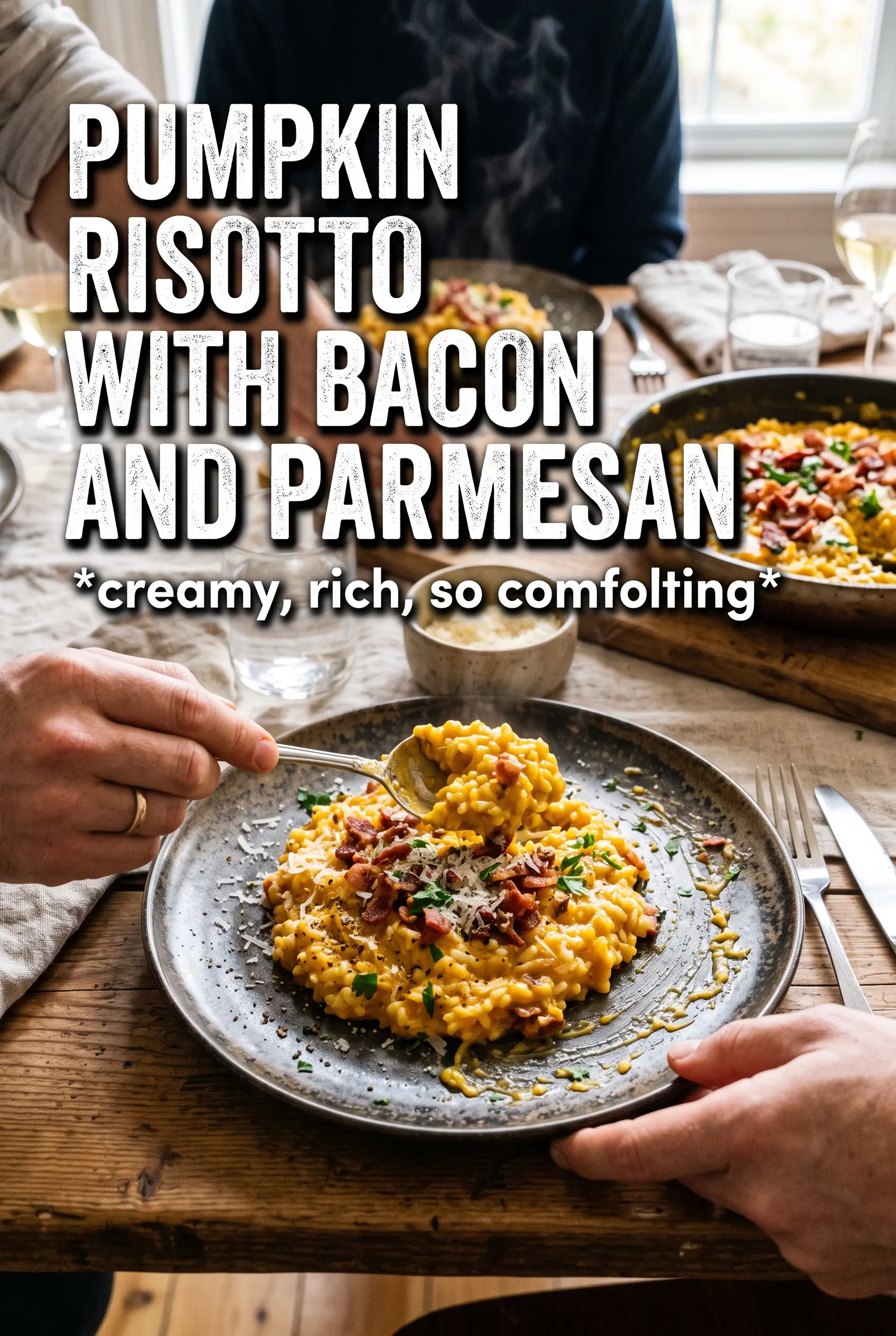
Pumpkin Risotto With Bacon And Parmesan
Ingredients
Equipment
Method
- In a Dutch oven, cook the bacon over medium heat until crispy, then remove to drain and leave about 1 tablespoon of the bacon fat in the pan.
- Sauté the onion in the reserved bacon fat for 4 minutes until softened, then add the garlic and cook for 1 minute.
- Add the arborio rice and toast for 2 minutes while stirring until the grains look slightly opaque.
- Pour in the white wine and stir until it is absorbed, scraping up any browned bits from the bottom of the pan.
- Add warm chicken broth one ladle at a time, stirring constantly and waiting until each ladle is absorbed before adding the next, until creamy and tender, about 20-25 minutes total.
- Stir in the pumpkin puree and grated parmesan, then finish by stirring in the unsalted butter until the risotto turns glossy and creamy.
- Season to taste with salt and white pepper, and cook 1 minute longer just to meld the flavors as the risotto thickens slightly.
- In a small amount of the extra butter, fry the fresh sage leaves until crispy, turning as needed so they get crisp edges.
- Serve the risotto topped with crispy bacon and fried sage, with additional parmesan if desired.