Pumpkin roll slices with that soft, spiced sponge and a thick cream cheese spiral never last long on the plate. The cake stays tender enough to roll without cracking, but it still has enough structure to hold the filling instead of collapsing into a sticky mess. That balance is what makes this dessert worth repeating.
The trick is in the cake batter and the timing. Eggs and sugar are beaten until pale and airy, which gives the sponge lift without needing a heavy amount of flour. Pumpkin puree keeps the cake moist, but the pan has to come out as soon as the center springs back and the edges just start to pull away. Overbaking dries it out fast, and a dry pumpkin cake is the one that splits when you try to roll it.
Below, I’ve included the step that keeps the cake from sticking to the towel, plus the filling texture that spreads cleanly without squeezing out the sides. If you’ve ever had a pumpkin roll crack halfway through assembly, the fixes here will save you from that again.
The cake rolled without cracking and the filling stayed thick instead of oozing out. Chilling it for an hour made slicing neat, even though I wanted to cut in sooner.
Save this Pumpkin Roll for the dessert that needs a clean spiral, a soft spice cake, and a thick cream cheese filling.
The Thin Cake Layer That Keeps Pumpkin Roll from Cracking
This dessert fails when the cake is too thick, too dry, or both. A pumpkin roll needs a batter that spreads all the way to the corners of the pan and bakes into a flexible sheet, not a fluffy cake. That’s why the pan size matters so much here. If you use anything smaller than a 15×10 jelly roll pan, the cake layer gets too dense and the roll tightens up before it cools.
Eggs do most of the structural work, and beating them with the sugar until light gives the cake enough lift to stay tender. Pumpkin puree adds moisture, but it also makes the batter heavier than a standard sponge, so the flour amount stays modest. The goal is a thin, even layer that springs back when touched in the center and pulls slightly from the sides. If the top looks dry before the center is set, it has gone too far.
- Pumpkin puree — Use plain pumpkin puree, not pumpkin pie filling. The filling already contains sugar and spices, which throws off the balance and can make the cake gummy.
- Pumpkin pie spice and cinnamon — The pie spice gives the classic warm background, and the extra cinnamon sharpens it just enough. If you only have pie spice, use a little extra cinnamon to keep the flavor from going flat.
- Flour — All-purpose flour is the right choice here. A lighter flour can make the cake fragile, and a heavier one makes it tough to roll.
Building the Spiral So the Filling Stays Put
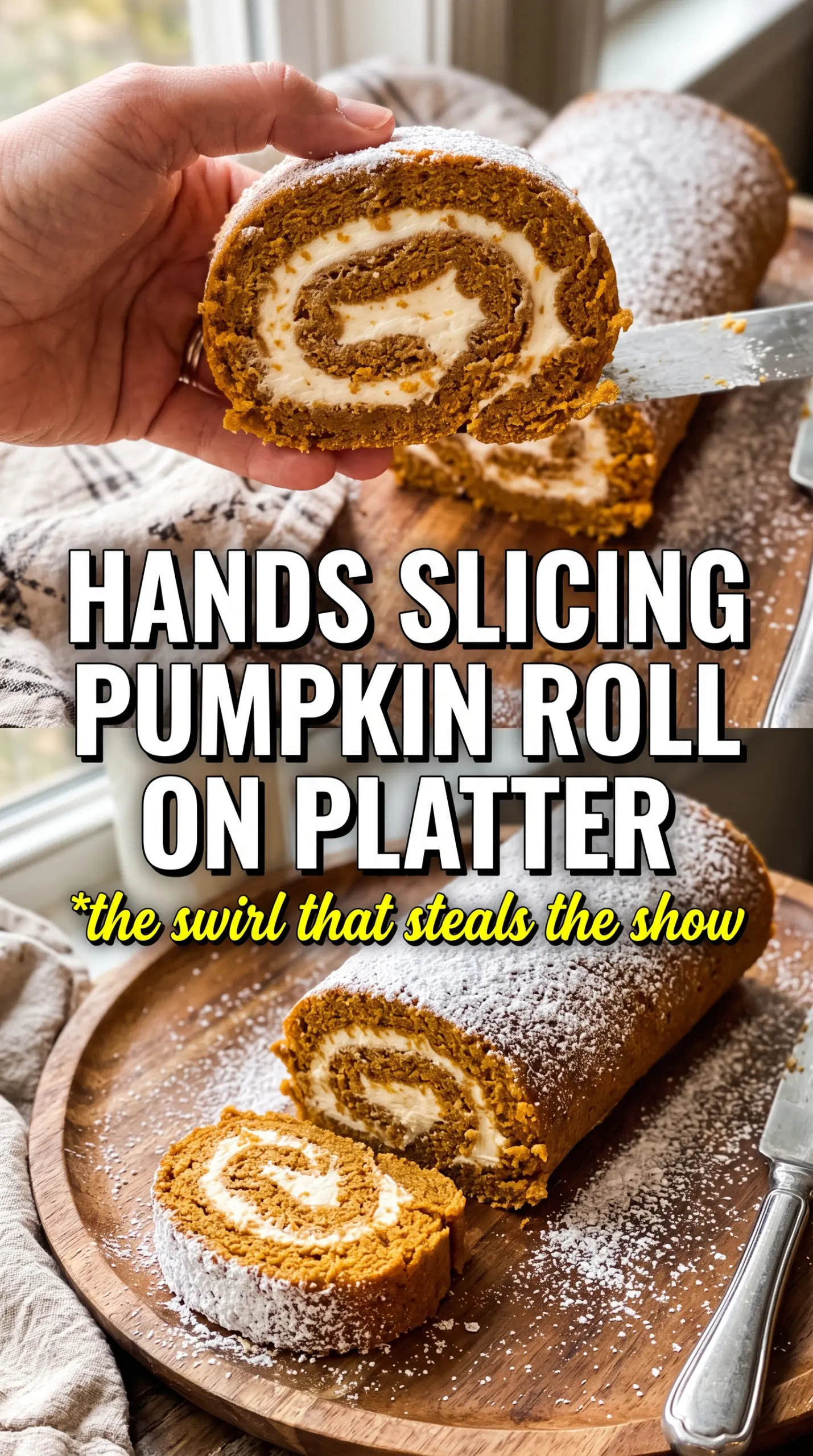
- Cream cheese — Full-fat cream cheese gives the filling enough body to hold its shape after chilling. Lower-fat versions soften too much and can turn loose when the roll is sliced.
- Butter — Softened butter makes the filling smooth and spreadable. If it’s too cold, you’ll get little lumps; if it’s melted, the filling turns greasy and won’t stay in a neat layer.
- Powdered sugar — This thickens the filling without making it gritty. Add it gradually so the filling turns fluffy instead of stiff and crumbly.
- Vanilla and cinnamon — Vanilla rounds out the tang from the cream cheese, and cinnamon links the filling back to the spiced cake. It’s a small addition that keeps the dessert tasting cohesive.
The Cooling Window That Matters More Than the Baking Time
From Oven to Towel
As soon as the cake comes out, turn it out onto a towel dusted generously with powdered sugar. That sugar layer is what keeps the warm cake from welding itself to the fabric. Peel off the parchment while the cake is still hot, because it releases cleanly then; once it cools, the parchment can tear the surface. Roll it up in the towel from the short end while it’s warm and flexible, or the first crack usually shows up at the seam.
Cooling in Shape
Let the rolled cake cool all the way before you unroll it for filling. The shape sets as it cools, which is what helps it hold that spiral later. If you rush this and spread the filling into a warm cake, the cream cheese starts to melt and the roll can slide apart when you tighten it. A full hour of chilling after assembly gives you clean slices instead of a squashed middle.
Spreading and Rerolling
Beat the filling until it’s smooth and thick enough to hold soft peaks. Spread it in an even layer right to the edges, but leave a small border so it doesn’t squeeze out when you roll. Reroll slowly and with steady pressure, keeping the seam underneath as you go. If the cake resists, don’t force it — let it rest for a minute and continue, because pulling too hard is what causes the visible split.
How to Adapt Pumpkin Roll Without Losing the Texture
Gluten-Free Version
Use a 1:1 gluten-free baking flour that contains xanthan gum. The cake will be a little more delicate, so handle it gently when you invert and roll it, but the method stays the same. Skip heavy blends that contain bean flour, because they can leave the cake tasting earthy instead of clean and spiced.
Lighter Dairy-Free Filling
Use a dairy-free cream cheese style spread and a plant-based butter that holds shape when chilled. The filling will be a little softer and less tangy, so chill it before spreading if it feels loose. This works best when you plan to serve the roll well chilled.
Extra-Spiced Pumpkin Roll
Add a pinch of cloves or nutmeg if you want the spice to lean warmer and more old-fashioned. Don’t increase the spices too much, though, or they’ll crowd out the pumpkin and make the cake taste sharp instead of balanced.
Storage and Reheating
- Refrigerator: Store tightly wrapped for up to 4 days. The cake softens slightly as it sits, but the spiral stays neat if it’s chilled before slicing.
- Freezer: Pumpkin roll freezes well. Wrap the whole roll or individual slices tightly in plastic, then foil, and freeze for up to 2 months.
- Reheating: Don’t reheat it in the microwave. Serve it chilled or let slices sit at room temperature for 15 to 20 minutes so the filling softens without melting.
Questions I Get Asked About This Recipe
Pumpkin Roll
Ingredients
Equipment
Method
- Preheat oven to 375F. Grease a 15x10 jelly roll pan, line with parchment, and grease again.
- Beat eggs and granulated sugar until light, about 2-3 minutes. Mix in pumpkin puree and vanilla until smooth.
- Fold in all-purpose flour, baking powder, baking soda, pumpkin pie spice, cinnamon, and salt. Mix just until no dry streaks remain.
- Spread the batter evenly in the prepared pan. Bake at 375F for 11-13 minutes, until the top springs back when lightly touched.
- Invert the warm cake onto a powdered sugar-dusted towel. Peel off the parchment while the cake is still warm.
- Roll the cake in the towel from the short end. Let it cool completely to set the shape.
- Beat cream cheese, powdered sugar, unsalted butter, vanilla, and cinnamon until smooth and spreadable. Unroll the cooled cake and spread the filling evenly.
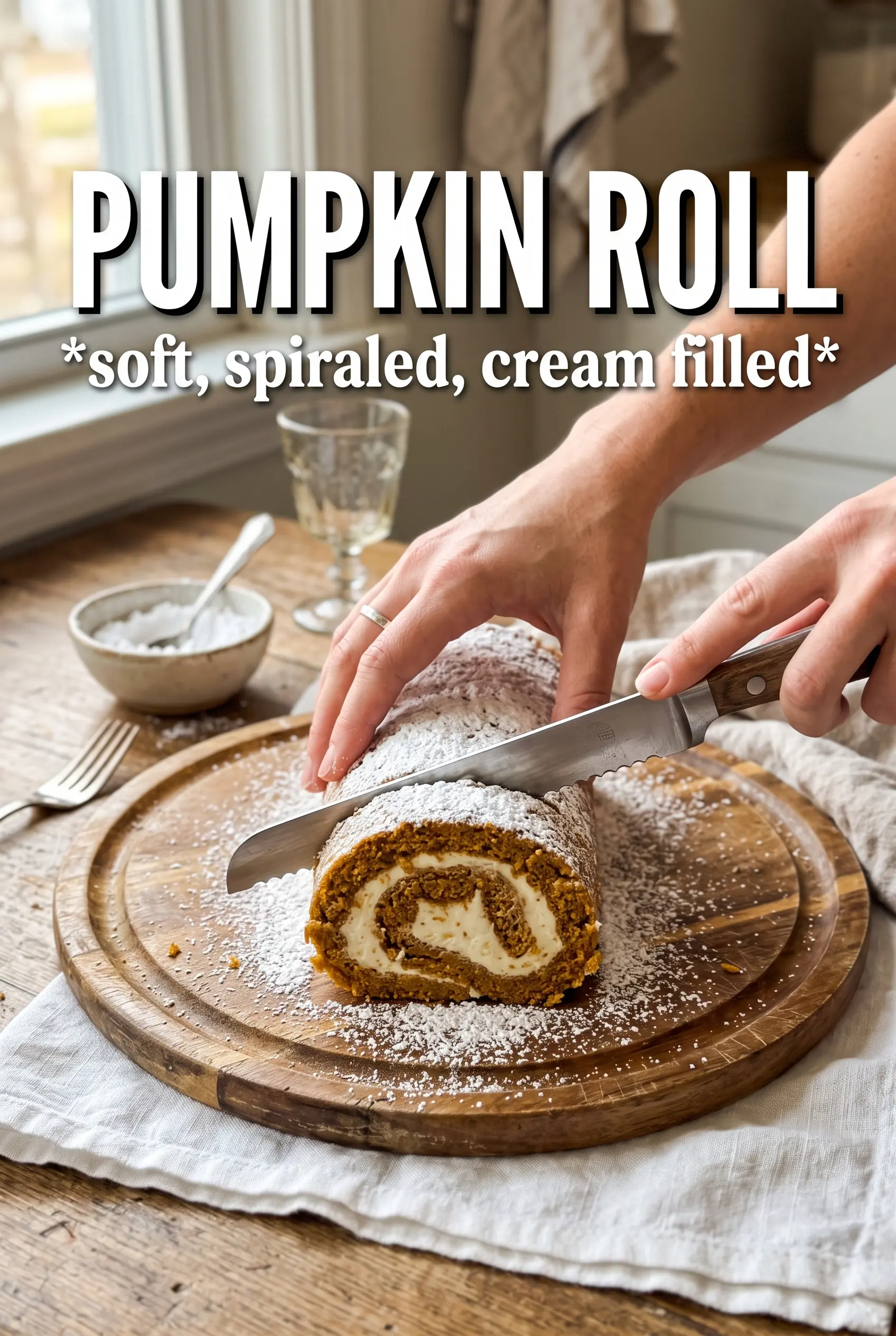
- Re-roll the cake without the towel. Refrigerate 1 hour, then dust with powdered sugar for dusting before slicing and serving.