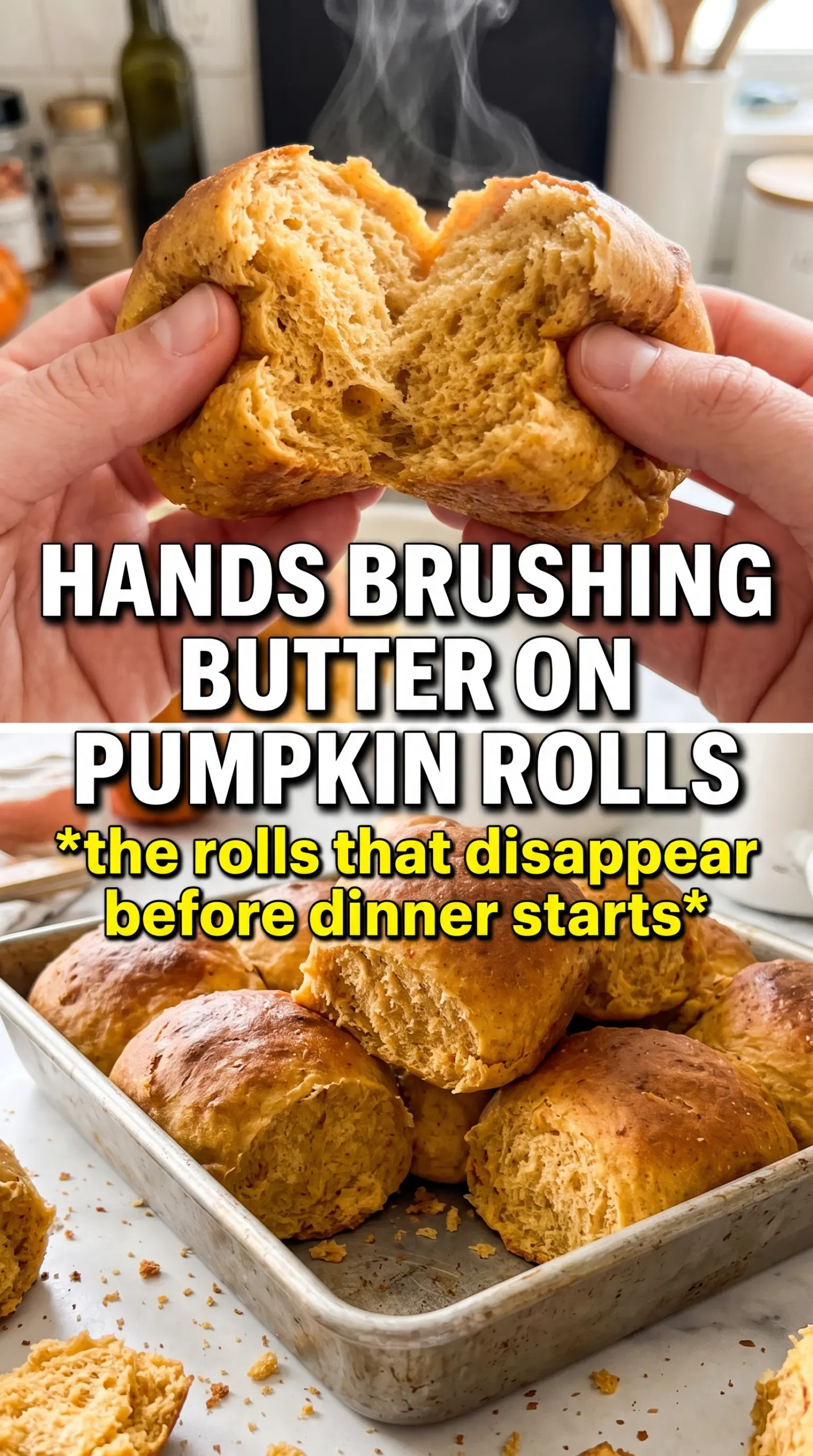
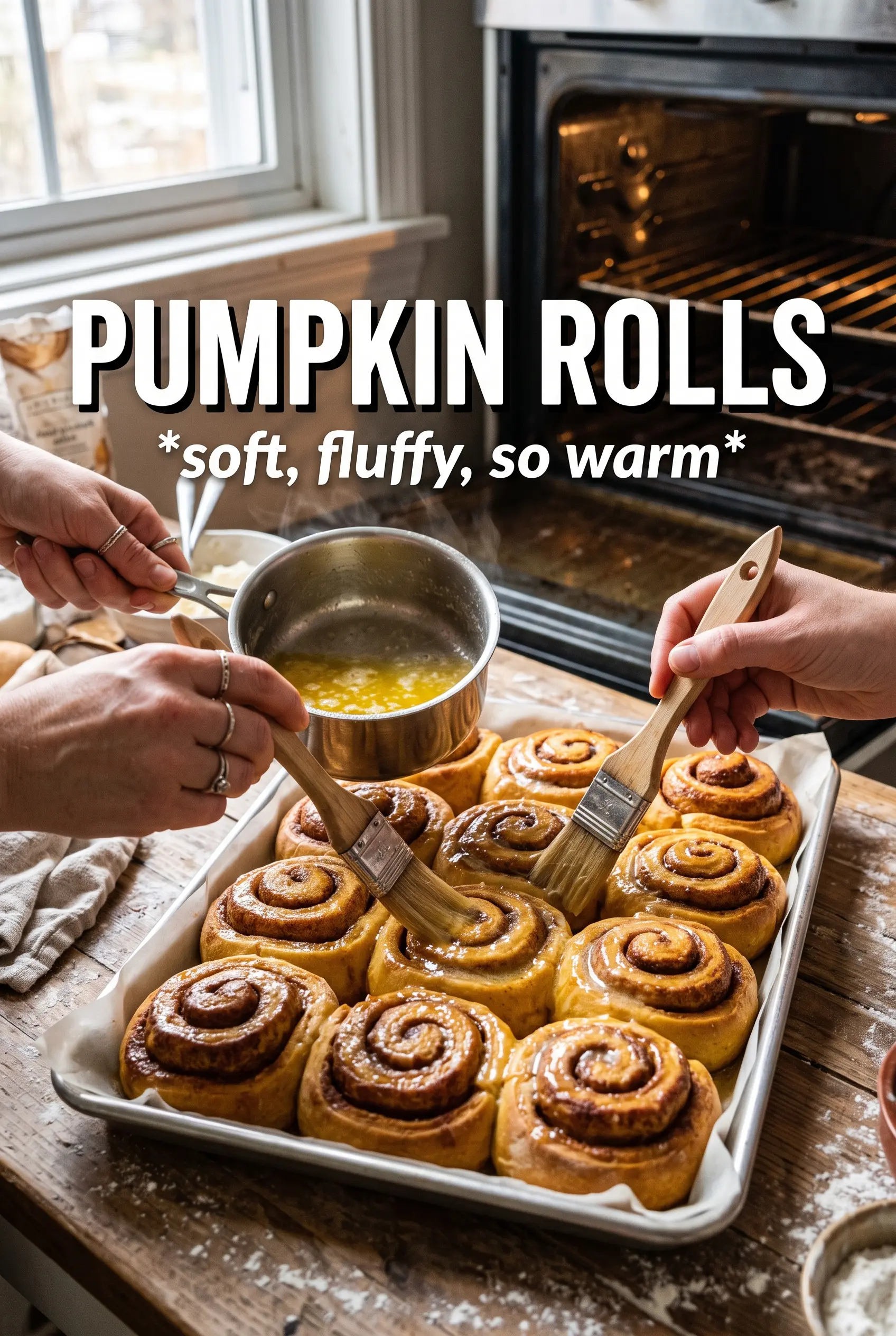
Soft pumpkin rolls rise into the kind of bread that disappears while it’s still warm. They bake up pillowy and tender with a gentle orange color, a whisper of spice, and just enough sweetness to make them feel special without tipping into dessert territory. The honey-cinnamon glaze brushed over the top catches in every seam and gives the rolls a glossy finish that makes the whole pan smell like a bakery.
What makes these work is the balance between moisture and structure. Pumpkin puree adds flavor, color, and softness, but it also changes the feel of the dough, so the flour amount and kneading time matter more than they would in a plain dinner roll. Instant yeast keeps the process moving, and the warm milk gives the dough the right starting temperature without pushing it into a hot spot that could slow the rise. The rolls stay light because the dough is kneaded until smooth, then baked just until the tops turn golden.
The dough came together fast and the rolls stayed fluffy instead of dense. That cinnamon honey glaze soaked into the tops just enough without making them soggy, and my kids grabbed two each before dinner started.
Save these pumpkin rolls for the morning you want soft, pillowy bread with a cinnamon honey glaze.
The Difference Between Tender Rolls and Dense Dough
Pumpkin rolls fail for the same reason a lot of enriched doughs fail: the dough gets too dry too early, then people keep adding flour until it turns stiff. Pumpkin puree brings extra moisture, but it also makes the dough look softer than a plain white bread dough, so the best cue is how it feels after kneading, not how it looks in the first minute of mixing. It should be smooth, elastic, and just slightly tacky, not sticky enough to cling to your hands in thick patches.
The other place people go wrong is rushing the rise. Pumpkin dough often takes a little more patience because the puree weighs it down just enough to slow the lift. Letting it rise until visibly puffy gives the rolls their light texture; pulling them early leaves you with heavy centers and tight crumb.
What Each Ingredient Is Actually Doing in These Pumpkin Rolls
- Warm milk — This gives the yeast a gentle, even start and helps the dough stay soft. It should feel warm to the touch, not hot. If it’s too hot, the yeast can slow down or die, and the rolls will bake up flat.
- Instant yeast — This keeps the rise simple and reliable. You can use active dry yeast if that’s what you have, but dissolve it a few minutes longer before moving on. The rise may take a little more time, but the texture stays the same.
- Pumpkin puree — This is the ingredient that gives the rolls their color, flavor, and tender crumb. Use plain pumpkin puree, not pumpkin pie filling. The pie filling has sugar and spices already mixed in, which throws off both the seasoning and the dough balance.
- Unsalted butter — Melted butter enriches the dough and helps the rolls stay soft for longer. Salted butter works in a pinch, but reduce the added salt slightly so the dough doesn’t taste flat or overly salty.
- Pumpkin pie spice — This is where the warm background flavor comes from. If you don’t have a blend, use cinnamon with a pinch of nutmeg and cloves. The rolls still work without it, but they’ll taste much plainer.
Building the Dough Without Beating Out the Softness
Waking Up the Yeast
Stir the warm milk, yeast, and sugar together and let it sit until the top looks foamy and a little frothy. That tells you the yeast is active and ready to work. If nothing happens after a few minutes, the milk was likely too hot, too cold, or the yeast is old. Starting over is better than trying to rescue a weak rise later.
Mixing in the Pumpkin
Add the pumpkin puree, melted butter, and egg and mix until the dough looks evenly orange and loose. It will look softer than a standard bread dough at this stage, and that’s normal. The mistake here is adding too much flour too soon because the dough seems wet. Give it time to come together before judging the texture.
Kneading to a Smooth Finish
Knead in the flour, salt, and pumpkin pie spice for 7 to 8 minutes until the dough is smooth and elastic. You want it to pull away from the bowl and hold together without feeling stiff. If it tears easily, it needs more kneading, not necessarily more flour. Stop when it feels supple and bouncy.
Rising, Shaping, and Baking
Let the dough rise until doubled, then divide it into 12 equal pieces so the rolls bake evenly. Shape each piece into a tight ball; loose shaping gives uneven tops and more spread in the pan. After the second rise, the rolls should look puffy and touching slightly before they go into the oven. Bake just until the tops turn golden and the centers are cooked through, then brush on the glaze while they’re still hot so it melts across the surface instead of sitting on top in streaks.
How to Adapt These Rolls Without Losing the Soft Crumb
Dairy-Free Pumpkin Rolls
Swap the milk for an unsweetened non-dairy milk and use a plant-based butter in both the dough and glaze. The rolls stay soft, though the flavor will be a little less rich. Choose a milk with a neutral taste so it doesn’t fight the pumpkin and spice.
Make Them Sweeter and More Dessert-Like
Add another tablespoon of sugar to the dough and brush a little extra glaze over the tops after baking. This pushes the rolls closer to a sweet breakfast bread and makes the cinnamon-honey finish stand out more. The crumb stays the same, but the flavor shifts toward a bakery-style treat.
Using All-Purpose Flour Without Guessing
All-purpose flour is the right choice here, but the amount can vary by brand and measuring style. If the dough feels too sticky after kneading for a few minutes, add flour one tablespoon at a time. The goal is softness, not a dry dough that bakes up tight.
Storage and Reheating
- Refrigerator: Store in an airtight container for up to 3 days. The rolls soften a bit more as they sit, especially under the glaze.
- Freezer: Freeze baked rolls without the glaze for up to 2 months. Wrap tightly and thaw at room temperature before warming.
- Reheating: Warm in a 300F oven for 8 to 10 minutes, or microwave individual rolls for 15 to 20 seconds. Don’t overheat them or the crumb turns tough before the center gets warm.
Answers to the Questions Worth Asking
Pumpkin Rolls
Ingredients
Equipment
Method
- Combine warm milk, instant yeast, and sugar, then let rest 5 minutes until foamy.
- Add pumpkin puree, melted butter, and egg, then mix until mostly combined.
- Knead in all-purpose flour, salt, and pumpkin pie spice for 7–8 minutes until smooth and elastic.
- Cover and rise for 1 hour until puffed.
- Punch down, then divide the dough into 12 equal portions.
- Shape each portion into a ball and place in a greased 9x13 baking dish.
- Let rise 30–40 minutes while you preheat the oven to 375°F.
- Bake for 18–20 minutes until the tops are golden.
- Brush the warm rolls immediately with the cinnamon honey glaze made from melted butter, honey, and cinnamon.