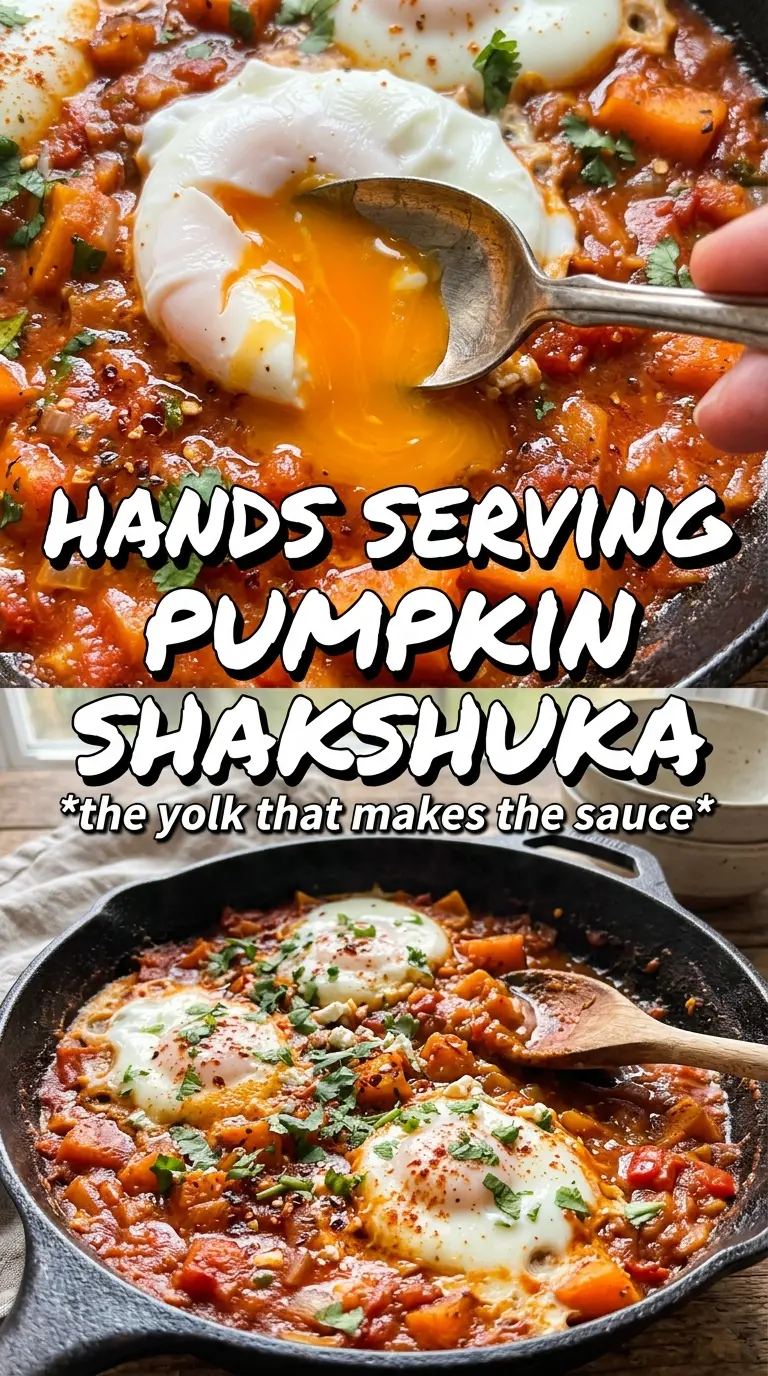
Pumpkin shakshuka turns a familiar tomato-and-egg skillet into something deeper, silkier, and a little more grounded. The pumpkin doesn’t make the sauce taste like pie; it adds body and a mellow sweetness that softens the acidity of the tomatoes and gives the eggs a rich, spoonable base. Each bite lands with warm spice, jammy tomato, and a yolk that runs into the sauce the way it should.
The key is cooking the vegetables and spices long enough for the onion to lose its sharp edge and the spices to bloom in the oil before the tomatoes go in. Pumpkin puree thickens the sauce fast, so you don’t need to reduce it down to nothing. You want it loose enough to cradle the eggs, not so thin that the whites spread out and disappear.
Below, I’ve included the exact visual cues I use for a set white and a still-runny yolk, plus a few swaps that keep the skillet working even when you’re missing a key ingredient.
The sauce thickened beautifully and the eggs stayed soft instead of overcooking. I used the pita to scoop up every last bit, and the feta on top made it taste even better the next day.
Save this pumpkin shakshuka for the nights when you want a one-pan dinner with silky sauce, runny yolks, and warm pita for scooping.
The Trick to Keeping the Pumpkin Sauce Silky, Not Heavy
The biggest mistake with pumpkin shakshuka is treating pumpkin puree like a thickener that can be dumped in and left alone. It needs to be cooked with the tomatoes long enough to lose that raw canned edge and settle into the sauce. If you rush this part, the dish can taste flat and a little pasty instead of rich and savory.
The other thing that matters is the water level. Crushed tomatoes vary a lot, and pumpkin puree adds its own body, so the sauce should end up thick enough to hold a well without the egg sliding away, but still loose enough to bubble gently around the edges. If it gets too tight before the eggs go in, stir in a splash of water and let it simmer for a minute before you crack them.
- Pumpkin puree — Use plain pumpkin puree, not pumpkin pie filling. The canned version is usually the easiest choice here because the tomatoes, spices, and feta carry the flavor; fresh roasted pumpkin works too, but it needs to be cooked and mashed until perfectly smooth.
- Crushed tomatoes — This is the backbone of the dish, so choose one that tastes bright and not metallic. If your tomatoes are extra acidic, a pinch of sugar can help, but the pumpkin usually softens the edge enough on its own.
- Eggs — Fresh eggs hold their shape better in the wells and give you cleaner whites. If your eggs are older, crack each one into a small bowl first so you can slide it into the sauce without breaking the yolk.
- Feta — Salty feta sharpens the sweet-savory balance. Buy a block and crumble it yourself if you can; pre-crumbled feta is drier and doesn’t melt into the sauce the same way.
What Each Ingredient Is Actually Doing in This Recipe
- Primary ingredient (the star) — Quality matters most. Choose the best you can find.
- Cooking medium (oil, butter, or broth) — This carries flavors and prevents dryness.
- Seasonings (salt, pepper, spices, herbs) — Layer flavors so nothing overpowers. Build depth gradually.
- Aromatics (garlic, onion, herbs) — Cook with fat to bloom flavors. Become the foundation.
- Supporting ingredients — Complement the main ingredient without overpowering it.
- Sauce or liquid (if applicable) — Brings flavors together. Balance richness with acid.
- Acid (lemon, vinegar, wine, or other) — Brightens and prevents flat-tasting results.
- Final finish (garnish, glaze, or sauce) — Prevents one-dimensional taste and adds visual appeal.
Building the Skillet So the Eggs Poach Instead of Overcook
Softening the Onion and Pepper First
Warm the olive oil until it shimmers, then cook the onion and bell pepper until they’re soft and starting to pick up color at the edges. That first 6 minutes matters because raw vegetables release water later and thin out the sauce at the wrong time. If the pan looks dry before they soften, add a small splash of oil rather than turning up the heat and scorching the onion.
Blooming the Spices in the Oil
Stir in the garlic, cumin, smoked paprika, coriander, turmeric, and cayenne and cook them just until they smell toasted and fragrant. You’re not frying them hard; you’re waking them up. If the garlic starts browning too fast, lower the heat right away, because burnt garlic turns the whole pan bitter in a hurry.
Reducing the Tomatoes and Pumpkin
Add the crushed tomatoes and pumpkin puree, then simmer until the sauce thickens and looks glossy rather than watery. Stir occasionally so the bottom doesn’t catch, especially near the end when the pumpkin starts to cling to the pan. Season at this point, not after the eggs are cooked, so the sauce tastes balanced all the way through.
Setting the Eggs Without Losing the Yolk
Use a spoon to make six clear wells, then crack each egg into its own spot. Cover the skillet and keep the heat at a gentle simmer; aggressive boiling makes the whites rubbery before the yolks have a chance to stay runny. Start checking at 6 minutes — the whites should look opaque and set, while the yolks still wobble slightly when you nudge the pan.
Dairy-Free Skillet
Leave off the feta and finish with extra herbs and a drizzle of olive oil. You lose the salty tang, so add a little more seasoning at the table or a few olives on the side if you want that sharp contrast back.
Extra-Spicy Version
Increase the cayenne or add a pinch of red pepper flakes with the garlic and spices. That gives the heat a chance to bloom in the oil instead of sitting flat on top of the finished dish.
Make It Heartier
Fold in a cup of cooked chickpeas with the tomato and pumpkin mixture. They hold up well in the sauce and turn the skillet into a fuller meal without changing the poaching time much.
Gluten-Free Serving
Serve with gluten-free flatbread, rice, or roasted potatoes instead of pita. The shakshuka itself is naturally gluten-free, so the only thing to watch is the bread you put beside it.
Storage and Reheating
- Refrigerator: Store the sauce separately from the eggs for up to 3 days. The sauce tastes even better on day two, but the eggs are best fresh.
- Freezer: Freeze the pumpkin-tomato sauce without the eggs for up to 2 months. Thaw it overnight in the fridge and poach fresh eggs in the reheated sauce.
- Reheating: Reheat the sauce gently over low heat until bubbling at the edges, then add fresh eggs. If you try to reheat already-cooked eggs in the sauce, the whites turn rubbery and the yolks lose their texture fast.
Answers to the Questions Worth Asking

Pumpkin Shakshuka
Ingredients
Equipment
Method
- Heat 3 tbsp olive oil in a large oven-safe cast iron skillet. Sauté the diced onion and bell pepper for 6 minutes, stirring until softened and slightly glossy.
- Add the minced garlic, cumin, smoked paprika, coriander, turmeric, and cayenne to the skillet. Cook for 2 minutes, stirring until fragrant and darker at the edges.
- Pour in the crushed tomatoes and stir in the pumpkin puree. Simmer for 10 minutes until the sauce thickens to a spoonable consistency.
- Season the sauce with salt and pepper to taste. Stir well so the seasoning disperses evenly.
- Make 6 wells in the sauce using the back of a spoon. Keep the wells wide enough to cradle the eggs.
- Crack 1 egg into each well. Cover the skillet and cook for 6-8 minutes, until the whites are set but the yolks remain runny.
- Scatter the crumbled feta and fresh herbs over the top. Serve immediately with warm pita.