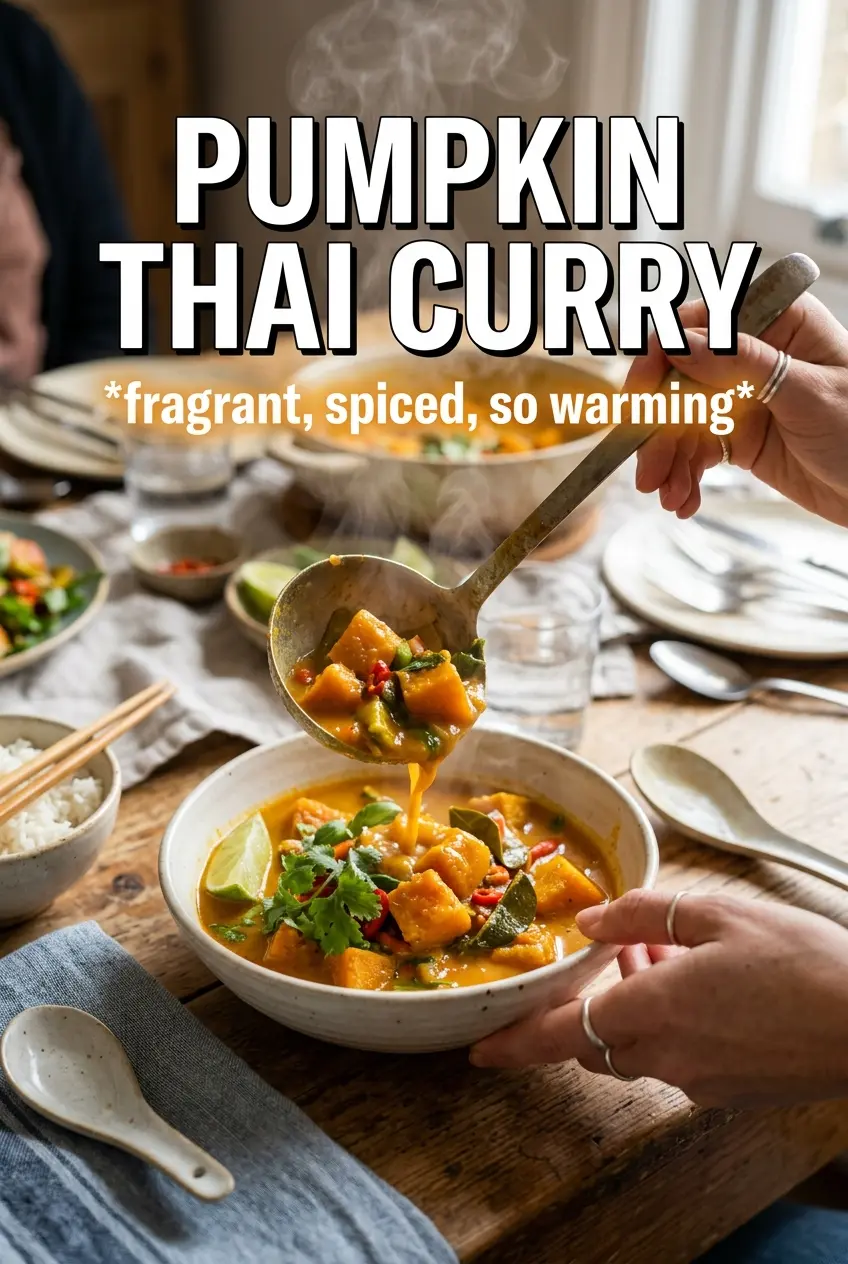
Silky coconut curry clings to tender pumpkin cubes and sweet bell pepper in a way that feels rich without turning heavy. The pumpkin softens just enough to thicken the sauce as it simmers, while the curry paste, ginger, and basil keep every spoonful bright and fragrant. Served over rice with a squeeze of lime, it lands with that balance I keep coming back to: warm, a little sweet, a little salty, and deeply comforting.
The trick is letting the curry paste bloom in the oil before any liquid goes in. That short step wakes up the spices and keeps the final sauce from tasting flat. I also like using coconut milk plus a little broth instead of going all-in on milk alone, because it gives you a sauce that stays lush but still has some lift.
Below you’ll find the small choices that make this bowl work, from the best way to handle the pumpkin to the point where the basil should go in so it stays fresh and vivid.
The curry paste bloomed beautifully and the pumpkin held its shape instead of turning to mash. I added lime at the end and the whole pot tasted restaurant-level.
Save this Pumpkin Thai Curry for the nights when you want a fast coconut curry with tender squash, bright basil, and a good squeeze of lime.
The Trick to Keeping the Pumpkin Tender, Not Mushy
Pumpkin in curry needs just enough time to soften, not so much that it collapses into the sauce. If you cube it too small, it breaks down before the coconut milk has a chance to pick up the flavor. If you cut it too large, the center stays firm while the sauce finishes. I aim for even, medium cubes so the pieces cook through at the same pace and still hold their edges.
The simmer matters more than the boil here. A hard boil can make the coconut milk split and can batter the pumpkin until the outside turns soft before the inside is done. Keep the heat at a gentle simmer, stir once or twice, and stop cooking when the pumpkin is just tender enough to give to a fork.
What Each Ingredient Is Actually Doing in This Curry

- Pumpkin or butternut squash — Butternut squash is the easiest stand-in if you can’t find pumpkin, and it behaves almost the same in the pot. The key is cutting it into even cubes so it softens at the same rate and doesn’t vanish into the sauce.
- Coconut milk — This is what gives the curry its body and mellow sweetness. Use full-fat if you want a richer, silkier sauce; light coconut milk works, but the curry will be thinner and less lush.
- Thai curry paste — Yellow paste gives you a softer, rounder curry, while red paste brings more heat and a deeper chile edge. Either one works, but it needs that quick fry in oil to open up before the liquid goes in.
- Fish sauce or soy sauce — This is the salt that makes the coconut and pumpkin taste complete. Soy sauce is the cleanest swap for a vegetarian version, and I use it in the same amount.
- Thai basil — Add it at the end, not earlier. Its peppery, anise-like flavor fades fast in heat, and the curry tastes fresher when the leaves are folded in right before serving.
Building the Curry Base Without Losing the Coconut Milk
Blooming the Paste First
Warm the coconut oil, then cook the onion, garlic, and ginger until they smell sweet and sharp at the same time. That gives the paste a flavor base to cling to instead of landing raw in the pot. Stir in the curry paste and cook it for about 2 minutes until it darkens slightly and smells fragrant. If it sticks or looks dry, lower the heat a little; scorched curry paste turns bitter fast.
Simmering the Pumpkin Gently
Add the pumpkin, bell pepper, coconut milk, and broth, then bring everything to a gentle simmer. You want small bubbles around the edges, not a rolling boil. Stir occasionally so the coconut milk stays smooth and the pumpkin cooks evenly. The curry is ready for the next stage when the pumpkin is tender enough to pierce easily but still holds its shape.
Finishing With Salt, Sweetness, and Basil
Stir in the fish sauce and brown sugar, then taste the sauce before you do anything else. This is where the curry gets its balance: salty enough to wake up the coconut, sweet enough to round the chile heat, and bright enough to taste complete. Fold in the Thai basil at the very end so it stays green and aromatic. If the sauce tastes flat, it usually needs lime at the table, not more sugar in the pot.
How to Adapt This Curry for Different Kitchens
Make it vegetarian without losing depth
Use soy sauce instead of fish sauce. The curry still gets the salty backbone it needs, and the coconut milk carries the flavor just fine. If you want a little more savory depth, add a splash more soy at the end rather than increasing the curry paste.
Use butternut squash instead of pumpkin
Butternut squash is the easiest swap and usually the sweetest one, so the curry tastes a touch rounder. It softens at about the same pace as pumpkin, which means you don’t need to change the cooking time much. Keep the cubes even so the texture stays intact.
Make it hotter or gentler
Red curry paste brings more heat and a deeper chile flavor; yellow paste is softer and a little sweeter. If you’re cooking for a mixed crowd, start with less paste, then add more after the sauce simmers. It’s easier to build heat than to pull it back.
Storage and Reheating
- Refrigerator: Store in an airtight container for up to 4 days. The pumpkin softens a little more as it sits, but the flavor gets even better.
- Freezer: It freezes well for up to 2 months. Cool it completely first, then freeze without the rice for the best texture.
- Reheating: Reheat gently on the stovetop over low heat or in the microwave at medium power. A hard boil can split the coconut milk and make the pumpkin fall apart.
Questions I Get Asked About This Recipe
Pumpkin Thai Curry
Ingredients
Equipment
Method
- Heat the coconut oil in a Dutch oven over medium heat, then sauté the onion, garlic, and ginger for 3 minutes until softened and fragrant.
- Add the Thai curry paste and cook for 2 minutes, stirring, until it darkens slightly and becomes aromatic.
- Add the pumpkin, bell pepper, coconut milk, and vegetable broth, then bring the mixture to a simmer.
- Simmer for 15-18 minutes until the pumpkin is just tender, stirring occasionally to keep the sauce cohesive.
- Stir in the fish sauce or soy sauce and brown sugar, then taste and adjust seasoning to balance salty and sweet.
- Fold in the Thai basil leaves and stir just until wilted.
- Serve the curry over steamed rice with lime wedges on top.