Red wine braised short ribs turn into something luxurious in the oven: deeply browned meat that slides apart with a spoon, carrots and onions melting into the sauce, and a braising liquid that finishes glossy and spoonable instead of thin and sharp. The best part is that the stovetop work does most of the heavy lifting. Once the ribs are seared properly and the wine is reduced with the tomato paste, the oven takes over and turns a tough cut into a rich, slow-cooked main dish worth every minute.
This version leans on a full bottle of dry red wine, beef broth, and a small amount of tomato paste to build a sauce with depth, not sweetness. The key is taking time with the browning stage and then reducing the liquid at the end so the braising juices cling to the meat and mashed potatoes instead of pooling on the plate. Bone-in short ribs matter here too; the bones add body and the meat stays succulent through the long braise.
Below, I’m walking through the part that makes or breaks the recipe: how to get a real sear, how to keep the braising liquid at the right level, and how to finish the sauce so it tastes round and concentrated instead of flat.
The ribs came out fall-apart tender and the sauce reduced into this rich, glossy gravy that soaked into the mashed potatoes perfectly. I’ve made braised short ribs before, but the tomato paste and wine reduction gave these so much more depth.
Save these Dutch oven red wine short ribs for the night you want fall-apart beef and a deep, glossy braising sauce over mashed potatoes.
The Sear and the Braise Both Have to Earn Their Keep
The biggest mistake with short ribs is rushing the browning or crowding the pan until the meat steams. You want each side to develop a dark crust that smells nutty and savory before it goes into the oven. That crust is what gives the braising liquid its backbone once the wine, broth, and tomatoes come together.
The second place people go wrong is adding too much liquid. Short ribs need enough braising liquid to come partway up the meat, not submerge it. Halfway up is the sweet spot: the exposed tops brown gently while the lower portion stays moist, and the steam inside the covered pot helps break the connective tissue down without washing out the flavor.
What Each Ingredient Is Actually Doing in the Pot
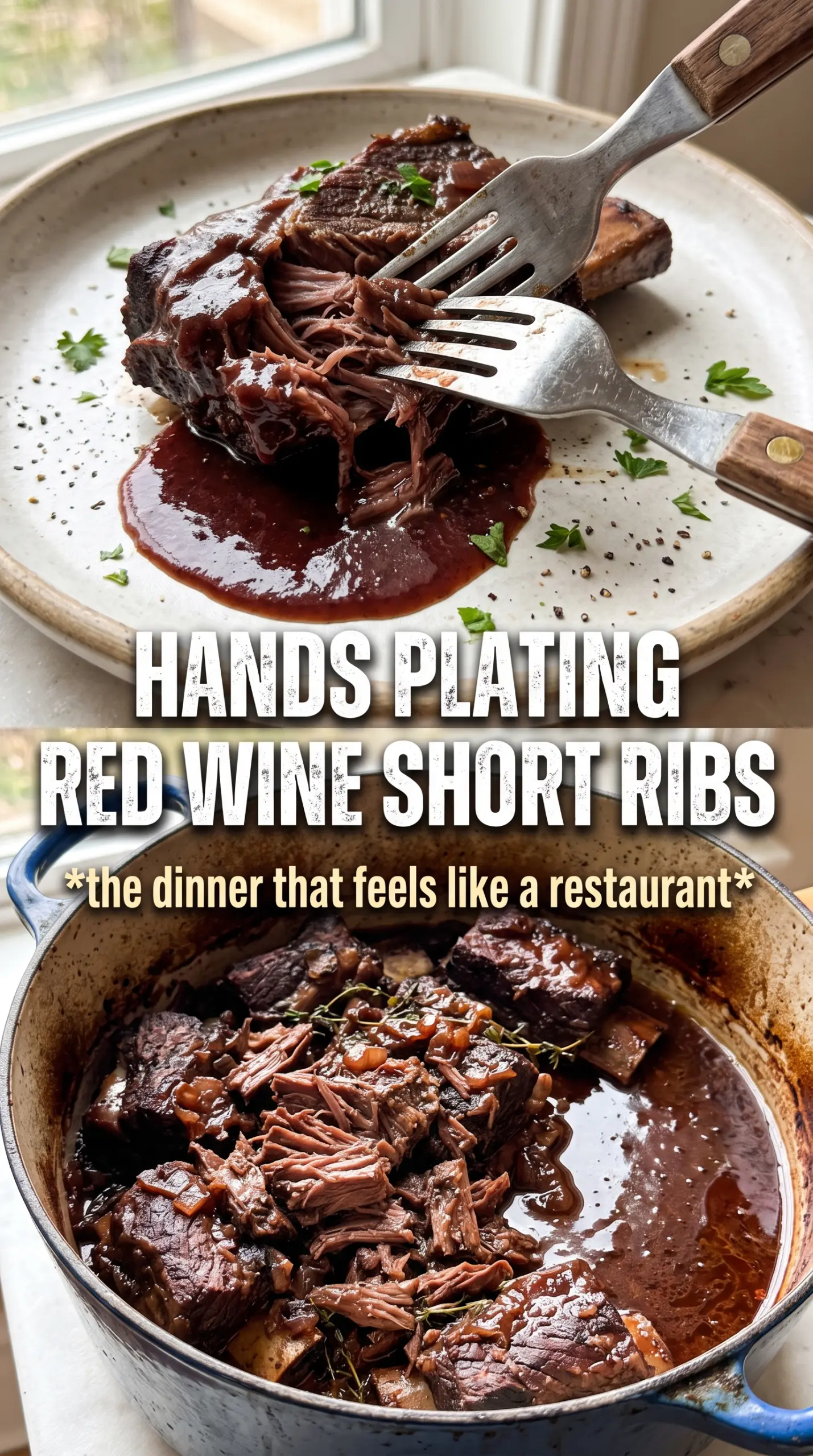
- Bone-in short ribs — These are the whole point of the dish. The bones help keep the meat juicy and give the braising liquid more body. Boneless ribs can work in a pinch, but they won’t give you quite the same richness.
- Dry red wine — Cabernet or Merlot both bring enough structure to stand up to long cooking. Don’t use a sweet wine here; it makes the sauce taste muddled. If you want a good result without spending a fortune, choose a bottle you’d actually drink with dinner.
- Tomato paste — This isn’t here to make the sauce taste like tomato. It adds concentration and a little darkness once it cooks with the onions and garlic. That quick toast in the pan keeps the sauce from tasting raw later.
- Beef broth — This softens the wine and gives the braising liquid enough savory depth to taste balanced after three hours in the oven. Use a good broth if you can; this is one of the few ingredients where a thin-tasting version shows up in the final sauce.
- Carrots, celery, onion, and garlic — They build the base of the braise and melt into the sauce as it cooks. Cut the vegetables into even pieces so they cook at the same pace and don’t leave any harsh bites behind.
- Thyme, rosemary, and bay leaves — These herbs bring a classic braised-beef aroma without taking over. Fresh herbs are worth using here because they stay cleaner and less dusty than dried ones during a long cook.
Getting the Heat Right Before the Oven Takes Over
Building a Deep Brown Crust
Season the ribs generously with salt and pepper before they hit the hot oil. The pan needs to be hot enough that the meat sizzles the second it lands, and each side should turn a deep mahogany brown, not pale tan. If the pan starts to look crowded, work in batches; crowded ribs release moisture and lose the crust you need for the sauce to taste layered instead of flat.
Cooking the Vegetables Until They Softly Collapse
Once the ribs come out, the onions, carrots, and celery go into the same pot. Stir them long enough to pick up the browned bits from the bottom, and let the onion turn translucent before the garlic and tomato paste go in. The tomato paste needs those two minutes of heat to darken and lose its raw edge; if you skip that, the finished sauce can taste sharp.
Deglazing Without Losing the Flavor
Pour in the red wine and scrape the bottom of the pot with a wooden spoon while it bubbles. Those stuck-on brown bits are not burned mess; they’re the best part of the flavor base. Let the wine simmer for a minute or two before adding the broth, tomatoes, herbs, and ribs so the alcohol mellows and the liquid tastes round instead of harsh.
Low Oven, Long Braise
Return the ribs to the pot and check that the liquid comes about halfway up the meat. Cover tightly and braise at 325F for 3 to 3 1/2 hours, until the ribs give almost no resistance when you slide a fork in. If they’re still tight or chewy, they need more time; short ribs are done when the meat wants to separate at the bone without being forced.
Reducing the Sauce Until It Clings
Take the ribs out gently so they stay intact, then strain the braising liquid and simmer it until it coats a spoon. This step matters because the pot juices will taste good long before they taste finished. If you stop too early, the sauce will be thin and slightly watery on the plate instead of glossy and concentrated.
How to Adapt These Short Ribs Without Losing the Soul of the Dish
Make It Dairy-Free by Serving It Straight Over Olive Oil Mashed Potatoes
The braise itself is naturally dairy-free, so the only adjustment is the side dish. Use olive oil or a dairy-free butter in the mashed potatoes and keep the sauce reduction just as it is. You’ll still get the same rich, comforting plate without losing any of the body in the meat sauce.
Use Cabernet for a Bigger, Deeper Sauce or Merlot for a Softer Finish
Cabernet gives the braise a firmer, more robust edge, while Merlot finishes a little rounder and softer. Either works, but the wine matters because most of the liquid becomes the sauce. Choose a bottle with flavor you’d enjoy sipping; the cooking doesn’t hide a wine you dislike.
Gluten-Free by Default, With One Thing to Watch
This recipe is naturally gluten-free as written, but check your beef broth to be sure it doesn’t contain wheat-based additives. The reduction step thickens the sauce without flour, so you don’t need any extra starch in the pot. Serve it with mashed potatoes or another gluten-free side and you’re set.
Make It Ahead for the Next Day
Short ribs taste even better after a night in the fridge because the sauce settles and the flavors knit together. Reheat them gently with a splash of broth if the sauce gets too tight. This is one of those dishes that gets easier, not worse, when you plan ahead.
Storage and Reheating
- Refrigerator: Store in an airtight container for up to 4 days. The sauce will thicken as it chills.
- Freezer: Freezes well for up to 3 months. Cool completely, portion with sauce, and thaw overnight in the fridge before reheating.
- Reheating: Warm gently on the stovetop over low heat or in a covered oven dish at 325F until hot. Don’t boil it hard or the meat can dry out and the sauce can turn greasy.
Questions I Get Asked About This Recipe
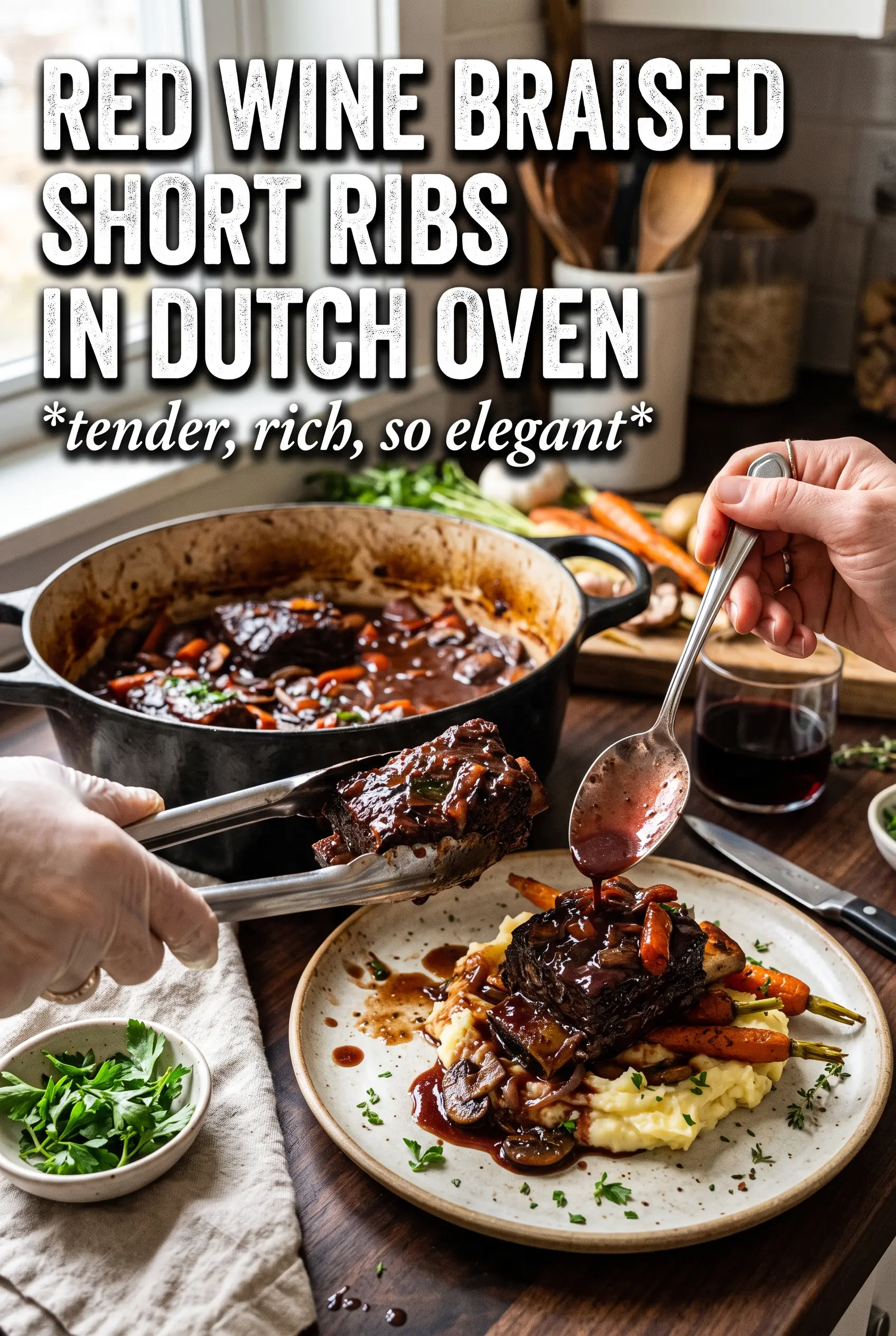
Red Wine Braised Short Ribs In Dutch Oven
Ingredients
Equipment
Method
- Preheat the oven to 325°F, then season the bone-in beef short ribs generously with salt and pepper. Set them aside while the Dutch oven heats.
- Heat the olive oil in a Dutch oven over high heat, then sear the short ribs until deeply browned on all sides and remove them. Aim for a dark, caramelized crust before pulling the ribs out.
- Sauté the diced onion, carrot chunks, and celery for 5 minutes. Cook until they soften and the pot looks slightly glossy from fond.
- Add the smashed garlic and tomato paste and cook for 2 minutes. Stir until fragrant and the tomato paste darkens slightly.
- Deglaze with the dry red wine, scraping the bottom of the Dutch oven to lift the browned bits. Bring the liquid to a lively simmer.
- Add the beef broth, diced tomatoes, bay leaves, fresh thyme, and fresh rosemary to the pot. Stir so the herbs are distributed throughout the braising liquid.
- Return the short ribs to the Dutch oven so the liquid comes halfway up the ribs. Add more wine or broth only if needed to reach the halfway mark.
- Cover and braise in the oven for 3 to 3-1/2 hours, until fall-off-the-bone tender. Check for fork-tender meat near the lower end of the time range.
- Remove the ribs, then strain the braising liquid and reduce it until glossy. Keep cooking until the sauce coats the back of a spoon.
- Serve the ribs over mashed potatoes and spoon the reduced braising sauce over top. Let a little sauce pool so the potatoes soak it up.