Roasted tomato basil soup tastes like the version you wish every tomato soup could be: deep red, silky, and full of the kind of sweetness that only comes from giving the vegetables enough time in the oven. Roasting changes everything here. The tomatoes collapse, the onion turns jammy, and the garlic loses its sharp edge so the finished soup tastes rounded instead of thin or acidic.
The small details matter. A splash of balsamic vinegar sharpens the roasted tomatoes without making the soup taste sweet, and the cream goes in after blending so it stays smooth instead of muddy. Basil is added near the end, where it keeps its fresh aroma instead of cooking away into the background. If you’ve ever had tomato soup that tasted flat or tinny, this version fixes that.
Below, I’ve included the roasting cues that matter most, plus the swaps that still give you a rich bowl when you’re working with what’s already in the kitchen.
The tomatoes caramelized beautifully and the soup came out smooth and rich without tasting heavy. I loved that the garlic softened right into the blend, and the grilled cheese croutons made it feel like a full meal.
Roasted Tomato Basil Soup with balsamic and creamy basil finish
The Trick to Keeping Roasted Tomato Soup from Tasting Flat
Roasted tomatoes bring sweetness, but they still need acid and fat to taste complete. That’s why the balsamic vinegar and cream matter here. The vinegar wakes up the tomatoes after roasting, while the cream smooths out the edges so the soup tastes layered instead of sharp.
The biggest mistake with tomato soup is stopping at blended roasted vegetables and broth. That can taste thin, especially if the tomatoes weren’t especially ripe. A little sugar rounds out the acid, but it shouldn’t taste sweet; it should just make the tomato flavor taste fuller and more like itself.
- Roasted tomatoes — Roma or vine tomatoes both work, but you want tomatoes that still have some body. Very soft, watery tomatoes can make the soup taste diluted unless you roast them long enough to reduce the moisture.
- Garlic and onion — Roasting them alongside the tomatoes gives the soup its backbone. If you skip the onion, the soup loses depth fast.
- Balsamic vinegar — Use a decent one if you can. It doesn’t need to be expensive, but harsh vinegar will stick out after blending.
- Heavy cream — This is what gives the soup that velvety finish. Half-and-half can work, but the soup will be lighter and a little less plush.
What Each Ingredient Is Actually Doing in This Bowl
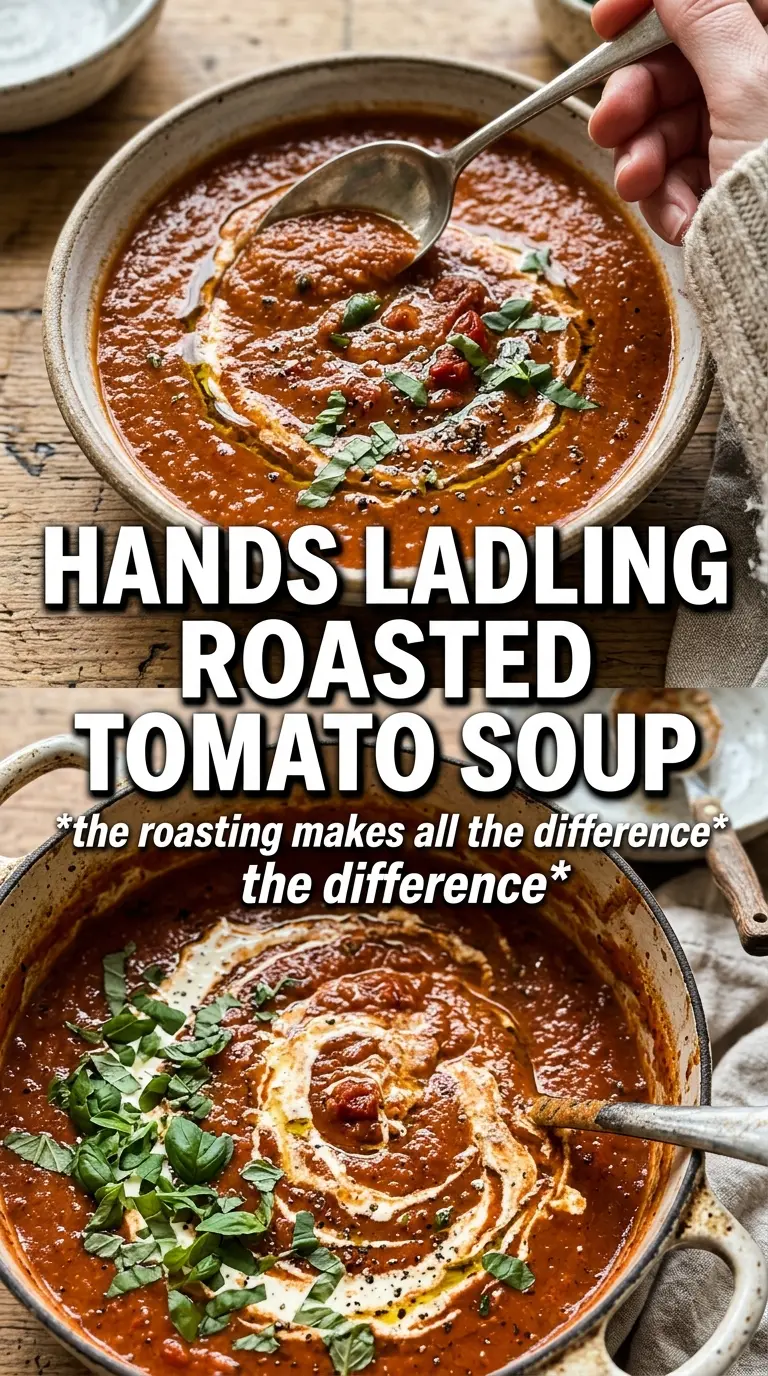
- Roma or vine tomatoes — Roma tomatoes are meatier and roast down with less water, but vine tomatoes bring a fuller tomato flavor. Either one works as long as you roast them until the edges pick up some color.
- Olive oil — This helps the vegetables caramelize instead of dry out. A good olive oil gives the soup better flavor, but it doesn’t need to be your fanciest bottle.
- Broth — Chicken broth gives the soup a little more savoriness, while vegetable broth keeps it vegetarian. Use the kind with a flavor you’d actually drink, because weak broth makes the soup bland.
- Fresh basil — Fresh basil is the difference between a soup that tastes alive and one that tastes cooked-out. Add it at the end so the aroma stays bright.
- Sugar — This doesn’t make the soup sweet. It smooths the acidity that can linger after roasting, especially if your tomatoes aren’t peak-season ripe.
Roast First, Blend Second, Finish Last
Getting Color in the Oven
Spread the tomatoes, onion, and halved garlic cut-side up on the baking sheet so they can roast instead of steam. Drizzle with olive oil and season well before they go into the oven. You’re looking for soft tomatoes with browned edges and onion pieces that look collapsed and glossy. If the pan is crowded, the vegetables will steam and the soup will taste dull, so use a big enough sheet pan.
Blending the Base Smooth
Transfer everything to a large pot with the broth and balsamic vinegar, then blend until completely smooth with an immersion blender. The soup should look thick and even, with no visible bits of skin or onion. If you use a countertop blender, work in batches and vent the lid carefully because hot soup can push upward fast. Blend well before adding the cream, because cream doesn’t fix texture problems.
Finishing with Cream and Basil
Stir in the heavy cream and fresh basil after the soup is already smooth. Keep the heat low and let it simmer gently for about 10 minutes, just long enough for everything to come together. If the soup boils hard after the cream goes in, it can lose its silky texture. Taste at the end and adjust with salt, pepper, and a little sugar only if the tomatoes still taste too sharp.
How to Adapt Roasted Tomato Basil Soup Without Losing the Good Part
Make it dairy-free
Swap the heavy cream for full-fat coconut milk or an unsweetened cashew cream. Coconut milk gives the soup a slightly richer, rounder finish, while cashew cream keeps the tomato flavor more neutral. Use the same amount and add it at the end over low heat so it doesn’t separate.
Keep it vegetarian
Use vegetable broth instead of chicken broth. That swap keeps the soup fully vegetarian without changing the texture at all. Choose a broth with a clean savory taste so the soup doesn’t lean watery.
Make it lighter
Replace the cream with half-and-half for a thinner, less rich soup. It still tastes good, but it won’t have the same velvet finish. If you go this route, simmer only briefly after adding it so the dairy stays smooth.
Storage and Reheating
- Refrigerator: Store for up to 4 days in an airtight container. The flavor deepens overnight, and the soup may thicken a little as it chills.
- Freezer: It freezes well, but the cream can separate slightly when thawed. For the best texture, freeze the soup before adding the cream, then stir the cream in after reheating.
- Reheating: Warm it gently on the stove over low to medium-low heat, stirring often. Don’t let it boil hard, especially if the cream is already in the pot, or it can turn grainy.
Answers to the Questions Worth Asking
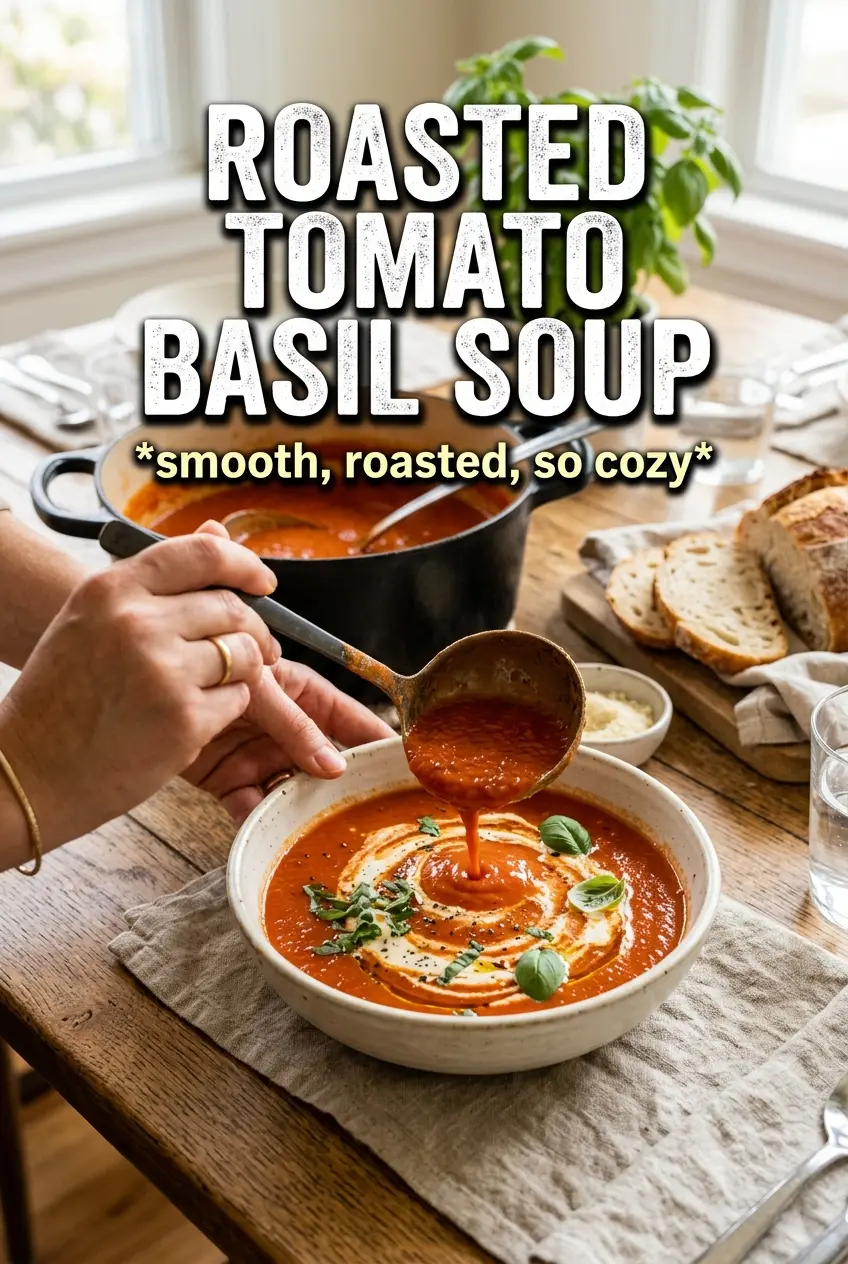
Roasted Tomato Basil Soup
Ingredients
Equipment
Method
- Preheat oven to 425F and arrange tomatoes, garlic, and onion on a rimmed baking sheet.
- Drizzle with 1/4 cup olive oil and season with salt, pepper, and dried oregano.
- Roast 35-40 minutes until caramelized and slightly charred at the edges.
- Squeeze roasted garlic from skins, then transfer all roasted vegetables to a large pot.
- Add chicken or vegetable broth and balsamic vinegar, then blend smooth with an immersion blender.
- Stir in heavy cream and fresh basil, then simmer 10 minutes.
- Add sugar, then season with salt and black pepper to taste.
- Serve hot with grilled cheese croutons or crusty bread.