Roasted vegetable pizza lands with the kind of contrast that makes a plain cheese pie feel unfinished. The crust comes out crisp at the edges, the vegetables turn sweet and caramelized, and the mozzarella melts into all those little pockets between the peppers, onions, zucchini, and tomatoes. A balsamic drizzle at the end pulls everything together with just enough sharpness to keep each bite from tasting heavy.
The real difference here is roasting the vegetables before they ever touch the dough. That step drives off moisture, which means the pizza bakes up with a sturdy crust instead of a soggy middle. I also like using a mix of mozzarella and parmesan: mozzarella gives you the stretch, while parmesan sharpens the flavor and helps the top brown a little more deeply.
Below, I’ll walk through the part that matters most — how to keep the vegetables flavorful without watering down the pizza — plus the swaps I use when I need to work with what’s already in the fridge.
The vegetables roasted down perfectly and the crust stayed crisp under all that cheese. I was nervous the zucchini would make it watery, but this baked up clean and the balsamic at the end made it taste restaurant-worthy.
Roasted Vegetable Pizza with caramelized edges and balsamic drizzle is worth keeping for pizza nights that need a little more color and a lot more flavor.
The Part That Keeps Vegetable Pizza Crisp Instead of Soggy
The biggest mistake with vegetable pizza is piling raw vegetables onto the dough and hoping the oven will sort it out. It won’t. Zucchini, tomatoes, and onions all release moisture as they bake, and that steam has nowhere to go once it’s trapped under cheese. Roasting the vegetables first concentrates their flavor and dries them out just enough that the finished pizza stays crisp under the toppings.
That extra bake also changes the flavor in a good way. The edges brown, the onion softens and sweetens, and the tomatoes collapse into little bursts of concentrated sauce. If your vegetables look a little smaller after roasting, that’s exactly what you want — they should taste deeper, not just softer.
- Zucchini — Slice it a little thicker than you think you need so it keeps some texture after roasting. Thin slices can disappear into the cheese and release too much liquid.
- Cherry tomatoes — Halving them is enough. They’ll blister and concentrate in the oven; if you roast them too long, they can dry out before the pizza even bakes.
- Red onion — This one brings sweetness and structure. Rings roast faster than chunks and sit nicely on the pizza without sliding off.
- Pizza dough — Store-bought dough works fine here, especially if it’s rested to room temperature. Cold dough fights back and bakes unevenly.
What Each Ingredient Is Doing in This Roasted Vegetable Pizza

- Pizza dough — A plain dough gives the vegetables room to shine. Homemade dough can be a little chewier, while store-bought dough is the easiest route if you want dinner on the table fast.
- Olive oil — Use enough to coat the vegetables and brush the dough lightly. That thin layer helps the crust brown and keeps the vegetables from tasting dry after roasting.
- Pizza sauce or marinara — Keep the layer thin. Too much sauce makes the center heavy and can overwhelm the roasted vegetables, which already bring a lot of moisture and flavor.
- Mozzarella and parmesan — Mozzarella gives the melt, parmesan gives the edge. I wouldn’t skip the parmesan unless you have to; it sharpens the whole pizza and helps balance the sweetness from the roasted vegetables.
- Balsamic glaze — This is the finishing move that makes the pizza taste complete. It adds acidity and a little sweetness, which is exactly what roasted vegetables need after all that oven time.
Building the Pizza So the Crust Stays Crisp
Roasting the Vegetables First
Toss the sliced zucchini, bell pepper, onion, and tomatoes with olive oil, salt, and pepper, then spread them in a single layer on a baking sheet. If they’re crowded, they steam instead of caramelize, and that’s the fast track to a watery pizza. Roast them until the edges are browned and the tomatoes have collapsed a bit; they should look cooked down, not just softened.
Prepping the Dough for a Better Bake
Roll the dough on parchment so you can move it easily, then brush it lightly with olive oil before the sauce goes on. That thin oil layer helps protect the crust from moisture and encourages browning underneath. If the dough keeps shrinking back, let it rest for a few minutes before rolling again; rushing that part usually leads to a misshapen, tight crust.
Layering Without Overloading
Spread the sauce in a thin coat, then scatter the roasted vegetables evenly across the top. Add the mozzarella and parmesan after the vegetables so the cheese melts around them instead of trapping them under a heavy blanket. Too much topping here is the enemy of a crisp pizza, so keep the layers balanced and let the crust stay visible in spots.
Finishing After the Bake
Bake until the crust is golden and the cheese is bubbling with a few browned spots. The pizza should lift cleanly from the parchment when it’s ready. Add the basil and balsamic glaze after baking so the herbs stay fresh and the glaze stays bright instead of getting cooked away.
How to Adapt This Pizza When the Fridge Looks Different
Make It Dairy-Free
Use your favorite meltable dairy-free mozzarella and skip the parmesan, or replace it with a dairy-free hard-style topping if you have one that browns well. The pizza will still work, but you’ll lose some of the salty bite that parmesan adds, so keep the sauce and balsamic balanced.
Make It Gluten-Free
Use a gluten-free pizza dough that’s designed for baking, not a pre-made crust that tends to crack under toppings. Gluten-free dough usually needs a little extra support from parchment and a hot oven, and it can brown faster on the bottom, so keep an eye on the crust during the last few minutes.
Swap the Vegetables by Season
Broccoli, mushrooms, eggplant, or thinly sliced asparagus all work well here as long as you roast them first. The important part is keeping the vegetables dry enough to sit on the pizza without flooding the crust, so don’t skip the roasting step even if the swap seems mild.
Storage and Reheating
- Refrigerator: Store leftovers in an airtight container for up to 3 days. The crust softens a bit, especially under the vegetables, but the flavor holds up well.
- Freezer: Freeze slices on a tray until firm, then wrap and store them in a freezer bag for up to 2 months. The texture is best if you freeze the pizza in slices instead of a whole pie.
- Reheating: Reheat in a 400F oven or toaster oven until the crust crisps back up and the cheese melts again. Skip the microwave if you can; it turns the crust rubbery and brings back the soggy texture you worked to avoid.
Answers to the Questions Worth Asking
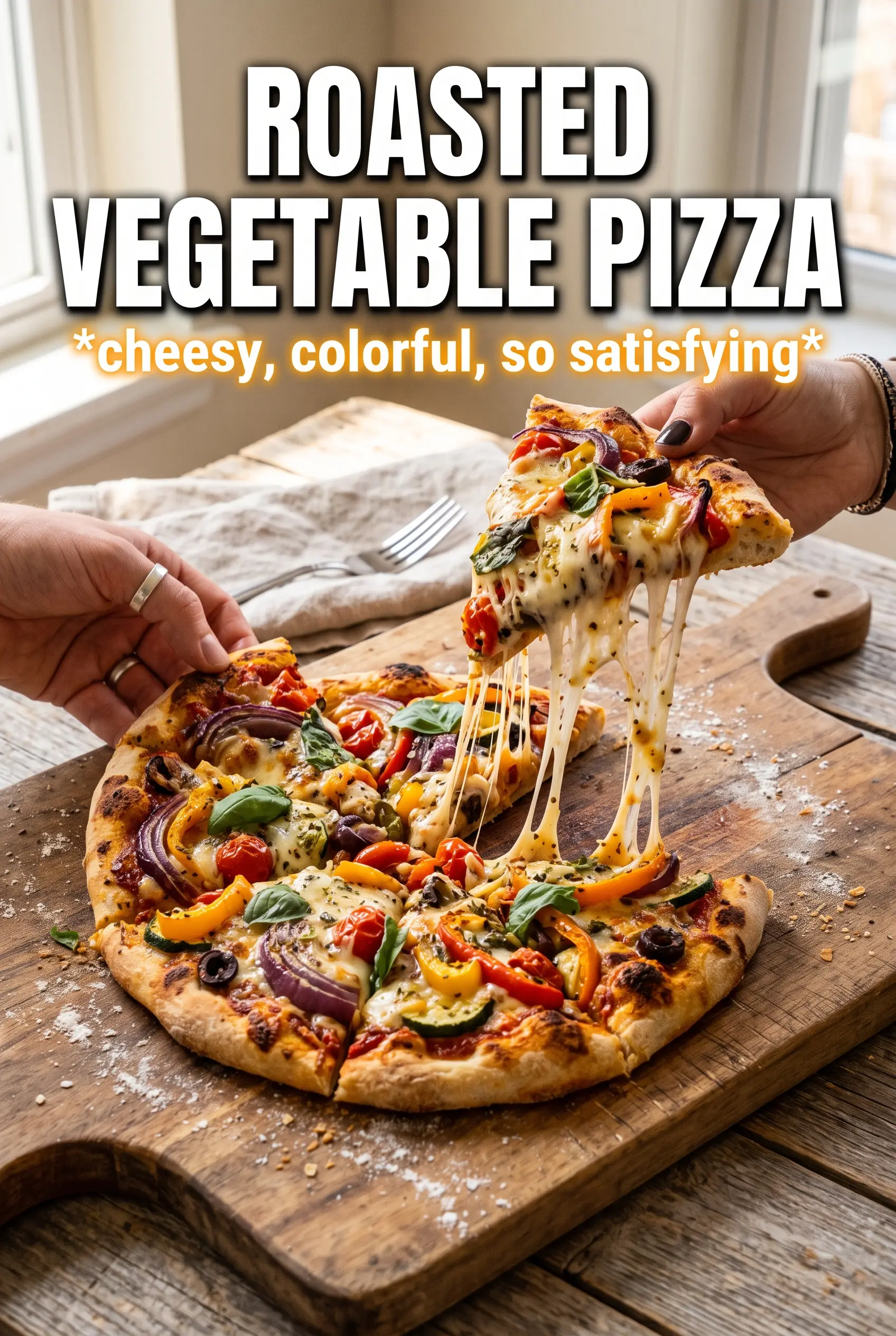
Roasted Vegetable Pizza
Ingredients
Equipment
Method
- Preheat your oven to 450°F, then toss zucchini, red bell pepper, red onion, and cherry tomatoes with 2 tablespoons olive oil, salt, and pepper until evenly coated. Spread in a single layer on a sheet pan.
- Roast at 450°F for 15-18 minutes until caramelized, stirring once halfway through for even browning. Keep the roasted vegetables handy while you prep the dough.
- Roll out the pizza dough on a parchment-lined sheet and brush with the remaining 1 tablespoon olive oil. Spread pizza sauce (or marinara) over the dough, then add minced garlic.
- Top the sauce with the roasted vegetables, then sprinkle shredded mozzarella and grated parmesan all over. Finish with Italian seasoning.
- Bake at 450°F for 12-15 minutes until the crust is golden and the cheese is bubbly. Remove and finish with fresh basil and a balsamic glaze drizzle.