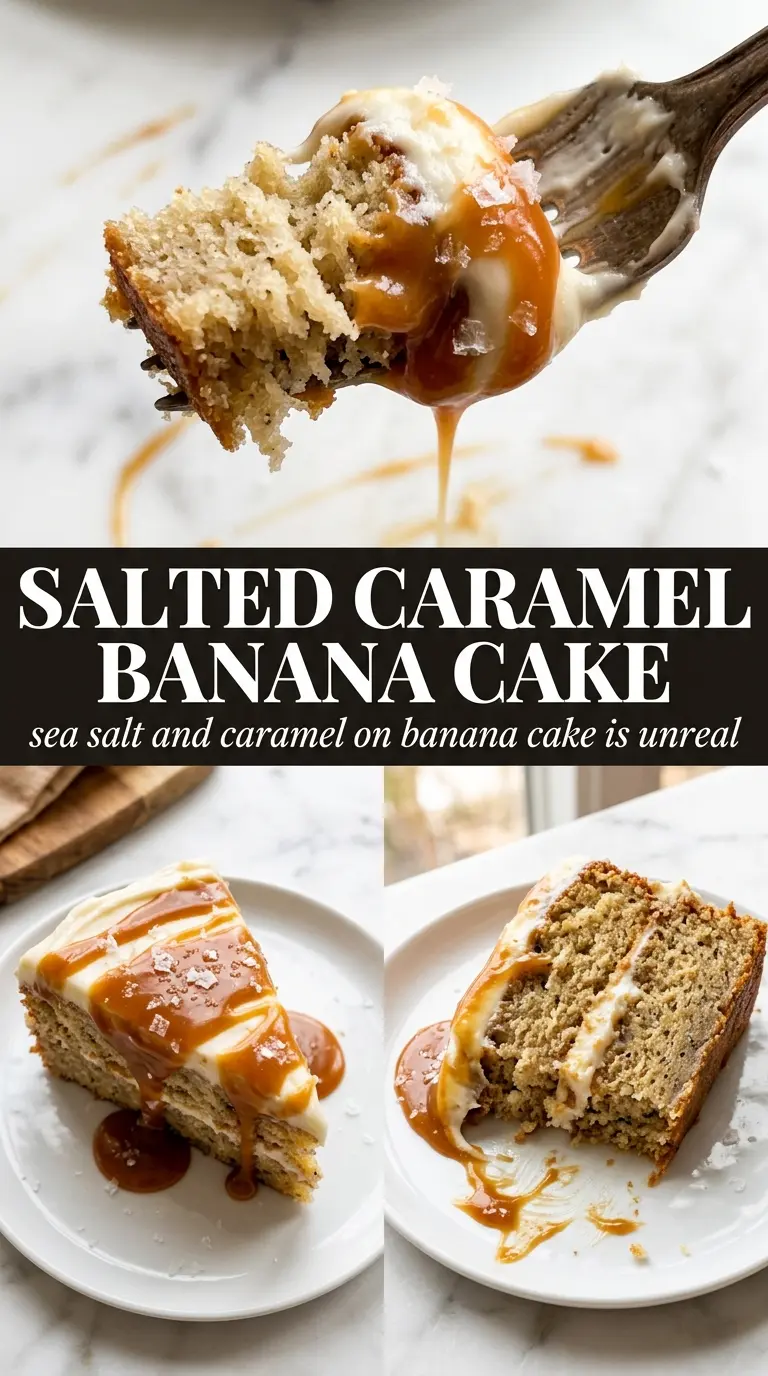
Salted caramel banana cake is the kind of dessert that disappears fast because it hits every note at once: plush banana layers, tangy cream cheese frosting, and a caramel finish that settles into the edges without making the cake cloying. The crumb stays tender, the frosting brings a cool richness, and the flaky salt on top keeps each bite from tasting heavy. It reads like celebration cake, but it eats like something you’d happily make on a regular weekend.
The key is balance. Very ripe bananas give the cake deep flavor and moisture, while sour cream keeps the crumb soft without turning it dense. The frosting uses salted caramel sauce for instant depth, but the cream cheese keeps it grounded so it spreads cleanly and doesn’t turn into straight sugar. That little hit of sea salt at the end matters more than it looks like it should; it sharpens the caramel and makes the banana taste fuller.
Below, I’ve included the exact point where the batter can go from silky to overmixed, plus a few smart swaps if you need to adjust the frosting or make the cake ahead. If you want a banana dessert that looks as good as it tastes, this is the one to keep close.
The cake layers were super moist and the caramel cream cheese frosting set up perfectly for slicing. I made it the day before a birthday dinner and the salted caramel drizzle stayed glossy without soaking in.
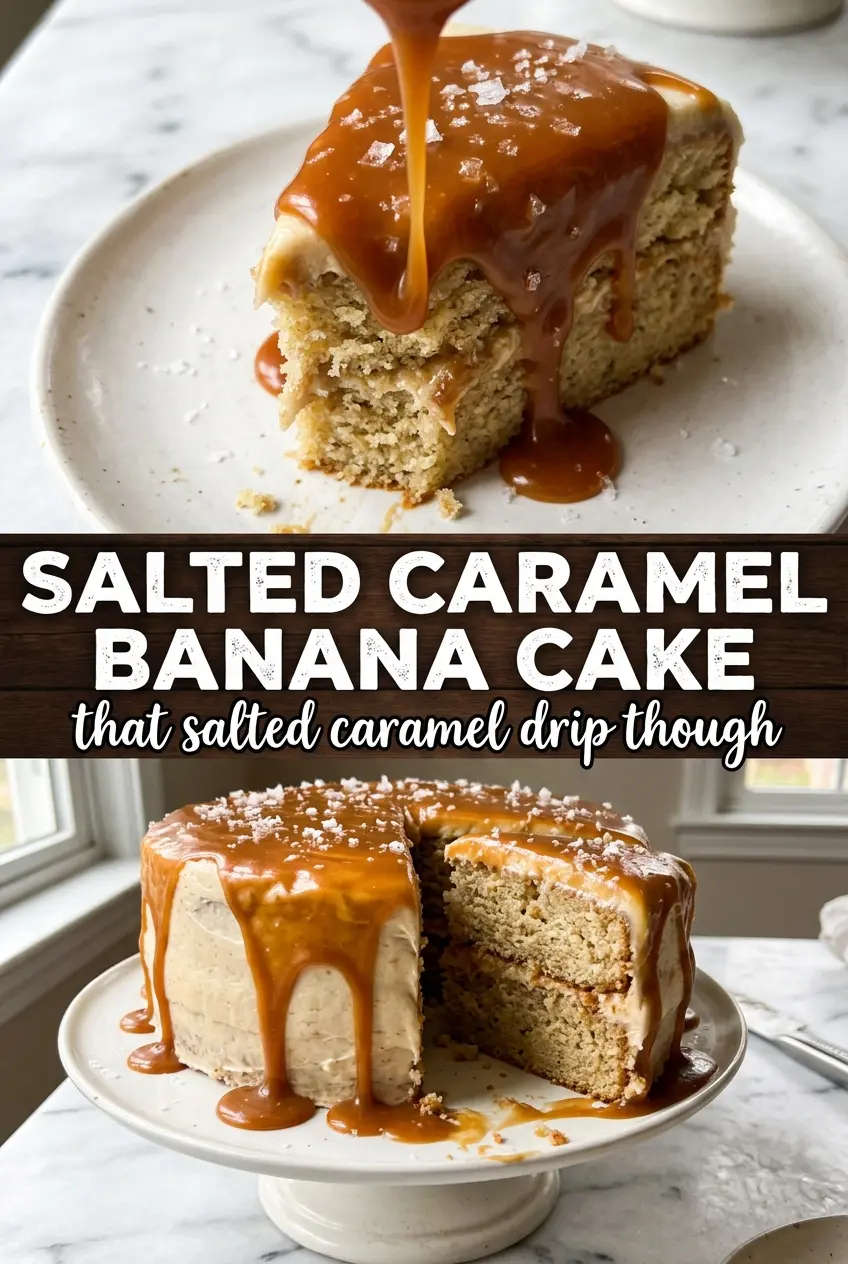
Save this salted caramel banana cake for the next birthday, brunch, or any time you want a tall banana layer cake with real caramel drama.
The Reason This Cake Stays Tender Instead of Turning Heavy
A lot of banana layer cakes bake up dense because the batter gets worked too much once the flour goes in, or because there isn’t enough acid and fat to keep the crumb soft. Here, the sour cream does the quiet work. It loosens the batter just enough and adds richness without making the cake greasy, while the mashed bananas bring moisture and natural sweetness.
The other thing that matters is the mixing order. Creaming the butter and sugar first gives you the structure you need, but once the dry ingredients and sour cream go in, the batter should look just combined. If you keep beating it after that point, the gluten tightens and the cake loses that soft, velvety bite that makes it worth frosting in the first place.
What Each Ingredient Is Actually Doing in This Cake
- Ripe bananas — These should be deeply speckled and soft enough to mash easily. Under-ripe bananas won’t give you the flavor or moisture this cake needs, and they’ll leave the crumb tasting flatter than it should.
- Sour cream — This is part tenderness, part insurance. It keeps the cake rich and soft, and it’s the ingredient I wouldn’t skip unless you’re replacing it with full-fat Greek yogurt in the same amount.
- Cream cheese — The frosting needs it for tang and structure. Neufchâtel works in a pinch, but lower-fat cream cheese can make the frosting looser and less stable once the caramel goes in.
- Salted caramel sauce — This is what makes the frosting taste like salted caramel instead of just sweet cream cheese frosting. If you’re using store-bought, pick one that pours smoothly; thick, grainy caramel can make the frosting harder to beat until fluffy.
- Flaky sea salt — Don’t trade this for table salt. You want little hits of salinity on top, not a uniform salty finish, and the flakes give you that sharp contrast against the frosting and caramel drizzle.
Building the Batter and Frosting Without Ruining the Texture
Creaming the Base Until It Fluffs Properly
Beat the butter and sugar until the mixture looks pale and a little billowy, not just blended. That step traps air, which helps the cake lift before the baking soda and baking powder finish the job. Add the eggs one at a time, then stir in the vanilla and mashed bananas; the batter may look a little loose at this stage, and that’s normal. If the mixture looks broken, the bananas were probably very wet, but it will come together once the dry ingredients are added.
Folding the Dry Ingredients in Three Passes
Mix the flour, baking soda, baking powder, salt, and cinnamon separately so the leavening is evenly distributed. Add the dry ingredients and sour cream in alternating additions, starting and ending with the flour mixture. Stop as soon as the batter looks smooth and no dry streaks remain. Overmixing here is the fastest way to get a gummy cake instead of a tender one, especially with banana batter.
Baking Until the Centers Spring Back
Divide the batter evenly between two greased 8-inch pans and bake at 350°F until the tops are set and a toothpick comes out clean, 30 to 35 minutes. You’re looking for cake that springs back lightly when touched in the center and pulls just slightly from the sides of the pan. If you pull it too early, the layers can sink in the middle once they cool; if you wait until they look deeply browned, they’re already past the tender stage.
Whipping the Frosting to Spreadable Billows
Beat the cream cheese and butter until completely smooth before adding the powdered sugar. If the base is lumpy, those lumps won’t disappear later. Pour in the caramel sauce and beat until the frosting looks fluffy and holds soft peaks. If it turns loose, the caramel was probably too warm or the cream cheese was too soft, so chill the bowl for 15 minutes and beat again before frosting the cake.
How to Adapt This Cake for Different Pans, Frostings, and Diets
Make It Gluten-Free Without Losing the Soft Crumb
Use a 1:1 gluten-free all-purpose flour blend that already includes xanthan gum. The cake will still be tender, but it may need an extra minute or two in the oven because gluten-free batters often hold a little more moisture. Don’t swap in almond flour alone; it won’t give you the structure needed for layer cake slices.
Use Greek Yogurt Instead of Sour Cream
Full-fat plain Greek yogurt works in the same amount and keeps the batter nicely moist. The flavor is a little tangier and the crumb can bake up slightly tighter, but it still gives you a good result. Use full-fat only; low-fat yogurt thins the batter too much and can throw off the texture.
Turn It Into a Sheet Cake
Bake the batter in a 9×13-inch pan and start checking a few minutes earlier than the layer cakes. The frosting still works beautifully, but you’ll get a more casual dessert with less dramatic height. It’s the better choice if you want neat squares for potlucks or an easier cake to transport.
Storage and Reheating
- Refrigerator: Store covered for up to 5 days. The frosting stays stable, and the banana cake stays moist, though the crumb will firm up a little when chilled.
- Freezer: Freeze unfrosted layers tightly wrapped for up to 2 months. Frosted slices can be frozen, but the caramel drizzle may lose some shine after thawing.
- Reheating: Let refrigerated slices sit at room temperature for 20 to 30 minutes before serving. Cold cream cheese frosting tastes dull and stiff, and the cake’s texture is better once the chill comes off.
Questions I Get Asked About This Cake
Salted Caramel Banana Cake
Ingredients
Equipment
Method
- Preheat the oven to 350°F and grease two 8-inch round pans.
- Beat the butter and sugar until fluffy.
- Add the eggs, vanilla, and mashed bananas, and beat until well combined.
- Whisk together the flour, baking soda, baking powder, salt, and cinnamon.
- Fold in the flour mixture with the sour cream in three additions, alternating between them.
- Divide the batter between the two pans.
- Bake at 350°F for 30–35 minutes, until a toothpick comes out clean.
- Cool the cakes completely before frosting.
- Beat the cream cheese and butter until smooth.
- Add the powdered sugar and beat until fully combined.
- Beat in the salted caramel sauce and continue until the frosting is fluffy.
- Layer and frost the cakes, spreading frosting between the layers and over the outside.
- Drizzle more salted caramel sauce over the top so it runs dramatically down the sides.
- Finish with flaky sea salt on top.