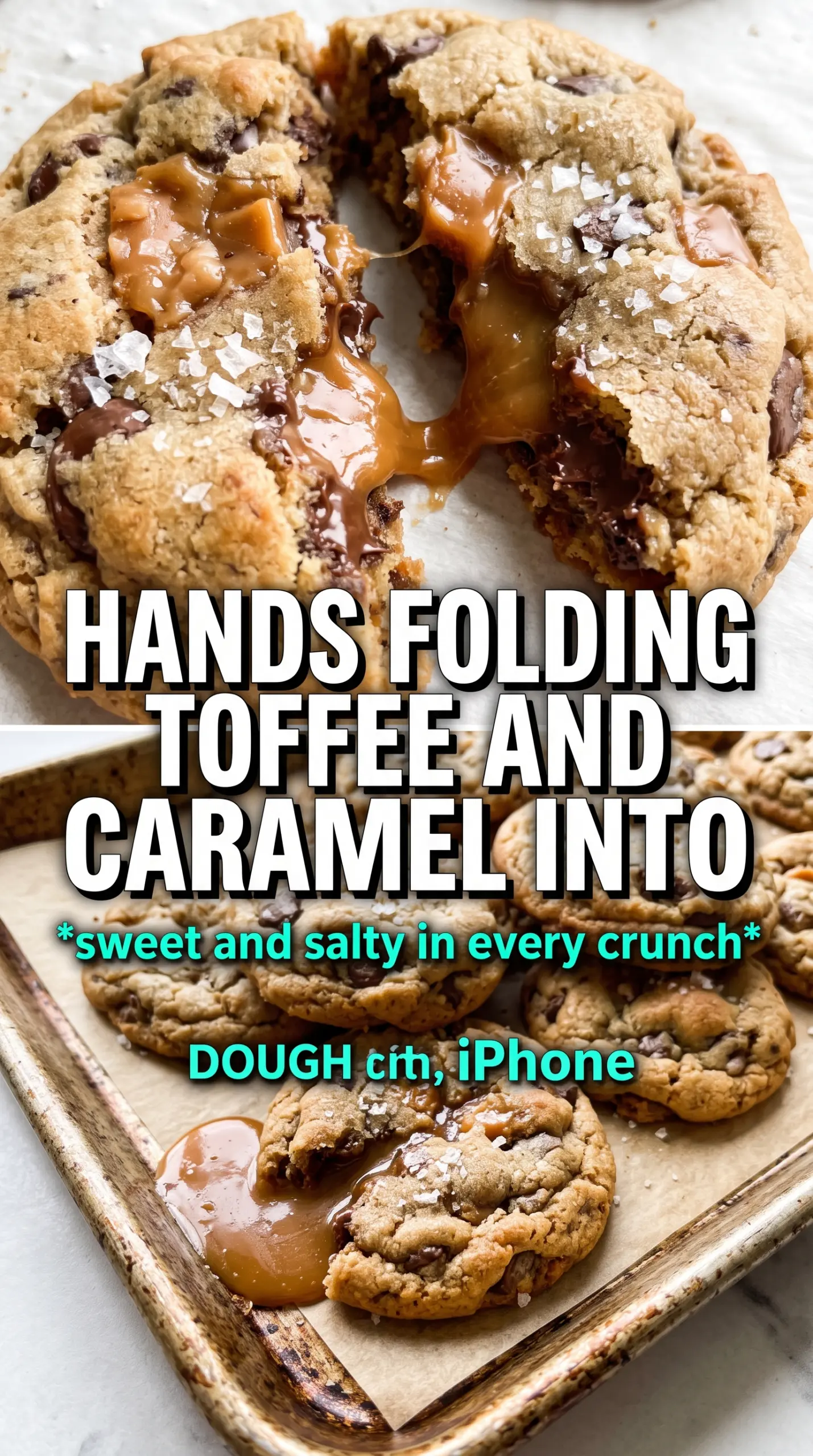
Salted caramel toffee cookies land in that perfect middle ground between crisp edges and a soft, chewy center. The toffee gives you little buttery crunches in every bite, while the caramel melts into glossy pockets that stay tender even after the cookies cool. A final sprinkle of flaky sea salt keeps the sweetness in check and makes the whole cookie taste bigger and more complete.
What makes this version work is the balance of mix-ins and the timing. The dough is sturdy enough to hold 28 cookies without spreading into lace, but it still bakes up with enough lift to stay soft in the middle. Pressing extra toffee and caramel pieces on top right after baking gives you those bakery-style caramel puddles without overworking the dough or adding extra sweetness to the base.
Below you’ll find the small details that matter most: how to keep the caramel from disappearing into the dough, why the cookies need a short rest on the pan, and the easiest swaps if you want to make them a little more chocolatey, a little more salted, or dairy-free.
The caramel stayed in little gooey pockets instead of melting away, and the flaky salt on top kept them from tasting too sweet. I baked mine right at 11 minutes and they were chewy in the center the next day too.
Save these salted caramel toffee cookies for the next time you want chewy centers, glossy caramel pockets, and flaky salt on top.
The Trick to Keeping the Caramel in Little Pockets, Not One Giant Melted Mess
Caramel pieces behave differently from chips once they hit the oven. They soften fast, and if the dough is too warm or the pieces are too small, they can disappear into the cookie instead of staying distinct. That isn’t a disaster, but it does change the texture from chewy-and-studded to uniformly sweet and slightly sticky.
The fix is simple: use a dough that is fully mixed but not greasy, and fold the caramel in at the very end so it stays in irregular chunks. The toffee bits help hold the structure because they don’t melt the way caramel does, so each cookie gets both crunch and gooeyness. Pull the pan when the edges are set and the centers still look a little soft; that carryover heat finishes the middle without turning the caramel into a hard candy shell.
What Each Mix-In Is Actually Doing Here
- Toffee bits — These bring crunch and a deep buttery note that keeps the cookie from tasting flat. Store-bought bits are perfect here; there is no payoff in making your own unless you want a bigger shard-like texture.
- Caramel pieces or caramel chips — This is where the gooey pockets come from. Use soft caramel pieces if you want visible melt pockets; use caramel chips if you want a slightly tidier cookie with less spread.
- Brown sugar — Brown sugar keeps the centers chewy and adds a molasses note that works with the caramel. Granulated sugar helps the edges set and gives a little more spread, so the two together matter.
- Flaky sea salt — Table salt inside the dough seasons the cookie; flaky salt on top finishes it. Don’t skip the top salt, because that contrast is what makes the caramel taste more intentional and less sugary.
- Caramel extract — Optional, but useful if you want the caramel flavor to read clearly even after baking. If you skip it, the cookies still work; they just lean more toward toffee-cookie than full caramel.
Building the Dough So the Centers Stay Chewy
Whisk the dry ingredients first
Start by whisking the flour, baking soda, and salt together so the leavener is evenly distributed. If the baking soda is clumped in one spot, you’ll get uneven browning and patches that spread too fast. This quick step also keeps you from overmixing later, which is what makes cookies tough instead of tender.
Cream the butter and sugars until they lighten
Beat the butter with both sugars until the mixture looks fluffy and a little paler in color. That texture means air has been worked in, which helps the cookies bake up with a soft center instead of a dense, greasy one. If the butter is too warm and the mixture looks shiny, chill it for a few minutes before moving on or the cookies will spread too much.
Fold in the mix-ins at the end
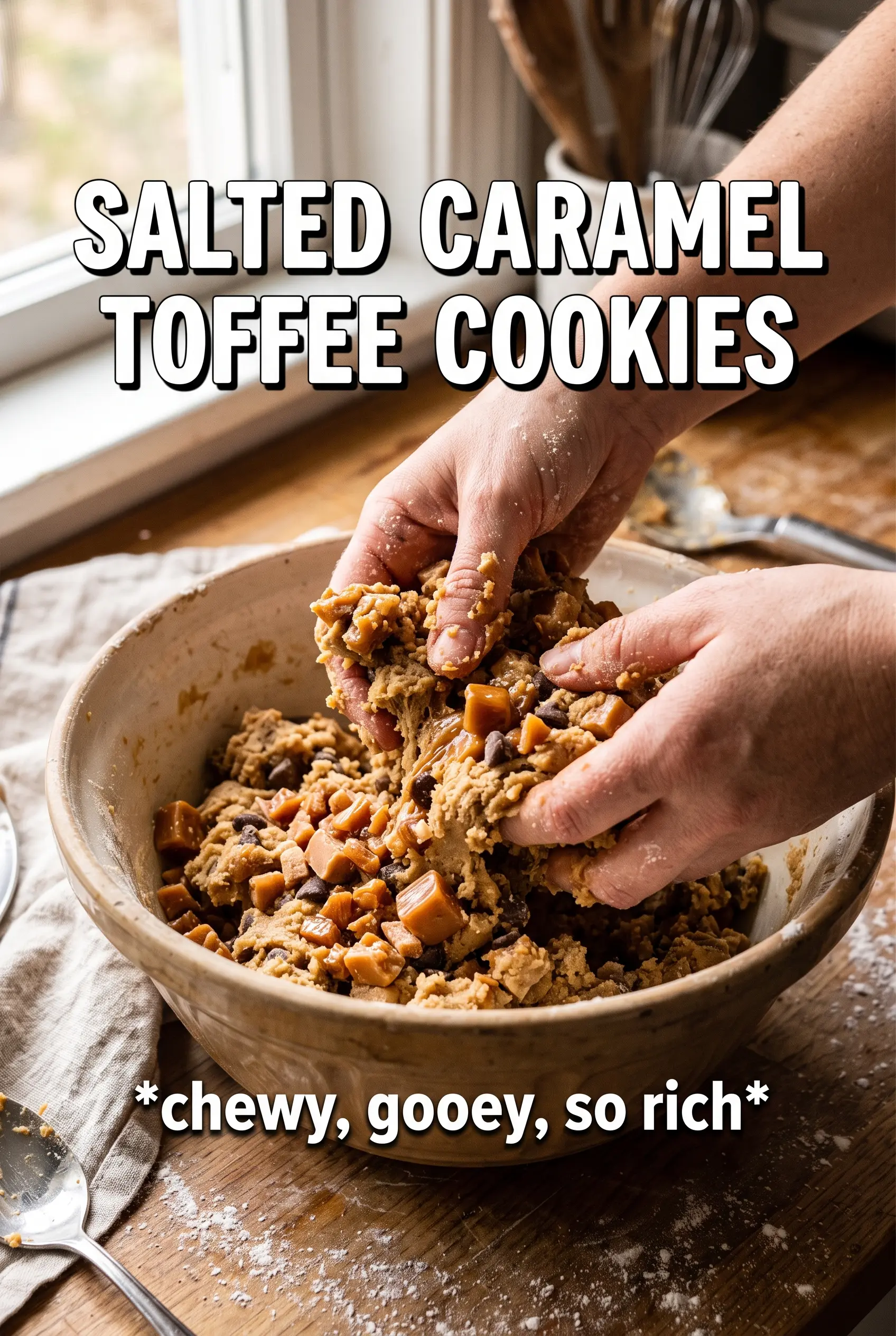
Once the flour is just combined, fold in the toffee bits and caramel pieces by hand. Stop as soon as you no longer see dry streaks of flour. Overmixing at this point can break up the caramel too much and make the dough sticky, which leads to flatter cookies and less distinct pockets of caramel after baking.
Bake until the edges set and the centers still look soft
Scoop 2-tablespoon rounds and bake until the edges are golden and the centers look slightly underdone. That visual cue matters more than the clock. If you wait until the whole cookie looks finished in the oven, it will overbake on the tray and lose the chewy middle that makes these worth repeating.
More Caramel, Less Crunch
Use soft caramel pieces instead of caramel chips and press a few extra pieces on top right after baking. The cookies will look a little more dramatic and taste richer, but they’ll also be slightly stickier once cooled. Keep them separated on the tray while they set.
Gluten-Free Version
Swap in a good 1:1 gluten-free flour blend that includes xanthan gum. The cookies may spread a touch less and bake up a little more delicate, but the toffee and caramel still give you the same sweet-salty contrast.
Dairy-Free Option
Use plant-based butter sticks and dairy-free caramel pieces if you can find them. The flavor shifts a little less buttery, but the texture still works well as long as the butter substitute is the stick-style kind, not a tub spread.
Storage and Reheating
- Refrigerator: Store in an airtight container for up to 5 days. The caramel will firm up a bit, but the cookies stay chewy.
- Freezer: Freeze baked cookies for up to 2 months, or freeze the scooped dough balls and bake from frozen with 1 to 2 extra minutes.
- Reheating: Warm a cookie in the microwave for 8 to 10 seconds to soften the caramel. Don’t overheat it or the caramel turns sticky and the edges go hard.
Answers to the Questions Worth Asking
Salted Caramel Toffee Cookies
Ingredients
Equipment
Method
- Preheat the oven to 375F, then line baking sheets with parchment for easy release and fast cleanup.
- Set the prepared baking sheets aside while you mix the dough so the oven stays at temperature.
- Whisk all-purpose flour, baking soda, and salt in a bowl until evenly combined.
- Beat the unsalted butter and both sugars until light and fluffy, then scrape down as needed for an even texture.
- Beat in the eggs, vanilla extract, and caramel extract if using until smooth.
- Fold the flour mixture into the wet ingredients just until no dry streaks remain.
- Fold in toffee bits (Heath) and the soft caramel pieces or caramel chips so they’re distributed through the dough.
- Scoop the dough into 2-tablespoon rounds and place them on the lined baking sheets with spacing between cookies.
- Bake for 10-12 minutes at 375F, until the edges are golden.
- Immediately press extra toffee bits and caramels on top while the cookies are hot so they adhere.
- Sprinkle generously with flaky sea salt, then cool on the pan for 5 minutes before transferring to finish cooling.