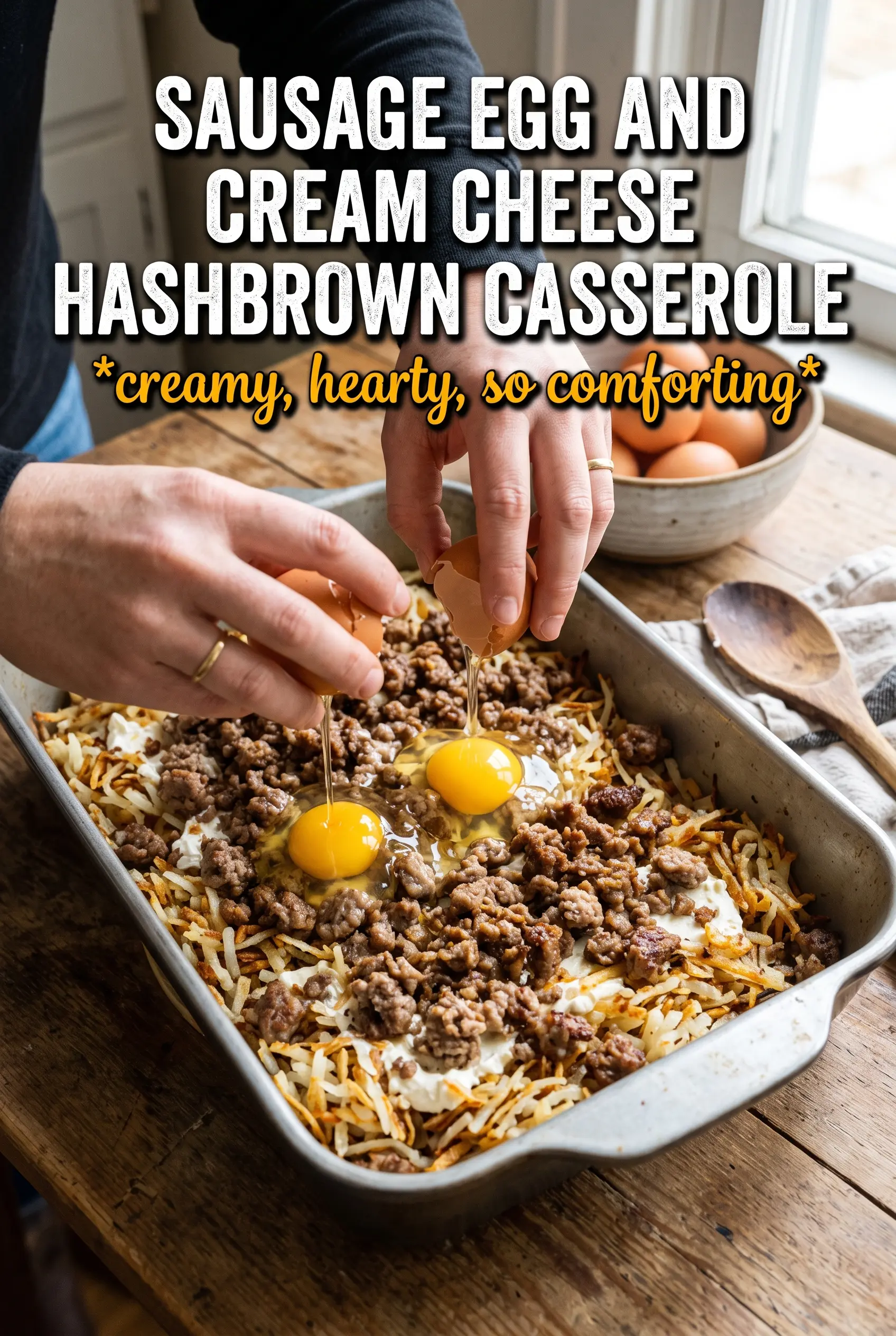
Golden hash browns, savory sausage, and a custardy egg base bake into a casserole that slices cleanly and holds its shape on the plate. The cream cheese melts into little pockets of richness, the cheddar turns crisp at the edges, and every bite gets a mix of salty, tangy, and smoky that makes this one feel like more than a standard breakfast bake.
The key here is building the layers in the right order and not rushing the rest time. Thawed hash browns keep the bottom from turning watery, and the egg mixture needs to soak down through the casserole before the oven sets it. Those small cubes of cream cheese matter too — they soften into the filling instead of disappearing completely, which gives the whole dish a creamy texture without making it loose.
Below you’ll find the timing that keeps the eggs tender, the texture cue that tells you the center is done, and a few smart swaps for making this casserole fit what you have on hand.
The cream cheese melted into these rich little pockets and the eggs set up perfectly without getting rubbery. I rested it the full 10 minutes and it sliced into neat squares for breakfast all week.
Save this sausage egg and cream cheese hashbrown casserole for mornings when you want a hearty bake with crisp edges, creamy pockets, and zero fuss.
The Trick to Keeping the Hash Browns From Going Watery
Frozen shredded hash browns can make this casserole heavy and soggy if they go into the dish with too much moisture still clinging to them. Thaw them fully, then press them lightly with a clean towel or paper towels before layering. That step keeps the base from steaming itself into a soft bed that never really sets.
The other common mistake is flooding the pan with egg mixture too fast. Pour it evenly so it can sink through the sausage and cream cheese instead of pooling on top. The casserole should look well moistened, not submerged.
- Thawed hash browns — They bake into a firmer base than partially frozen potatoes, which release extra water in the oven.
- Breakfast sausage — Use a well-browned crumble. That extra browning adds flavor and keeps the filling from tasting flat.
- Cream cheese — Cube it while it’s cold enough to hold shape. If it’s too soft, it disappears into the egg mixture instead of leaving those creamy pockets.
What Each Ingredient Is Actually Doing in This Casserole
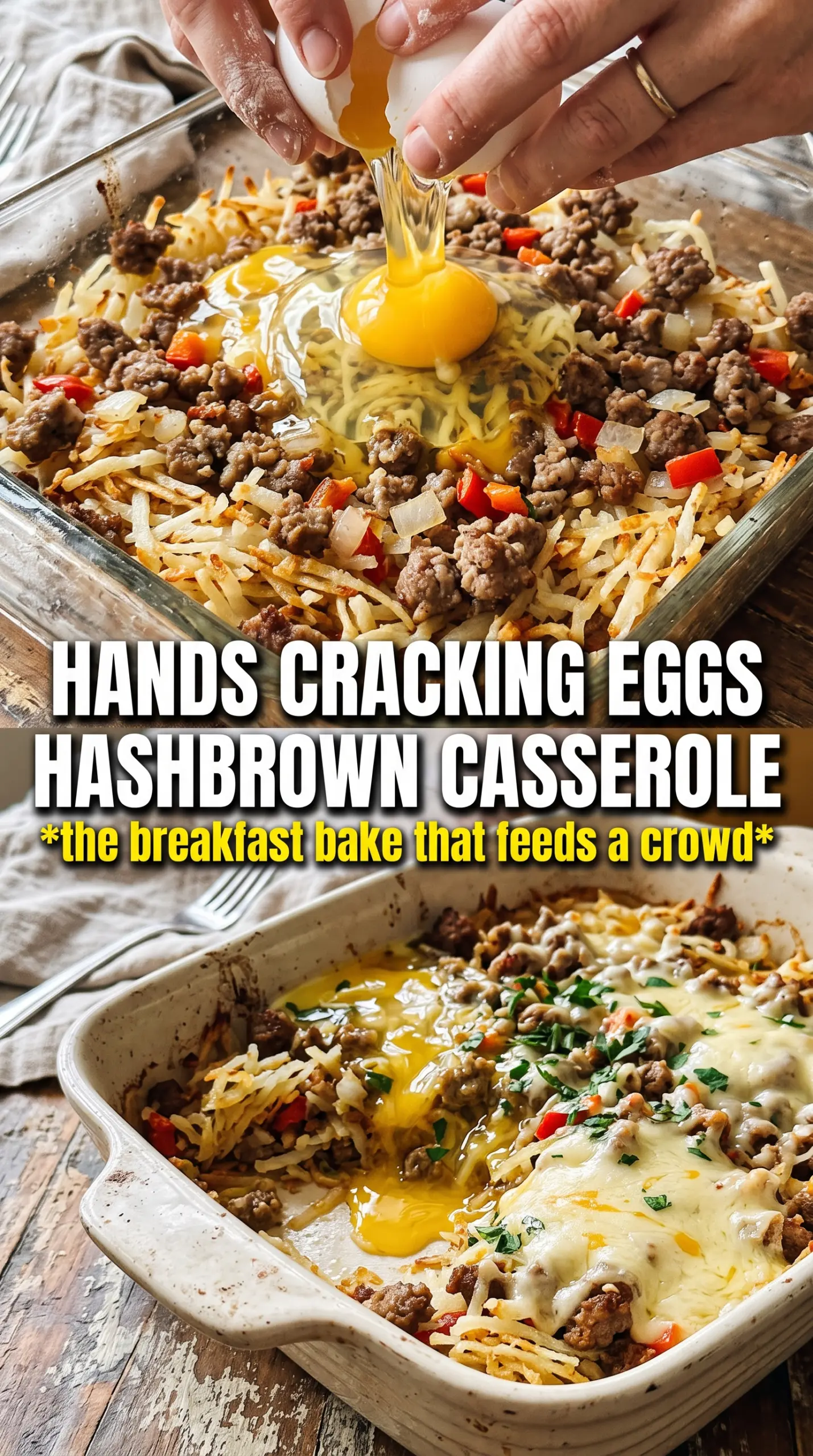
- Breakfast sausage — This is the backbone of the flavor. If you swap in turkey sausage, expect a leaner result with less drippings and a slightly lighter finish.
- Eggs — They set the casserole and hold the layers together. Whisk them with the milk and sour cream until the mixture looks fully blended so you don’t get streaks of plain egg.
- Sour cream and whole milk — Together they make the custard tender. You can use half-and-half for a richer result, but don’t skip the dairy entirely or the eggs can bake up firm and dry.
- Sharp cheddar — Sharp cheese stands up to the sausage and cream cheese. Mild cheddar melts fine, but it fades into the background.
- Smoked paprika — This deepens the savory flavor without making the casserole taste spicy. If you only have regular paprika, the dish still works, but you lose some of that subtle smoky finish.
Building the Bake So the Center Sets Without Drying Out
Layer the potatoes first
Spread the hash browns in an even layer across the greased dish and season them before anything else goes on top. That first layer needs to cover the pan edge to edge so the casserole slices neatly later. If you leave gaps, the egg mixture slips through and the bottom bakes unevenly.
Add the sausage and cream cheese
Scatter the cooked sausage over the potatoes, then drop the cream cheese cubes across the surface. Don’t mix them into the hash browns or they’ll sink and disappear. The cubes soften in place and create creamy spots throughout the casserole instead of one heavy layer.
Pour in the egg mixture slowly
Whisk the eggs, milk, sour cream, and smoked paprika until smooth, then pour it over the casserole in an even stream. If you dump it all in one spot, the center can turn dense while the edges dry out. The top should look coated and glossy before the cheese goes on.
Watch for the set center
Bake until the top is golden and the center no longer sloshes when you gently nudge the pan. A knife inserted near the middle should come out with only moist crumbs, not raw egg. If the top browns before the middle is done, lay a loose sheet of foil over it for the last stretch.
Let it rest before slicing
Give the casserole 10 minutes on the counter after it comes out of the oven. That rest lets the eggs finish setting and keeps the squares from collapsing when you cut them. The green onions go on at the end so they stay fresh and bright.
How to Adapt This for Different Mornings
Make it lighter with turkey sausage
Turkey sausage works well here if you want less richness, but it needs a little help. Brown it well and season the pan a bit more aggressively, since it won’t bring the same savory fat as pork sausage.
Dairy-free version
Use a plant-based cream cheese and shredded dairy-free cheddar, then swap in unsweetened non-dairy milk. The texture will be a little less lush, but the casserole still sets and slices well if you don’t overbake it.
Gluten-free by default
This casserole is naturally gluten-free as long as your sausage is certified gluten-free. That matters more than people expect, because some breakfast sausage blends use fillers or seasoning mixes with hidden gluten.
Make it ahead for a crowd
Assemble the casserole the night before, cover it, and refrigerate it unbaked. In the morning, let it sit on the counter while the oven preheats so it doesn’t go in ice-cold, then add a few extra minutes to the bake time if needed.
Storage and Reheating
- Refrigerator: Store leftovers covered for up to 4 days. The hash browns soften a little, but the casserole still reheats well.
- Freezer: Freeze baked squares tightly wrapped for up to 2 months. Thaw overnight in the fridge before reheating for the best texture.
- Reheating: Warm individual portions in a 325F oven until hot through, or use the microwave in short bursts. Don’t blast it on high heat or the eggs turn rubbery before the center warms.