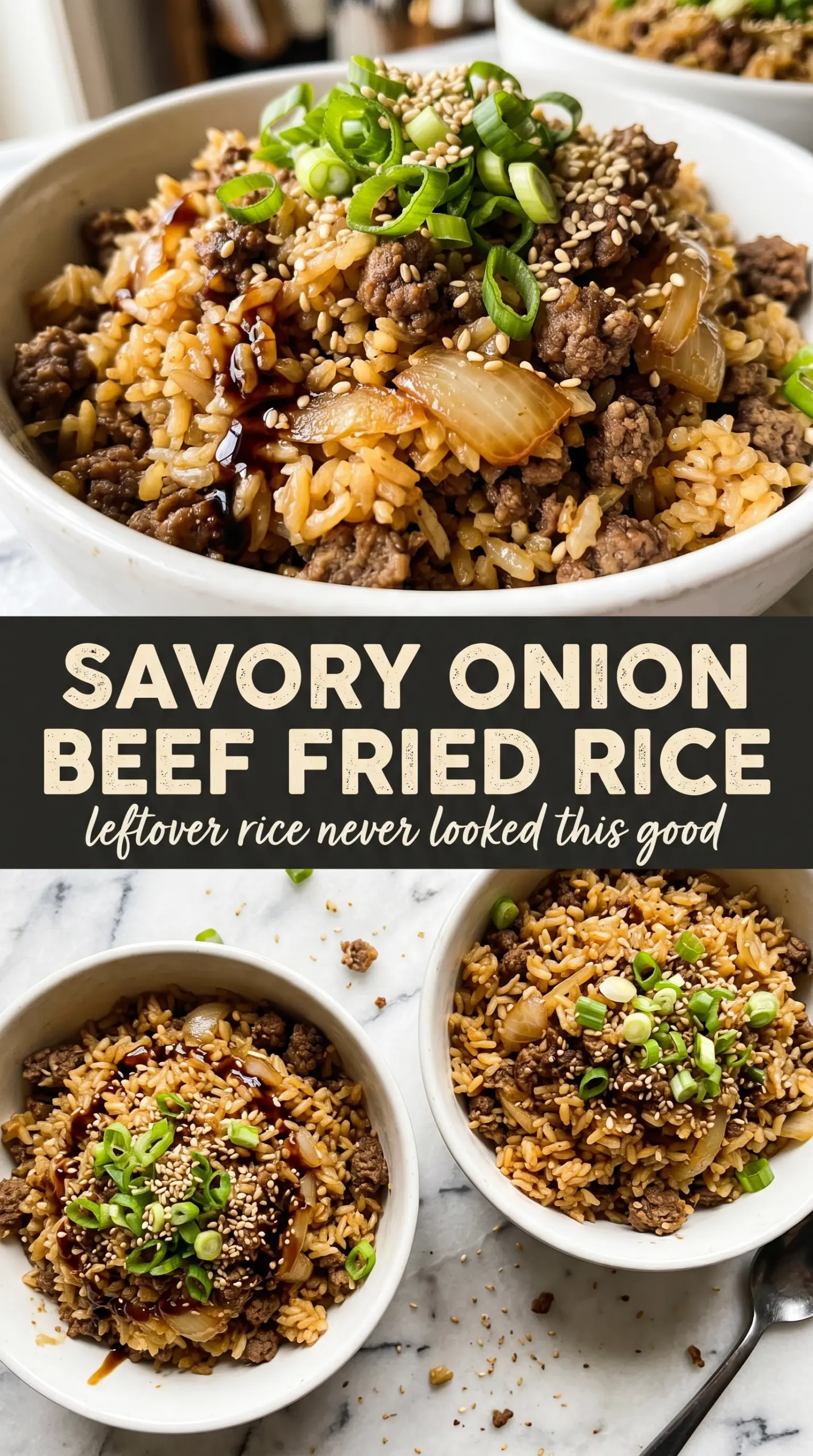
Golden, smoky fried rice with ground beef and onion is one of those dinners that disappears fast because every bite hits something different: crisped rice, savory beef, soft egg, and sweet onion cooked down just enough to turn mellow and rich. The best part is that it doesn’t taste like a leftovers cleanup meal. It tastes intentional, with edges that catch on the pan and a deep savory finish from soy sauce, oyster sauce, and a little sesame oil.
This version works because it starts hot and stays hot. The beef browns before anything else softens the pan, which builds flavor right away, and the onion cooks in the fat so it picks up all that savory base. Day-old rice matters here because fresh rice turns sticky and steamy instead of separate and toasted. Cold rice also gives you a better chance at those slightly charred grains that make fried rice worth making at home.
Below, I’m walking through the small things that change the result: when to leave the rice alone, why the eggs go in before the sauce, and how to keep the whole pan tasting smoky instead of soggy.
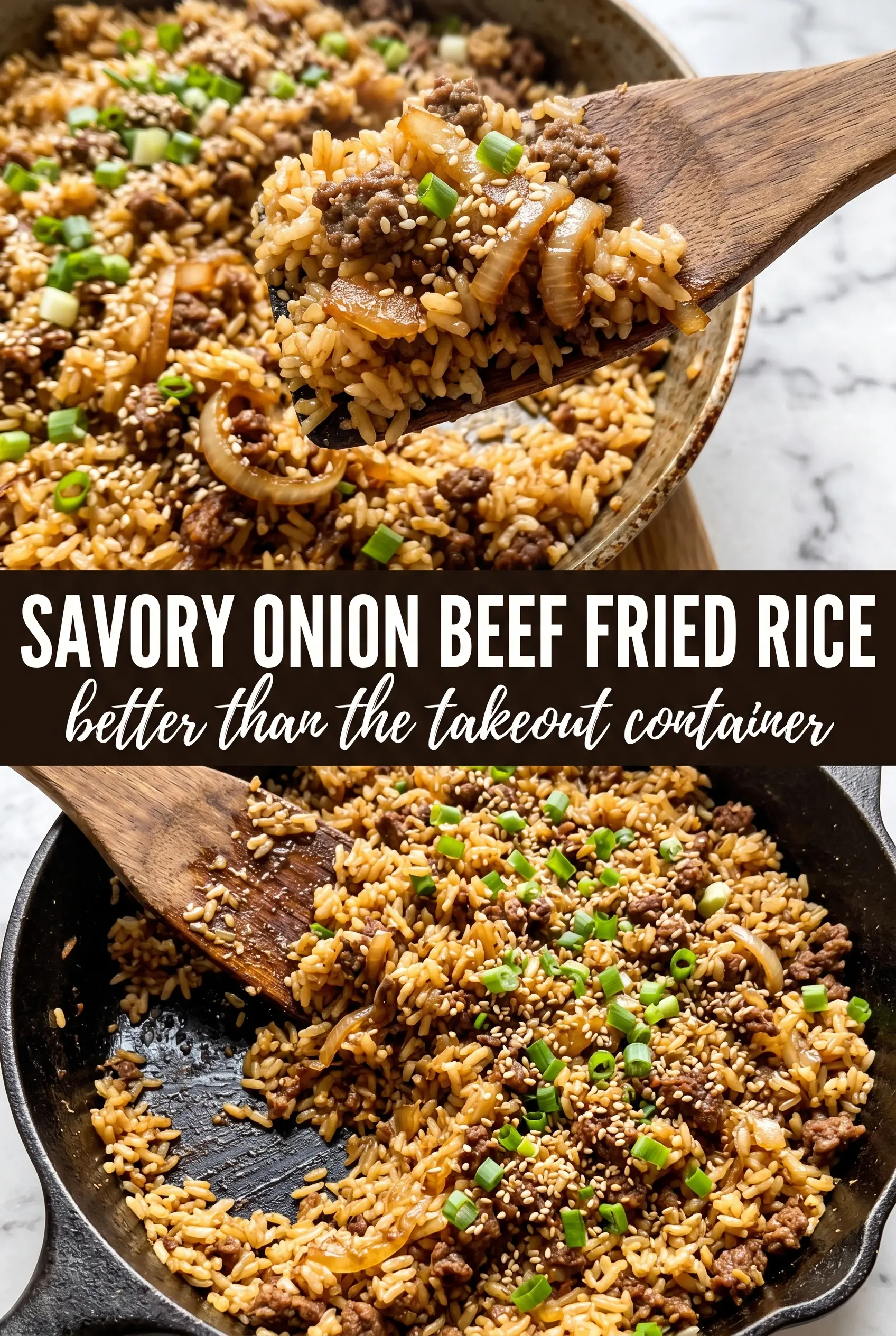
The rice got those little crisp bits I always miss when I make fried rice at home, and the onion cooked down into the beef just enough without turning mushy. I added the sesame seeds at the end and it tasted like takeout, only better.
Like this smoky beef fried rice? Save it for the nights when you want crisp rice, caramelized onion, and one pan dinner comfort.
The Part Most Fried Rice Gets Wrong: Wet Pan, Soft Rice
Fried rice fails when the pan never gets hot enough to dry the rice and brown the bits that touch metal. If the heat is too low, the grains steam, the beef turns gray instead of crisp, and the seasoning sits on top instead of clinging to each grain. High heat changes the whole dish. It gives the rice edges, keeps the onion from collapsing too early, and turns the pan drippings into the kind of savory coating you can taste in every forkful.
The other mistake is adding sauce too soon. Soy sauce and oyster sauce belong near the end, after the rice has had time to toast. If they go in too early, the moisture cools the pan and you lose the smoky finish that makes this taste like fried rice instead of beef and rice stirred together.
What Each Ingredient Is Actually Doing in This Pan
- Ground beef — This is the backbone of the dish. It browns fast, leaves flavorful fat in the pan, and gives the rice something rich to cling to. An 80/20 blend works best because you get enough fat for flavor without needing extra oil, but if yours is lean, keep the vegetable oil in the pan so the rice still fries instead of sticking.
- Day-old white rice — Cold, dry rice is the difference between loose grains and a sticky mound. Fresh rice holds too much steam and breaks apart when tossed, so if you only have freshly cooked rice, spread it on a tray and chill it until it’s cool all the way through.
- Onion and garlic — The onion brings sweetness that balances the beef and soy sauce, while the garlic gives the pan its sharp finish. Dice the onion small so it softens quickly and doesn’t compete with the rice texture. Garlic only needs 30 seconds; if it browns, it turns bitter fast.
- Soy sauce, oyster sauce, and sesame oil — Soy sauce brings salt and color, oyster sauce adds body and a deeper savory note, and sesame oil goes in at the end for aroma. None of them should cook for long. Heat flattens sesame oil, and oyster sauce can taste dull if it gets fried for too long before the rice is tossed through.
- White pepper — This gives the fried rice that quiet, slightly sharp restaurant-style finish. Black pepper works in a pinch, but white pepper has the cleaner flavor this dish wants.
Getting the Char Without Turning the Rice to Mush
Brown the beef first and leave some texture
Start with a hot wok or large skillet and let the beef cook until it’s browned and starting to crisp at the edges. Don’t rush this part by stirring constantly. A little contact with the pan gives you those browned bits that flavor the whole dish, and you can drain off excess fat if the pan looks greasy before you add the onion.
Cook the onion until it softens, not until it disappears
Add the diced onion after the beef and cook it until it turns translucent and picks up color from the pan, about 3 minutes. The goal is tender and savory, not jammy. Garlic goes in only after the onion has some softness, because garlic burns faster than onion and a scorched garlic note will take over the whole pan.
Scramble the eggs in the empty space
Push the beef and onion to one side of the wok and scramble the eggs in the open space until they’re just set. Soft curds work best because they’ll break into the rice later without turning rubbery. If you cook them too long here, they dry out and disappear into the pan instead of giving you those little egg bits that make fried rice feel finished.
Toast the rice before seasoning it
Add the cold rice and press it into the hot surface so it can sit undisturbed for 1 to 2 minutes. That pause is where the flavor happens. You’re looking for a little crackle and a few lightly charred grains, not a browned crust across the whole pan. After that, toss and repeat once or twice until the rice looks separate and hot through.
Finish with sauce fast and over high heat
Drizzle the soy sauce, oyster sauce, sesame oil, and white pepper over the rice, then toss hard for about 2 minutes. The sauce should disappear into the grains instead of pooling. If the pan starts to look wet, keep stirring over high heat until the moisture cooks off and the rice regains its loose, glossy look.
How to Change This When You Need a Different Version
Make it gluten-free
Use a gluten-free soy sauce or tamari and check that your oyster sauce is labeled gluten-free. The rest of the recipe already works in your favor, since the flavor comes from browning and seasoning rather than flour or a thickener.
Use ground turkey or chicken
Swap in ground turkey or chicken for a lighter version, but keep the pan hot and don’t skip the extra oil if the meat is lean. You’ll lose a little richness, so the onion and oyster sauce matter even more for depth.
Make it lower carb
Replace some of the rice with finely chopped cauliflower rice, but add it at the very end and cook just long enough to warm through. Cauliflower releases moisture fast, so it won’t brown the same way and the texture will be softer, but it still gives you the same savory beef-onion base.
Storage and Reheating
- Refrigerator: Store leftovers in an airtight container for up to 4 days. The rice firms up a bit in the fridge, which actually helps it reheat well.
- Freezer: It freezes well for about 2 months. Cool it completely, portion it into flat freezer bags or containers, and press out as much air as you can before freezing.
- Reheating: Reheat in a skillet over medium-high with a splash of water to loosen the grains, then stir until hot. The common mistake is blasting it in the microwave until it turns dry and patchy; the pan brings back the texture much better.
Answers to the Questions Worth Asking
Savory Onion Beef Fried Rice
Ingredients
Equipment
Method
- Heat vegetable oil in a wok or large skillet over high heat, then add ground beef and cook, breaking apart, until browned and slightly crispy. Drain off excess fat.
- Add diced onion to the pan and cook for 3 minutes, stirring as needed. Add minced garlic and cook for 30 seconds.
- Push the beef and onion to one side, then scramble the beaten eggs in the empty space until just set. Mix the eggs into the beef.
- Add cold day-old cooked white rice and press it into the wok, then let it sit undisturbed for 1–2 minutes to get slightly charred. Toss to combine.
- Drizzle soy sauce, oyster sauce, sesame oil, and white pepper over the rice, then toss everything together over high heat for 2 minutes.
- Top with sliced green onions and sesame seeds, then serve hot.