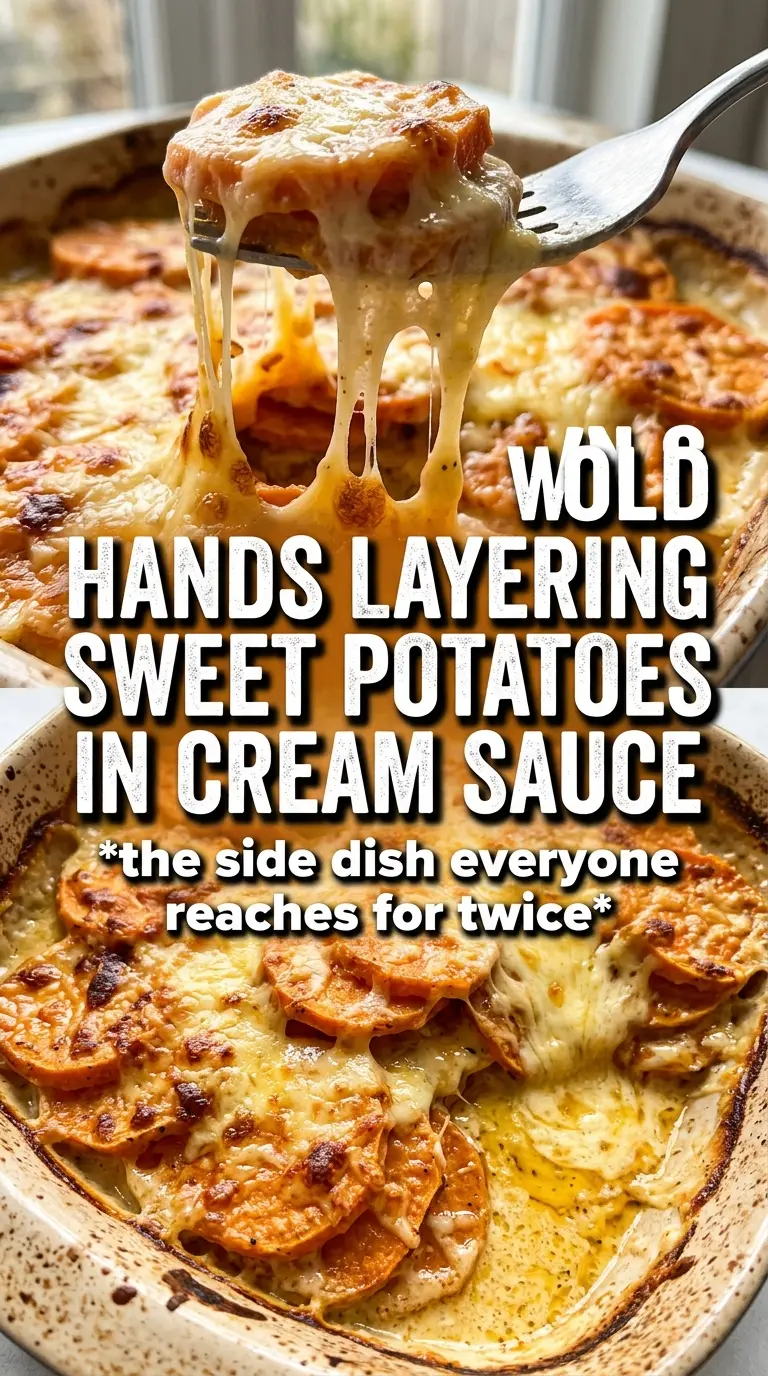
Thin, tender layers of sweet potatoes baked in cream get a golden, bubbling crust that turns this side dish into the first thing people scoop onto their plates. The maple, thyme, cinnamon, and nutmeg work in the background, giving the dish a gentle warmth without tipping it into dessert territory. It’s rich, but not heavy in a way that wears you down.
What makes this version work is the balance between the sweet potatoes’ natural starch and the dairy mixture. The cream and milk soak into the slices as they bake, and the foil keeps the top from drying out before the potatoes turn fully tender. Then the Gruyere and parmesan finish the job with a salty, savory crust that cuts through the sweetness and keeps each bite interesting.
Below, you’ll find the little details that matter most: how thin to slice the potatoes, when to uncover the dish, and how to keep the topping from browning before the center is cooked through.
The layers turned out perfectly tender and the cheese topping browned without burning. I loved that the maple and thyme stayed in the background instead of making it taste too sweet.
Save these scalloped sweet potatoes for the night you want a creamy, cheesy side with golden edges and a maple-kissed finish.
The Trick Is Keeping the Potatoes Tender Before the Top Gets Too Dark
Sweet potatoes can take on a lot of color before they’re actually soft in the center, and that’s the part that trips people up. The foil-covered bake gives the slices time to steam and absorb the cream mixture before the cheese goes on, which keeps the top from overbrowning while the middle stays firm. Once the foil comes off, the goal is a fully tender potato and a crust that has time to turn bubbly and spotted gold.
The other thing that matters here is the slice thickness. Too thick, and the casserole stays tight and undercooked in the middle. Too thin, and it collapses into a soft mash. Thin, even slices give you those clean, layered pieces that hold their shape when served.
- Uniform slicing keeps the bake even from edge to center. A mandoline makes this easier, but a sharp knife works if you keep the slices consistent.
- Foil for the first bake traps enough moisture to soften the potatoes before the cheese has a chance to scorch.
- Resting after baking lets the cream settle so the slices lift neatly instead of sliding apart the second you cut in.
What Each Ingredient Is Actually Doing in This Dish
- Sweet potatoes are the structure of the dish. Choose medium-sized potatoes with smooth skin; they’re easier to slice evenly than oversized ones.
- Heavy cream and whole milk make the sauce lush without turning greasy. Cream carries the dish, while the milk loosens it just enough so it can seep between the layers.
- Gruyere brings the nutty, savory finish that keeps this from tasting one-note. If you need a swap, Swiss or a mild fontina will melt well, though neither has quite the same depth.
- Parmesan adds salt and helps the top brown into a crisp crust. Pre-grated works in a pinch, but freshly grated melts more cleanly.
- Maple syrup, thyme, cinnamon, and nutmeg build the warm backdrop. Don’t overdo the spices; they should round out the sweetness, not announce themselves.
- Garlic keeps the dish savory. Mince it finely so it perfumes the cream instead of leaving sharp bites behind.
Building the Layers So the Center Cooks Before the Cheese Does
Mixing the Cream Base
Whisk the cream, milk, garlic, maple syrup, thyme, cinnamon, nutmeg, salt, and pepper until the mixture looks smooth and slightly speckled. The garlic should be evenly dispersed so it seasons the whole dish instead of settling in pockets. If the cream tastes bland now, it will taste bland after baking too, so season it a touch more boldly than you think you need.
Stacking the Sweet Potatoes
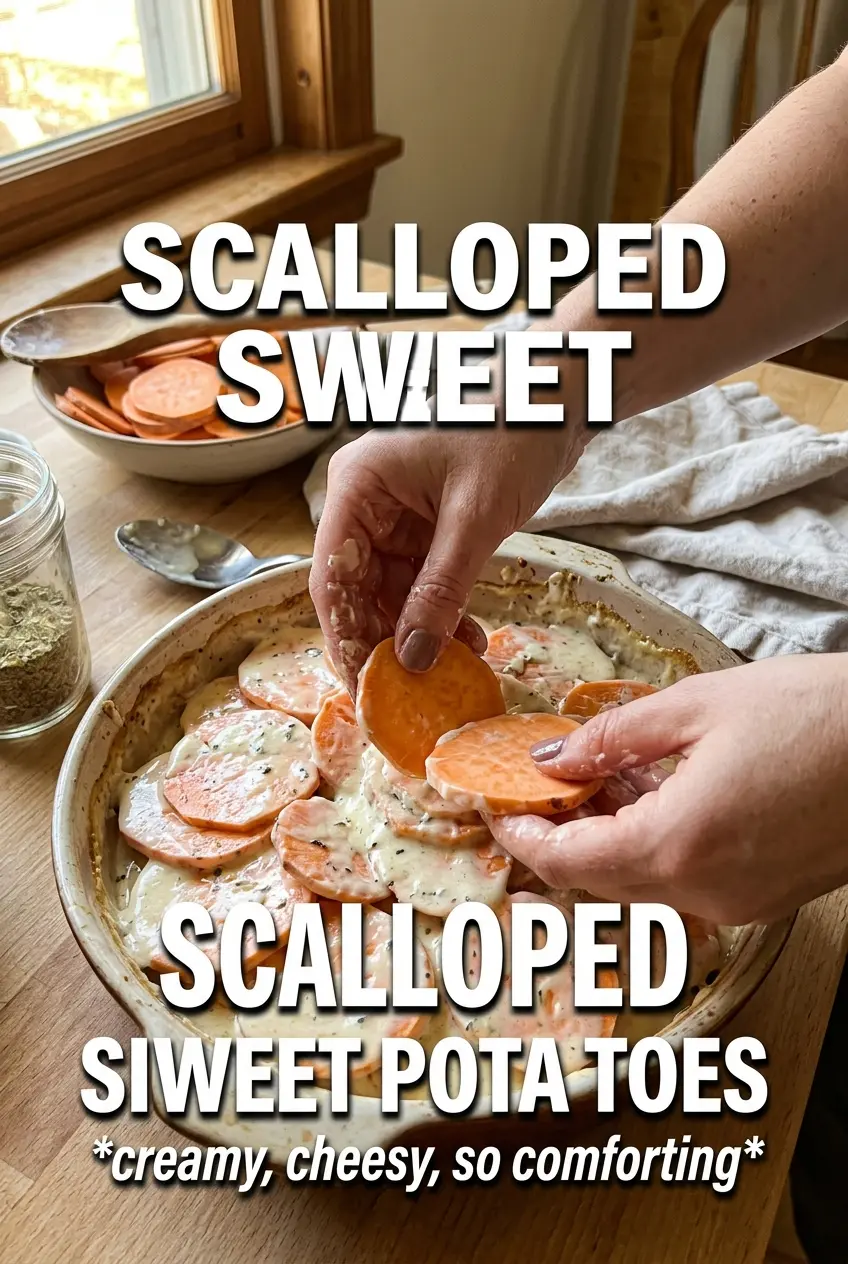
Lay the slices in overlapping rows rather than dumping them in loose layers. That gives you a tighter bake and a prettier slice when it’s served. Pour the cream mixture over the potatoes slowly and evenly so it works down through the layers instead of pooling in one corner.
The Covered Bake
Cover the dish tightly with foil and bake until the potatoes are starting to soften when pierced. If the foil isn’t sealed well, the top edges dry out before the center has a chance to cook. This first stage is all about patience; the potatoes need the steam to relax their starch before the cheese goes on.
The Cheese Finish
Uncover the dish, scatter the Gruyere and parmesan across the top, and return it to the oven until the surface is bubbling and deeply golden. Watch the edges: if they start browning too fast, the oven is running hot or the dish is sitting too close to the top rack. Let it rest for 10 minutes before serving so the sauce thickens instead of running everywhere.
How to Adapt These Scalloped Sweet Potatoes Without Losing the Creamy Texture
Make It Dairy-Free
Use full-fat coconut milk or an unsweetened dairy-free cream substitute for the sauce, then swap in a meltable plant-based cheese for the topping. You’ll lose a little of the Gruyere’s nutty depth, but the dish will still be creamy and layered. Keep the seasoning generous, since dairy-free versions usually need more salt to taste balanced.
Use Different Cheese on Top
If Gruyere isn’t in the fridge, use fontina, Swiss, or sharp white cheddar. Fontina melts the smoothest, cheddar gives you more bite, and Swiss keeps the flavor closest to the original. Parmesan still helps the top brown, so keep that in the mix if you can.
Make It Ahead for a Holiday Table
You can assemble the dish a few hours ahead and keep it covered in the fridge until baking time. Let it sit at room temperature while the oven preheats so the baking dish isn’t going in ice-cold, which helps the potatoes cook more evenly. If it’s been chilled overnight, add a few extra minutes to the covered bake.
Go Gluten-Free Without Changing the Method
This recipe is naturally gluten-free as written, which makes it an easy side for a mixed crowd. Just check that your cheese and spice blends don’t contain any hidden starches or anti-caking additives if you’re cooking for someone with a strict gluten-free need. The texture and bake time stay exactly the same.
Storage and Reheating
- Refrigerator: Store leftovers in an airtight container for up to 4 days. The sauce will thicken as it chills, and the top will soften.
- Freezer: It freezes, but the texture won’t be quite as silky after thawing. If you freeze it, wrap portions tightly and thaw in the refrigerator before reheating.
- Reheating: Warm covered in a 350F oven until heated through, then uncover for the last few minutes to bring back some texture on top. The microwave works for single servings, but the cheese crust won’t stay crisp.
Answers to the Questions Worth Asking
Scalloped Sweet Potatoes
Ingredients
Equipment
Method
- Preheat the oven to 375F, then butter a 9x13 baking dish.
- Whisk heavy cream, whole milk, garlic, maple syrup, fresh thyme, cinnamon, nutmeg, salt, and pepper until evenly combined.
- Layer the sweet potato slices in overlapping rows in the baking dish.
- Pour the cream mixture over the sweet potato layers so they’re evenly coated.
- Cover tightly with foil and bake for 40 minutes at 375F.
- Uncover, then scatter Gruyère and parmesan over the top.
- Bake 20-25 more minutes at 375F until the sweet potatoes are completely tender and the topping is golden and bubbly.
- Rest for 10 minutes before serving so the layers set slightly.