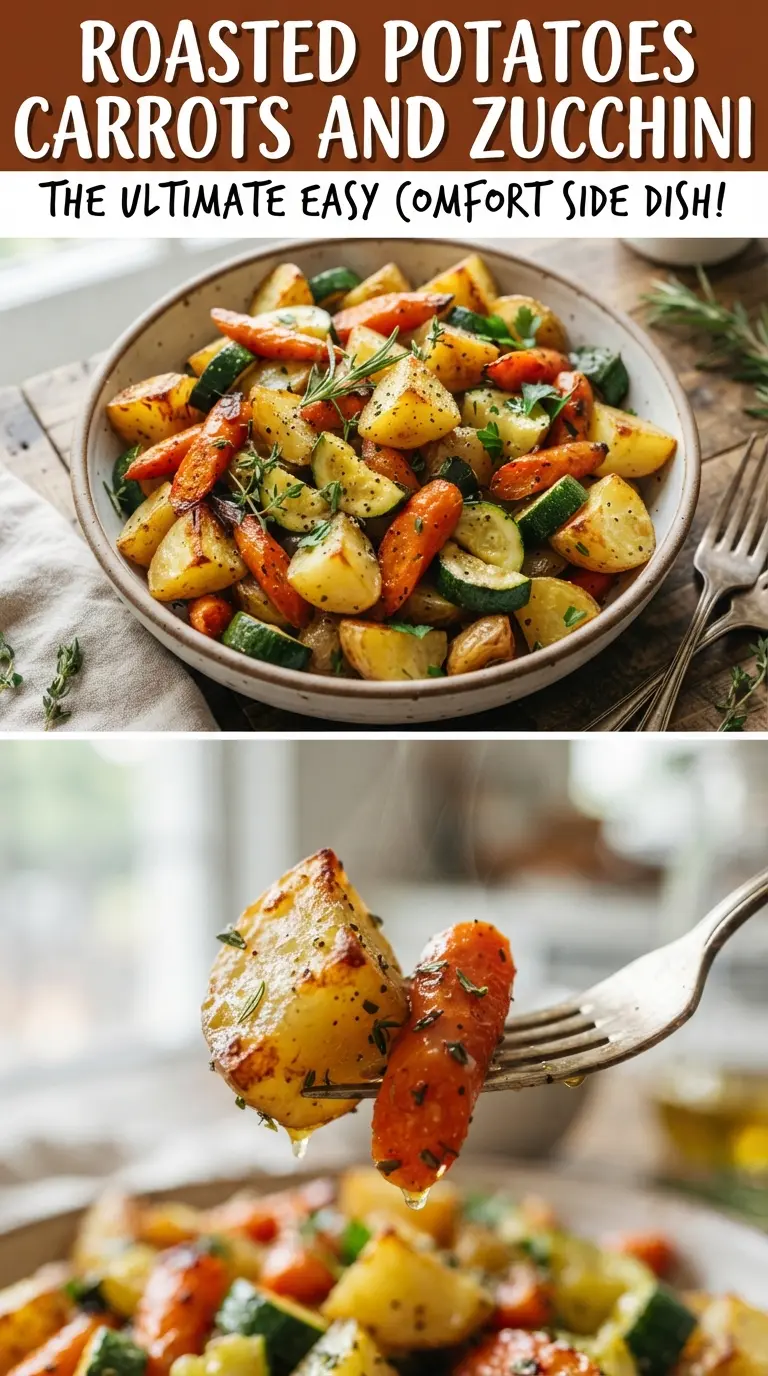
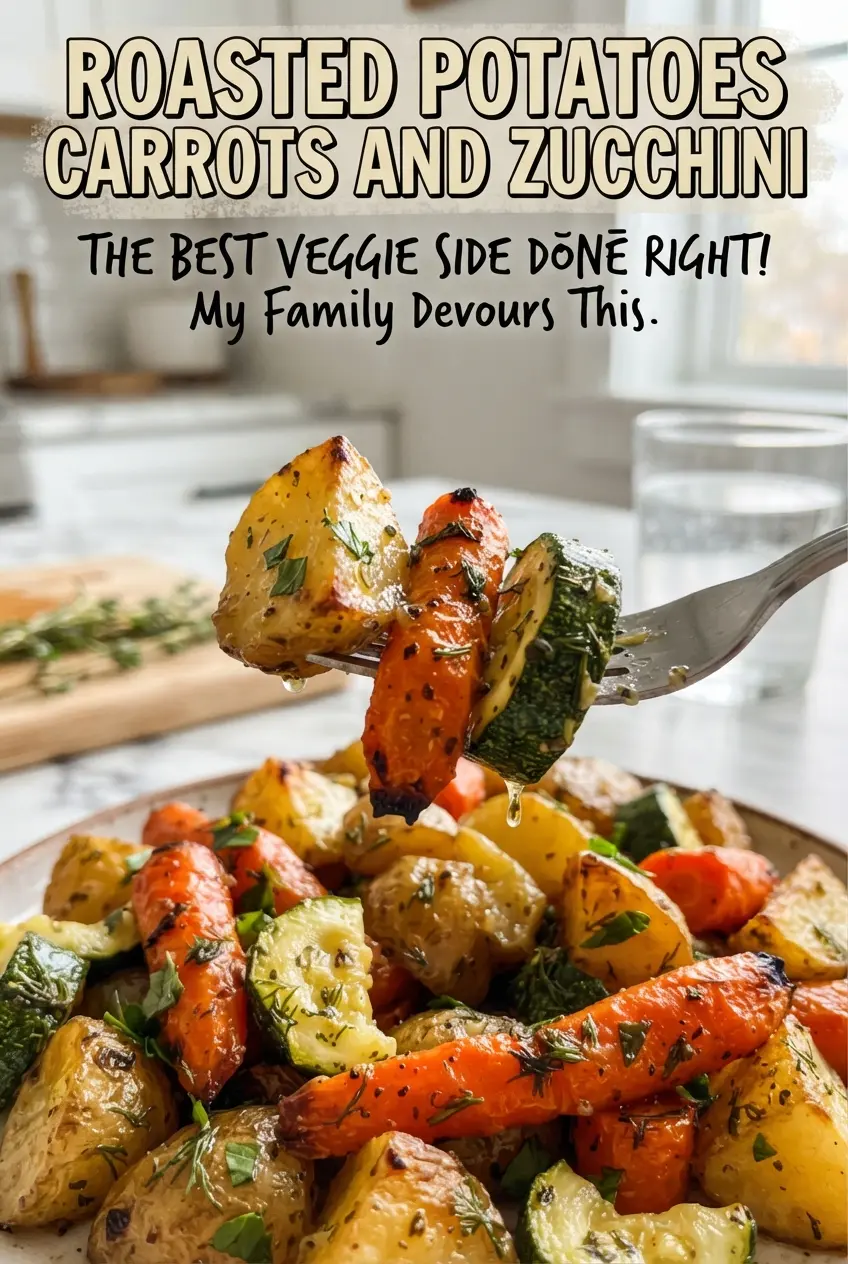
Roasted potatoes, carrots, and zucchini land in that sweet spot where the edges turn crisp, the centers stay tender, and everything on the pan picks up the kind of caramelized flavor that makes people go back for seconds before the platter hits the table. The potatoes bring the crunch, the carrots turn jammy at the edges, and the zucchini softens just enough without collapsing into mush.
The trick is giving the potatoes and carrots a head start. They need more time than the zucchini, and if everything goes in together, the zucchini gives up moisture before the other vegetables have a chance to brown. Garlic, Italian seasoning, Parmesan, and parsley finish the dish with enough savory depth to make these vegetables feel complete, not like an afterthought.
Below, I’ll walk through the timing that keeps the pan from steaming, the small ingredient choices that matter most, and a few ways to adapt this for different meals without losing the texture that makes it work.
The potatoes got crispy on the edges and the zucchini stayed tender instead of watery. Adding the zucchini later made all the difference, and the Parmesan at the end gave it that salty finish I was missing.
Save these roasted potatoes, carrots, and zucchini for the night you want crisp edges, caramelized vegetables, and almost no cleanup.
The Reason These Vegetables Brown Instead of Steam
Roasting mixed vegetables sounds straightforward until one pan comes out crisp and another comes out limp. The difference is moisture management. Potatoes and carrots can take the heat, but zucchini releases water fast, so it needs to join the pan later or it will cool everything down and keep the surfaces from browning.
Cut size matters just as much. Baby potatoes quartered into even pieces and carrots sliced into half-inch coins finish at about the same time once they’ve had their head start. If your carrot slices are too thin, they’ll dry out before the potatoes are done. If the zucchini pieces are too small, they’ll collapse before they pick up any color.
- Potatoes — baby potatoes roast into the crispiest texture here because they’ve got enough starch to brown at the edges without falling apart. Quarter them evenly so they cook at the same speed.
- Carrots — the natural sugars in carrots caramelize beautifully at high heat. Coins hold their shape better than thin slices and give you that soft center with browned edges.
- Zucchini — this is the ingredient that needs the timing discipline. Add it later, or it will steam the pan and go soft before it has a chance to color.
- Parmesan — it’s not just garnish. It adds salt, savoriness, and a little bit of dry, nutty finish that makes the vegetables taste more complete.
What Each Ingredient Is Actually Doing in This Recipe
- Primary ingredient (the star) — Quality matters most. Choose the best you can find.
- Cooking medium (oil, butter, or broth) — This carries flavors and prevents dryness.
- Seasonings (salt, pepper, spices, herbs) — Layer flavors so nothing overpowers. Build depth gradually.
- Aromatics (garlic, onion, herbs) — Cook with fat to bloom flavors. Become the foundation.
- Supporting ingredients — Complement the main ingredient without overpowering it.
- Sauce or liquid (if applicable) — Brings flavors together. Balance richness with acid.
- Acid (lemon, vinegar, wine, or other) — Brightens and prevents flat-tasting results.
- Final finish (garnish, glaze, or sauce) — Prevents one-dimensional taste and adds visual appeal.
What Each Seasoning Is Doing on the Pan
- Olive oil — this is what carries the heat and helps the vegetables brown. Use enough to lightly coat everything, but not so much that it pools on the pan and fries the vegetables unevenly.
- Garlic — minced garlic perfumes the pan as it roasts, but it can burn if it’s left in dry spots. Toss it with the oil so it sticks to the vegetables instead of scorching directly against the sheet pan.
- Italian seasoning — this gives the dish its herb backbone without needing a long ingredient list. Dried herbs work well here because they can stand up to the oven heat better than fresh herbs.
- Parsley — add it at the end so it stays bright. If you roast parsley for the whole time, it loses its fresh finish and disappears into the background.
Getting the Timing Right on the Sheet Pan
Roast the Potatoes and Carrots First
Spread the potatoes and carrots in a single layer and put the pan into a hot 425°F oven. You want the vegetables to sit flat enough that their cut sides can make contact with the pan; crowded pieces trap steam and go pale. After 20 minutes, the potatoes should be starting to turn golden at the edges and the carrots should be softening.
Add the Zucchini at the Right Moment
Toss the zucchini with the remaining oil and add it to the pan after the first roast. Stir everything once so the zucchini gets coated and picks up some of the seasoned oil already on the pan. If the zucchini goes in too early, it gets watery and drags down the browning on the rest of the vegetables.
Finish Until the Edges Crisp
Give the pan 15 minutes more, then check for deep color on the potatoes and browned spots on the zucchini. The carrots should be tender enough to pierce easily but not floppy. If your oven runs cool, let the vegetables go a few minutes longer rather than pulling them early; pale roasted vegetables taste flat, and color is where the flavor is.
How to Adapt These Roasted Vegetables Without Losing the Texture
Dairy-free version
Skip the Parmesan and finish with a little extra salt plus a squeeze of lemon if you want brightness. You lose the salty, nutty finish from the cheese, but the vegetables stay just as crisp and the flavor still feels complete.
Make it heartier with onions or peppers
Add sliced red onion or bell peppers when you add the zucchini. Onion caramelizes beautifully alongside the carrots, while peppers soften without turning soggy. Keep the pieces large enough that they don’t disappear into the pan.
Gluten-free and naturally vegetarian
This dish already fits both of those needs as written. The only thing to watch is the Parmesan if you’re serving strict vegetarians, since some brands use animal rennet. A vegetarian-friendly Parmesan-style cheese works the same way.
Storage and Reheating
- Refrigerator: Store leftovers in an airtight container for up to 4 days. The zucchini softens a bit, but the potatoes and carrots hold up well.
- Freezer: I don’t recommend freezing this one. Zucchini turns watery and soft after thawing, which changes the whole texture of the dish.
- Reheating: Warm leftovers on a sheet pan in a 400°F oven until hot and the potatoes re-crisp at the edges. Microwaving works in a pinch, but it turns the vegetables soft and mutes the browned flavor.
Questions I Get Asked About This Recipe
Roasted Potatoes Carrots and Zucchini
Ingredients
Equipment
Method
- Preheat the oven to 425F and position a sheet pan inside to heat up. The oven should be fully hot before the vegetables go in.
- Toss baby potatoes and carrots with 3 tablespoons olive oil, garlic, dried Italian seasoning, salt, and black pepper on the hot sheet pan. Spread into an even layer so the edges can brown.
- Roast for 20 minutes, stirring once halfway through if needed for even browning. Watch for potatoes starting to turn golden at the corners.
- Toss zucchini with the remaining olive oil, then add it to the pan and stir to combine. Make sure zucchini pieces are coated and not piled on top of potatoes.
- Roast for 15 minutes more until potatoes are crispy and zucchini is tender. Look for browned zucchini edges and crisp, deep-gold potato surfaces.
- Sprinkle Parmesan and fresh parsley over the roasted vegetables, then serve immediately. The herbs should look fresh and the Parmesan should melt slightly from the heat.