Caramelized sausage, tender roasted squash, and Brussels sprouts with crisp edges make this sheet pan dinner the kind of meal that disappears fast and doesn’t leave you with a sink full of pans. The sweet-tangy glaze catches on the vegetables as they roast, and the apple softens just enough to add a little brightness without turning mushy. It’s hearty, balanced, and it tastes like more effort went into it than actually did.
What makes this version work is the way the glaze is built right into the pan. Maple syrup and balsamic give the vegetables enough help to brown, while Dijon and garlic keep the whole tray from tasting flat or overly sweet. Cutting the sausage into rounds gives you more surface area for browning, and using a hot oven lets the squash and Brussels sprouts caramelize instead of steam. That’s the difference between a decent tray bake and one you keep making on repeat.
Below, you’ll find the small timing detail that keeps the vegetables from going soft, plus a few smart swaps if you want to change up the mix without losing the balance.
The glaze clung to everything and the Brussels sprouts got those crisp, dark edges I was hoping for. My husband kept sneaking the sausage pieces straight from the pan.
Save this sheet pan sausage and fall veggies dinner for a night when you want caramelized edges, cozy squash, and an easy one-pan cleanup.
The Trick to Keeping the Veggies Roasted, Not Waterlogged
Sheet pan dinners fail when the pan gets crowded. Once the vegetables pile up, they start steaming in their own moisture instead of browning, and the whole dish turns soft before the sausage has a chance to develop those crisp edges. A large rimmed baking sheet matters here because it gives the ingredients room to roast in a single layer.
The other thing that keeps this dish on track is the cut size. Butternut squash needs to be in fairly even cubes so it cooks at the same pace as the Brussels sprouts, while the sausage rounds and onion wedges should be thick enough to hold their shape through the roast. If the squash pieces are tiny, they’ll collapse before the rest of the tray is done.
- Butternut squash — This is the slowest vegetable in the mix, so cut it into small, even cubes. Pre-cubed squash works fine if the pieces aren’t huge.
- Brussels sprouts — Halving them gives the cut sides a chance to caramelize. If some of your sprouts are very large, quarter them so they cook through at the same time.
- Italian sausage — Slicing the links into rounds creates more browned surface area than leaving them whole. Chicken sausage works too, but it won’t give you quite the same richness.
- Apple — Use a firm apple like Honeycrisp or Pink Lady. Softer apples break down too quickly and can turn jammy before the roast is finished.
What Each Ingredient Is Doing on the Pan
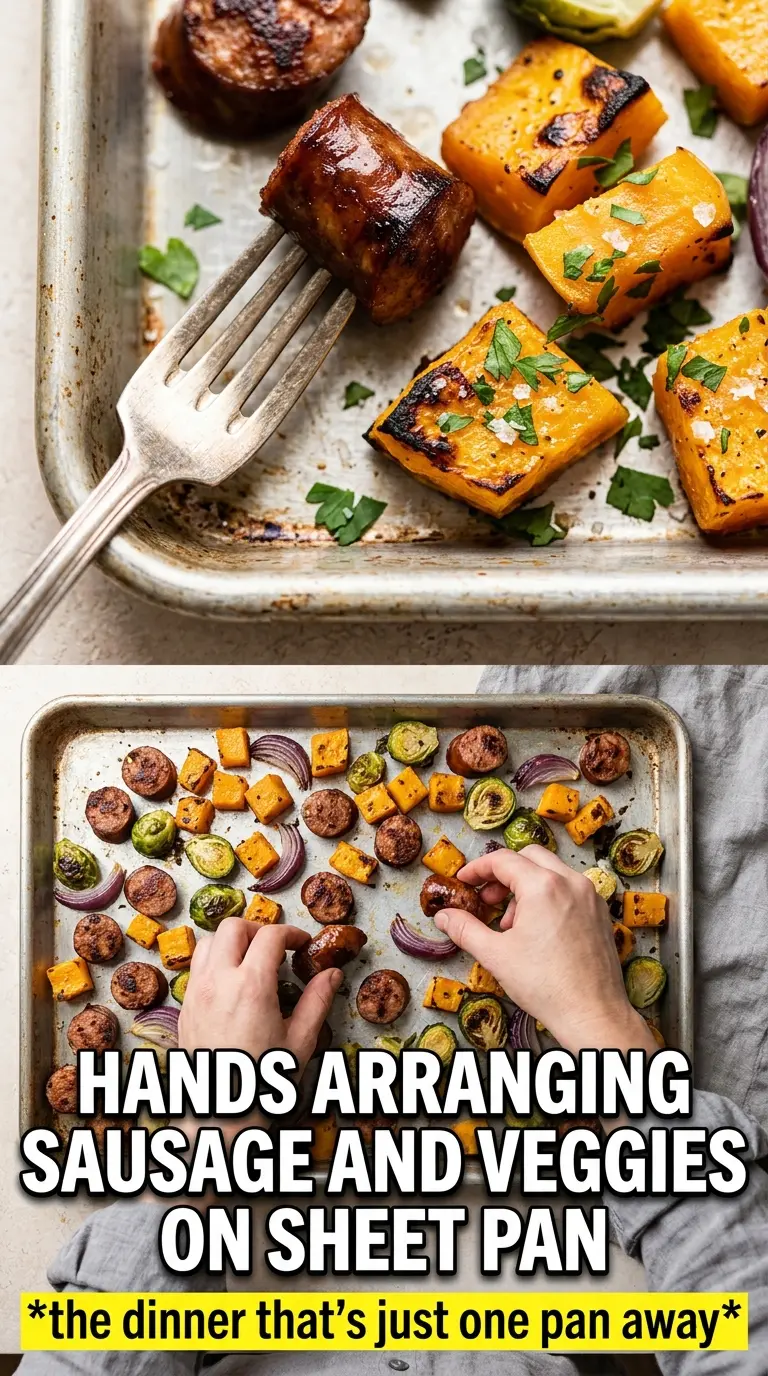
- Italian sausage links — They bring fat, seasoning, and browning all at once. Pork sausage gives the deepest flavor, but turkey or chicken sausage will work if you want something lighter.
- Balsamic vinegar, maple syrup, and Dijon — This trio makes the glaze taste balanced instead of sugary. The vinegar sharpens everything, the maple helps with browning, and the Dijon keeps the sweetness in check.
- Fresh rosemary and Italian seasoning — Rosemary adds a woodsy note that fits roasted squash and sausage better than dried herbs alone. If you only have dried rosemary, crush it between your fingers before mixing it in so it doesn’t taste scratchy.
- Bell peppers and red onion — These roast quickly and add color plus a little sweetness. Use any color pepper you have, but don’t skip the onion; it melts into the glaze and helps pull the whole tray together.
Getting the Glaze and the Roast to Finish at the Same Time
Whisk the glaze first
Mix the olive oil, balsamic, maple syrup, Dijon, garlic, rosemary, Italian seasoning, salt, and pepper before anything hits the pan. That way the seasoning spreads evenly, and you don’t end up with pockets of mustard or garlic clinging to one corner of the tray. The glaze should look loose and glossy, not thick like a sauce.
Lay everything out in a single layer
Spread the sausage and vegetables across the baking sheet with a little breathing room between pieces. If you heap everything in the center, the moisture has nowhere to go and the vegetables soften before they brown. Tossing once in the glaze helps, but the real key is leaving the pan open enough for hot air to move around the food.
Roast, then broil at the end
Roast at 425°F until the squash is tender at the edges and the sausage is cooked through, then give the pan a brief broil for extra caramelization. Don’t walk away during the broil; the maple in the glaze can go from browned to burnt in a minute. You’re looking for dark edges, glossy vegetables, and sausage that’s browned in spots.
How to Adapt This Tray Bake Without Losing the Balance
Make it dairy-free and gluten-free without changing the method
This recipe is naturally dairy-free and gluten-free as written, as long as your sausage and Dijon mustard are labeled gluten-free. That makes it a solid one-pan dinner for mixed groups, and you don’t lose anything in texture or flavor by keeping it this way.
Swap the squash for sweet potatoes if that’s what you have
Sweet potatoes roast a little faster and taste sweeter than butternut squash, so cut them into slightly larger chunks to keep them from softening too soon. The dish will still be hearty, but the final flavor will lean a little more caramel-sweet.
Use chicken sausage for a lighter finish
Chicken sausage works well here, especially if you want a less rich result. You’ll lose some of the deep rendered fat that helps the pan brown, so watch for pale spots and give the vegetables a little extra time if needed.
Leave out the apple for a less sweet version
If you want the tray to lean more savory, skip the apple and add a few extra onion wedges instead. You’ll lose a little brightness, so I’d keep the balsamic in place to keep the glaze lively.
Storage and Reheating
- Refrigerator: Store leftovers in an airtight container for up to 4 days. The Brussels sprouts soften a bit, but the flavor holds up well.
- Freezer: This freezes okay, though the vegetables won’t stay as crisp. Freeze in a shallow container for up to 2 months and expect a softer texture after thawing.
- Reheating: Reheat on a baking sheet in a 375°F oven until warmed through. The biggest mistake is microwaving too long, which makes the sausage rubbery and the vegetables soggy.
Answers to the Questions Worth Asking

Sheet Pan Sausage and Fall Veggies
Ingredients
Equipment
Method
- Preheat oven to 425F and line a large rimmed baking sheet with parchment.
- Whisk olive oil, balsamic vinegar, maple syrup, Dijon mustard, minced garlic, fresh rosemary, Italian seasoning, salt, and pepper until smooth.
- Arrange sausage rounds, butternut squash, Brussels sprouts, red onion wedges, bell pepper chunks, and apple slices in an even layer.
- Drizzle the glaze over everything, then toss to coat so vegetables and sausage look glossy.
- Roast at 425F for 30-35 minutes, stirring once halfway, until vegetables are caramelized and sausage is cooked through.
- Broil at high for 2-3 minutes to push the edges darker and more caramelized.