Crispy skillet potatoes underneath tangy-sweet sloppy joe beef is the kind of dinner that disappears fast. The potatoes stay sturdy enough to catch the sauce, the beef mixture clings instead of sliding off, and the melted cheddar ties the whole thing together without turning it heavy. Every bite hits that familiar sloppy joe comfort, just with more texture and a lot less bun.
What makes this version work is the order. The potatoes get cooked first and set aside so they can brown properly instead of steaming under the beef. The sauce also leans on a little vinegar and Worcestershire, which keeps the ketchup from tasting flat and gives the finished skillet that sharp, savory edge sloppy joes need.
Below, I’m walking through the potato timing that keeps them crisp, the little ingredient choices that make the sauce taste balanced, and a few ways to adapt the skillet if you want it lighter, cheesier, or easier to reheat.
The potatoes stayed crisp under the sloppy joe meat, and the sauce thickened up perfectly in just a few minutes. I topped it with extra pickles and my husband asked me to put it in the regular dinner rotation.
Save this sloppy joe potato skillet for the nights when you want crispy potatoes, saucy beef, and melted cheddar all in one pan.
The Part That Keeps the Potatoes Crispy Under the Sauce
The mistake with a skillet like this is crowding everything together too early. Once the potatoes go back into the pan, they’re no longer trying to brown; they’re just waiting to get coated. That means the crisping has to happen first, before the beef mixture ever shows up.
Russet potatoes work best because they give you a fluffy center and a sturdy crust once the cut sides hit the hot oil. If they’re cut unevenly, the small pieces will overcook before the larger ones get color, so keep the dice fairly even. When the potatoes are done, they should release from the pan and show deep golden edges, not pale spots or soft sides.
- Russet potatoes — These crisp better than waxier potatoes and hold up under the sauce. Yukon Golds work in a pinch, but the texture will be a little creamier and less crunchy.
- Ground beef — An 80/20 blend gives the best flavor. If you use leaner beef, add a little oil to the pan so the onions and peppers don’t stick while the meat browns.
- Ketchup, mustard, brown sugar, Worcestershire, and apple cider vinegar — This is the sauce backbone. The vinegar and Worcestershire keep it from tasting like plain sweet ketchup, and the brown sugar rounds out the sharp edges.
- Cheddar cheese — Sharp cheddar gives you the best payoff because it cuts through the sweetness of the sauce. Pre-shredded works fine, but freshly shredded melts more smoothly.
What Each Ingredient Is Actually Doing in This Recipe

- Primary ingredient (the star) — Quality matters most. Choose the best you can find.
- Cooking medium (oil, butter, or broth) — This carries flavors and prevents dryness.
- Seasonings (salt, pepper, spices, herbs) — Layer flavors so nothing overpowers. Build depth gradually.
- Aromatics (garlic, onion, herbs) — Cook with fat to bloom flavors. Become the foundation.
- Supporting ingredients — Complement the main ingredient without overpowering it.
- Sauce or liquid (if applicable) — Brings flavors together. Balance richness with acid.
- Acid (lemon, vinegar, wine, or other) — Brightens and prevents flat-tasting results.
- Final finish (garnish, glaze, or sauce) — Prevents one-dimensional taste and adds visual appeal.
Building the Sauce So It Clings Instead of Running Off
Get the Potatoes Deeply Golden First
Heat the oil until it shimmers, then add the diced potatoes in a single layer. Let them sit long enough to develop a crust before stirring, or they’ll turn patchy and soft instead of crisp. The potatoes are ready when most sides are golden and the centers are just tender enough to pierce with a fork.
Brown the Beef and Cook Off the Veggies
Cook the onion and bell pepper with the ground beef until the meat has real browning and the onion looks translucent. If there’s a lot of fat in the pan, drain it before adding the garlic so the sauce doesn’t turn greasy. Garlic only needs about 30 seconds; if it goes in too early, it can burn and make the whole skillet taste harsh.
Simmer the Sloppy Joe Sauce Until It Thickens
Stir in the ketchup, mustard, brown sugar, Worcestershire, and vinegar, then let the mixture simmer until it turns glossy and spoonable. This is the stage that separates a loose meat sauce from one that actually coats the potatoes. If the sauce still looks thin after a few minutes, keep it on the heat; once it thickens slightly, it will cling much better after it hits the potatoes.
Finish With Cheese and the Right Garnishes
Return the potatoes to the skillet and fold them in gently so they keep some of their edges. Sprinkle the cheddar over the top, cover the pan, and let the heat melt it without drying out the potatoes. The pickles and diced onion at the end matter more than they look like they should; they add crunch and sharpness that keep the skillet from tasting one-note.
How to Adapt It Without Losing the Best Part
Make It Gluten-Free
This recipe is already close, but Worcestershire sauce is the one ingredient to check. Use a certified gluten-free brand and you’re set. The texture and flavor stay the same, and nothing else in the skillet needs changing.
Use Ground Turkey Instead of Beef
Ground turkey works if you want something lighter, but it needs a little help because it doesn’t bring the same richness as beef. Add a drizzle of oil when you brown it, and don’t skip the Worcestershire and vinegar or the sauce can taste flat.
Make It Extra Cheesy
Add a second layer of cheese after you fold in the potatoes, then cover the skillet again for another minute. That gives you stretchy melted cheese through the whole pan instead of just a top layer. Monterey Jack blends well if you want it milder.
Storage and Reheating
- Refrigerator: Store leftovers in an airtight container for up to 4 days. The potatoes soften a bit, but the flavor holds up well.
- Freezer: You can freeze it, but the potatoes won’t stay crisp. Freeze in portions for up to 2 months and expect a softer texture after thawing.
- Reheating: Warm it in a skillet over medium-low heat with a splash of water or a lid on for a few minutes. The biggest mistake is blasting it in the microwave until the potatoes turn rubbery and the cheese splits.
Answers to the Questions Worth Asking
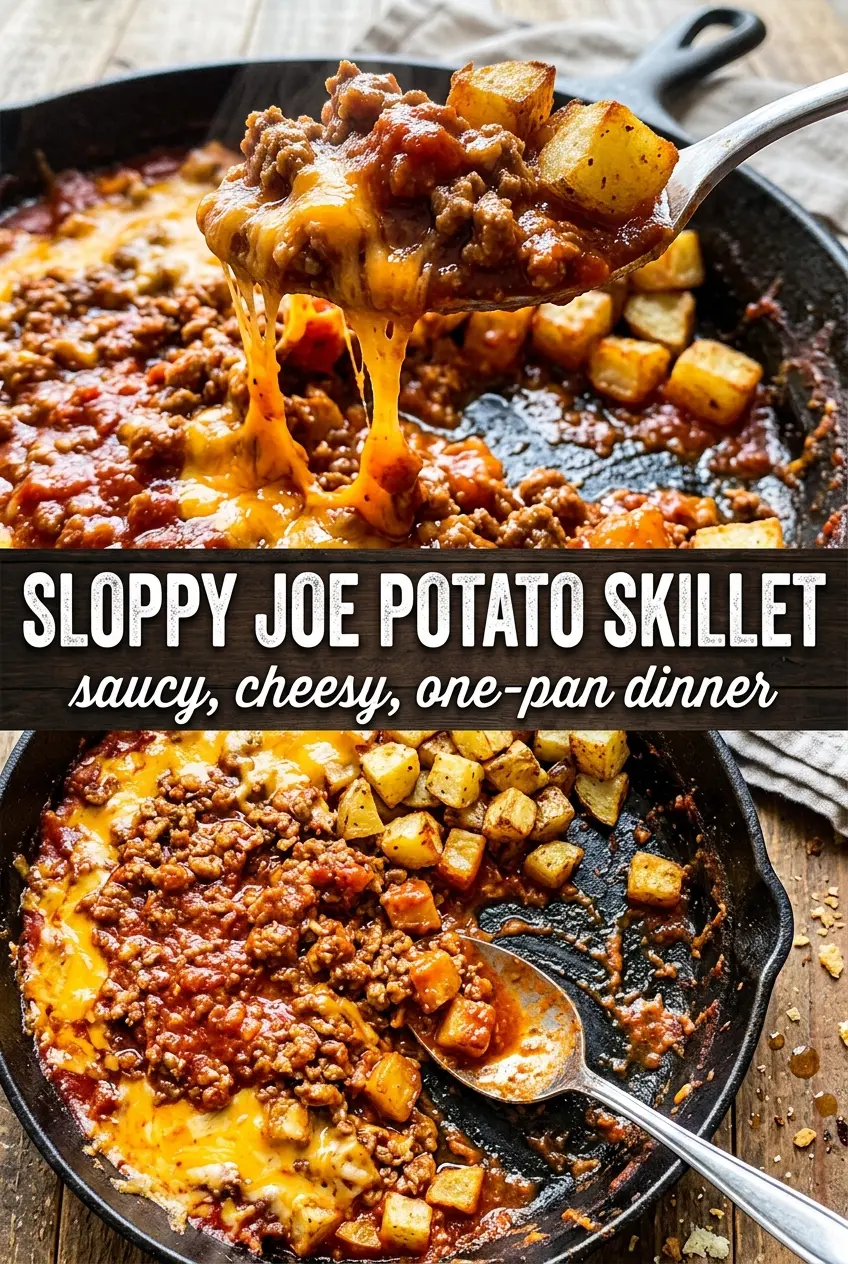
Sloppy Joe Potato Skillet
Ingredients
Equipment
Method
- Heat the cast iron skillet over medium-high heat and pan-fry the diced russet potatoes in oil for 12–15 minutes, stirring occasionally, until golden and crispy. Season with salt and pepper to taste, then set the potatoes aside.
- In the same skillet, brown the ground beef with the diced onion and diced green bell pepper over medium-high heat, stirring until the beef is cooked through. Drain excess fat, then add the minced garlic and stir for about 30 seconds.
- Stir in the ketchup, yellow mustard, brown sugar, Worcestershire sauce, and apple cider vinegar, then simmer for 5 minutes until the sauce thickens. Keep the heat steady so the mixture reduces and coats the meat.
- Return the crispy potatoes to the skillet and toss until the potatoes are coated with the sloppy joe meat sauce. Spread everything into an even layer for better melting.
- Sprinkle shredded cheddar cheese over the top, cover the skillet, and heat for 2 minutes until the cheddar is melted and bubbly. Turn off the heat and let it rest briefly so the sauce clings to the potatoes.
- Serve hot with dill pickles and diced white onion on top. Add a few extra pickles if you like the tangy-sweet flavor to pop.