Slow cooker sausage and potato casserole lands on the table as a creamy, hearty dinner with tender potatoes, smoky sausage, and a cheesy top that holds together instead of turning watery. The potatoes soak up the seasoned sauce as they cook, and the sausage brings enough salt and smoke to keep every bite interesting. It’s the kind of meal that feels generous without asking much from you once it’s in the pot.
The key is browning the sausage first. That extra minute in the skillet gives you deeper flavor and keeps the casserole from tasting flat. Mixing the sour cream with the soup and broth before it goes in also matters, because it helps the sauce stay smooth as it cooks instead of separating into greasy patches. The cheddar gets divided for a reason too: some melts into the casserole, and the rest stays on top for that finish everyone notices.
Below, I’ve added the small details that make this work: how to keep the potatoes tender instead of mushy, what to do if you want to swap the sausage, and how to reheat it without drying out the sauce.
The potatoes were tender all the way through and the sauce thickened up beautifully. Browning the sausage first made a huge difference, and the leftovers reheated without turning gluey.
Save this slow cooker sausage and potato casserole for a cozy, cheesy dinner with almost no hands-on time.
The Part That Keeps the Sauce Creamy Instead of Greasy
Most slow cooker casseroles go wrong when everything is layered in cold and the dairy goes in without any planning. Sour cream can handle slow heat, but it behaves better when it’s whisked with the broth and soup first. That gives the crockpot a smooth base to work with, instead of pockets of dairy that can split or look grainy around the edges.
Browned sausage helps here too. The skillet does more than add color; it renders off some fat and builds a deeper, smokier flavor before the meat goes into the slow cooker. If you skip that step, the casserole will still cook, but the sauce tastes softer and the sausage can read a little bland against the potatoes.
- Smoked kielbasa or andouille — Either one works, but andouille brings more heat and kielbasa stays milder and a little sweeter. Use what matches the rest of your table.
- Baby potatoes — Halving them gives the slow cooker enough surface area to season the centers without letting them collapse. Bigger chunks need longer and can turn chalky before they’re tender.
- Cream of mushroom soup — This is the backbone of the sauce. A homemade white sauce won’t give quite the same convenience or thickness, though you can swap in cream of chicken if mushroom isn’t your thing.
- Sour cream — This is what makes the casserole taste creamy instead of canned. Full-fat sour cream holds up best; light versions work, but the sauce is thinner.
What Each Ingredient Is Actually Doing in This Recipe
- Primary ingredient (the star) — Quality matters most. Choose the best you can find.
- Cooking medium (oil, butter, or broth) — This carries flavors and prevents dryness.
- Seasonings (salt, pepper, spices, herbs) — Layer flavors so nothing overpowers. Build depth gradually.
- Aromatics (garlic, onion, herbs) — Cook with fat to bloom flavors. Become the foundation.
- Supporting ingredients — Complement the main ingredient without overpowering it.
- Sauce or liquid (if applicable) — Brings flavors together. Balance richness with acid.
- Acid (lemon, vinegar, wine, or other) — Brightens and prevents flat-tasting results.
- Final finish (garnish, glaze, or sauce) — Prevents one-dimensional taste and adds visual appeal.
Building the Layers So the Potatoes Cook Evenly
Browning the Sausage First
Start with the sausage in a skillet and cook it until the edges are browned and the slices have some color. You’re not cooking it through from raw; you’re building flavor and giving the fat somewhere to go before it meets the potatoes. If the pan looks dry, that’s fine — the sausage will release enough grease on its own. Let it rest on a plate while you mix the sauce so it doesn’t overcook.
Mixing the Cream Base
Whisk the soup, broth, sour cream, garlic powder, and smoked paprika until the mixture looks smooth and loose enough to pour. If the sour cream is cold from the fridge, it may look slightly thick at first, but keep whisking and it will come together. This step matters because the sauce needs to move around the potatoes in the cooker, not sit in clumps on top.
Stacking the Crockpot
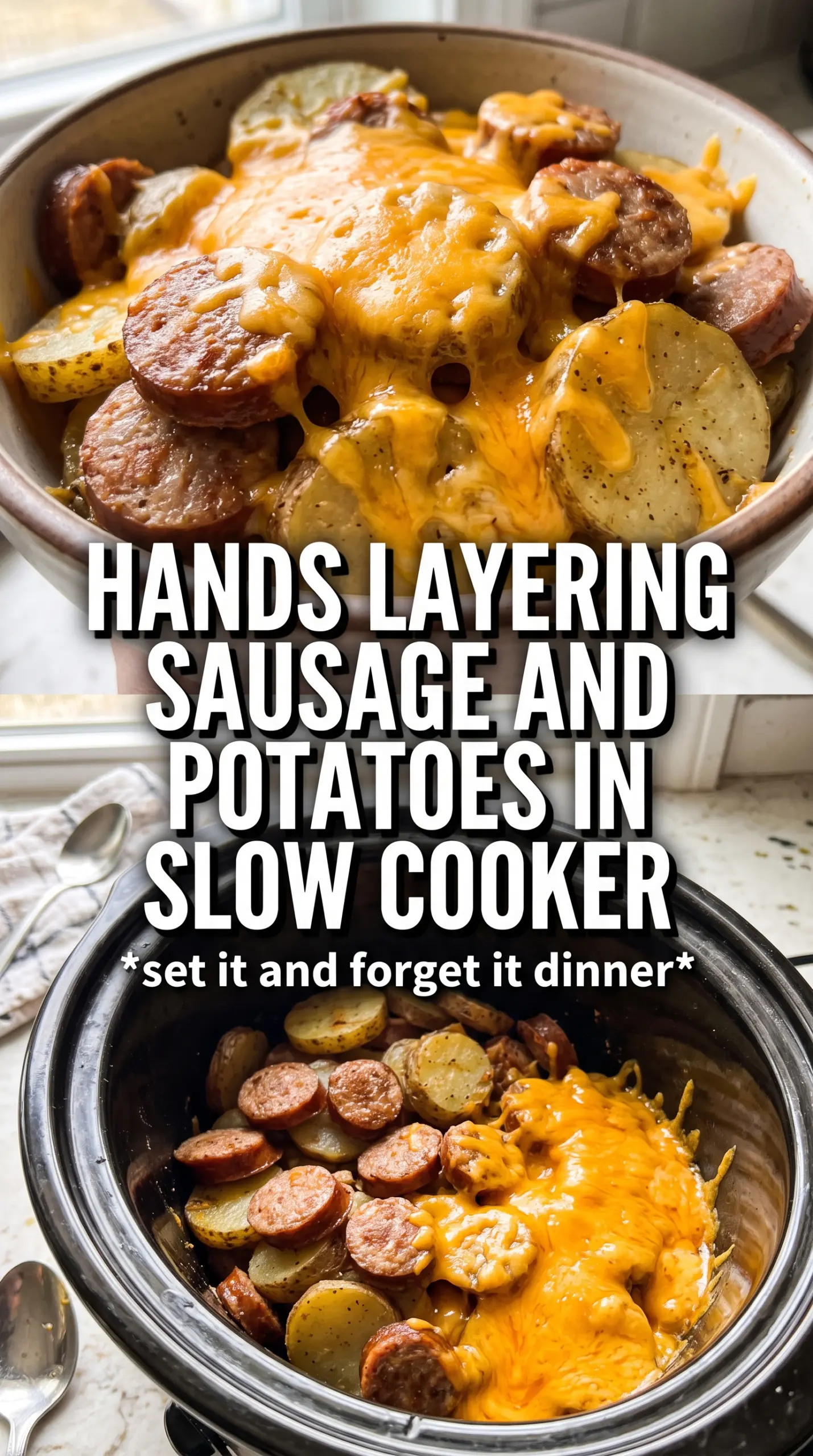
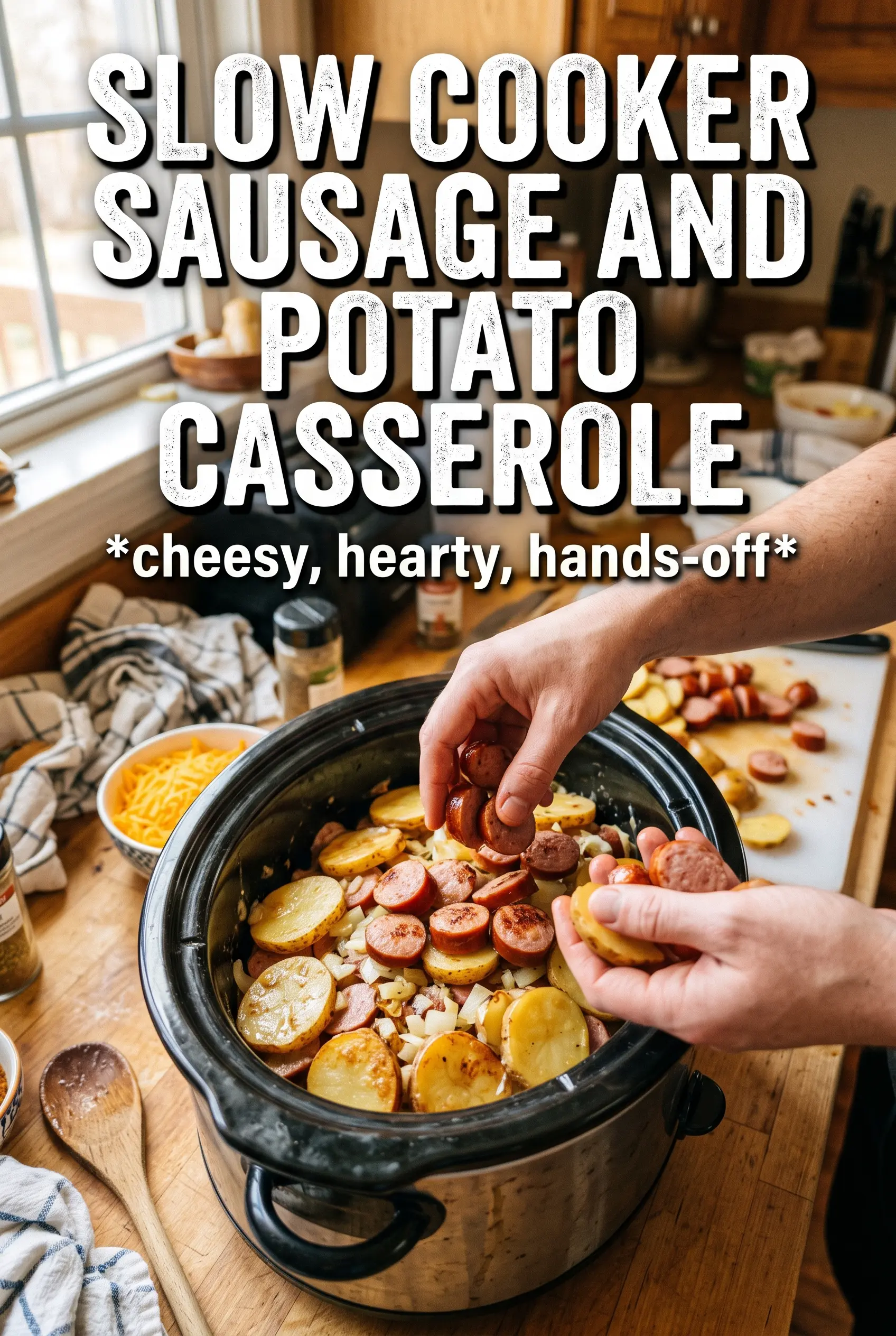
Layer the potatoes, onion, garlic, and sausage in the slow cooker before the sauce goes in. That keeps the potatoes close to the heat and lets the sauce settle through the layers instead of sliding off the top. Pour the sauce over everything, then top with part of the cheddar. Resist the urge to stir hard; one gentle nudge is enough, and too much mixing can break up the potatoes before they soften.
Finishing With the Cheese
Cook until the potatoes are tender when pierced with a fork and the sauce has thickened around the edges. Add the remaining cheddar near the end so it melts into a glossy top instead of disappearing into the base. If you add all the cheese too early, it can get stringy and separate before dinner is ready. A short final melt on High gives you the best texture and the sharpest cheese flavor.
Make It With Chicken Sausage
Chicken sausage works if you want a lighter casserole, but it won’t give you the same smoky depth as kielbasa or andouille. Choose a well-seasoned variety and brown it the same way so the casserole still has enough backbone.
Make It Gluten-Free
Use a certified gluten-free cream of mushroom soup and check the sausage label, since some brands include fillers. The texture stays the same, and the sauce still thickens nicely as long as the soup base is the right one.
Make It Lighter Without Losing the Structure
You can use light sour cream and reduced-fat cheddar, but don’t swap in fat-free dairy or the sauce gets thin and chalky. This version still tastes rich enough for dinner, just a little less heavy.
Storage and Reheating
- Refrigerator: Keep leftovers covered for up to 4 days. The potatoes soften a bit more as they sit, but the flavor gets even better by day two.
- Freezer: It freezes well in portions, though the sauce may look a little looser after thawing because of the sour cream. Freeze in airtight containers for up to 2 months.
- Reheating: Warm it gently in the microwave or in a covered baking dish at 325°F until hot. High heat is what breaks the sauce, so reheat slowly and stir once halfway through if you’re using the microwave.
Questions I Get Asked About This Recipe
Slow Cooker Sausage and Potato Casserole
Ingredients
Equipment
Method
- Heat a cast iron skillet over medium-high heat and brown the sliced smoked kielbasa or andouille until browned on the edges, then set aside.
- Slice and prep the baby potatoes by halving them, then dice the onion and mince the garlic so everything is ready for layering.
- Whisk the cream of mushroom soup, chicken broth, sour cream, garlic powder, and smoked paprika until smooth, and season with salt and pepper to taste.
- In a slow cooker, layer the halved baby potatoes, diced onion, minced garlic, and browned sausage rounds.
- Pour the creamy sauce over the layered ingredients, then sprinkle 1 cup of the sharp cheddar over the top.
- Cover and cook on Low for 5-6 hours, until the potatoes are tender and the edges look lightly bubbly around the casserole.
- Scatter the remaining cheddar over the top and cook on High for 15 minutes, until the cheese is fully melted and slightly browned in spots.
- Serve hot, finished with green onions for a fresh pop of color and extra aroma.