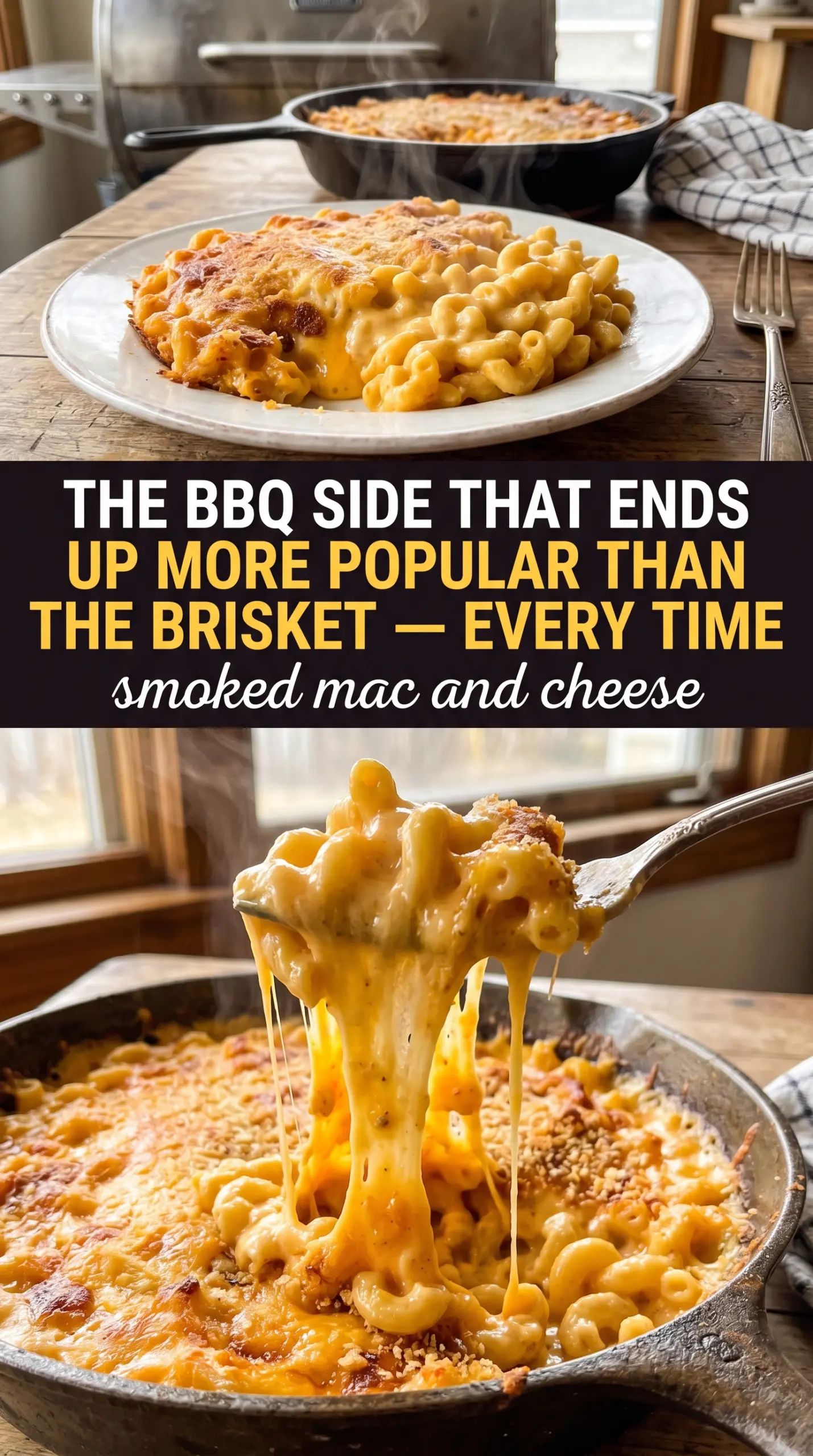
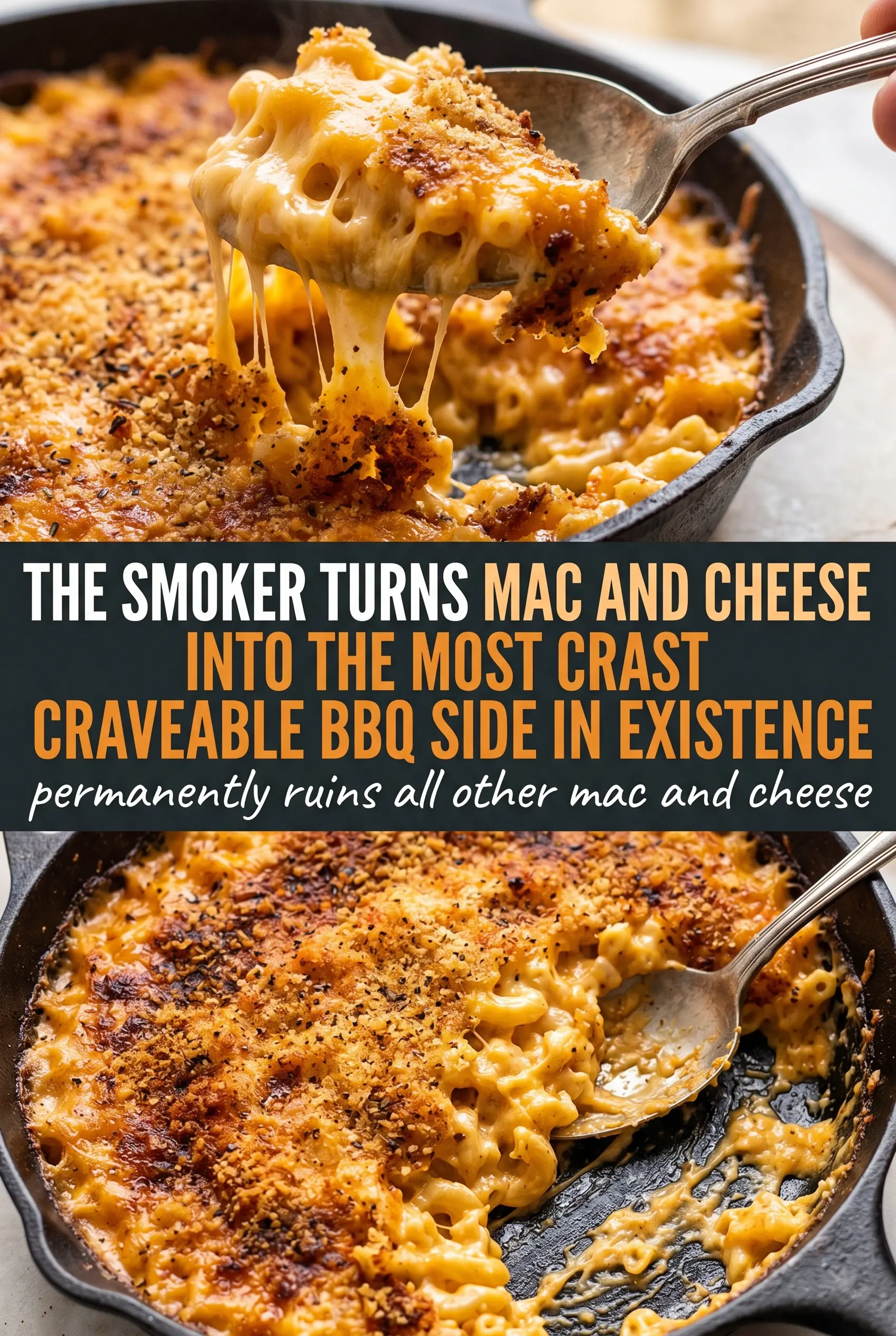
Smoked mac and cheese lands on the table with the kind of pull-apart creaminess people remember. The sauce clings to every elbow, the top turns golden and crisp, and the whole pan picks up just enough smoke to taste like it spent the afternoon near a live fire. It still eats like comfort food, but the smoker gives it a deeper, rounder finish than a baked version ever can.
The key here is balance: a sauce that’s loose enough to coat the pasta before it goes into the smoker, and cheeses that bring both melt and flavor. Sharp cheddar gives the bite, smoked Gouda brings that warm woodsy note, and the panko topping keeps the surface from going soft. Cook the sauce gently and the texture stays smooth instead of grainy or broken.
Below, I’ve included the small details that matter most — how to keep the cheese sauce stable, when the pasta is ready for the pan, and what to do if you want a stronger smoke flavor without drying out the edges.
The cheese sauce stayed silky the whole time in the smoker, and the panko topping came out crisp without turning soggy. I used it for a cookout and there wasn’t a spoonful left.
Save this smoked mac and cheese for the next barbecue when you want a creamy center, smoky depth, and a crisp panko lid.
The Part That Keeps Smoked Mac and Cheese Creamy, Not Gritty
Most smoked mac and cheese problems start before the pan even hits the smoker. If the sauce gets too hot while the cheese is going in, the fat separates and the whole thing turns grainy. The fix is simple: take the pan off the heat before you add the cheese and stir until it melts slowly into a smooth sauce. That gentler approach matters even more here because the smoker is going to keep cooking the dish after it’s assembled.
The other place people get into trouble is pasta texture. Cook the macaroni just to al dente, because it’s going to absorb sauce and soften a bit more over those 60 to 90 minutes. If you cook it all the way through on the stovetop, the final dish can go past creamy and land in mushy territory.
- Sharp cheddar — This gives the sauce its backbone and the tang that keeps the dish from tasting flat. Pre-shredded cheddar works in a pinch, but it melts less smoothly because of the anti-caking coating.
- Smoked Gouda — This is where the smoky depth comes from, and it’s worth using the real thing. There isn’t a substitute that matches the same creamy, mellow smoke, though fontina or Monterey Jack can soften the flavor if you want it milder.
- Heavy cream and milk — The mix gives the sauce enough body without making it heavy. You can swap in all milk, but the result won’t have the same rich finish.
- Panko topping — It keeps the top crisp while the pasta underneath stays soft. Regular breadcrumbs work too, but panko gives you a lighter crunch that holds up better in the smoker.
What Each Ingredient Is Actually Doing in Smoked Mac And Cheese
- Protein (quality, proper thickness) — Good quality protein tastes better. Even thickness ensures even cooking.
- Seasoning (bold, distributed throughout) — Don’t be shy with salt and pepper. Quality seasoning elevates everything.
- Oil or fat (protective and flavorful) — The fat helps develop crust and carries flavors. Use generously.
- Heat management (appropriate temperature for the protein) — Too high and the outside burns before the inside cooks. Too low and it steams.
- Technique (sear, then finish based on thickness) — Proper technique creates flavor. Sear for crust, then cook through gently.
- Aromatics and seasonings (garlic, herbs, spices) — These add complexity and depth. Distribute them throughout the cooking process.
- Resting time (let it rest before serving) — Resting allows juices to reabsorb. This keeps the protein moist and tender.
- Optional: finishing sauce or glaze — A light sauce adds richness without overwhelming. Apply at the very end.
Building the Sauce Before the Smoke Takes Over
Making the Roux
Melt the butter, whisk in the flour, and cook it just until it smells a little nutty and looks pale blonde. That short cook takes away the raw flour taste without pushing the roux dark, which would fight the flavor of the cheese. If the mixture looks pasty and dry, keep whisking over medium heat until it loosens and bubbles gently.
Finishing the Cheese Sauce
Pour in the milk and cream slowly while whisking so the base stays smooth. Once it thickens enough to coat a spoon, take it off the heat before adding the cheddar and Gouda in handfuls. If you dump the cheese in all at once or keep the pot over high heat, the sauce can turn oily and grainy instead of glossy.
Combining Pasta and Topping
Fold the cooked macaroni into the sauce until every piece is coated, then spread it into an aluminum pan. The pan should look generously sauced; it will tighten up a little as it smokes. Stir the panko with melted butter until it looks evenly damp, then scatter it over the top. Dry crumbs won’t brown evenly, and clumps of buttered crumbs can burn before the center is hot.
Smoking Until Bubbly and Set
Set the pan in a 225°F smoker and let it go until the edges are bubbling and the top is golden, usually 60 to 90 minutes. The mac is ready when the center is hot and creamy, not loose and milky. If the top is browning too fast, tent it loosely with foil for the last stretch so the cheese underneath can finish without scorching the crust.
Make It Spicier With a Little Heat
Stir in a pinch of cayenne, a spoonful of diced pickled jalapeños, or a little chipotle powder when you season the sauce. The smoke and heat play well together, but keep the pepper in the background so it doesn’t bury the cheese.
Gluten-Free Version
Use your favorite gluten-free pasta and thicken the sauce with a gluten-free flour blend or a cornstarch slurry. The sauce will still be creamy, but the pasta needs to stay a touch firmer because gluten-free shapes soften faster in the smoker.
No Smoked Gouda on Hand
Swap in Monterey Jack for a milder, creamier mac and cheese or use fontina for a richer melt. You’ll lose some of the signature smoky note, so add a tiny pinch of smoked paprika if you want that flavor to stay present.
Storage and Reheating
- Refrigerator: Keep leftovers covered for up to 4 days. The sauce will firm up as it chills, which is normal.
- Freezer: It freezes, but the texture gets a little less silky after thawing. Freeze in portions, tightly wrapped, for up to 2 months.
- Reheating: Reheat covered in the oven at 325°F with a splash of milk stirred in, or warm individual portions gently in the microwave. The big mistake is blasting it at high heat, which dries out the pasta and makes the cheese separate.
Questions I Get Asked About This Recipe
Smoked Mac And Cheese
Ingredients
Equipment
Method
- Prepare smoker to 225°F, using clean, steady smoke for low-and-slow cooking.
- Set an aluminum pan (for the mac) aside so it’s ready to load once the sauce is mixed.
- Melt butter in a saucepan over medium heat until fully liquid and just beginning to look foamy.
- Add flour and whisk for 1 minute to cook the roux and remove raw flour taste.
- Whisk in milk and heavy cream gradually until the mixture is smooth and starts to thicken, 3 to 5 minutes.
- Add sharp cheddar and smoked Gouda and stir until fully melted and the sauce is creamy, 2 to 4 minutes.
- Season with garlic powder plus salt and pepper, then stir until evenly combined and glossy.
- In an aluminum pan, stir cooked elbow macaroni into the cheese sauce until every noodle is coated.
- In a bowl, mix panko breadcrumbs with melted butter until the crumbs look evenly damp.
- Sprinkle the buttered panko evenly over the top for a uniform crust.
- Smoke at 225°F for 60 to 90 minutes until the mac and cheese is bubbly at the edges and the top is golden (visual cue: bubbling through the center and browned crumb layer).
- Let the smoked mac and cheese rest for 10 minutes before serving so it thickens slightly and slices cleanly.