Southern mac and cheese lands on the table with a golden top that gives way to a soft, custardy center and long, cheesy pulls from the spoon. The best versions aren’t dry or gluey; they’re rich enough to hold together when sliced, but still creamy enough to feel like comfort food instead of casserole math. This one earns its place because it bakes into two textures at once: a lightly browned crust on top and a silky, baked custard underneath.
The trick is in the milk mixture and the way the cheese is layered. Evaporated milk brings body without making the filling heavy, while the eggs set the casserole just enough to keep it from collapsing into a puddle. A mix of sharp cheddar, Colby Jack, and Gruyere keeps the flavor deep and layered instead of one-note. The Dijon and smoked paprika don’t read as “special,” but they keep the whole dish from tasting flat.
Below you’ll find the little details that matter most: how to keep the custard from turning grainy, which cheese swap still gives you that Southern-style finish, and how to reheat leftovers without drying out the edges.
The custard set up beautifully and the top turned deeply golden without the noodles drying out. I baked it the full 45 minutes and let it rest, and it sliced clean instead of falling apart.
Save this Southern mac and cheese for the nights when you want a creamy custard-style bake with a crisp, bubbling cheddar top.
The Custard Set Matters More Than the Cheese Melt
Southern mac and cheese fails when people treat it like stovetop pasta and overload it with cheese before the eggs and milk have a chance to set. That gives you a greasy pan with noodles that sink and separate instead of a sliceable bake. The custard is what holds the dish together here, and it needs enough heat to firm up without boiling.
The other mistake is overcooking the noodles. They should be fully cooked, but not mushy, because they keep absorbing liquid in the oven. If the pasta starts soft before it goes into the dish, the final texture turns pasty instead of creamy. Layering half the cheese in the middle and the rest on top helps you get flavor throughout the pan without losing that classic browned cap.
What Each Cheese Is Actually Doing in This Bake
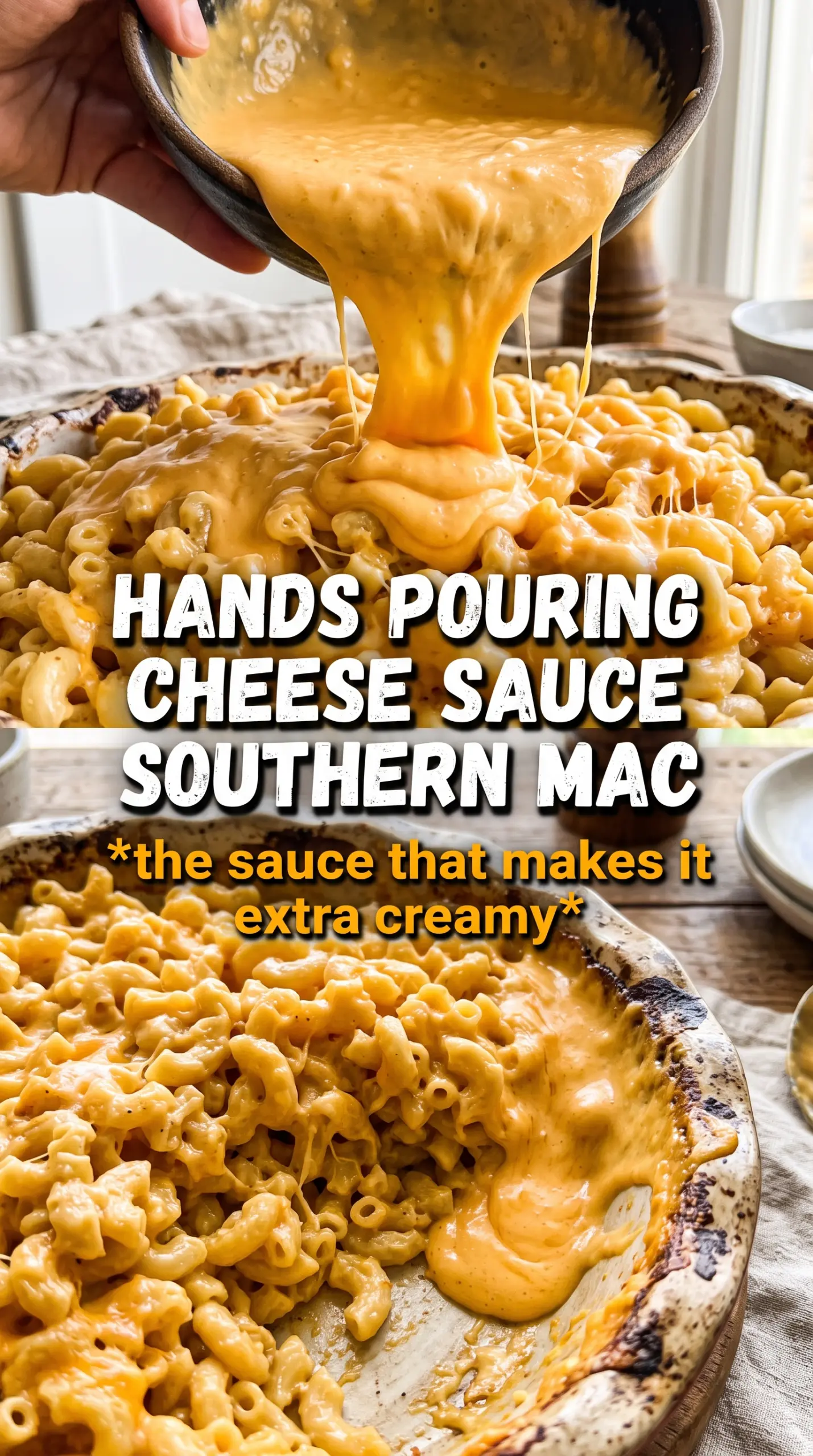
- Sharp cheddar — This is the backbone of the dish. Use a good block and shred it yourself if you can, because pre-shredded cheese carries anti-caking starch that can make the custard a little grainy.
- Colby Jack — It melts smoothly and softens the sharper edges of the cheddar. If you swap it, choose another mild melting cheese rather than anything oily or overly aged.
- Gruyere — This adds depth and a nutty finish that makes the casserole taste more layered. Swiss can work in a pinch, but Gruyere gives you a fuller, richer melt.
- Evaporated milk — This is what gives the filling body without turning it heavy. Regular milk alone works, but the texture won’t be quite as lush.
- Eggs — They set the bake into a custard. If you skip them, you’ll get a looser, saucier pan that won’t slice cleanly after resting.
Building the Layers So the Center Stays Creamy
Mix the Custard Until It Looks Even
Whisk the eggs, milks, Dijon, spices, salt, and pepper until the mixture looks completely blended and slightly frothy. You don’t want streaks of egg white hiding in the liquid, because those set unevenly in the oven. The Dijon won’t make the dish taste mustardy; it sharpens the cheese and keeps the flavor from going dull.
Layer the Pasta and Cheese Instead of Dumping It All Together
Start with half the macaroni, then add the middle layer of cheese, then the rest of the macaroni. That structure helps the cheese melt through the casserole instead of disappearing only into the top layer. If you toss everything together in one bowl, the cheese can clump and the texture turns less distinct.
Bake Until the Center Just Stops Jiggling
Pour the custard over the assembled dish, dot it with butter, and cover the top with the last of the cheddar. Bake until the edges are bubbling and the center has only a slight wobble when you shake the pan gently. If the middle is still sloshy, give it more time; if you push it past the set point, the eggs tighten too far and the casserole turns dry.
Let It Rest Before You Scoop
Give the pan a full 10 minutes after it comes out of the oven. That rest period lets the custard finish setting, which keeps the first serving from collapsing into a puddle. The top stays crisp, the center stays creamy, and the spoon goes through in clean, generous portions.
How to Adapt This Southern Mac and Cheese Without Losing the Texture
Gluten-Free Version
The base recipe is already gluten-free as written, as long as your Dijon and spices are certified gluten-free. Keep the same cheese ratio and pasta shape so the custard still nests into the macaroni the same way.
Dairy-Light Swap
You can replace the evaporated milk with half-and-half, but the casserole will bake a little softer and richer. If you go lighter than that, the custard loses body and won’t slice as neatly.
More Pepper, Less Smoke
If you want a sharper, more classic Southern bakery flavor, reduce the smoked paprika and add a little more black pepper. That keeps the dish bright and savory without pushing the seasoning into barbecue territory.
Storage and Reheating
- Refrigerator: Store covered for up to 4 days. The texture firms up after chilling, but it reheats well.
- Freezer: It freezes, but the custard can turn a little grainy after thawing. If you freeze it, cool completely, wrap tightly, and thaw overnight in the fridge before reheating.
- Reheating: Reheat covered at 325F until warmed through, or microwave individual portions at medium power. The common mistake is blasting it on high heat, which dries out the edges before the center loosens.
Questions I Get Asked About This Recipe
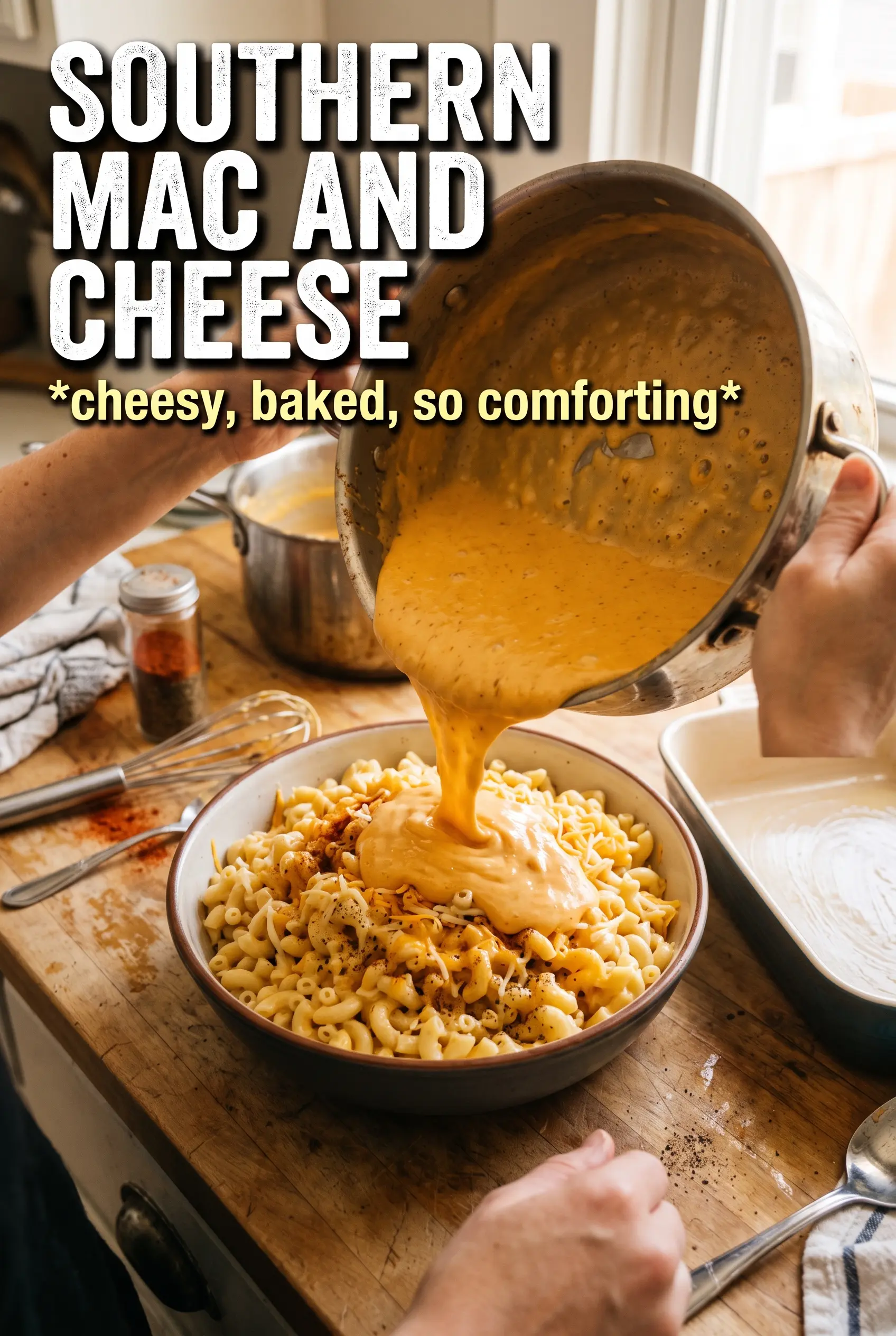
Southern Mac And Cheese
Ingredients
Equipment
Method
- Preheat the oven to 350°F, then butter a deep 9x13 baking dish.
- Cook the elbow macaroni until tender, then drain it well.
- Whisk the eggs, whole milk, evaporated milk, Dijon mustard, smoked paprika, garlic powder, cayenne, salt, and pepper until smooth.
- Layer half the cooked macaroni in the buttered baking dish.
- Scatter 2 cups sharp cheddar, the Colby Jack, and the Gruyere over the macaroni.
- Add the remaining macaroni in an even layer, then pour the egg-milk custard over everything.
- Dot the top with the cubed butter, then sprinkle with the remaining 2 cups sharp cheddar.
- Bake for 40-45 minutes at 350°F until the custard is set and the top is golden.
- Rest for 10 minutes before serving to let the custard firm up and thicken.