Sticky beef noodles hit that sweet spot between takeout comfort and weeknight practicality: glossy noodles, savory ground beef, and a sauce that clings instead of pooling at the bottom of the bowl. The best part is the texture. Wide noodles catch every bit of the dark sauce, and the beef gets coated instead of buried, so every forkful tastes balanced and complete.
What makes this version work is the timing. The sauce gets whisked together before it hits the pan, so the cornstarch can do its job fast once it meets heat. Browning the beef first builds flavor in the wok or skillet, then the garlic and ginger go in for just a few seconds so they stay fragrant instead of bitter. The last toss with the noodles happens while the sauce is still bubbling, which is how you get that sticky, glossy finish instead of a watery noodle bowl.
Below you’ll find the small details that make this dish reliable, from the noodle choice to the one step that keeps the sauce from turning thin. If you’ve ever wanted beef noodles that taste like they came from your favorite corner takeout spot, this is the kind of recipe worth keeping close.
The sauce thickened right on the noodles and coated everything instead of turning soupy. I used linguine and it still had that glossy takeout-style finish my husband kept going back for.
Keep these sticky beef noodles handy for the nights when you want glossy noodles, savory beef, and fast cleanup.
The trick to sticky noodles is managing the heat before the sauce goes in
This dish lives or dies by timing. If the pan is hot enough to brown the beef but you let the sauce sit too long, the sugar can scorch before the cornstarch has a chance to thicken everything evenly. The goal is a fast, glossy simmer: beef browned, aromatics fragrant, sauce bubbling, then noodles tossed through while the mixture is still moving.
Another common failure is watery noodles. If they go into the pan straight from the pot without draining well, they dilute the sauce and wash away the cling you’re after. Tossing them with a little sesame oil after draining helps, but the bigger fix is keeping the sauce concentrated and adding the noodles at the very end, when the pan still has enough heat to coat them cleanly.
What each ingredient is doing in the pan
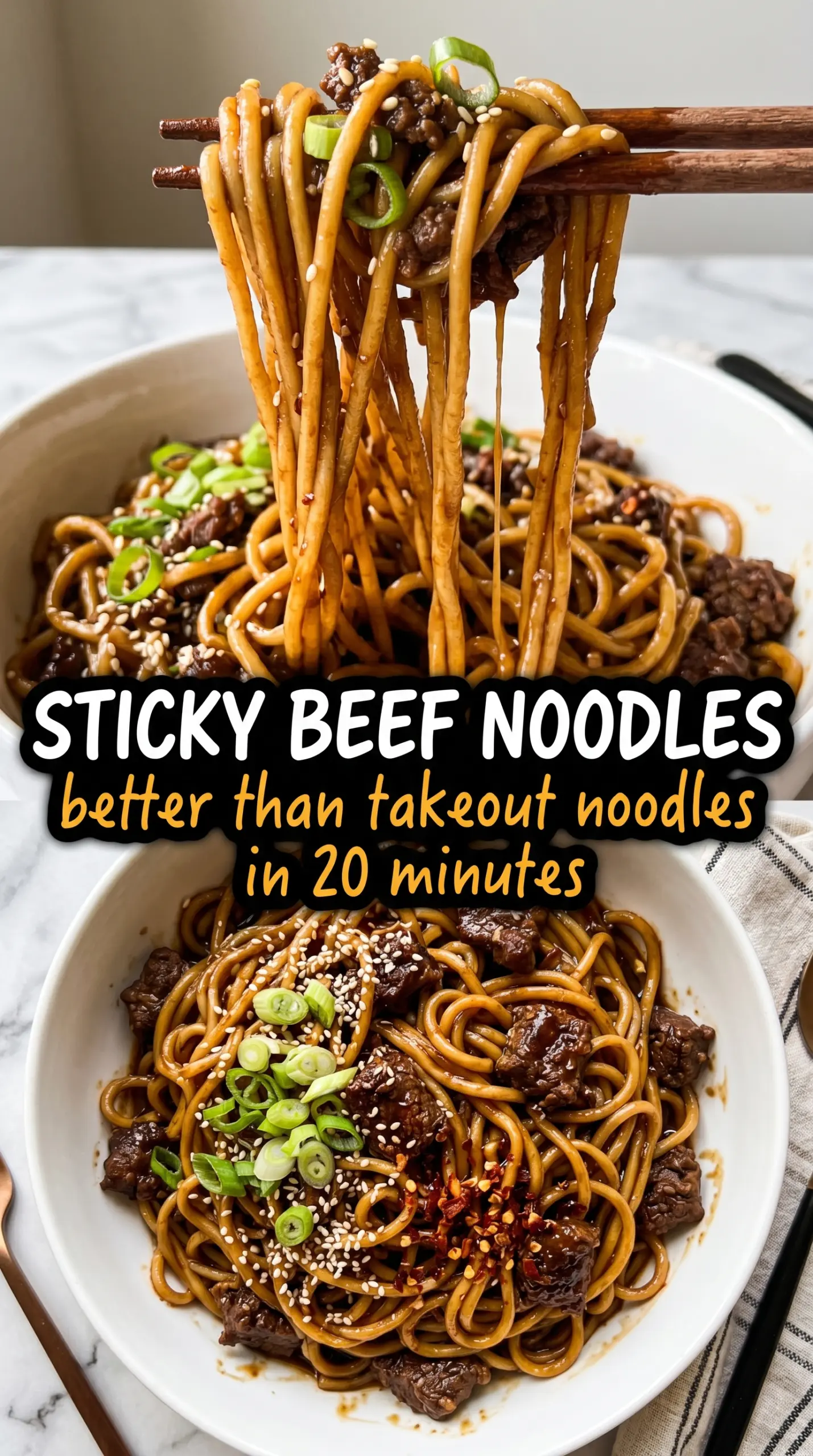
- Ground beef — This brings the rich, savory base and gives the sauce something substantial to cling to. An 80/20 blend has enough fat for flavor, but if your beef is fattier, draining after browning keeps the finished noodles from tasting greasy.
- Wide noodles — Udon, lo mein, or linguine all work because they have enough surface area to hold the sauce. Thin noodles can work in a pinch, but they don’t carry the sticky coating the same way.
- Soy sauce, brown sugar, hoisin, and oyster sauce — These are the backbone of the dish. Soy sauce brings salt and color, brown sugar gives the sticky shine, hoisin adds depth, and oyster sauce rounds everything out with a savory finish. If you need a substitute for oyster sauce, use an extra teaspoon of hoisin plus a splash more soy, but the sauce will taste a little less layered.
- Sesame oil, rice vinegar, and sriracha — Sesame oil gives the noodles that nutty takeout aroma, rice vinegar keeps the sweetness from feeling heavy, and sriracha adds just enough heat to wake up the sauce. Don’t skip the vinegar; without it, the dish can taste flat.
- Cornstarch — This is what turns the sauce from thin and glossy into actually sticky. It needs to hit heat in a simmering sauce, so whisk it in fully before it goes near the pan.
- Garlic and ginger — These need only a short cook time. Fresh is worth using here because the whole dish depends on that sharp, fragrant lift right before the sauce goes in.
Building the sticky sauce without losing the gloss
Brown the beef hard first
Heat the oil until it shimmers, then add the ground beef and break it apart as it cooks. You want real browning, not just gray meat, because those caramelized bits give the final sauce its depth. If the pan gets crowded or the beef starts steaming, keep cooking until the moisture evaporates and the edges turn dark. Drain the excess fat after browning, but leave a little behind so the sauce still has something rich to coat.
Wake up the garlic and ginger fast
Once the beef is browned, stir in the garlic and ginger and cook just until fragrant, about 30 seconds. They should smell sharp and warm, not toasted or bitter. If the pan is blazing hot and you know the aromatics will catch, pull it off the heat for a few seconds before adding them back. That tiny pause keeps the garlic sweet and the ginger bright.
Let the sauce bubble into its sticky finish
Pour in the pre-mixed sauce and toss immediately so the cornstarch doesn’t settle in one spot. Within a minute or two, it should go from loose and thin to lacquered and clingy, with small bubbles breaking across the surface. If it still looks watery, keep simmering for another minute instead of adding more cornstarch right away; the sauce needs heat to activate what’s already in it. Add the noodles only when the sauce lightly coats the spoon and leaves a trail in the pan.
Toss the noodles while the pan is still hot
Add the drained noodles and use tongs to lift and fold them through the beef until every strand is glossy. This is the moment where the dish can go wrong if the noodles were rinsed too aggressively or sat too long and cooled off, because cold noodles stop the sauce from clinging. Work quickly, but don’t rush the final toss; the sauce needs a minute of contact with the hot noodles to tighten up and stick. Finish with green onions and sesame seeds while the noodles are still steaming.
How to adapt these sticky beef noodles without losing what makes them work
Make it gluten-free
Use gluten-free tamari instead of soy sauce and swap the noodles for rice noodles or a gluten-free rice pasta that holds up to tossing. Check the oyster sauce and hoisin labels carefully, since many brands contain wheat. The finished dish stays sticky and savory, but the noodles will be a little softer than wheat-based udon or lo mein.
Use ground turkey or chicken
Lean poultry works well, but it needs a little extra oil in the pan and a careful eye so it doesn’t dry out. You lose some of the beefy richness, so let the sauce simmer the full two minutes and don’t skimp on the sesame oil. The result is lighter, but still glossy and satisfying.
Make it vegetarian
Swap the beef for crumbled extra-firm tofu or finely chopped mushrooms. Mushrooms give you the best savory depth, while tofu needs to be pressed and browned first so it doesn’t go soft in the sauce. Either way, the sauce stays the same and still gives you that sticky, takeout-style finish.
Add vegetables without watering it down
Thin-sliced bell pepper, shredded carrot, snap peas, or baby bok choy all fit here, but cook them fast so they stay crisp. Add them after the beef is browned, before the sauce goes in, and let any moisture evaporate first. That keeps the noodles sticky instead of turning the pan saucy in the wrong way.
Storage and Reheating
- Refrigerator: Store in an airtight container for up to 4 days. The noodles will absorb some sauce as they sit, so they’ll look a little less glossy after chilling.
- Freezer: It freezes, but the noodles soften after thawing, so I only freeze it if I have no better option. Cool it completely, pack it tightly, and freeze for up to 2 months.
- Reheating: Reheat in a skillet with a splash of water over medium-low heat, stirring until the sauce loosens and coats the noodles again. The common mistake is blasting it on high heat, which dries out the beef and makes the sauce sticky in the wrong way.
Answers to the questions worth asking
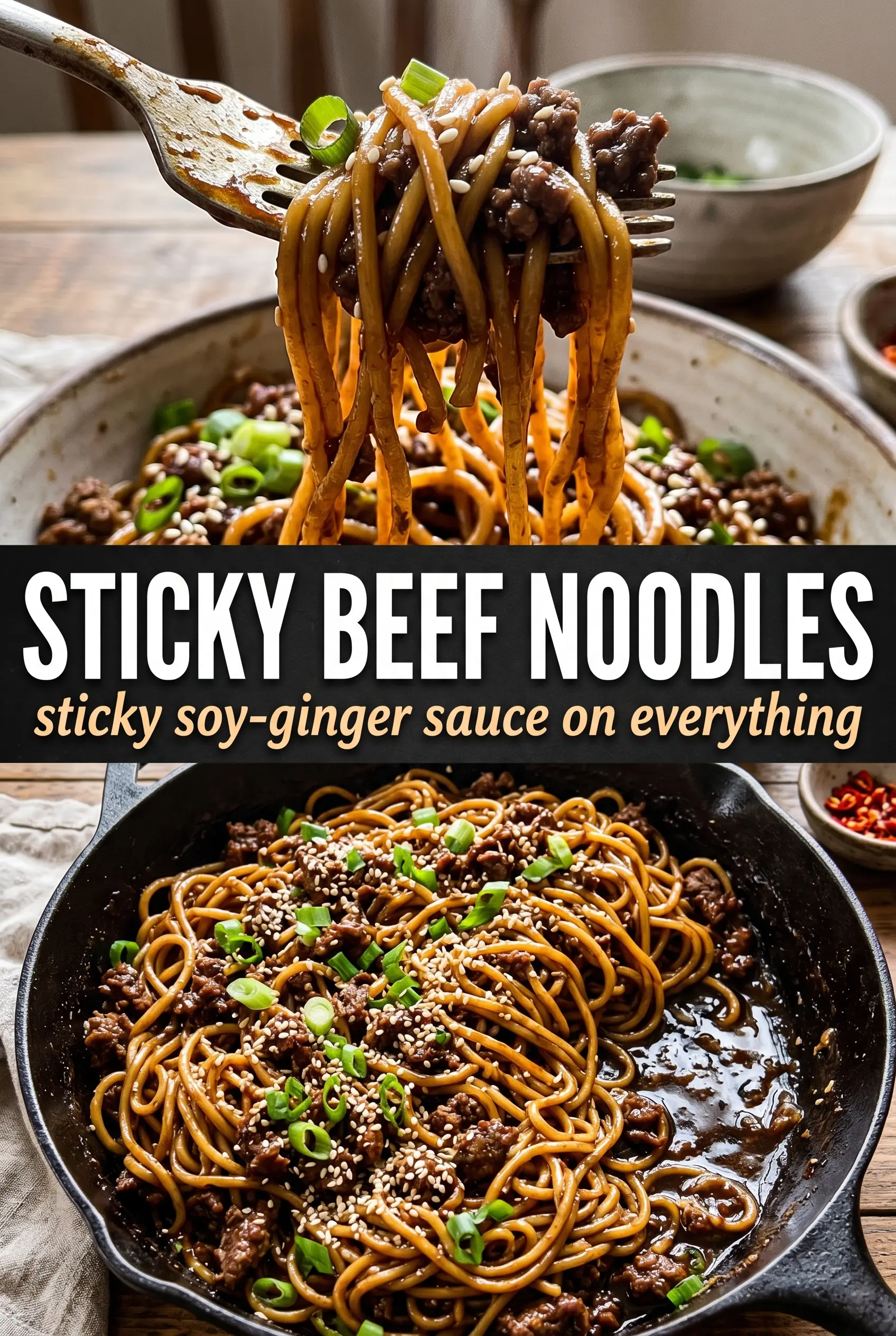
Sticky Beef Noodles
Ingredients
Equipment
Method
- Cook the wide noodles according to package directions, then drain and toss with a little sesame oil to prevent sticking, until evenly coated (look for glossy strands).
- Whisk the soy sauce, brown sugar, oyster sauce, hoisin sauce, sesame oil, rice vinegar, sriracha, and cornstarch together until smooth and glossy, with no dry cornstarch streaks.
- Heat the vegetable oil in a Dutch oven over high heat and brown the ground beef, breaking it apart until no longer pink (about 5 minutes), then drain excess fat.
- Add the minced garlic and grated ginger and cook for 30 seconds until fragrant, watching for a quick sizzle and a darker aroma.
- Pour in the sticky sauce and simmer for 2 minutes, stirring until it thickens and starts to caramelize (it should look darker and cling to the back of a spoon).
- Add the drained noodles and toss until coated all over, with the sauce visibly clinging to every strand (look for a dark, glossy sheen).
- Garnish with green onions and sesame seeds right before serving for fresh color and a toasted finish (finish with a final glossy toss).