Stovetop creamy ground beef pasta lands in that sweet spot between comforting and efficient: tender pasta, savory beef, and a sauce that clings instead of pooling at the bottom of the bowl. The tomatoes keep the cream from feeling flat, the parmesan melts into the broth for body, and the whole pot comes together with the kind of ease that makes it hard not to put this into regular weeknight rotation.
The trick is building the sauce in the same pot after the beef browns, then letting the pasta finish right in that seasoned liquid. That does two jobs at once. The starch from the pasta thickens the sauce naturally, and the beef broth gives the cream enough structure that it tastes rich without turning heavy. Draining the fat after browning matters too; leave too much behind and the sauce can feel greasy instead of silky.
Below, I’ve included the small details that keep the pasta tender and the sauce creamy, plus a few swaps if you need to stretch the recipe or adjust it for what’s in your kitchen.
The sauce coated every piece of pasta and never turned watery, even after sitting for a few minutes. I loved that the tomatoes kept it from tasting too heavy.
Love a creamy skillet dinner? Save this stovetop creamy ground beef pasta for nights when you want a rich, one-pot pasta with parmesan and tomatoes.
The Reason This Pasta Stays Creamy Instead of Turning Soupy
The common mistake with creamy pasta skillet dinners is treating the liquid like plain pasta water. This dish needs enough broth to cook the noodles and enough cream to round out the flavor, but not so much that the sauce never tightens up. The pasta should finish in a glossy, lightly thickened sauce that coats the spoon and the noodles at the same time.
Covered cooking helps the pasta soften evenly, but stirring occasionally matters just as much. If you walk away, the starch settles and the bottom can catch before the top has had time to absorb enough liquid. Once the pasta is tender, the sauce should look loose but not thin; the parmesan finishes the job by giving it a creamy, clingy texture without needing flour.
What Each Ingredient Is Actually Doing In This Skillet
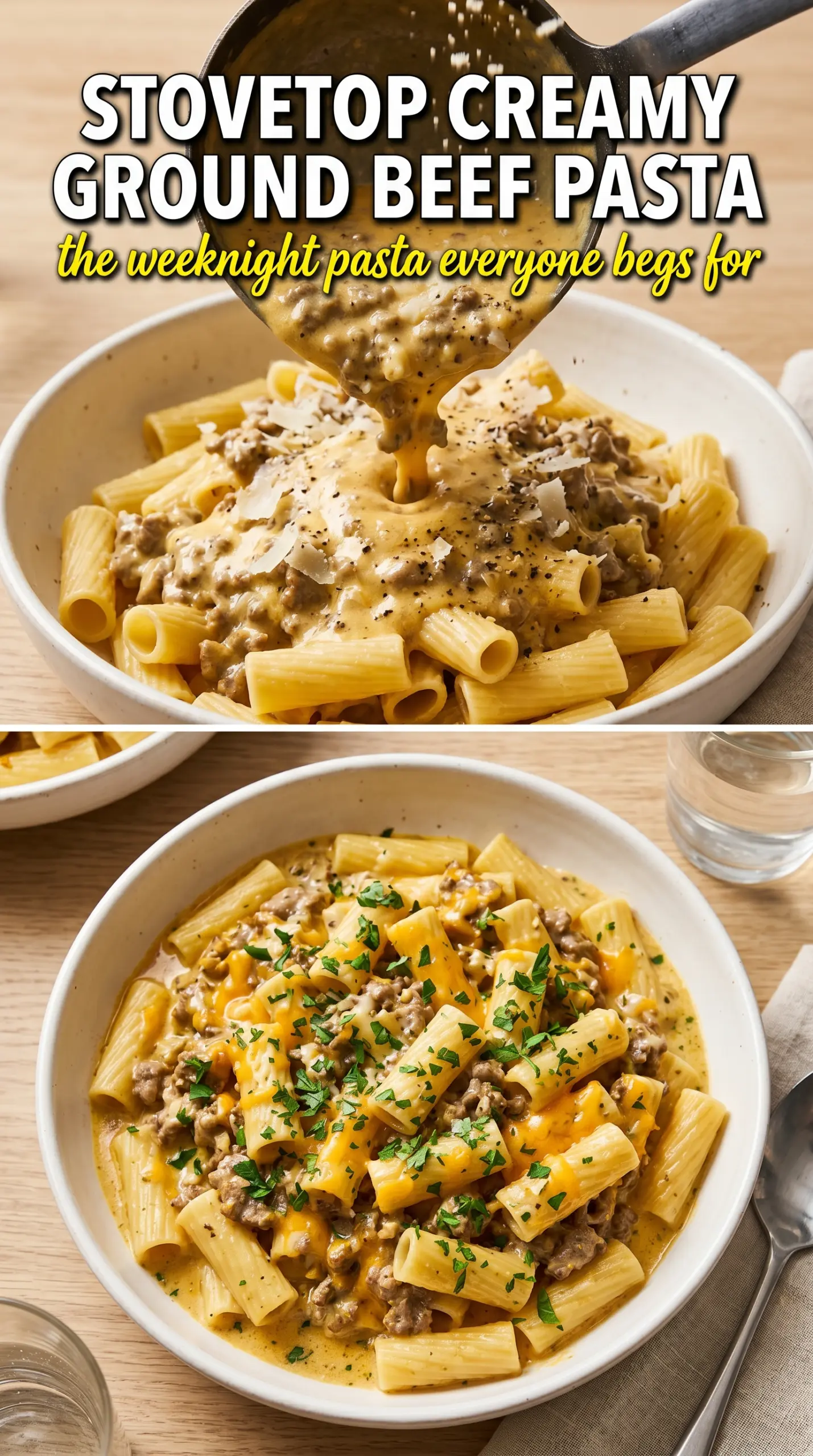
- Ground beef — This brings the savory base and enough fat to carry the sauce. An 80/20 blend has the best flavor, but anything leaner works if you don’t mind a slightly less rich finish. If your beef is very lean, keep a tablespoon or two of the rendered fat in the pan so the final dish doesn’t taste dry.
- Onion and garlic — These build the background flavor that keeps the sauce from tasting like cream and broth alone. The onion needs a few minutes to soften with the beef, and the garlic only needs 30 seconds once the beef is browned. Let garlic go longer and it turns bitter fast.
- Beef broth — This is what gives the pasta a savory backbone while it cooks. Water will technically work, but the sauce will taste flatter and you’ll need more salt at the end. Use a low-sodium broth if you can, because the parmesan adds its own salt.
- Heavy cream — This is the ingredient that turns the broth into a proper sauce. Half-and-half can work in a pinch, but it won’t thicken as cleanly and it’s more likely to look thin once the pasta is done. Heavy cream gives you the most forgiving, silky result.
- Diced tomatoes — Drained tomatoes keep the sauce from being one-note and help cut through the richness. Don’t skip draining them, or the extra liquid can throw off the sauce balance. You want tomato flavor, not tomato soup.
- Parmesan cheese — This finishes the sauce and helps it cling to the pasta. Grate it fresh if you can; pre-shredded parmesan doesn’t melt as smoothly and can leave the sauce a little grainy. Stir it in off the heat or with the burner very low so it melts instead of seizing.
How to Keep the Pasta Tender and the Sauce Thick in the Same Pot
Brown the Beef Until the Pan Has Real Flavor
Cook the ground beef with the diced onion over medium-high heat until the meat loses its pink color and the onion softens. You want some browning on the bottom of the pot; that’s where the flavor starts. If there’s a lot of grease, drain it off before you move on. Too much fat makes the sauce slick instead of creamy.
Let the Garlic Wake Up, Not Burn
Stir in the garlic after the beef is browned and cook it for about 30 seconds. It should smell fragrant immediately. If it starts to brown, the heat is too high and the pot is too hot from the beef; pull it off the burner for a moment before adding the liquid. Burnt garlic will show up in every bite.
Cook the Pasta in the Sauce, Not Next to It
Add the uncooked pasta, broth, cream, tomatoes, seasoning, red pepper flakes, salt, and pepper all at once. Bring the pot to a boil, then lower it to medium and cover. Stir occasionally so the noodles don’t stick and the sauce doesn’t scorch on the bottom. If the liquid looks a little thin halfway through, keep going; the starch and parmesan will tighten it at the end.
Finish With Parmesan Off the Heat
When the pasta is tender, stir in the parmesan until the sauce turns glossy and creamy. If the pot is bubbling hard when you add the cheese, the sauce can turn grainy or stringy. Let it settle for a minute first, then stir until every noodle looks coated. Garnish with parsley and serve right away while the sauce is still silky.
How to Adapt This Skillet for Different Kitchens and Different Nights
Make It Lighter With Lean Beef
Use lean ground beef if that’s what you have, but don’t drain every trace of moisture away. A leaner pan will taste a little less rich, so keep the parmesan and parsley at the end for fullness and freshness. If the sauce seems thin, let it sit uncovered for a couple of minutes before serving.
Dairy-Free Version That Still Tastes Satisfying
Swap the heavy cream for an unsweetened dairy-free cooking cream and leave out the parmesan or use a dairy-free grated alternative. The sauce won’t be quite as luxurious, but the broth, beef, and tomatoes still build a deep savory base. Keep the heat gentle so the substitute doesn’t separate.
Gluten-Free Pasta Swap
Use a sturdy gluten-free pasta shape and start checking it a couple of minutes early. Gluten-free noodles can go from firm to soft fast, and they often absorb liquid differently, so you may need a splash more broth near the end. Stir gently so they don’t break apart.
Extra Veggies Without Ruining the Sauce
Add a handful of chopped spinach at the very end or sauté mushrooms with the onion if you want more bulk. Spinach wilts into the hot sauce almost instantly, while mushrooms need the early cook time so they can brown instead of steaming. Either way, don’t overload the pot or the sauce will lose its creamy texture.
Storage and Reheating
- Refrigerator: Store leftovers in an airtight container for up to 4 days. The pasta will absorb more sauce as it sits, so it gets thicker by day two.
- Freezer: It freezes, but the cream sauce can separate a little after thawing. For the best texture, freeze only if you need to, and thaw overnight in the fridge before reheating.
- Reheating: Warm it gently on the stovetop or in the microwave with a splash of broth or cream. High heat is the usual problem here; it can make the sauce break and turn the pasta mushy before the center is hot.
Answers to the Questions Worth Asking
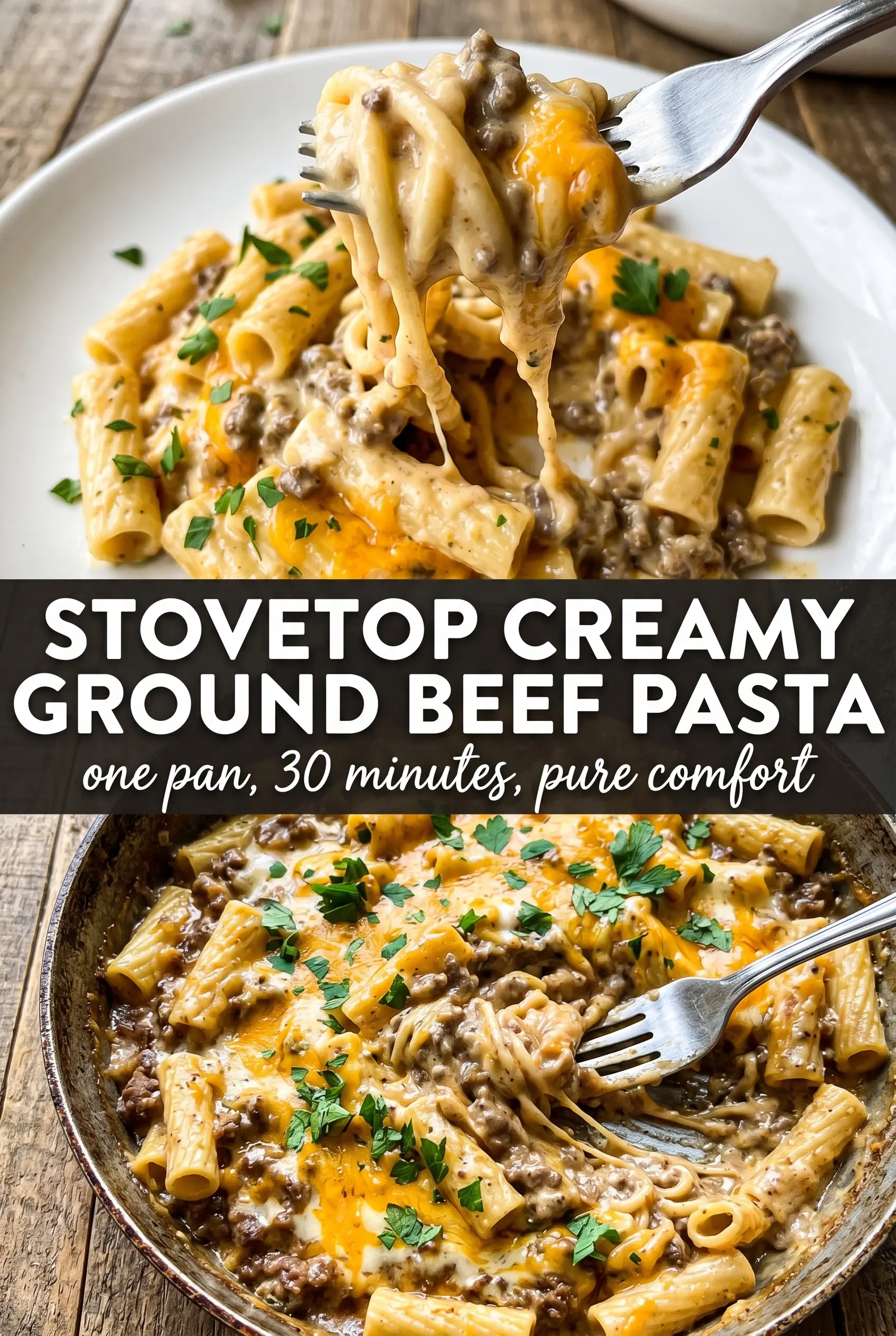
Stovetop Creamy Ground Beef Pasta
Ingredients
Equipment
Method
- Heat a large pot over medium-high heat and brown the ground beef with the diced onion until the beef is cooked through; drain excess fat. Cook with constant stirring for a quick, evenly browned layer, then add the minced garlic and cook for 30 seconds to bloom the aroma.
- Stir in the uncooked penne or rigatoni, beef broth, heavy cream, drained diced tomatoes, Italian seasoning, red pepper flakes, salt, and pepper until everything is fully combined. Bring to a boil, then reduce heat to medium, cover, and cook for 12–14 minutes, stirring occasionally, until the pasta is tender.
- Stir in the grated parmesan until the sauce turns creamy and coats the pasta smoothly with a glossy thickness.
- Taste and adjust seasoning with salt and pepper, garnish with fresh parsley, and serve immediately while the sauce clings to the pasta.