Stuffed baked potatoes with mushrooms hit that sweet spot between rustic and special. The skins stay sturdy, the centers turn creamy, and the mushroom filling brings enough savoriness to make the whole plate feel like dinner, not just a side dish dressed up for attention. When the Gruyere melts into the potato and the mushrooms go deeply golden first, you get a filling that tastes rich without feeling heavy.
This version works because the potatoes are baked until the flesh is dry and fluffy, not dense or wet, and the mushrooms are cooked long enough to drive off their moisture before they ever meet the filling. That matters. If the mushrooms go in raw or the potato flesh is mashed too aggressively, the filling turns loose instead of billowy. I also like using a little sour cream with milk for a smooth texture and enough tang to keep the Gruyere from tasting flat.
Below you’ll find the small details that keep the skins crisp, the filling creamy, and the tops browned in all the right places. The mushroom mixture is flexible too, so you can swap in what you have without losing the heart of the dish.
The mushroom filling got beautifully golden before it went into the potatoes, and the Gruyere melted into the mashed centers without turning stringy. I served these with chives and sour cream, and they disappeared fast.
Save these stuffed baked potatoes with mushrooms for a cozy main dish with crispy skins and a creamy Gruyere filling.
The Part Most People Get Wrong: Dry Potato Flesh, Not Dense Filling
The biggest mistake with stuffed baked potatoes is scooping out flesh that’s still wet or underbaked. A potato that hasn’t cooked long enough gives you gluey filling, and one that gets mashed hard turns pasty fast. You want the inside fluffy enough to break apart with a fork and dry enough to absorb the butter, milk, and sour cream without collapsing.
The mushroom layer matters just as much. Those mushrooms need time in the pan until the moisture cooks off and the edges start to brown. If they’re still slippery and pale when they go into the potatoes, they’ll leak into the filling and dull the flavor instead of deepening it.
- Russet potatoes — These are the right choice because the skins hold up and the interiors mash light and fluffy. Waxy potatoes stay too compact for this kind of filling.
- Gruyere — It melts smoothly and brings a nutty flavor that fits the mushrooms. Swiss cheese works in a pinch, but it won’t taste as rounded.
- Mixed mushrooms — Cremini give body, shiitake add depth. If you only have cremini, use them; just cook them until they brown properly so the filling still tastes rich.
- Sour cream and milk — Sour cream gives the filling tang and body, while milk loosens the mash without making it heavy. Use whole milk if you have it, but any milk will work here.
What Each Ingredient Is Actually Doing in the Filling
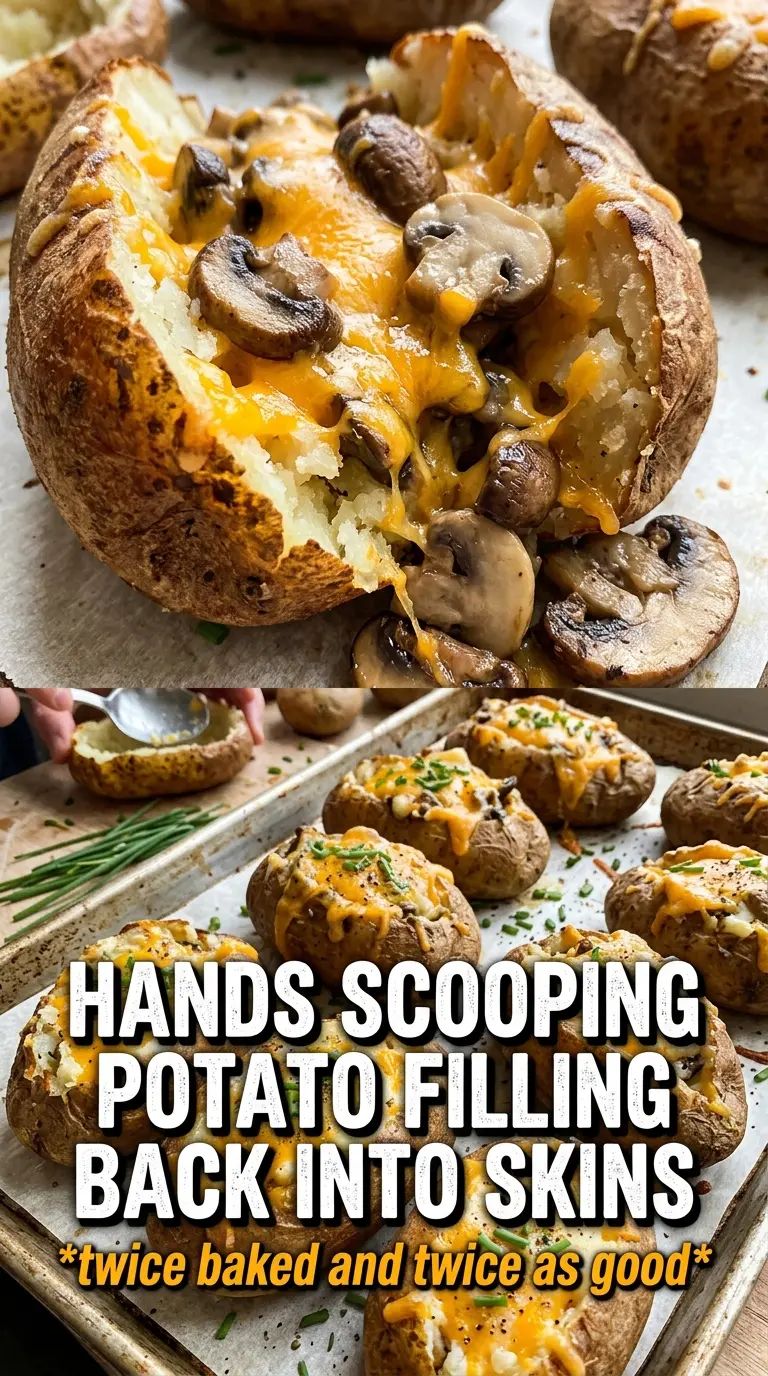
- Russet potatoes — Their thick skins become edible bowls, and their starchy flesh turns fluffy instead of waxy. That structure is what lets the potatoes hold a generous filling without falling apart.
- Butter — It carries flavor through the mash and gives the filling a soft, velvety finish. Split the butter between the mushrooms and the potato flesh so both layers taste complete.
- Shallot, garlic, and thyme — Shallot gives sweetness, garlic gives edge, and thyme makes the mushrooms taste earthy rather than flat. Add the garlic late so it perfumes the pan instead of burning.
- Parmesan-style sharpness from Gruyere — The cheese does more than melt; it seasons the whole filling and helps it set in the oven. If you want a stronger top, hold back a little of the cheese for the final bake.
- Truffle salt — Optional, but useful in a small amount if you want the mushrooms to taste even more woodsy. Use it sparingly; too much can overwhelm the Gruyere.
Building the Potato Shells and Mushroom Filling in the Right Order
Baking the Potatoes Until the Centers Go Fluffy
Bake the potatoes until a knife slides through the center with no resistance and the skins look dry and slightly wrinkled. If they feel heavy or the flesh clings together when you cut them, they need more time. Let them cool just enough to handle, then halve them and scoop while the interior is still warm.
Cooking the Mushrooms Down to Their Best Self
Start the shallot in butter first so it softens before the mushrooms go in. Once the mushrooms hit the pan, let them sit long enough to release their liquid and then brown; stirring too often slows that down. The pan should smell nutty and savory before you stop cooking them, not watery or bland.
Mashing Without Making the Filling Heavy
Add the butter, sour cream, milk, most of the Gruyere, and parsley to the potato flesh while it’s still warm enough to melt the cheese. Mash just until combined. If you beat it hard, the starch turns sticky and the filling loses that light, pillowy texture that makes stuffed potatoes worth eating.
Finishing Under the Oven Heat
Fold in most of the mushrooms, refill the skins, and pile the remaining cheese and mushrooms on top. The second bake should be long enough for the tops to melt and brown at the edges, not so long that the potatoes dry out. You’re looking for bubbling cheese and a lightly crisped top, then chives and sour cream go on after baking.
Three Ways to Work This Recipe Around What You Have
Dairy-Free Version With Olive Oil and Broth
Replace the butter with olive oil and use unsweetened dairy-free milk in the mash. Skip the sour cream and add a spoonful of dairy-free yogurt or a splash of vegetable broth for moisture. The filling will be a little less rich, but the mushrooms stay front and center.
Make It Meatier With Bacon or Pancetta
Cook a little diced bacon or pancetta first, then use that fat to sauté the shallot and mushrooms. You’ll get a smokier, saltier filling and lose a bit of the clean mushroom flavor, but the result is excellent if you want the potatoes to eat more like a full meal.
Gluten-Free and Naturally Vegetarian
This recipe is already gluten-free as written, as long as your cheese and sour cream are labeled safely if cross-contamination matters to you. It’s also vegetarian without any extra changes, which makes it one of those rare main dishes that works for a mixed table without any special handling.
Storage and Reheating
- Refrigerator: Store leftovers in an airtight container for up to 4 days. The skins soften a little, but the filling stays creamy.
- Freezer: Freeze the stuffed potatoes before the final bake for best results. Wrap them tightly and thaw in the fridge overnight before finishing in the oven.
- Reheating: Reheat in a 350F oven until the center is hot and the cheese is melted again. The microwave works in a pinch, but it softens the skins and makes the filling less appealing.
Answers to the Questions Worth Asking
Stuffed Baked Potatoes With Mushrooms
Ingredients
Equipment
Method
- Bake the russet potatoes at 400°F for 55-60 minutes, until tender when pierced. Cool slightly, then halve lengthwise.
- Sauté the minced shallot in 2 tablespoons of butter at medium heat for 3 minutes, stirring occasionally, until softened. Add the minced garlic and fresh thyme and cook for 1 minute, until fragrant.
- Add the sliced mixed mushrooms and cook for 7-8 minutes until golden, then season with salt and black pepper. Keep them warm while you prepare the potato mash.
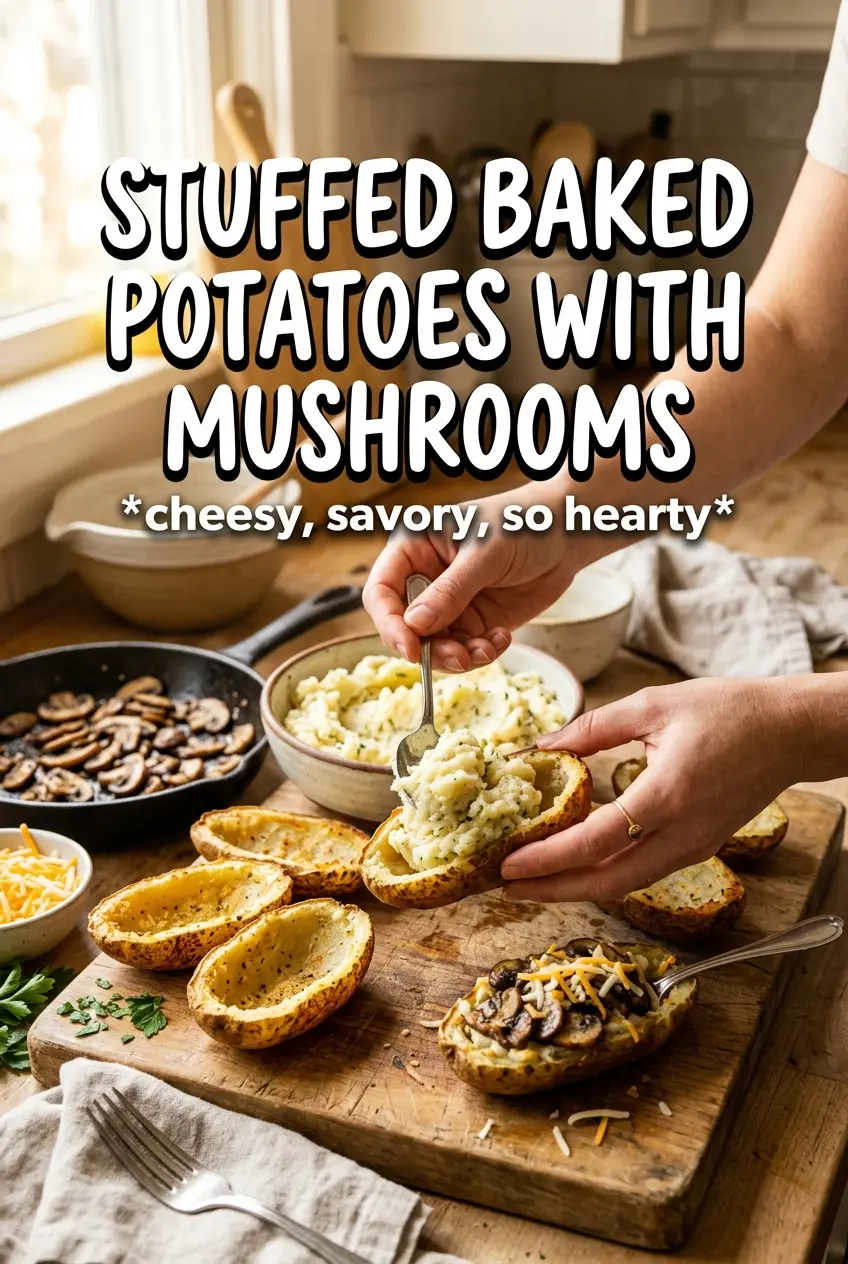
- Scoop the potato flesh into a bowl and mash, keeping some texture if you like. Mash with the remaining butter, sour cream, milk, 3/4 cup of the shredded Gruyère, and the parsley until creamy.
- Fold in most of the cooked mushrooms, then fill the potato skins with the creamy mushroom-Gruyère mixture. Press lightly so the filling sits level.
- Top the stuffed potatoes with the remaining Gruyère and the remaining mushrooms. Bake at 400°F for 15 minutes until golden and bubbling.
- Finish by adding sour cream and fresh chives on top right before serving for a fresh, bright cue.