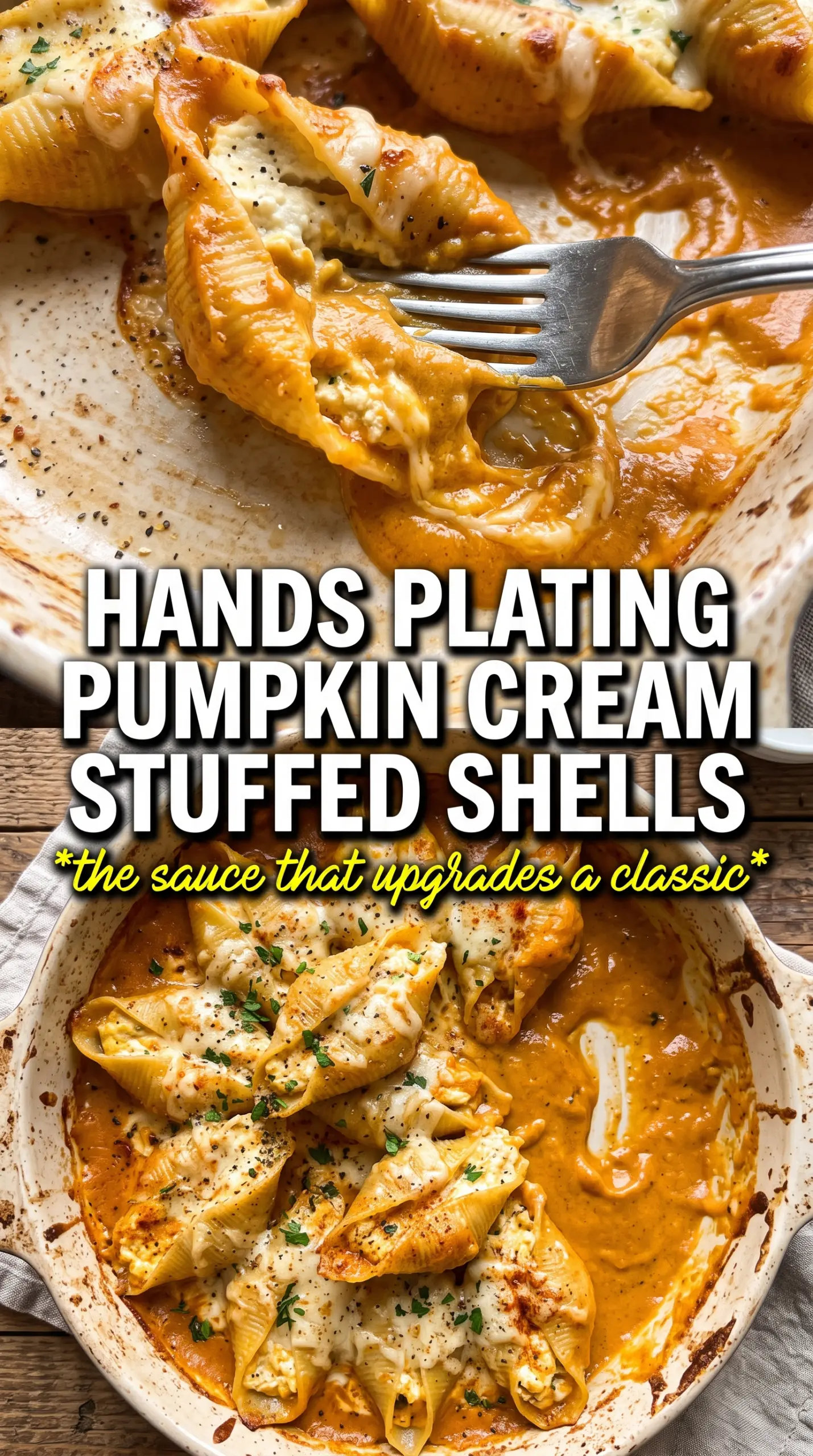
Stuffed shells get even better when the sauce is velvety and a little unexpected. Here, the pumpkin cream sauce wraps around the ricotta-filled pasta in a way that feels rich without turning heavy, and the finished dish bakes up with bubbling edges, browned mozzarella, and just enough sage to keep every bite from tasting flat. It’s the kind of pan that comes out of the oven looking like you spent all afternoon on it, even though the steps stay simple and practical.
The trick is keeping the sauce loose enough to pool around the shells before baking. Pumpkin puree needs cream and broth to turn silky, and a short simmer is enough to pull the garlic, parmesan, and nutmeg into something that tastes rounded instead of one-note. I also like stuffing the shells when they’ve cooled just enough to handle; hot shells tear more easily and cold filling doesn’t settle well once it hits the sauce.
Below, you’ll find the detail that matters most for creamy baked pasta: how to keep the sauce smooth, how full to stuff each shell, and the small timing choice that keeps the cheese topping browned instead of dry.
The pumpkin cream sauce turned out silky, not thick and gluey, and the shells held together perfectly when I served them. My husband kept scooping up the extra sauce from the pan.
Love the creamy pumpkin sauce and bubbly mozzarella? Save these stuffed shells for the next night you want baked pasta that feels special without extra work.
The Part That Keeps the Shells from Turning Watery
Stuffed pasta can go wrong in two places: the filling gets loose, or the sauce gets thin and slips to the bottom of the pan. This version avoids both by treating the pumpkin sauce like a real cream sauce instead of a puree dump. Pumpkin needs the fat from cream and the salt from parmesan to taste full, and the short simmer gives the sauce time to tighten just enough to cling without becoming pasty.
The other mistake is overcooking the shells before they go in the oven. They should be al dente, with a little bite left in the center, because they keep cooking once they’re buried in sauce and covered with cheese. If they’re fully soft before baking, they split when you stuff them and go mushy after 35 minutes in the oven.
- Cool the shells before stuffing. Warm shells are fragile. Let them sit until they’re easy to handle, then fill them so they keep their shape in the baking dish.
- Keep the sauce spoonable. It should pour easily and settle around the shells. If it looks too thick in the skillet, loosen it with a splash more broth before it goes into the pan.
- Don’t skip the parmesan in the sauce. It deepens the pumpkin and helps the cream taste seasoned instead of flat.
What Each Ingredient Is Actually Doing in This Dish
- Jumbo pasta shells — These need to be large enough to hold a proper scoop of filling without tearing. Cook them just to al dente, then drain well so the sauce doesn’t slide off a slick, overcooked surface.
- Ricotta — Use a thick ricotta if you can. Watery ricotta makes the filling slump, while a drier, creamier one keeps the shells neat and gives the baked center a plush texture.
- Egg — This binds the filling so it sets in the oven instead of oozing out when you scoop the shells. Without it, the ricotta can loosen too much once the cheese melts.
- Pumpkin puree — Use pure pumpkin, not pumpkin pie filling. The puree brings body and color, but it needs cream and broth to taste like a sauce instead of canned squash.
- Heavy cream — This is what turns the pumpkin into a true baking sauce. Half-and-half will work in a pinch, but the sauce won’t be as plush or stable.
- Parmesan — Grated parmesan sharpens the sauce and seasons the filling. Freshly grated melts more smoothly than the shelf-stable kind.
- Fresh sage — The garnish matters here. Its herbal edge cuts through the cream and keeps the finished dish from tasting one-note.
Building the Sauce Before the Cheese Goes in
Start with the garlic
Warm the garlic in the pan just long enough for it to smell sweet and fragrant, about a minute. If it starts to brown, the sauce will pick up a bitter edge that gets louder once the cream and pumpkin go in. Keep the heat moderate and stir it constantly so it softens instead of toasting.
Let the pumpkin loosen into cream
Stir in the pumpkin, cream, broth, parmesan, and seasonings, then let the mixture simmer for about five minutes. It should thicken slightly and look glossy, not dry or grainy. If it tightens too fast, the heat is too high; lower it and add a splash of broth so it stays pourable.
Fill the shells without overstuffing
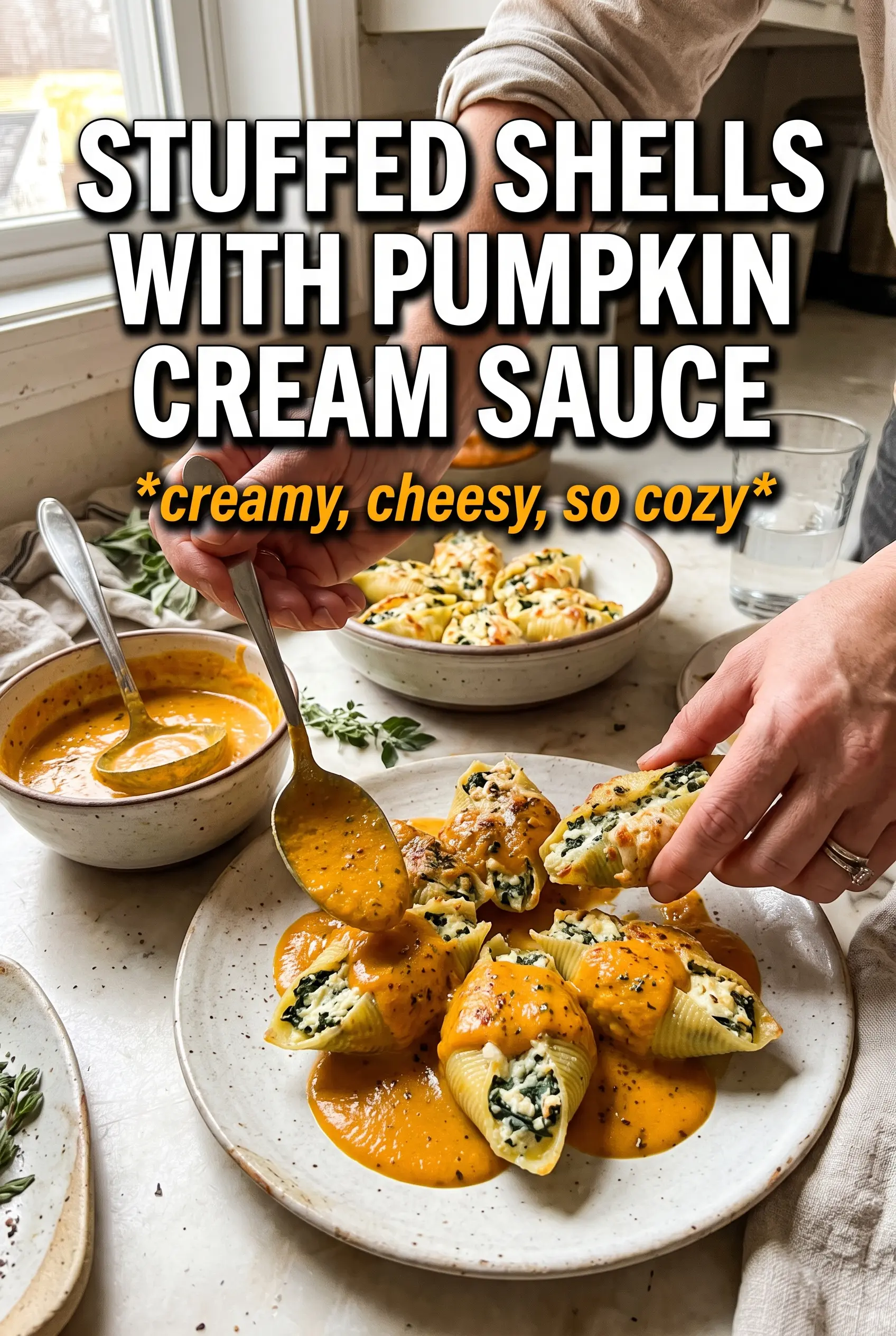
Spoon the ricotta mixture into each shell and aim for a full fill without mounding it so high that the pasta splits. The filling should look smooth and hold its shape. Lay the shells snugly in the sauce so they stay upright, but don’t cram them so tightly that the sauce can’t move around them.
Bake until the edges bubble
Cover the shells with the remaining sauce and scatter mozzarella over the top. Bake until the cheese is melted, the sauce is bubbling around the edges, and the top has gold spots. If the mozzarella is browning too quickly before the center is hot, tent the dish loosely with foil for the last part of baking.
How to Adapt These Stuffed Shells for Different Tables
Make it vegetarian-friendly
The recipe is already close, but use vegetable broth instead of chicken broth if you want a fully vegetarian pan. The flavor stays creamy and savory, though the sauce will taste a little softer without the chicken broth’s extra depth.
Lighten the dairy load
You can swap part of the heavy cream for half-and-half, but don’t replace all of it if you want the sauce to stay silky after baking. The finished sauce will be a little thinner and less rich, which is fine if you want a lighter pan.
Add a little sausage
Browned Italian sausage fits nicely with the pumpkin sauce if you want something heartier. Cook it separately, drain it well, and tuck a little into the sauce or the filling. Skip adding extra salt until after it’s mixed in, since sausage brings plenty on its own.
Storage and Reheating
- Refrigerator: Store leftovers covered for up to 4 days. The shells will absorb some sauce, so the dish gets a little thicker by day two.
- Freezer: This freezes well after baking. Cool completely, portion into airtight containers, and freeze for up to 2 months. The ricotta filling stays creamy, though the sauce softens a bit after thawing.
- Reheating: Reheat covered in a 350°F oven until hot in the center, adding a spoonful of cream or broth if the sauce looks tight. The biggest mistake is blasting it in the microwave until the cheese turns rubbery and the sauce separates.
Answers to the Questions Worth Asking
Stuffed Shells With Pumpkin Cream Sauce
Ingredients
Equipment
Method
- Preheat the oven to 375F and grease a 9x13 baking dish, keeping it ready for layering.
- Sauté the minced garlic over heat for 1 minute, until fragrant.
- Add pumpkin puree, heavy cream, chicken broth, grated parmesan, Italian seasoning, nutmeg, and red pepper flakes, then stir until smooth.
- Simmer the sauce for 5 minutes, stirring occasionally so it thickens slightly and looks cohesive.
- Pour most of the pumpkin cream sauce into the greased baking dish, spreading it into an even base.
- Mix the ricotta filling by combining ricotta, egg, parmesan, Italian seasoning, and salt and pepper until evenly blended.
- Stuff each cooked jumbo shell with the ricotta filling and nestle them into the sauce in the baking dish.
- Pour the remaining sauce over the shells so they’re partially covered, then scatter shredded mozzarella over the top.
- Bake at 375F for 35-40 minutes until bubbly around the edges and golden on top.
- Garnish with fresh sage right after baking so it stays bright and fragrant.