Sweet, moist banana bread doesn’t need added sugar to taste like the kind of loaf you want to slice thick and keep nibbling at the counter. When the bananas are ripe enough, they bring the sweetness, the fragrance, and that soft, almost jammy crumb all on their own. This version bakes up golden on top with a tender middle and just enough structure to slice cleanly once it’s cooled.
The trick is using bananas that have gone deeply speckled, even mostly black, because that’s where the natural sugar concentrates. Applesauce adds extra moisture without making the loaf heavy, and the coconut oil keeps the crumb soft instead of cakey. A little cinnamon helps the bananas taste fuller, not spiced in an obvious way.
Below, I’ll walk through the little details that matter most: when to stop mixing, how to tell the loaf is baked through without drying it out, and the small swaps that work if you want to use whole wheat flour or add nuts.
I was skeptical that banana bread with no added sugar would taste right, but the bananas carried it completely. Mine baked up with a soft center, a golden top, and the slices held together perfectly after cooling.
Like this naturally sweet banana loaf? Save it for the extra-ripe bananas on your counter and the days when you want banana bread without added sugar.
The Reason Most Sugar-Free Banana Bread Turns Dense
Banana bread without added sugar can go heavy fast because people try to compensate with too much flour or overmix the batter until it tightens up. The batter should look thick but still spoonable, not dry or paste-like. Once the flour goes in, stir only until the streaks disappear. That’s where the tenderness lives.
The other place this goes wrong is baking too hot or pulling it too early. A sugar-free loaf often browns a little less dramatically than a sweet one, so the color on top is less important than the center. You want a deeply set top and a toothpick that comes out clean, not just one with a few moist crumbs clinging to it. Letting it cool all the way is part of the recipe, not an afterthought.
What Each Ingredient Is Actually Doing In This Loaf
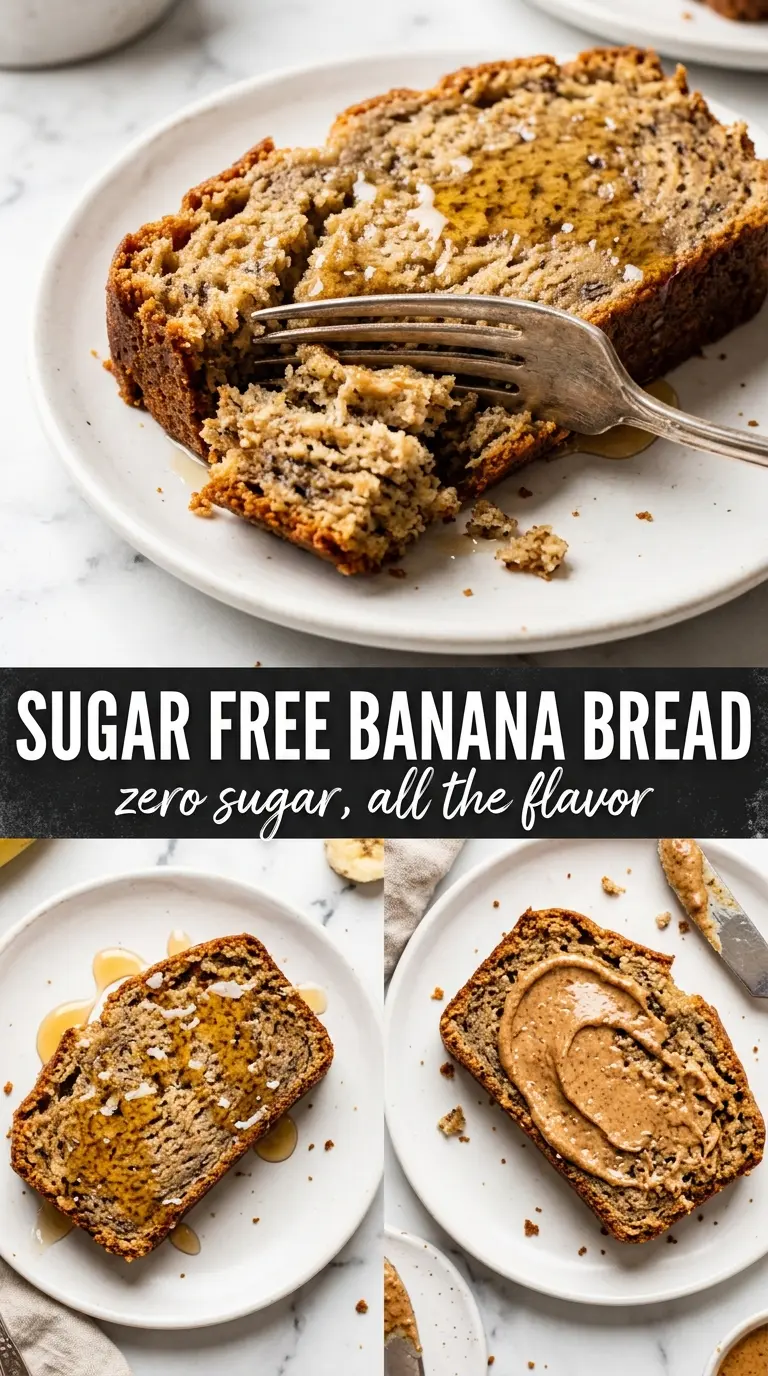
- Very ripe bananas — These are the sweetener, the moisture, and most of the banana flavor. Use bananas with lots of dark spots, or better yet, bananas that look almost overripe. That’s the difference between a loaf that tastes mildly banana-like and one that tastes naturally sweet without help.
- Unsweetened applesauce — This keeps the loaf moist without adding sugar or making the crumb greasy. You can swap in plain Greek yogurt for a little more structure, but the loaf will taste slightly tangier and less soft.
- Coconut oil — Melted coconut oil gives a tender crumb and a clean finish. You can use neutral oil if that’s what you have, but butter will make the loaf taste richer and a little less light.
- Flour — All-purpose flour gives the softest texture, while whole wheat brings a nuttier flavor and a slightly denser crumb. If you use whole wheat, don’t pack the flour into the cup or the loaf can turn dry.
- Baking soda — This reacts with the bananas and helps the loaf rise. If your bananas aren’t ripe enough, the bread can bake up flatter and less tender because there isn’t enough acid and moisture working with the soda.
- Cinnamon — You won’t taste cinnamon as a separate note here. It just rounds out the banana flavor and makes the loaf taste fuller.
Mixing The Batter Without Beating The Life Out Of It
Start With The Wet Ingredients
Mash the bananas until mostly smooth, then whisk in the eggs, melted coconut oil, vanilla, and applesauce until the mixture looks glossy and even. A few small banana bits are fine. If the coconut oil is too hot, it can start to cook the eggs, so let it cool for a minute after melting before you add it in.
Fold The Flour In Gently
Add the flour, baking soda, cinnamon, and salt, then fold just until no dry streaks remain. The batter should look thick and a little lumpy, not whipped and airy. Overmixing makes the loaf tough and can create a gummy line near the center.
Watch The Bake, Not The Clock Alone
Pour the batter into the pan, smooth the top, and bake until the loaf is deeply golden and a toothpick in the center comes out clean, usually 60 to 70 minutes. If the top browns before the middle is set, lay a piece of foil loosely over it for the last 15 minutes. The loaf is done when the center no longer jiggles and the edges pull slightly from the pan.
Let It Cool Before You Slice
This part matters more than people think. Sugar-free banana bread firms up as it cools, and slicing it too early can make the middle seem underbaked even when it isn’t. Leave it in the pan for a short rest, then move it to a rack and wait until it’s fully cool before cutting.
How To Change It Without Losing The Texture
Whole Wheat Banana Bread
Swap in whole wheat flour for all of the flour if you want a nuttier, heartier loaf. It will bake up a little denser and absorb more moisture, so don’t add extra flour and let the batter sit for a minute before baking so the flour can hydrate.
Dairy-Free And Naturally Sweet
This recipe is already dairy-free as written if you use coconut oil, which keeps it easy for anyone avoiding butter or milk. The flavor stays clean and banana-forward, and the crumb still stays soft because the moisture comes from the fruit and applesauce.
Add-Ins That Work
Sugar-free chocolate chips or chopped nuts both fit here, but keep the amount modest so the loaf still slices neatly. Fold them in at the very end, and toss nuts with a teaspoon of flour first if they tend to sink.
Freezer-Friendly Loaf
Banana bread freezes well once it’s cooled completely. Slice it first, wrap the pieces tightly, and freeze them flat so you can thaw one slice at a time. The texture stays much better this way than freezing the whole loaf and cutting it later.
Storage And Reheating
- Refrigerator: Store in an airtight container for up to 5 days. The crumb firms up a little in the fridge, but the flavor stays good.
- Freezer: Freeze slices or the whole loaf tightly wrapped for up to 3 months. Thaw at room temperature or overnight in the fridge.
- Reheating: Warm a slice in the toaster oven or microwave for just a few seconds. Too much heat dries out the edges fast, especially in a loaf with no added sugar.
Answers To The Questions Worth Asking
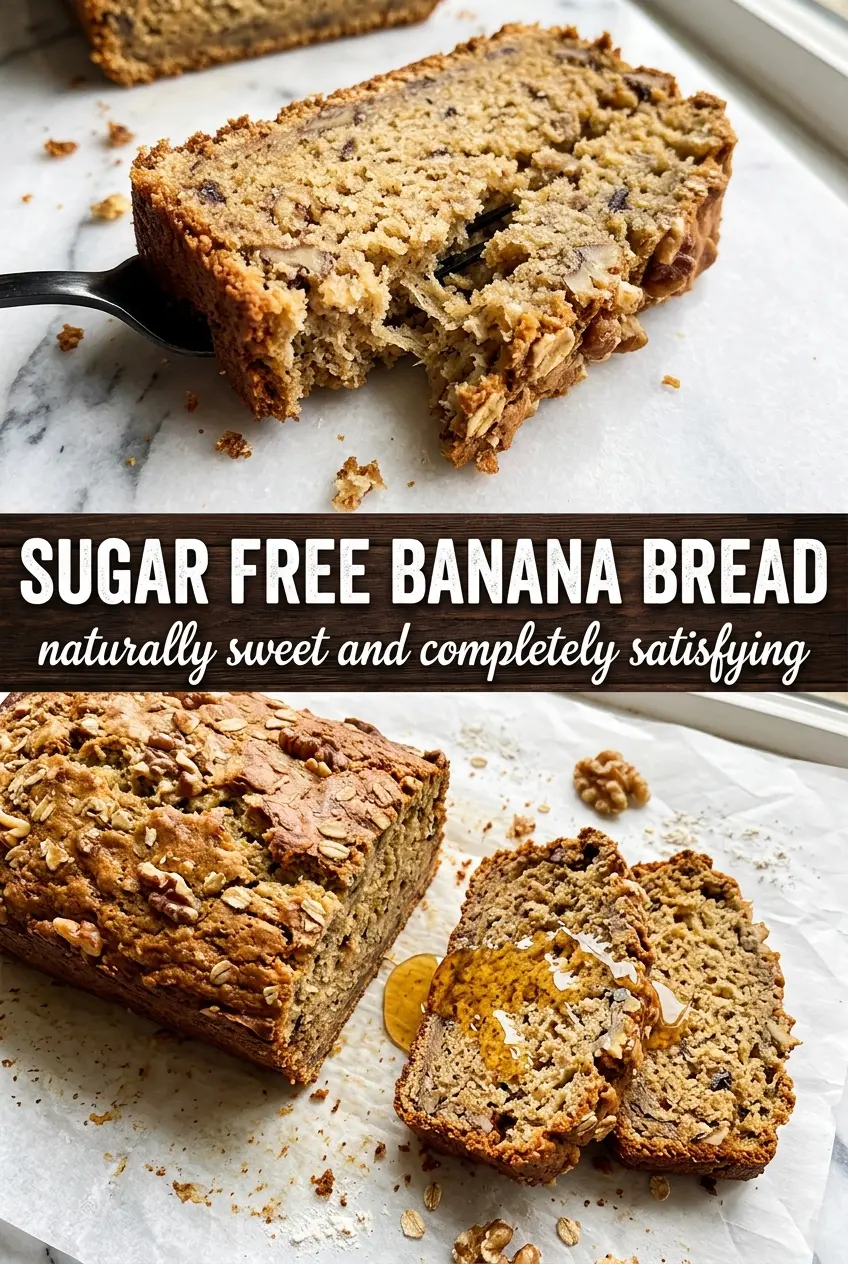
Sugar Free Banana Bread
Ingredients
Equipment
Method
- Preheat oven to 350°F and grease a 9x5 loaf pan. Set the pan on a sheet pan for easier handling.
- Whisk mashed bananas, eggs, melted coconut oil, vanilla, and applesauce until smooth and combined. Keep whisking just until no egg streaks remain.
- Fold in flour, baking soda, cinnamon, and salt until just combined. Stop mixing as soon as you no longer see dry flour to avoid a dense loaf.
- Fold in sugar-free chocolate chips or chopped nuts if using. Distribute them evenly without overmixing.
- Pour batter into the prepared pan and smooth the top. Tap the pan lightly once to settle the batter.
- Bake for 60–70 minutes until the top is deeply golden and a toothpick inserted in the center comes out clean. If the top browns too fast, tent loosely with foil for the remaining time.
- Cool completely before slicing, because the bread firms up significantly as it cools. Slice once fully cooled for clean edges and better structure.