Silky, savory, and full of that deep tomato richness that clings to every ridge of rigatoni, this sun-dried tomato vegan pasta lands in the kind of dinner rotation you reach for when you want comfort without heaviness. The sauce turns creamy without dairy, the spinach melts into the pasta just enough to feel integrated, and the basil at the end keeps the whole bowl bright instead of flat.
What makes this version work is the balance: sun-dried tomato oil starts the sauce with instant flavor, tomato paste adds body and intensity, and coconut cream gives it that lush texture that coats the pasta instead of pooling underneath it. Nutritional yeast matters here too. It brings a savory, almost cheesy edge that keeps the sauce from tasting like coconut soup with tomatoes in it. The reserved pasta water is the other piece that earns its place, because it loosens the sauce just enough for the starch to help it cling.
Below, I’ve laid out the part that makes the biggest difference when you’re cooking this at home: how to keep the sauce creamy, what to swap if you don’t have coconut cream, and the small finishing step that makes the whole dish taste finished instead of just mixed.
The sauce turned out perfectly creamy and coated the rigatoni instead of getting watery. I added a splash more pasta water at the end and the spinach wilted right in without turning soggy. My husband asked if there was any left for lunch the next day.
Save this Sun-Dried Tomato Vegan Pasta for a creamy dairy-free dinner with spinach, basil, and a sauce that clings beautifully to every bite.
The Trick to Keeping a Coconut Cream Sauce From Turning Heavy
The biggest mistake with vegan pasta sauces like this is treating coconut cream like a shortcut instead of an ingredient that needs balance. Coconut cream gives body, but if you dump it in and stop there, the sauce can taste flat or feel too rich by the end of the bowl. Tomato paste and nutritional yeast pull it back into savory territory, and the reserved pasta water keeps the texture from getting paste-thick.
Let the tomato paste cook for a full minute before the cream goes in. That short step removes the raw edge and deepens the tomato flavor. Then keep the simmer gentle. A hard boil can separate the sauce and dull the flavor, especially once the coconut cream and pasta water start working together.
- Sun-dried tomato oil — This is where the first layer of flavor comes from, so use the oil from the jar if you have it. Plain olive oil works in a pinch, but you lose some of that concentrated tomato taste.
- Tomato paste — It’s not there for color alone. It gives the sauce depth and helps the whole dish taste cooked instead of assembled.
- Nutritional yeast — This adds the savory, cheesy note that makes the sauce feel complete. Don’t skip it unless you have to; no substitute gives quite the same finish.
- Coconut cream — Use full-fat coconut cream, not lite coconut milk. You want the thickness here, and a thinner product makes the sauce loose and watery.
What Each Ingredient Is Doing in the Pan
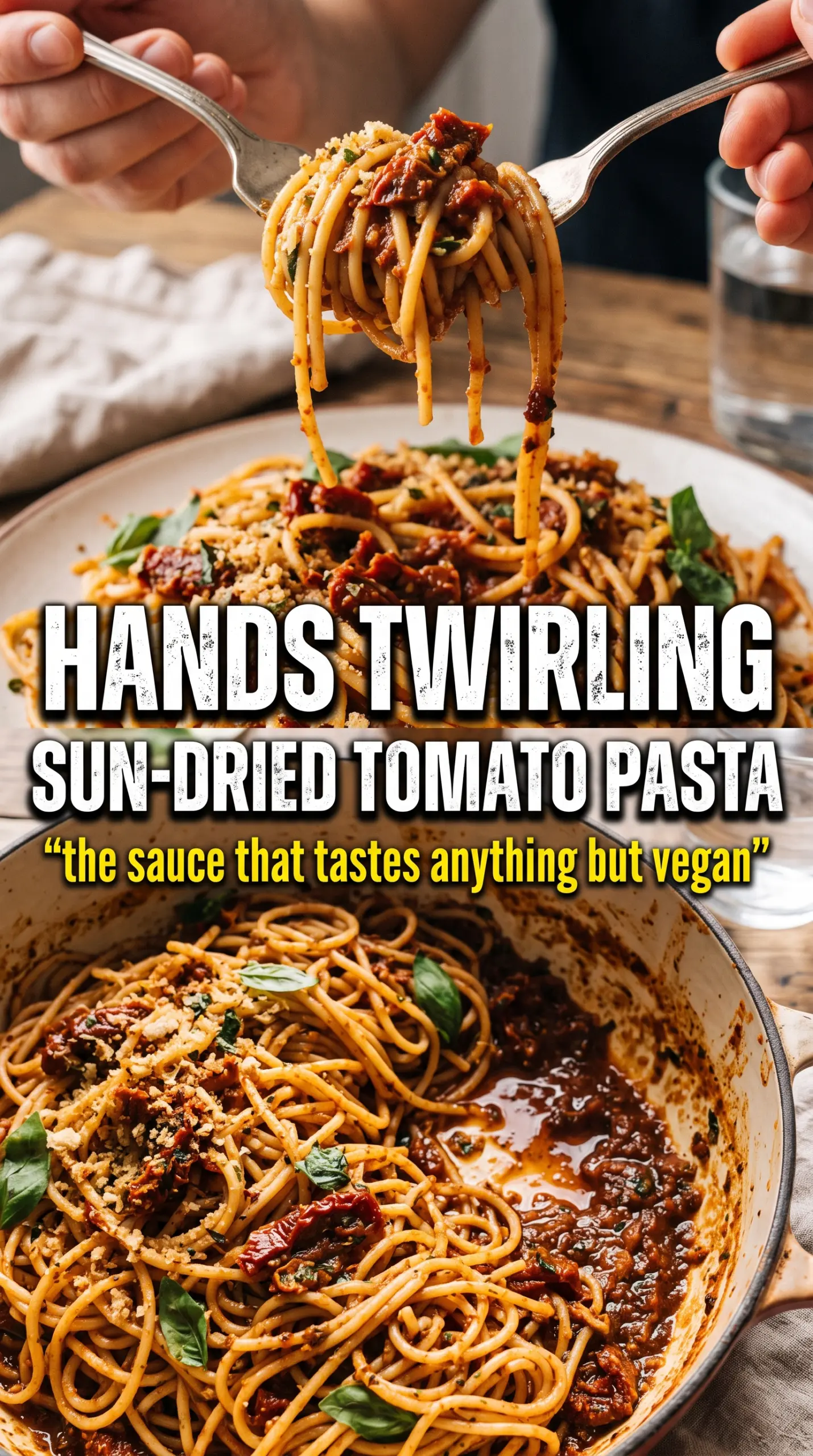
- Rigatoni or penne — Short pasta with ridges holds the sauce best. Long noodles work, but you lose some of that clingy, satisfying bite.
- Sun-dried tomatoes — Chop them finely so they melt into the sauce instead of hanging around in chewy chunks. If they’re packed dry instead of in oil, soak them in hot water first, then use olive oil for the sauté.
- Garlic — It should soften and perfume the oil, not brown. Burnt garlic turns the whole sauce bitter in a hurry.
- Baby spinach — It only needs a minute or two at the end. Add it too early and it fades into the sauce before the pasta has even been coated.
- Fresh basil — Add it after the heat is off so it stays bright. Cooking basil hard strips out the fresh finish that makes the bowl taste balanced.
Building the Sauce Before the Pasta Goes In
Starting with the Tomato Oil
Warm the sun-dried tomato oil over medium heat, then add the garlic and chopped tomatoes. You want a gentle sizzle, not aggressive frying, because the goal is to soften the garlic and bloom the tomato flavor in the oil. After about 2 minutes, the garlic should smell sweet and the tomatoes should look glossy and slightly darker. If the garlic starts to brown, lower the heat right away.
Cooking Out the Tomato Paste
Stir in the tomato paste and let it cook for a minute before adding the cream. It should darken slightly and smell richer, not raw or sharp. This is the point that makes the sauce taste layered instead of one-note. If you rush this step, the paste can leave the finished dish tasting tinny.
Simmering the Cream Into Shape
Pour in the coconut cream, Italian seasoning, red pepper flakes, and nutritional yeast, then let the sauce simmer gently for about 5 minutes. It should thicken enough to coat a spoon without feeling heavy or gluey. Keep the heat low enough that the surface barely bubbles. If it boils hard, the sauce can split and the coconut flavor becomes more noticeable than it should be.
Tossing in the Pasta and Spinach
Add the drained pasta straight into the pan and use reserved pasta water a splash at a time until the sauce clings neatly to every piece. Then add the spinach and toss until it just wilts. This is the point where the sauce comes together, so don’t overdo the water at once. If it looks loose in the pan, give it a minute off the heat before adding more liquid.
Make It Gluten-Free
Use your favorite gluten-free short pasta and cook it just to al dente, because it will soften a little more when it hits the sauce. Some GF pastas release less starch, so you may need a little extra pasta water to help the sauce cling.
If You Don’t Have Coconut Cream
Full-fat cashew cream is the best swap if you want a neutral flavor and a similarly rich texture. Oat cream works too, but it’s thinner and slightly sweeter, so the sauce won’t feel quite as lush.
Turn It Into a Heartier Dinner
Add white beans, sautéed mushrooms, or roasted chickpeas at the end. Beans keep the dish creamy and mild, while mushrooms bring a deeper savory note that plays well with the sun-dried tomatoes.
Storage and Reheating
- Refrigerator: Store for up to 4 days. The pasta will absorb some sauce as it sits, so it gets a little thicker.
- Freezer: It freezes, but the texture is best if you freeze the sauce separately from the pasta. Coconut-based sauces can change slightly after thawing, so stir well when reheating.
- Reheating: Warm it slowly over low heat with a splash of water or plant milk. High heat is the mistake here; it tightens the sauce and can make the coconut separate.
Questions I Get Asked About This Recipe
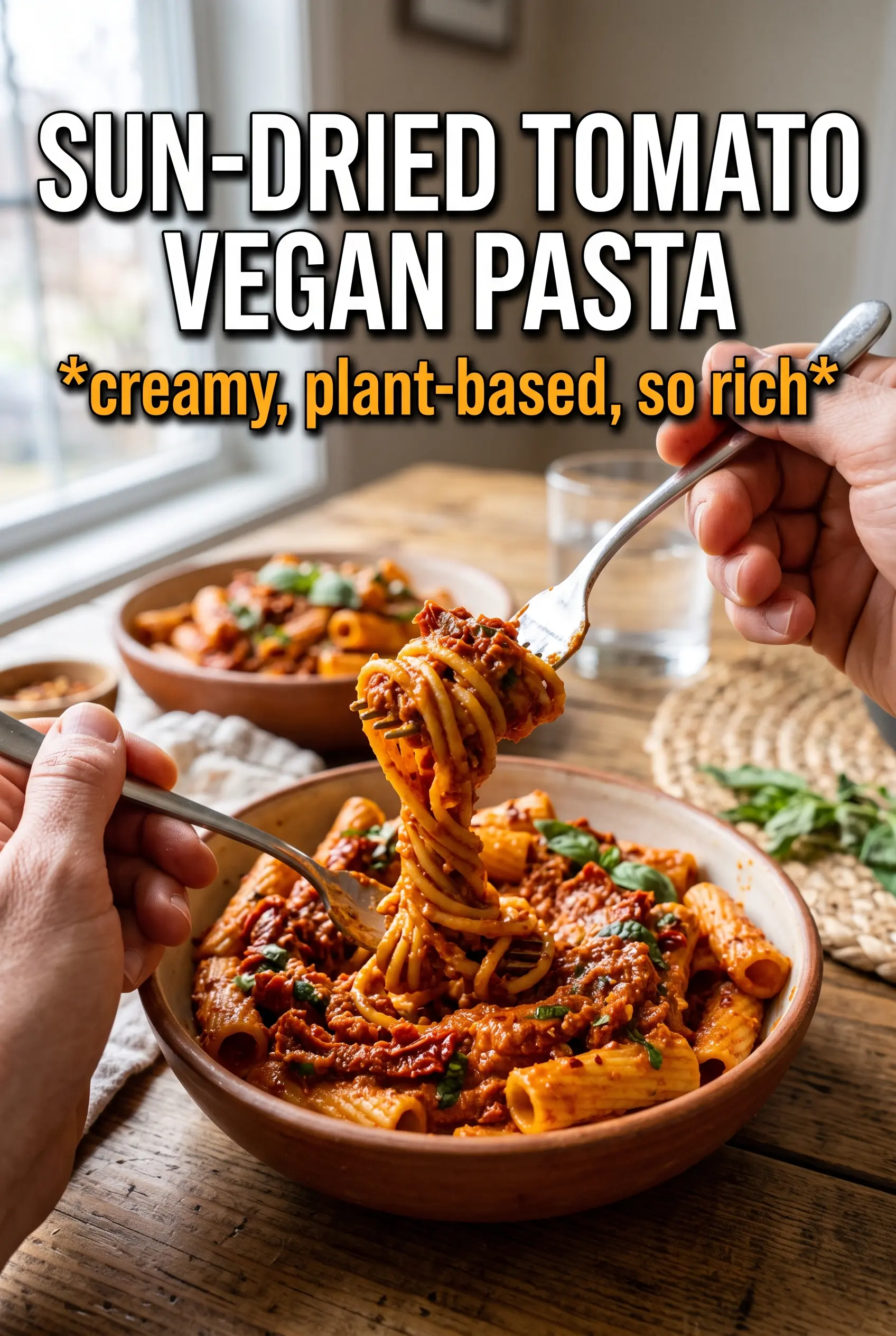
Sun-Dried Tomato Vegan Pasta
Ingredients
Equipment
Method
- Cook the rigatoni or penne in boiling water until al dente, then drain and reserve 1 cup pasta water.
- Set the pasta aside while you make the sauce, keeping the reserved pasta water within reach.
- Heat the sun-dried tomato oil in a large skillet over medium heat until shimmering, then sauté the garlic and chopped sun-dried tomatoes for 2 minutes.
- Stir in the tomato paste and cook for 1 minute, scraping up any browned bits.
- Add the full-fat coconut cream, Italian seasoning, red pepper flakes, and nutritional yeast, then simmer for 5 minutes until slightly thickened.
- If the sauce gets too thick, add a splash of reserved pasta water to loosen it.
- Add the cooked pasta to the skillet and toss, adding reserved pasta water as needed until the sauce coats.
- Add the baby spinach and toss until wilted, about 1 minute.
- Season with salt and pepper to taste.
- Top with fresh basil and extra nutritional yeast for serving.