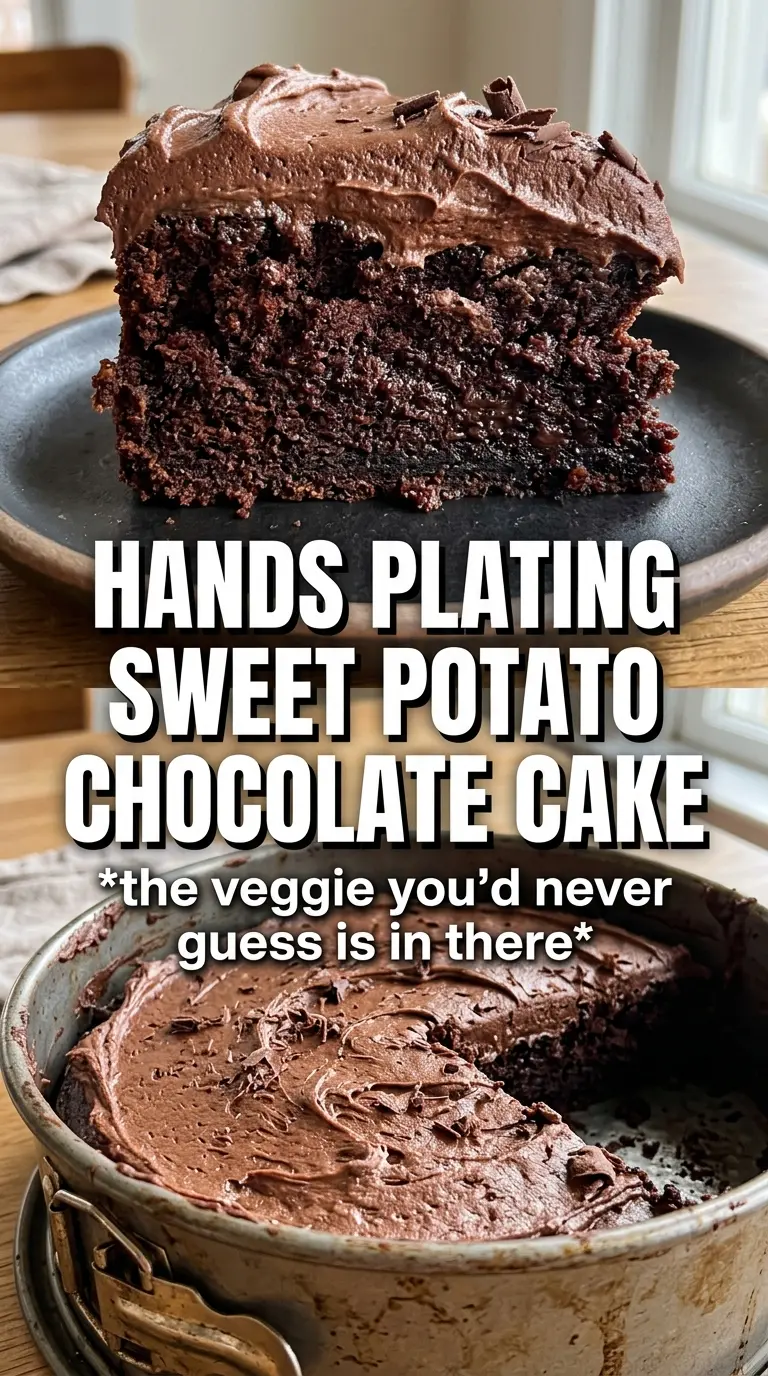
Sweet potato chocolate cake bakes up dense in the best way: deeply chocolatey, moist for days, and sturdy enough to slice cleanly without giving up that soft, tender crumb. The sweet potato doesn’t make it taste like pie or frosting filler. It just rounds out the cocoa, keeps the layers plush, and gives the cake a little extra richness that plain chocolate cakes sometimes miss.
The trick is in how the sweet potato puree works with the butter and buttermilk. You get moisture without thinning the batter too much, and that matters because cocoa already drinks up a lot of liquid. The ganache frosting leans dark and glossy at first, then turns fluffy once the powdered sugar goes in, so the whole cake stays bold instead of cloying.
Below, I’ll walk through the one step that keeps the crumb soft, the ingredient choices that matter most, and how to frost this cake so the layers stay neat instead of sliding around.
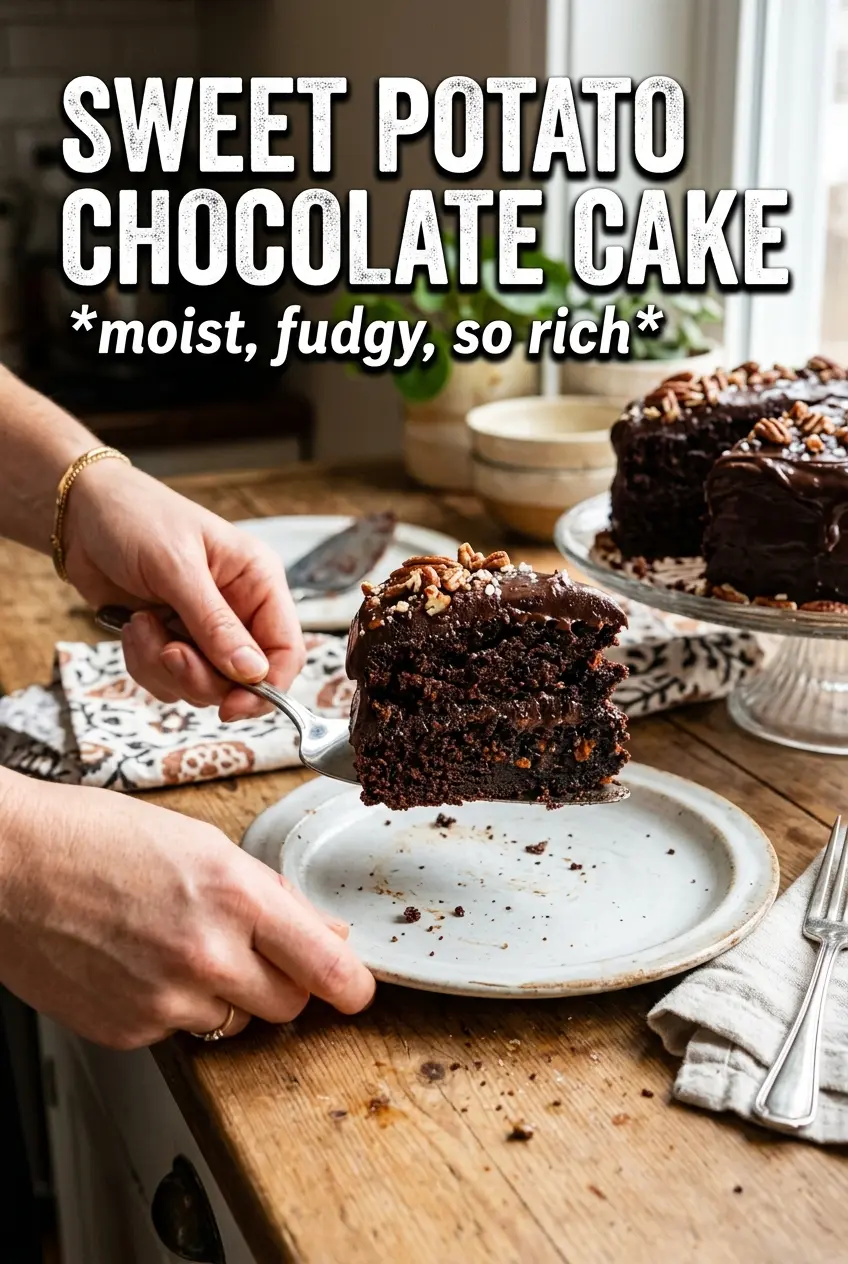
The cake came out unbelievably moist and the chocolate flavor stayed deep, not overly sweet. The ganache frosting set up perfectly after a short chill, and the layers sliced clean without crumbling.
Save this sweet potato chocolate cake for the nights when you want a rich layer cake with a moist crumb and a glossy ganache finish.
The Reason This Cake Stays Moist Without Turning Heavy
Sweet potato puree can make a cake go from soft and rich to dense and gummy if the batter is pushed too far. Here, the balance works because the puree replaces some of the usual moisture without overwhelming the structure from the flour and eggs. The result is a cake that feels plush, not pudding-like.
The other thing that keeps this cake on track is the cocoa-to-liquid ratio. Cocoa powder needs enough fat and moisture to bloom properly, but too much and the batter gets loose and bakes up flat. That’s why the butter, eggs, buttermilk, and puree all have a job here. Each one pulls its weight.
- Sweet potato puree — Use it smooth and fully cooled. If it’s watery, the batter loosens too much; if it’s chunky, the crumb turns uneven.
- Buttermilk — This adds tang and helps the cake stay tender. Whole milk works in a pinch, but you lose some lift and that subtle bite that keeps the chocolate from tasting flat.
- Cocoa powder — A good unsweetened cocoa gives the cake its backbone. Dutch-process cocoa makes a darker, smoother cake, while natural cocoa gives a sharper chocolate edge.
- Eggs and butter — These build the structure that lets the puree do its work without sinking the layers in the center.
What Each Part of the Batter Is Actually Doing
- Flour and cocoa — The flour gives the cake body, while the cocoa supplies most of the dry bulk. Sifting them together helps keep the batter from clumping, which matters because cocoa likes to hide little dry pockets.
- Baking powder and baking soda — You need both. The baking soda reacts with the buttermilk, and the baking powder gives the layers extra lift so the cake doesn’t bake up squat.
- Cinnamon — Just enough to warm the chocolate without making the cake taste spiced. It disappears into the background and makes the chocolate taste deeper.
- Dark chocolate chips, cream, and butter — This is the frosting base. The cream melts the chocolate, the butter adds shine and a softer set, and the powdered sugar turns it into a spreadable frosting instead of a thin glaze.
Mixing and Frosting Without Losing the Cake’s Structure
Building the Batter
Cream the butter and sugar until it looks pale and fluffy, not greasy. That step traps air, which is part of what gives the cake lift before it even hits the oven. Add the eggs one at a time so the batter stays smooth, then mix in the sweet potato puree, buttermilk, and vanilla. If the mixture looks slightly curdled at that point, that’s normal and it smooths out once the dry ingredients go in.
Bringing in the Dry Ingredients
Fold in the flour mixture just until no dry streaks remain. Overmixing here is the fastest way to turn a tender cake into a tight one, and cocoa batter makes that mistake easy to miss because it darkens quickly. Divide the batter evenly between the pans and level the tops so the layers bake at the same speed.
Knowing When the Layers Are Done
Bake until the centers spring back when pressed and a toothpick comes out with a few moist crumbs, not wet batter. If the cake pulls away from the sides a little, that’s a good sign. Let the layers cool completely before you frost them, or the ganache will slide right off and soak into the sponge instead of sitting on top.
Turning Ganache Into Frosting
Pour the hot cream over the chocolate chips and butter, then let it sit before stirring. That pause matters because it gives the chocolate time to melt evenly. Once smooth, cool the mixture until it thickens to a spreadable texture, then beat in the powdered sugar and vanilla. If you rush this while it’s still warm, the frosting will look loose and glossy instead of fluffy and sliceable.
How to Adjust This Cake for Different Kitchens and Different Crowds
Dairy-Free Version
Swap the butter for a good dairy-free baking stick, use an unsweetened non-dairy milk with a teaspoon of lemon juice in place of the buttermilk, and choose a dairy-free dark chocolate. The cake stays moist, but the frosting will set a little softer, so chill the layers before slicing.
Gluten-Free Swap
Use a 1:1 gluten-free baking blend that already includes xanthan gum. The sweet potato helps keep the crumb soft, but gluten-free cakes still need the full cooling time before frosting so they don’t break apart at the layers.
Deeper Chocolate, Less Sweet
Use Dutch-process cocoa and a chocolate chip with a higher cacao percentage. The cake turns darker and a little less sharp, and the frosting tastes more grown-up without losing its creamy set.
Storage and Reheating
- Refrigerator: Store covered for up to 5 days. The cake stays moist, and the frosting firms up slightly, which actually helps clean slicing.
- Freezer: Freeze unfrosted layers wrapped tightly for up to 2 months, or freeze frosted slices on a tray before wrapping. Sweet potato cake freezes well because the crumb stays tender after thawing.
- Reheating: Bring slices to room temperature before serving, or warm them briefly in the microwave for 10 to 15 seconds. Don’t overheat, or the ganache softens too much and the cake loses that clean, fudgy texture.
Questions I Get Asked About This Recipe
Sweet Potato Chocolate Cake
Ingredients
Equipment
Method
- Preheat oven to 350F, then grease two 9-inch round pans.
- Beat butter and sugar until creamy, then beat in eggs one at a time.
- Add sweet potato puree, buttermilk, and vanilla, and mix until smooth.
- Fold in flour, cocoa powder, baking powder, baking soda, cinnamon, and salt just until the batter is combined.
- Divide batter between the two prepared pans.
- Bake at 350F for 35-40 minutes, until a toothpick inserted in the center comes out with moist crumbs.
- Cool the cakes completely in the pans, then turn out and level the tops if needed.
- Heat heavy cream until steaming, then pour it over dark chocolate chips and unsalted butter in a bowl.
- Rest the mixture for 2 minutes, then stir until smooth and glossy.
- Cool ganache until spreadable, then beat with powdered sugar and vanilla until fluffy and lighter in color.
- Frost between layers, then frost the top and sides all over.