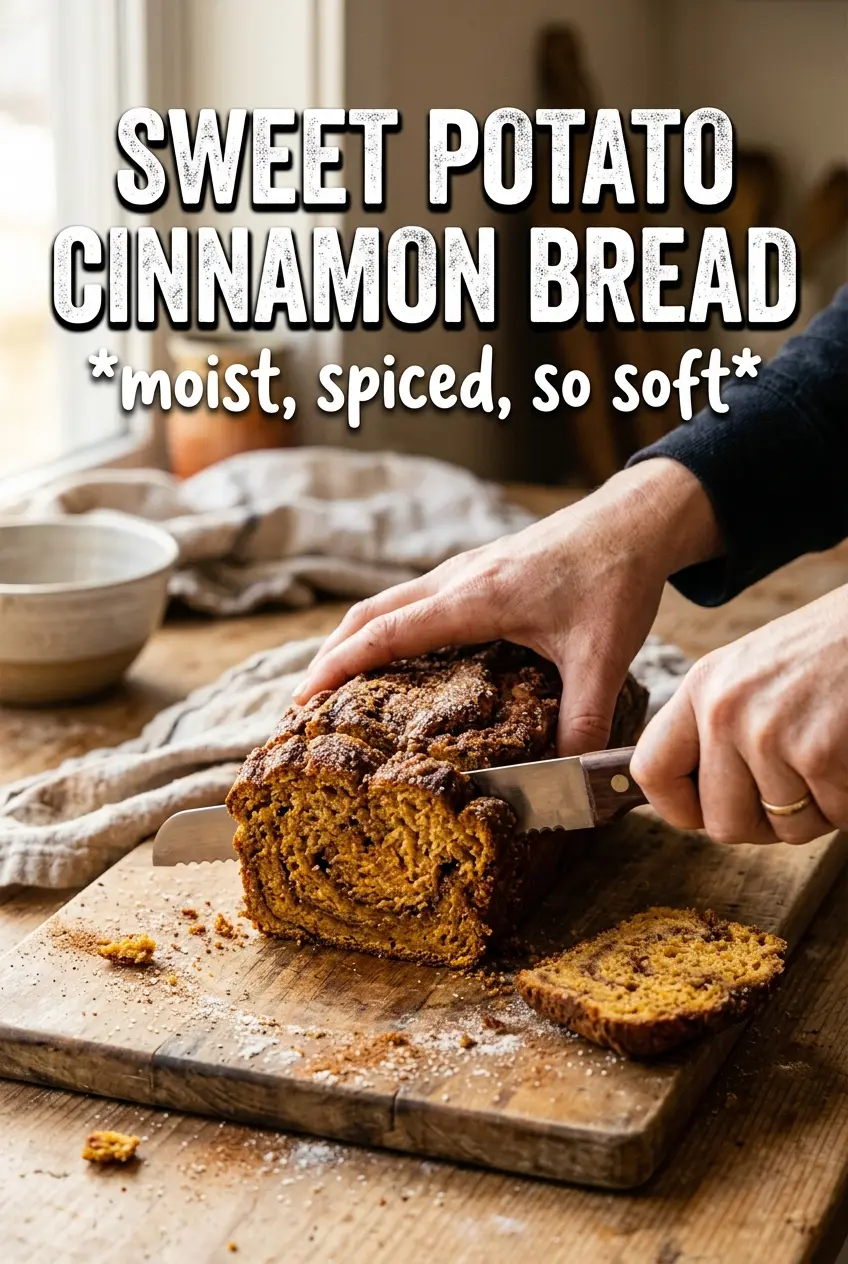
Sweet potato cinnamon bread bakes up with a tender, moist crumb, a warm spice aroma, and a cinnamon-sugar top that turns crisp in the oven. The sweet potato keeps each slice soft for days, while the swirl in the center gives you those pockets of brown sugar and spice that taste like the best part of a coffee cake tucked into a loaf.
What makes this version work is the balance: enough sweet potato puree to keep the bread rich and plush, but not so much that it turns dense or gummy. Sour cream adds tang and extra moisture, and the mix of oil plus eggs keeps the texture steady instead of cakey. The cinnamon swirl is mixed with a little melted butter so it bakes into a ribbon instead of disappearing into the batter.
Below you’ll find the one detail that keeps the loaf from sinking, the ingredient choices that matter most, and a few smart ways to adapt it if you want to change the spice level or make it ahead.
The loaf stayed incredibly moist for days, and the cinnamon swirl held its shape instead of melting into the batter. I baked mine at 65 minutes and the center came out perfectly set.
Pin this sweet potato cinnamon bread for a soft, swirled breakfast loaf with a crackly cinnamon sugar top.
The Part That Keeps the Swirl from Disappearing
The swirl isn’t just a stripe for looks. It needs enough body to stay visible, but not so much that it turns into a paste and tears through the batter. Brown sugar, cinnamon, and melted butter give you a mixture that spreads cleanly when the loaf rises around it. If the swirl looks runny, it will sink. If it’s too dry, it clumps and leaves gaps.
The other thing people miss is the batter thickness. Sweet potato puree varies a lot depending on how wet the potatoes were after roasting. If your puree is loose, the loaf can bake up heavy in the middle. Aim for a puree that’s smooth and thick, not watery, and mix the batter only until the flour disappears so the crumb stays soft.
- Sweet potato puree — Roasted sweet potatoes give the bread a deeper, sweeter flavor than boiled ones. If your puree seems wet, spoon it into a bowl and let it sit for a few minutes before measuring.
- Sour cream — This adds moisture and a gentle tang that keeps the loaf from tasting flat. Plain Greek yogurt works in a pinch, but the crumb will be slightly tighter.
- Brown sugar swirl — Darker brown sugar gives a richer caramel note, but light brown sugar works fine. Mix it with melted butter so it bakes into a soft ribbon instead of staying sandy.
- Vegetable oil — Oil keeps the bread tender even after it cools. Melted butter can be used, but the loaf won’t stay as soft on day two.
What Each Ingredient Is Actually Doing in This Recipe

- Primary ingredient (the star) — Quality matters most. Choose the best you can find.
- Cooking medium (oil, butter, or broth) — This carries flavors and prevents dryness.
- Seasonings (salt, pepper, spices, herbs) — Layer flavors so nothing overpowers. Build depth gradually.
- Aromatics (garlic, onion, herbs) — Cook with fat to bloom flavors. Become the foundation.
- Supporting ingredients — Complement the main ingredient without overpowering it.
- Sauce or liquid (if applicable) — Brings flavors together. Balance richness with acid.
- Acid (lemon, vinegar, wine, or other) — Brightens and prevents flat-tasting results.
- Final finish (garnish, glaze, or sauce) — Prevents one-dimensional taste and adds visual appeal.
Building the Loaf Without Overmixing the Batter
Mix the Dry Ingredients First
Whisk the flour, baking powder, baking soda, cinnamon, nutmeg, and salt together until the color looks even. This keeps the leaveners and spices from clumping in one bite. If you skip this, you can end up with dense streaks or pockets of spice. Use a bowl big enough that the flour doesn’t fly everywhere when you fold it in later.
Whisk the Wet Ingredients Until Smooth
Stir the sweet potato puree, sugars, oil, eggs, sour cream, and vanilla until the mixture looks thick and glossy. You don’t need to beat air into it; just dissolve the sugars and break up any egg streaks. If the puree has lumps, press them out now, not after the flour goes in. A smooth base makes the loaf bake evenly and slice cleanly.
Fold, Layer, and Swirl
Add the dry ingredients to the wet mixture and fold just until the flour disappears. A few streaks are better than a batter worked too hard, because overmixing builds toughness fast. Scrape half the batter into the pan, spoon over the cinnamon swirl, then cover with the rest of the batter. Drag a knife through once or twice for a loose swirl; too many passes will blend it into the loaf instead of leaving a ribbon.
Bake Until the Center Sets
Finish with the cinnamon sugar on top, then bake until the top is deep golden and a toothpick inserted in the center comes out clean or with a few moist crumbs. If the top browns too quickly before the middle is done, lay a piece of foil over it for the last 10 to 15 minutes. Let the loaf cool in the pan for a while before lifting it out. That rest helps the structure set so the slices don’t collapse.
How to Adapt This Loaf for Different Kitchens and Different Cravings
Dairy-Free Version
Swap the sour cream for an equal amount of unsweetened dairy-free yogurt. The loaf will still stay moist, but the tang will be a little softer. Keep the swirl butter or replace it with melted coconut oil if you need the whole recipe dairy-free.
Gluten-Free Adjustment
Use a 1:1 gluten-free baking blend that includes xanthan gum. The texture will be a little more delicate, so let the loaf cool fully before slicing or it can crumble at the center. I wouldn’t use almond flour here; it changes the structure too much.
Extra Spice, Less Sweet
Drop the granulated sugar by 2 tablespoons and add another 1/4 teaspoon cinnamon plus a pinch of cloves. This keeps the loaf more breakfast-friendly and lets the sweet potato come through. The crumb stays just as tender because the oil and sour cream are doing the moisture work.
Storage and Reheating
- Refrigerator: Store tightly wrapped for up to 5 days. The crumb stays moist, but the cinnamon sugar top softens a bit after the first day.
- Freezer: This bread freezes well. Wrap individual slices or the whole loaf in plastic, then foil, and freeze for up to 2 months.
- Reheating: Warm slices in a toaster oven or microwave for a few seconds until just heated through. Don’t overheat it or the edges dry out before the center warms.
Questions I Get Asked About This Recipe
Sweet Potato Cinnamon Bread
Ingredients
Equipment
Method
- Preheat the oven to 350F and grease a 9x5 loaf pan.
- Whisk all-purpose flour, baking powder, baking soda, cinnamon, nutmeg, and salt together.
- In a second bowl, whisk sweet potato puree, granulated sugar, brown sugar, vegetable oil, eggs, sour cream, and vanilla until smooth.
- Fold the dry mixture into the wet mixture until just combined, avoiding overmixing.
- Pour half the batter into the prepared loaf pan.
- Drizzle the cinnamon swirl mixture over the batter.
- Pour the remaining batter into the pan and swirl with a knife for a marbled center.
- Sprinkle the cinnamon sugar topping over the top.
- Bake for 60-65 minutes at 350F, until a toothpick comes out clean.