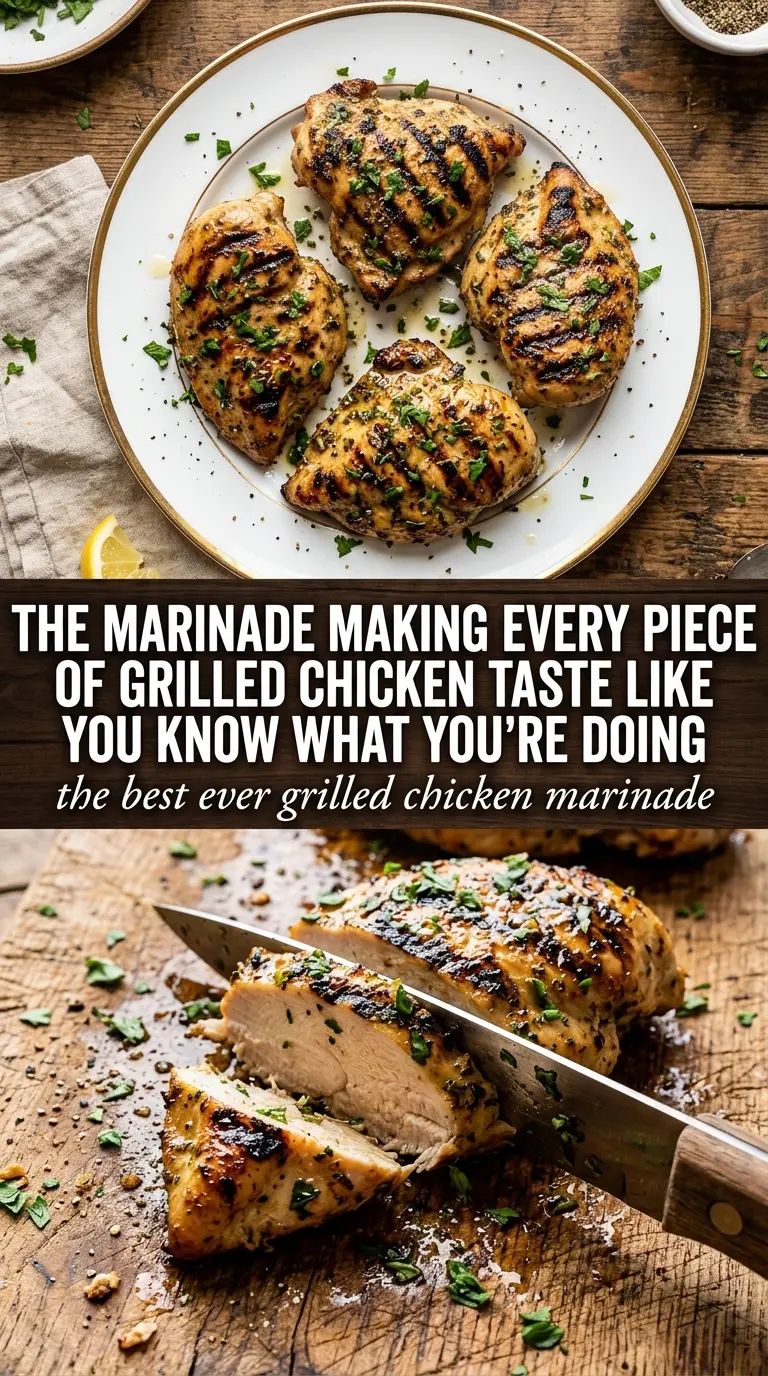
Juicy grilled chicken starts here, with a marinade that gets deep into the meat instead of sitting on the surface and tasting flat. This one hits the balance I want every time: salty from the soy sauce, bright from lemon, a little tang from Dijon, and enough brown sugar to help the chicken pick up a good char without burning too fast.
The trick is letting the marinade do more than season. The oil carries the flavors, the acid wakes everything up, and the Worcestershire adds that quiet savory depth that makes people keep taking another bite. I’ve tested plenty of versions that were either too sharp, too sweet, or too bland once they hit the grill. This one stays balanced and turns out chicken that’s tender, well-seasoned, and full of flavor all the way through.
Below, I’ve included the small details that matter most: how long to marinate, why some cuts need a shorter soak, and what to watch for on the grill so the outside doesn’t dry out before the center hits temperature.
Save this grilled chicken marinade for juicy, well-seasoned chicken with the kind of grill marks that actually mean something.
The Reason This Marinade Stays Bright Instead of Turning Mushy
Acid is useful here, but only if you give it a supporting cast. Lemon juice alone can start to cure the outside of the chicken if you leave it too long, which leaves the surface stringy before the center is seasoned. The oil and Worcestershire slow that down, while the Dijon helps the marinade cling so it doesn’t just slide off when the chicken hits the grill.
The other thing that matters is timing. Four hours is the sweet spot for most cuts. You’ll get noticeable flavor without the texture going soft. Push it to 24 hours only if you’re using thicker pieces like bone-in thighs or breasts, and keep an eye on leaner cuts so the acid doesn’t take over.
- Chicken cut: Boneless breasts cook fast and need the shortest soak. Thighs and drumsticks can handle a longer marinade and usually stay juicier on the grill.
- Olive oil: This helps the seasoning coat the meat evenly and keeps the surface from drying out over direct heat. A neutral oil works in a pinch, but olive oil gives a better finish.
- Lemon juice: Fresh juice gives the marinade its clean brightness. Bottled lemon juice works, but it tastes flatter and can come across harsh after grilling.
- Dijon mustard: This does more than add flavor. It helps emulsify the marinade, which means the oil and acid stay mixed long enough to coat the chicken properly.
What Each Ingredient Is Actually Doing in This The Best Ever Grilled Chicken
- Acid (vinegar, lemon, or lime juice): The acid tenderizes the protein gently. It also adds brightness and prevents the marinade from tasting flat.
- Oil (carrying flavor and protecting): Oil coats the protein and prevents drying. It helps the marinade adhere and penetrate evenly.
- Salt (seasoning and moisture retention): Salt seasons the protein and helps it retain juices. Apply directly before cooking for best results.
- Spices and aromatics (garlic, onion, herbs): These add complexity and depth. They should be minced fine for quick penetration.
- Heat (if using warm spices): Warm spices like cumin and coriander add earthiness. Toast them briefly before mixing for deeper flavor.
- Resting time (varies by marinade strength): Weak marinades need 2+ hours; strong marinades (with lots of acid) need 30 minutes to 1 hour. Marinate longer and the protein becomes mushy.
- Cold storage (essential for food safety): Marinades work best in the refrigerator. Room temperature marinades over-tenderize quickly.
- Pat dry before cooking: Excess marinade on the surface burns. Dry the protein so it can develop a good crust.

The Best Ever Grilled Chicken Marinade
Ingredients
Equipment
Method
- Whisk together olive oil, soy sauce, lemon juice, Worcestershire sauce, Dijon mustard, minced garlic, brown sugar, black pepper, and dried herbs until evenly combined, with no sugar streaks left. Visual cue: the mixture should look smooth and uniform.
- Place chicken in a large zip-top bag and pour the marinade over it, ensuring the chicken is coated. Visual cue: you should see marinade covering all surfaces.
- Marinate in the refrigerator for 4-24 hours. Visual cue: the chicken will take on a deeper, lightly opaque color as it sits.
- Preheat the grill to medium-high heat. Visual cue: the grates should be hot enough to create immediate sizzle when chicken is placed on them.
- Grill chicken until the internal temperature reaches 165°F, timing varying by cut. Visual cue: you’ll see clear grill marks and the surface will look browned and set.
- Let the chicken rest for 5-10 minutes before serving. Visual cue: juices should redistribute and the meat should look more settled rather than actively steaming.
Notes
How to Grill It Without Losing All That Marinade Work
Mixing the Marinade Until It Looks Smooth
Whisk the oil, soy sauce, lemon juice, Worcestershire, Dijon, garlic, brown sugar, pepper, and herbs until the mixture looks glossy and unified. If the brown sugar sits in little clumps or the mustard isn’t fully blended, the chicken won’t marinate evenly. Taste the marinade before it goes on the chicken; it should be boldly seasoned because some of that flavor stays on the surface.
Letting the Chicken Soak the Right Amount of Time
Put the chicken in a zip-top bag or shallow dish and coat it completely with the marinade. Refrigerate for at least 4 hours, and up to 24 hours depending on the cut. Thin breasts can turn soft if they sit too long in the lemon juice, while thighs and drumsticks are more forgiving. Turn the bag once or twice if you can, so the chicken doesn’t sit with one side dry.
Grilling Over Medium-High Heat
Preheat the grill fully before the chicken goes on. You want clean grill grates and steady medium-high heat, not raging flames. Let excess marinade drip off the chicken first so the sugar doesn’t scorch instantly, then grill until the surface has good color and the meat releases easily from the grate. If it sticks hard, give it another minute; forcing it too soon tears the crust.
Pulling It Before It Dries Out
Cook to 165°F in the thickest part, then move the chicken to a plate and let it rest for 5 to 10 minutes. Resting matters because the juices settle back into the meat instead of running out the second you cut it. If your chicken is dry, it usually went too far past temperature or sat over a flame that was too hot for too long.