Perfectly grilled salmon earns its place on repeat because it gives you crisp skin, tender flaky flesh, and clean lemon-garlic flavor without turning the fish dry or fussy. When the grill is hot and the salmon goes on skin-side down, the skin protects the fillet long enough to build a good crust while the center stays moist. That’s the difference between a piece of fish that tastes carefully cooked and one that just got rushed over the flame.
The marinade here does a lot with a little. Olive oil keeps the surface from sticking, lemon juice brightens the fish without overpowering it, and Dijon helps the seasoning cling so every bite tastes balanced. The short marinating time matters. Go much longer and the acid starts to change the texture on the outside before the grill ever gets a chance to do its job.
Below, I’m walking through the small details that matter most: how to oil the grates, when to leave the salmon alone, and what to look for when it’s just cooked through. There are also a few practical swaps and storage notes for nights when you want the same salmon dinner with a different finish.
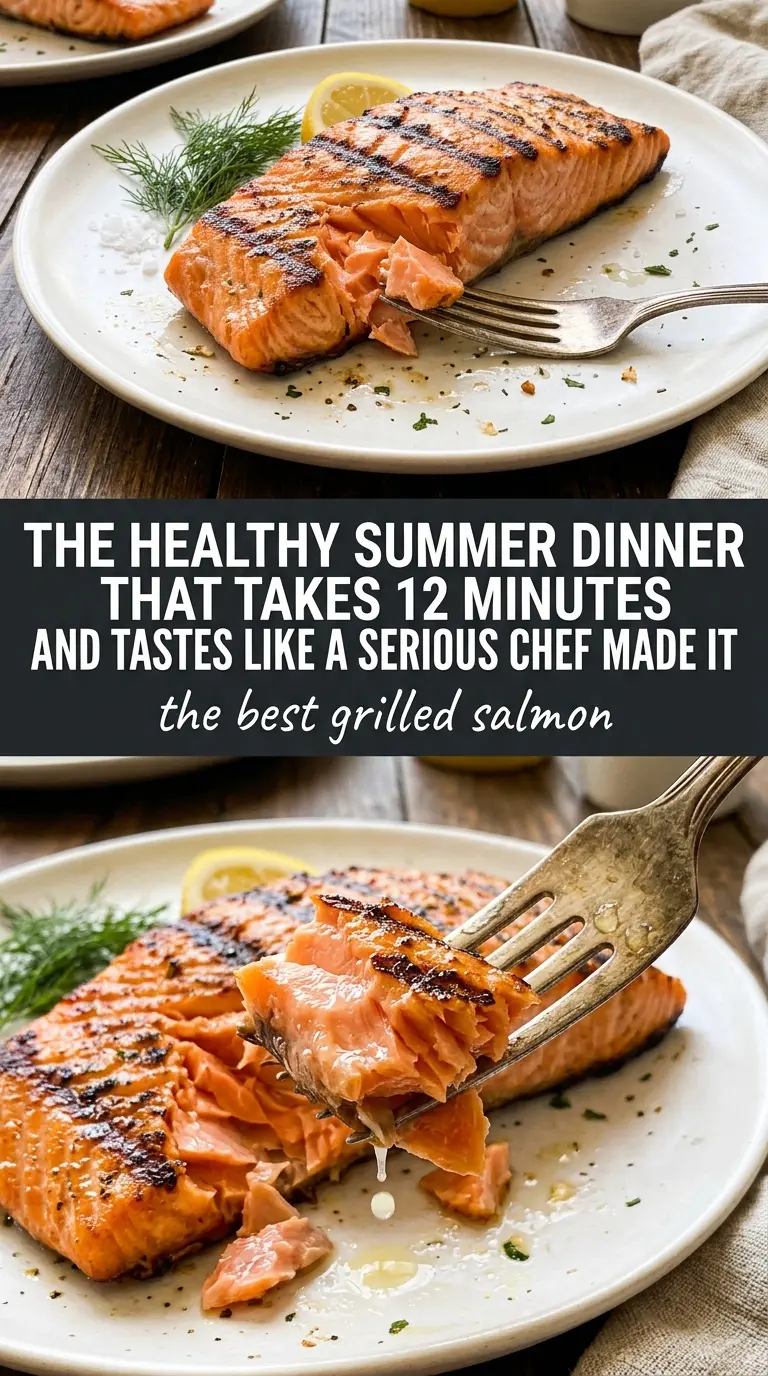
The salmon released cleanly after 6 minutes skin-side down, and the inside stayed flaky and moist instead of drying out on the second flip. The lemon and Dijon were spot on with the grilled flavor.
Save this grilled salmon for the nights when you want crisp skin, flaky fish, and a fast dinner that still feels special.
The Reason Most Grilled Salmon Sticks or Flares Up
Salmon usually goes wrong on the grill for one of two reasons: the grates weren’t hot and clean enough, or the fish got moved before it had a chance to release on its own. Skin-on fillets give you a built-in buffer, but that skin only works if you start on a well-oiled grate and leave the salmon alone long enough for the surface to set. If you try to lift it too early, the skin tears and the flesh follows.
The other mistake is overcooking during the second side. Salmon keeps cooking after it comes off the heat, so the best texture happens when the center is just turning opaque and still looks slightly translucent in the thickest part. That carryover heat finishes the job while the juices stay where they belong.
- Skin-on fillets — Skin-on salmon is easier to grill because the skin shields the flesh from direct heat and helps the fillet hold together. Skinless salmon can work, but it needs a grilling basket or a much gentler hand.
- Medium-high heat — This gives you the quick sear that sets the skin and creates grill marks without drying the fish out. If the grill is too cool, the salmon steams and sticks instead of caramelizing.
- A short marinade — Fifteen minutes is enough for the lemon, garlic, and Dijon to season the surface without breaking down the texture. Longer marinating starts to change the outside of the fish in a way that can make it soft or mushy.
What the Lemon, Dijon, and Olive Oil Are Doing Here
- Olive oil — This helps the marinade coat the salmon evenly and gives the surface a little insurance against sticking. A basic extra-virgin olive oil is fine here; there’s no need to use your best finishing bottle for this.
- Lemon juice — Fresh lemon juice is worth using because bottled lemon can taste flat and harsh next to grilled fish. The acid brightens the salmon, but it’s the short marinating time that keeps it from turning the texture chalky.
- Dijon mustard — Dijon doesn’t make the salmon taste mustardy. It helps emulsify the marinade so it clings to the fillets and adds a subtle savory edge that plays well with the smoke from the grill.
- Fresh dill — Dill is the right finish because it tastes clean and grassy beside the rich fish. Dried dill won’t give you the same lift, so keep that for another recipe and use the fresh herb here if you can.
Getting the Salmon Onto the Grill Without Losing the Skin
Build the Marinade First
Whisk the olive oil, lemon juice, garlic, Dijon, salt, and pepper until the mixture looks slightly thickened and no longer separates right away. That little bit of emulsion helps the seasonings cling to the fish instead of sliding off. Brush it over the salmon and let the fillets sit for 15 minutes, no longer. If they sit too long, the acid starts to work on the surface and the texture turns soft before grilling.
Preheat and Oil the Grates
Get the grill to medium-high heat and brush or wipe the grates with oil just before the salmon goes on. You want the surface hot enough that the fish audibly sizzles, but not so hot that the outside scorches before the center cooks. If the grates are dirty or dry, the skin will stick no matter how carefully you try to lift it.
Start Skin-Side Down and Stay Patient
Place the salmon skin-side down and don’t move it for 6 to 8 minutes. The skin needs time to crisp and release naturally, and that release is the sign you’re on track. If the fillet resists when you try to lift it, give it another minute instead of forcing it. Forced flips tear the fish and leave half the skin behind.
Finish the Flip Gently
Turn the fillets carefully and grill for just 2 to 3 minutes on the second side, only until the salmon reaches your preferred doneness. The thickest part should still look moist, with flakes that separate cleanly under a fork. Pull it early rather than late, because salmon goes from tender to dry in a matter of minutes once it’s fully exposed to direct heat.
Three Smart Ways to Change This Grilled Salmon
Make it dairy-free and naturally gluten-free
This recipe already fits both diets as written, which is one reason it’s such a good weeknight fish dinner. Just keep an eye on your mustard label if you’re cooking for someone sensitive to gluten, and serve it with simple vegetables or rice so the salmon stays the focus.
Swap the dill for a different herb finish
Parsley gives you a fresher, milder finish, while chopped chives add a light onion note. Basil works too if you want the salmon to lean a little sweeter and more summery, but it changes the character of the dish more than dill does.
Use a grill pan when the weather won’t cooperate
A grill pan gives you the same basic method indoors, though the smoke level will be lower and the marks won’t be as dramatic. Heat the pan well, oil it lightly, and keep the fillets skin-side down until they release cleanly. The texture stays close to outdoor grilling as long as you don’t overcrowd the pan.
Storage and Reheating
- Refrigerator: Store leftovers in an airtight container for up to 3 days. The skin will soften, but the fish should still flake nicely.
- Freezer: Grilled salmon freezes reasonably well for up to 2 months if wrapped tightly and sealed. Thaw it overnight in the refrigerator before reheating so it doesn’t dry out unevenly.
- Reheating: Warm it gently in a low oven at 275°F until just heated through, or use short bursts in the microwave at reduced power. High heat is the mistake that dries salmon out fast, so keep the reheating low and slow.
Questions I Get Asked About This Recipe
The Best Grilled Salmon
Ingredients
Equipment
Method
- In a small bowl, mix olive oil, lemon juice, minced garlic, Dijon mustard, salt, and pepper until combined.
- Brush the marinade over the salmon fillets, skin-side up, and make sure each piece is coated evenly.
- Let the salmon sit for 15 minutes at room temperature so the flavors can soak in, with the surface looking glossy from the marinade.
- Preheat the grill to medium-high heat and oil the grates well so the skin releases cleanly.
- Place the salmon on the grill skin-side down, laying them down carefully and avoiding movement so grill marks can form.
- Grill skin-side down for 6-8 minutes, watching for crisping skin at the edges and a slightly opaque top surface.
- Carefully flip the salmon and grill for 2-3 minutes until cooked to your desired doneness, with the flesh turning flaky and opaque.
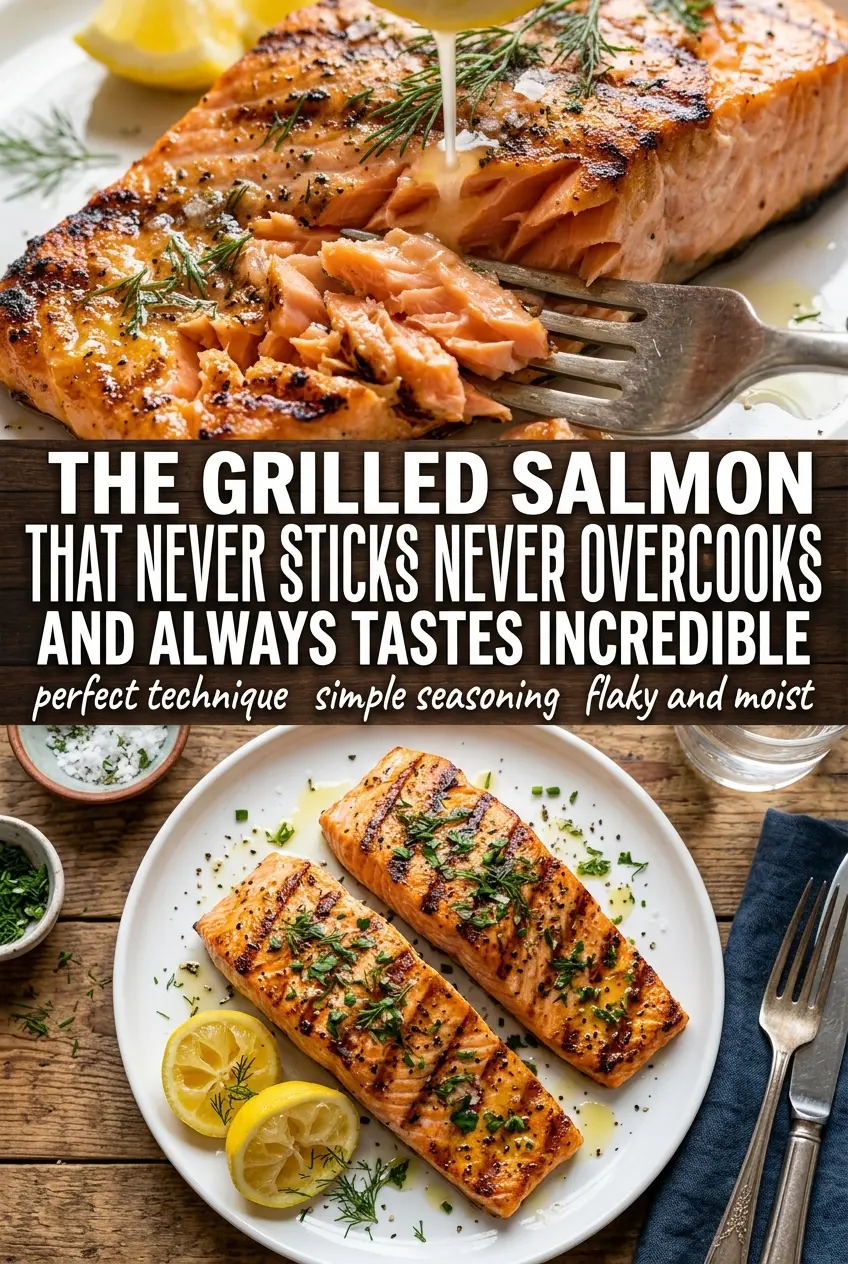
- Serve immediately with fresh dill and lemon wedges, letting the bright citrus lift the grilled flavor.