Plump tortellini coated in a silky carbonara sauce is the kind of dinner that feels bigger than the time it takes to make it. The pasta catches every bit of the egg-and-parmesan sauce, the pancetta brings salt and crunch, and the whole dish lands with that peppery, glossy finish you want when carbonara is done right. It’s rich without being heavy, and it eats like something you’d order at a small Italian spot, only faster.
The trick here is treating the tortellini like the pasta and the filling at the same time. You want it hot when it hits the pan, but the pan must be off the heat before the egg mixture goes in, or you’ll end up with scrambled bits instead of a smooth sauce. A little reserved pasta water loosens the cheese and eggs just enough to turn everything creamy without adding cream.
Below, I’ll show you the exact point where the sauce comes together, how to keep it from breaking, and a few swaps that still keep the dish weeknight-friendly.
The sauce turned silky as soon as I tossed in the pasta water, and the tortellini stayed plump instead of falling apart. My husband kept sneaking forkfuls straight from the pan.
Save this tortellini carbonara for a fast pasta night with crispy pancetta and a glossy parmesan sauce.
The Heat Trap That Ruins Carbonara Sauce
The biggest mistake with tortellini carbonara is carrying over too much heat into the egg mixture. Tortellini cooks quickly, but it also holds on to a lot of heat, and that’s enough to turn a glossy sauce grainy in seconds if the pan is still on the burner. The pancetta fat and pasta water help, but they can’t rescue eggs that hit direct heat at the wrong moment.
This version works because the sauce starts in a cool pan, not a hot one. The residual warmth from the pasta and pancetta is enough to thicken the eggs slowly while the parmesan melts in, which gives you that velvety coating instead of little curds. If the pan feels aggressively hot, let it sit for 30 seconds before adding the egg mixture. That pause matters.
- Off-heat tossing keeps the eggs in the safe zone where they thicken instead of scramble.
- Reserved pasta water stretches the sauce and helps it cling to the tortellini.
- Fine parmesan melts faster and smoother than coarse shreds, which is important here.
What Each Ingredient Is Actually Doing in This Dish
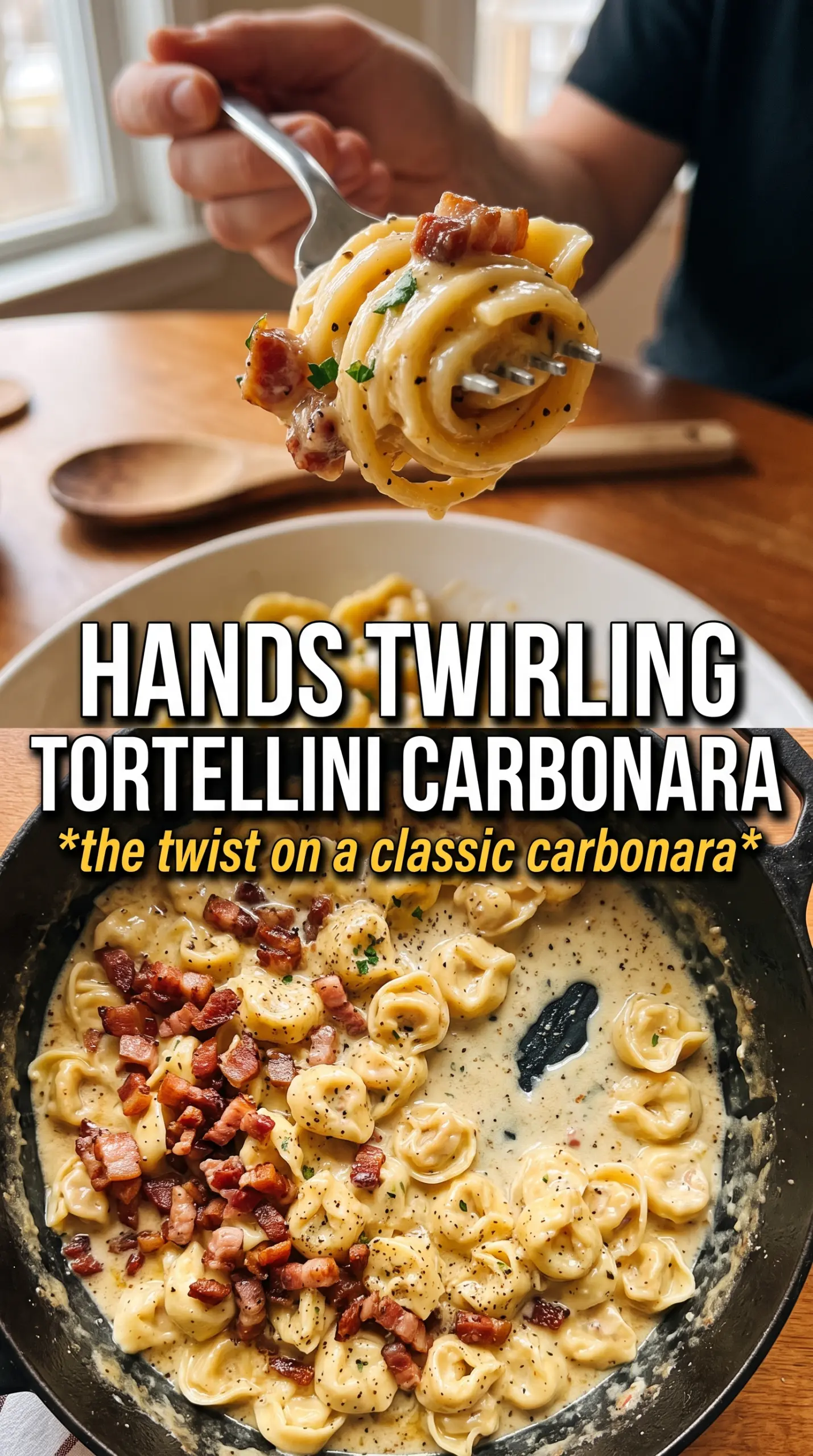
- Refrigerated cheese tortellini gives you a built-in filling that makes the dish feel hearty without extra work. Fresh refrigerated pasta cooks fast and stays tender; dried tortellini needs a different timing and often a little more water.
- Pancetta or thick-cut bacon brings the salty, crisp backbone of the dish. Pancetta tastes a little cleaner and more savory, while bacon adds smoke. Either works, but dice it small so you get bits of crunch in every bite.
- Egg yolks plus one whole egg give the sauce body and shine. Yolks bring richness, while the whole egg helps the mixture loosen enough to coat the pasta instead of clumping.
- Finely grated parmesan is worth buying or grating yourself. Pre-shredded cheese often contains anti-caking agents that make the sauce less smooth.
- Garlic needs just a minute in the pancetta fat. Any longer and it can turn bitter, which shows up fast in a dish with only a few ingredients.
- Nutmeg and black pepper don’t taste sweet or warm in an obvious way here; they round out the eggs and cheese and give the sauce that classic carbonara depth.
Building the Sauce Without Scrambling the Eggs
Crisping the Pancetta First
Start the pancetta in a cold pan and let it render slowly so the fat melts out before the edges crisp. You want deep golden pieces, not shrunken, burnt scraps. Once the pancetta is crisp, stir in the garlic for just a minute until it smells fragrant. If the garlic browns, pull the pan off the heat immediately; burnt garlic will take over the whole dish.
Whisking the Carbonara Base
Combine the yolks, whole egg, parmesan, nutmeg, and a heavy hand of black pepper in a bowl before the pasta is done. The mixture should look thick and gritty from the cheese, not smooth like a custard. That’s normal. A proper whisking here helps the cheese disperse, and it gives the eggs a head start so they emulsify when they hit the hot tortellini.
Turning Pasta Water Into Sauce
Move the drained tortellini straight into the pan with the pancetta, then take the pan completely off the heat before adding the egg mixture. Toss quickly and add pasta water a splash at a time until the sauce turns shiny and loosens enough to flow around the pasta. If it looks tight or clumpy, it needs more water and more tossing, not more heat. The sauce should coat the tortellini and pool lightly at the bottom of the bowl.
Finishing With the Right Texture
Taste before salting. Pancetta and parmesan already bring a lot of salt, and overdoing it is easy here. Add fresh parsley and extra parmesan at the end for color and a fresh edge. Serve immediately while the sauce is still glossy, because carbonara thickens as it sits.
Make It With Bacon Instead of Pancetta
Thick-cut bacon works well here and gives you a smokier finish. Use the same amount, and drain off extra fat if the pan looks greasy before adding the tortellini. The only real tradeoff is a more pronounced smoke flavor, which some people love and others notice immediately.
How to Make It Gluten-Free
Use a gluten-free cheese tortellini that holds up in boiling water, then treat the sauce the same way. Gluten-free pasta can be a little more delicate, so undercook it by a minute and toss gently once the egg mixture goes in. The key is keeping enough pasta water on hand to loosen the sauce without breaking the pasta apart.
Lighter on the Cheese, Still Creamy
You can cut the parmesan back slightly, but don’t replace it with cream. The cheese is part of what thickens the sauce and gives it that carbonara pull. If you want a lighter bowl, use a little extra pasta water and stop once the sauce is just glossy enough to coat the pasta.
Storage and Reheating
- Refrigerator: Store leftovers for up to 3 days. The sauce will tighten and lose some of its silkiness as it chills.
- Freezer: I don’t recommend freezing this dish. The egg sauce can separate and the tortellini texture turns soft after thawing.
- Reheating: Warm gently in a skillet over low heat with a splash of water to loosen the sauce. High heat is the mistake here; it cooks the eggs again and turns the sauce grainy.
Questions I Get Asked About This Recipe
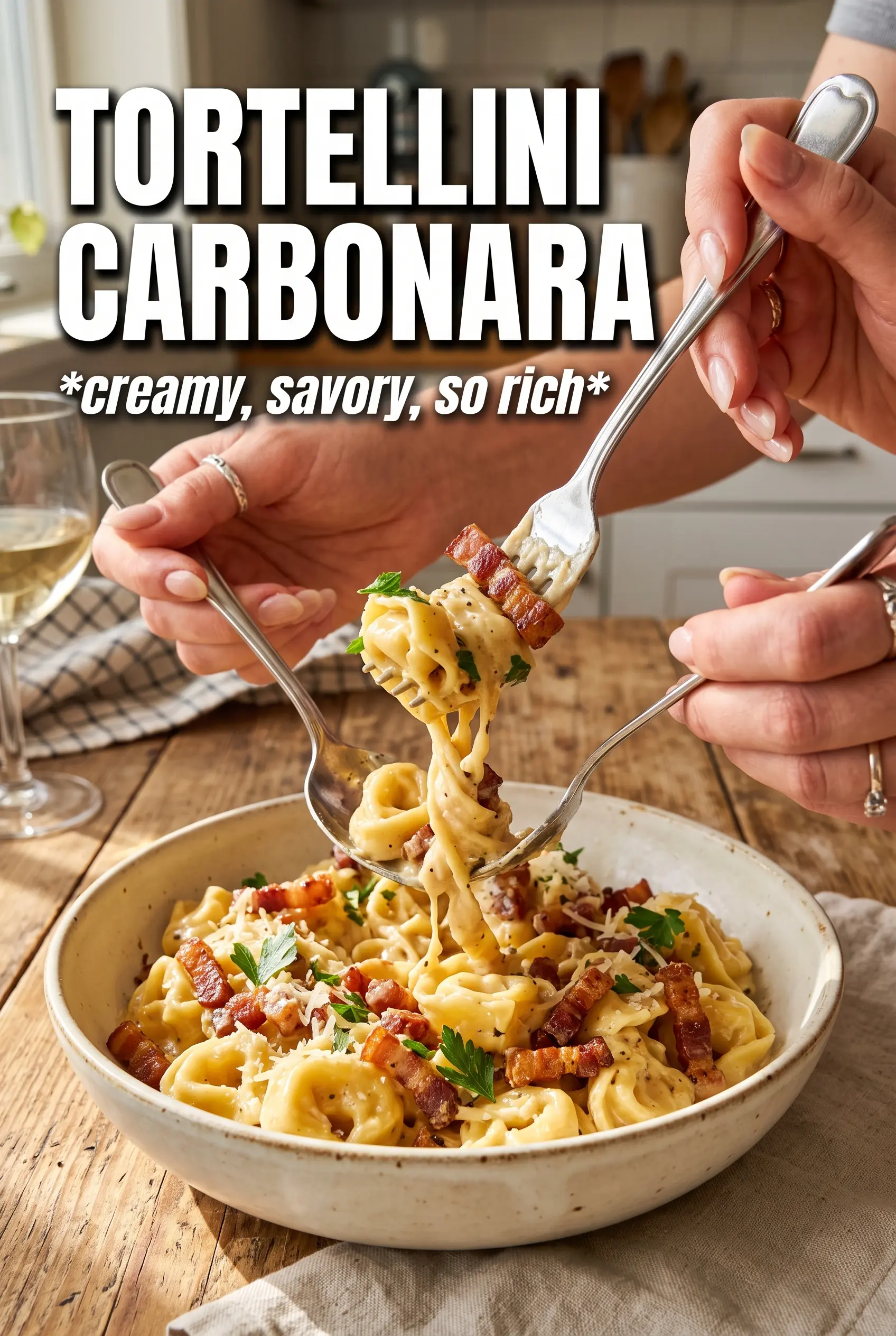
Tortellini Carbonara
Ingredients
Equipment
Method
- Bring a pot of well-salted water to a boil and cook the refrigerated cheese tortellini until tender, then reserve 1 cup of pasta cooking water. Look for the tortellini to float and become plump, then stop cooking right at doneness.
- In a cast iron skillet over medium heat, cook the diced pancetta until crispy and the fat renders, stirring occasionally. Continue until the pieces are browned and audibly sizzle, then add the minced garlic and cook 1 minute while fragrant.
- Remove the pancetta pan from the heat. Stop further cooking so the garlic doesn’t brown.
- In a bowl, whisk the egg yolks, whole egg, finely grated parmesan, nutmeg, and generous freshly cracked black pepper until smooth and thick. The mixture should look uniform and pale-yellow with visible pepper flecks.
- Add the hot tortellini to the pancetta pan off heat, then quickly pour in the egg mixture. Toss immediately as the egg begins to coat rather than scramble.
- Toss vigorously, adding pasta cooking water a splash at a time until the sauce turns silky and creamy. Keep tossing until it clings to the tortellini and looks glossy, not streaky.
- Season with salt to taste, then top with fresh parsley and extra parmesan before serving. Finish with abundant cracked black pepper across the top for contrast.