Golden caramelized onions turn this vegan pasta into something that tastes slow-cooked and a little luxurious, even though the method is straightforward. The onions melt down into a deep amber base that clings to rigatoni or spaghetti, and the pasta water pulls everything together into a glossy sauce without any cream at all.
The trick is patience at the pan. Medium-low heat gives the onions time to soften and brown evenly instead of scorching, and the small amount of vegan butter helps round out the edges of the olive oil. Nutritional yeast adds a savory finish, while a splash of white wine and balsamic keeps the sauce from tasting flat or one-note.
Below, I’ve added the specific signs to watch for while caramelizing the onions, plus a few smart swaps if you need to adjust for what’s in your kitchen. Once you’ve made this once, the method starts to feel second nature.
The onions turned this amazing deep amber color and the sauce coated the pasta instead of sitting at the bottom of the bowl. I used rigatoni, and it held onto every bit of that savory onion sauce.
Save this vegan caramelized onion pasta for the night you want a silky onion sauce without any cream.
The Real Reason This Sauce Turns Silky Instead of Greasy
The difference here comes from building the sauce in layers instead of trying to rush the onions into submission. Caramelized onions already carry a lot of natural sweetness, so you need the wine, balsamic, and pasta water to keep the sauce balanced and loose enough to coat the noodles. If you dump everything together too early, the onions steam, the pan goes dry in spots, and you miss that deep cooked flavor that makes the whole dish work.
The other piece people skip is using the pasta water while the onions are still hot. That starchy water helps emulsify the olive oil and vegan butter, which is what gives the pasta that clingy, glossy finish. Without it, the sauce tastes fine but sits on the pasta instead of wrapping around it.
- Low heat matters most for the onions — medium-low gives them time to soften, then brown. Higher heat pushes them straight from pale to bitter.
- White wine adds lift — it cuts the sweetness of the onions and deglazes the pan. If you leave it out, the dish tastes heavier and more one-dimensional.
- Nutritional yeast is the savory backbone — it brings the parmesan-like finish that keeps this from tasting like plain sweet onions on pasta.
- Pasta water is not optional here — it loosens the sauce just enough to coat every ridge and strand without turning watery.
What Each Ingredient Is Actually Doing in This Pasta
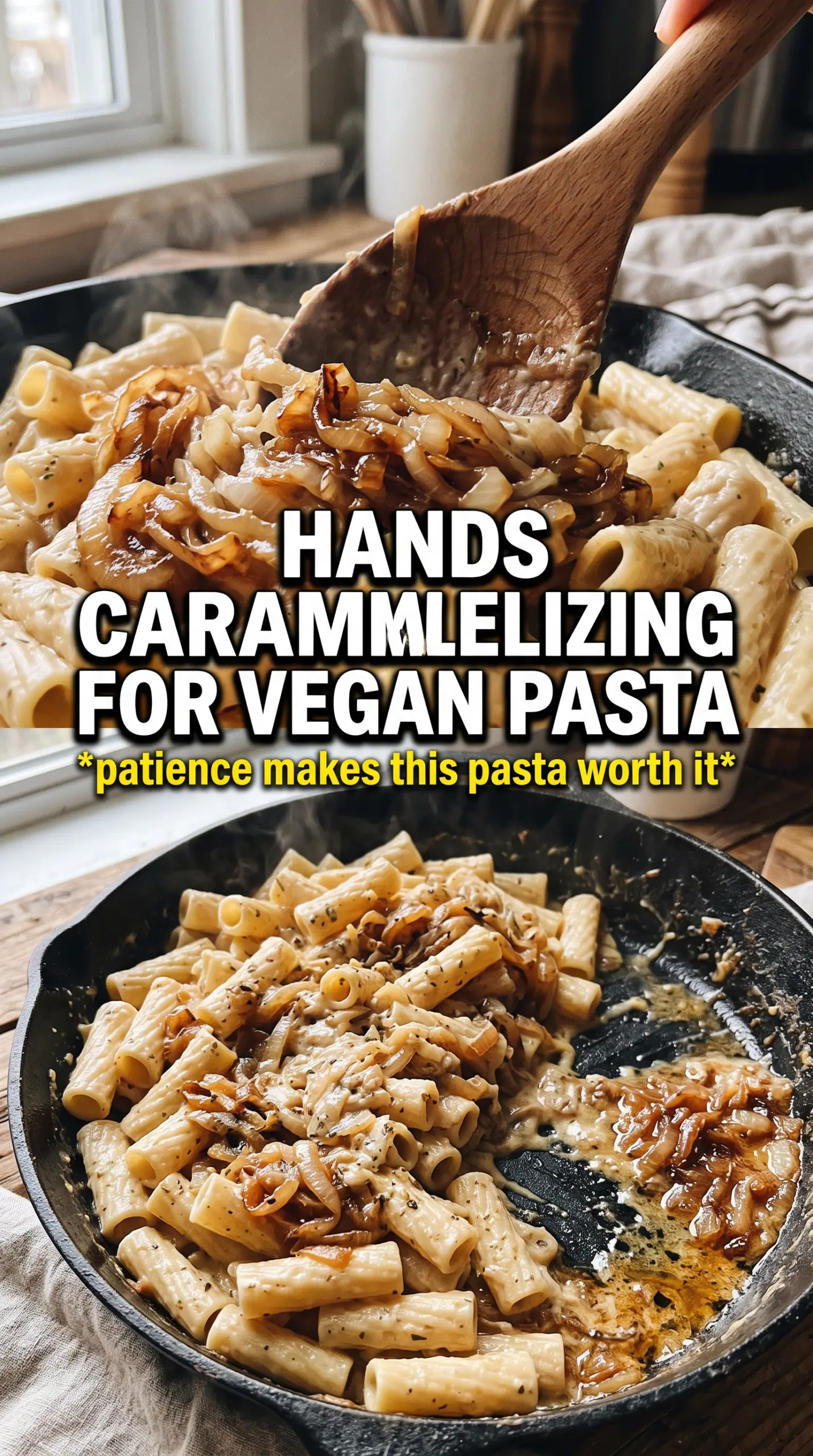
- Onions — These are the whole point of the dish. Yellow onions give the best balance of sweetness and structure, and thin slicing helps them cook evenly instead of going mushy on the outside while staying sharp in the middle.
- Olive oil and vegan butter — The oil keeps the butter from scorching, while the butter adds a rounder, more savory edge. You can use all olive oil if needed, but the sauce will taste a little leaner.
- Dry white wine — This is the ingredient that wakes everything up after the onions caramelize. Use something dry, not sweet; the point is brightness, not extra sugar.
- Nutritional yeast — It doesn’t melt like cheese, but it gives the sauce that umami depth and a gentle cheesy finish. If you use less, the dish still works, but it loses some of its savory pull.
- Balsamic vinegar — A teaspoon is enough to deepen the color and sharpen the flavor. Too much will make the sauce taste sticky and sweet, so keep it restrained.
- Rigatoni or spaghetti — Rigatoni holds the onion strands in every ridge, while spaghetti gives you a smoother, silkier bite. Both work; just cook them to true al dente so they can finish in the pan without turning soft.
Getting the Onions to Dark Amber Without Burning Them
Starting the Pan Slowly
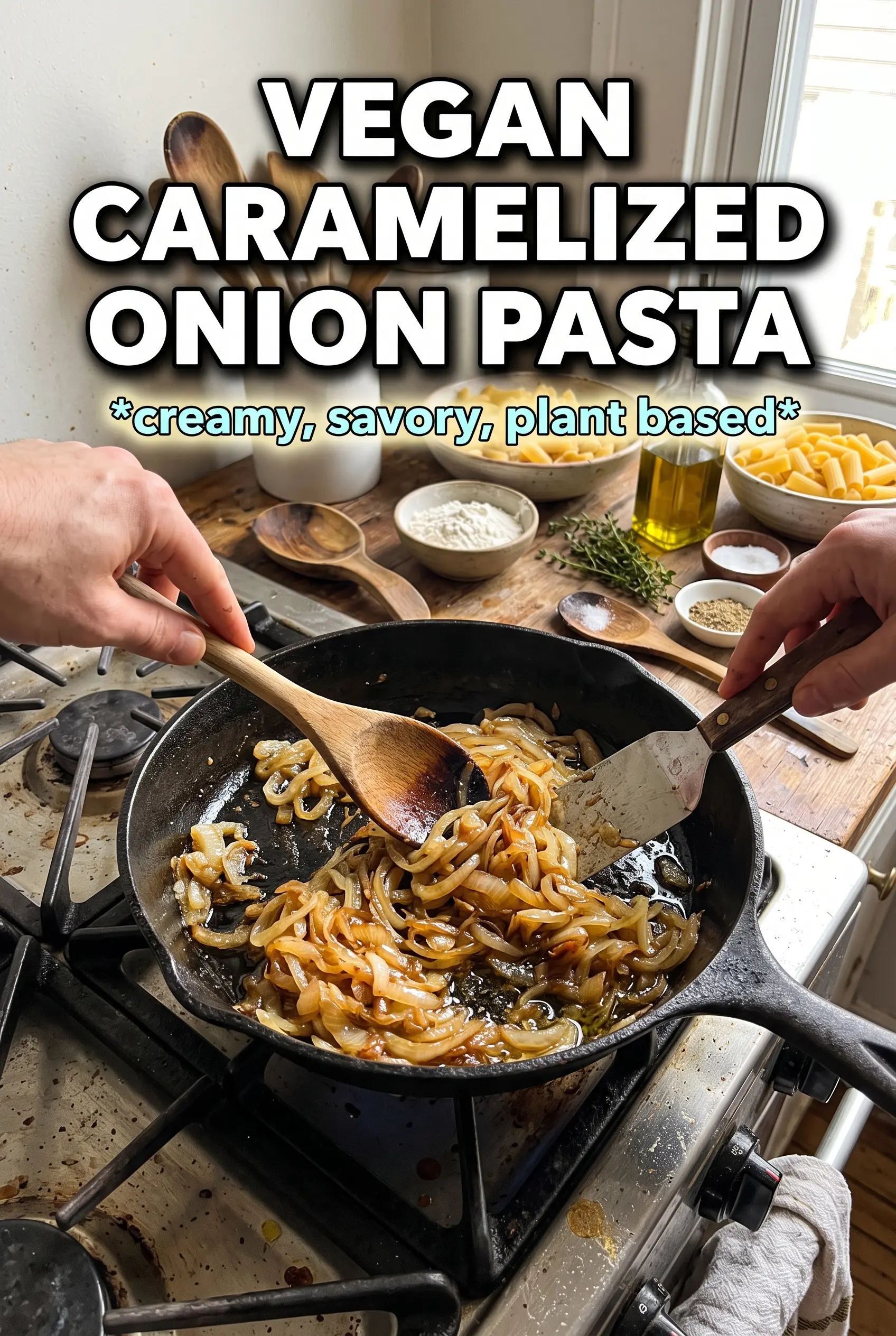
Heat the olive oil and vegan butter over medium-low before adding the sliced onions. They should sizzle softly, not spit or brown at the edges right away. Stir every few minutes so the onions at the bottom don’t catch while the ones on top stay pale. If the pan looks dry before the onions are fully soft, add a small splash of water and keep going.
Letting Time Do the Work
After the onions have softened, stay patient and keep cooking until they turn deep golden-amber and collapse into a jammy pile. This usually takes the full 35 to 40 minutes, and the biggest mistake is pulling them too early because they look done from a distance. They need to lose their sharp raw bite and develop a sweet, cooked smell before the sauce base is ready.
Building the Finishing Sauce
Stir in the garlic and thyme for just about 2 minutes, long enough for the garlic to smell fragrant but not brown. Deglaze with the white wine and let it bubble until the sharp alcohol smell cooks off. Then add the balsamic and red pepper flakes, toss in the pasta with a little reserved water, and keep stirring until the sauce turns glossy and clings to the noodles instead of pooling in the pan.
How to Adapt This Pasta When You Need a Different Version
Make It Gluten-Free
Use your favorite gluten-free pasta shape and cook it just to al dente. Gluten-free noodles can break down faster in a saucy finish, so add them to the pan gently and stop tossing as soon as the sauce looks cohesive.
Skip the Wine If You Need an Alcohol-Free Version
Replace the white wine with vegetable broth plus an extra teaspoon of balsamic vinegar. You’ll lose a little of the sharp brightness that wine brings, but the broth keeps the pan from going dry and still gives the onions something to deglaze against.
Make It Richer and More Creamy
Stir in an extra tablespoon of vegan butter at the very end, off the heat. That gives the sauce a softer, silkier finish without making it greasy, and it works especially well if you’re using spaghetti instead of rigatoni.
Storage and Reheating
- Refrigerator: Store leftovers in an airtight container for up to 4 days. The pasta will absorb some of the sauce as it sits, so expect it to look thicker the next day.
- Freezer: This freezes better than cream-based pasta, but the noodles soften a bit after thawing. Freeze in a shallow container for up to 2 months.
- Reheating: Reheat gently in a skillet with a splash of water or broth over low heat. The common mistake is blasting it in the microwave until the onions tighten up and the pasta dries out.
Questions I Get Asked About This Pasta
Vegan Caramelized Onion Pasta
Ingredients
Equipment
Method
- Heat olive oil and vegan butter in a Dutch oven over medium-low heat. Add the thinly sliced onions and cook 35-40 minutes, stirring every few minutes, until deeply caramelized and golden (look for rich amber color and very soft onions).
- Add minced garlic and fresh thyme, then cook for 2 minutes. Stir until fragrant and lightly toasted (about 2 minutes), keeping the heat at medium-low to avoid browning the garlic too fast.
- Pour in the dry white wine to deglaze, scraping up any browned bits from the bottom. Cook for 2 minutes, until the liquid reduces slightly and the pan looks glossy.
- Stir in balsamic vinegar and red pepper flakes. Cook for 2 minutes, just to blend flavors and coat the onions.
- Cook the rigatoni or spaghetti in salted water until al dente. Reserve about 1 cup pasta cooking water before draining.
- Toss the drained pasta with the caramelized onions, nutritional yeast, and enough reserved pasta water to make the sauce creamy. Cook while tossing over low heat for 1-2 minutes until the noodles are evenly coated (the sauce should look silky and cling to the pasta).
- Season with salt and black pepper to taste, then turn off the heat. Top with fresh parsley and a little extra nutritional yeast before serving.